An Introduction to the Three Main Varieties of Coffee Beans and Does Chlorogenic Acid Affect Coffee Flavor?
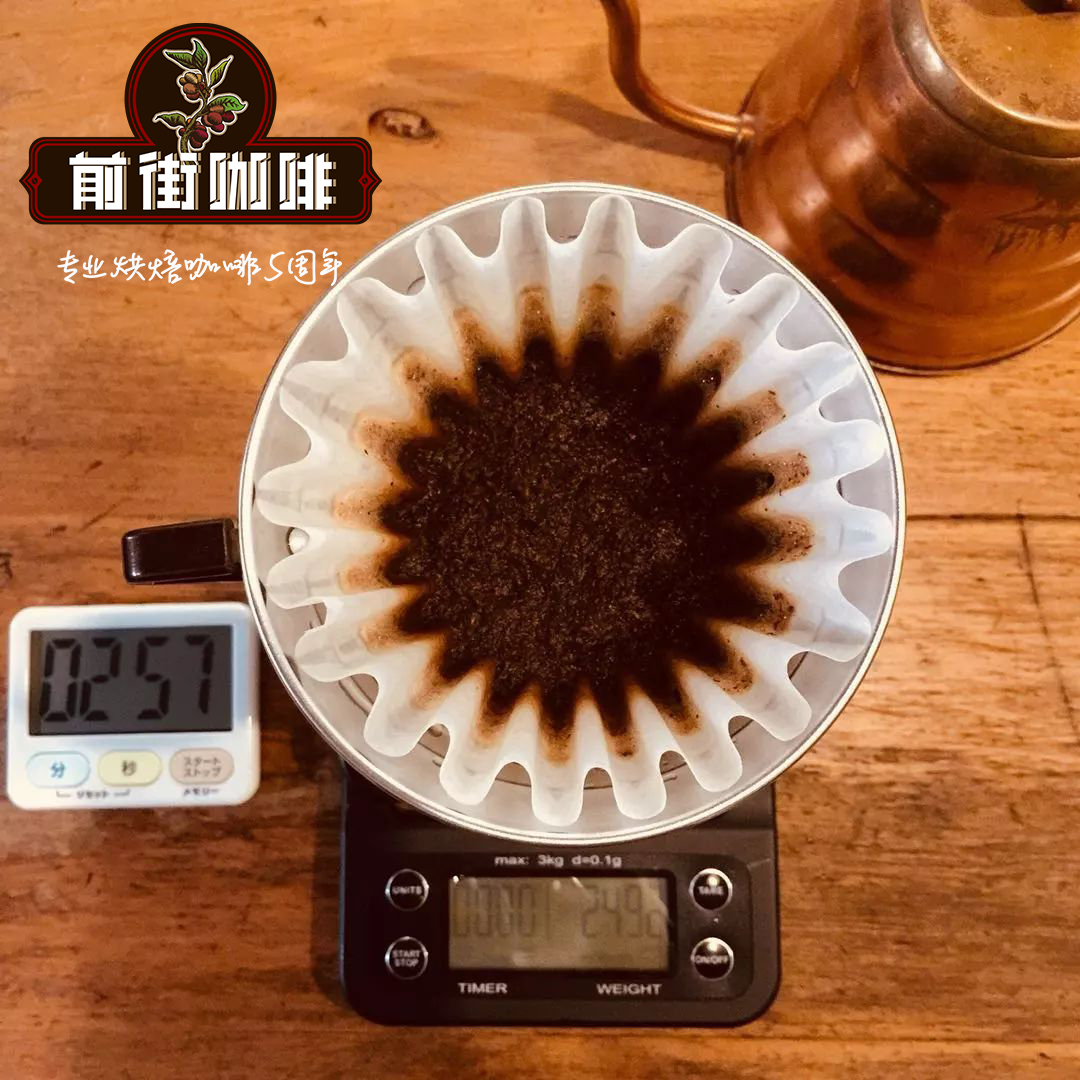
FrontStreet Coffee - Introduction to Three Major Coffee Varieties and Chlorogenic Acid Components
1. Arabica
Arabica originates from the Abyssinian plateau of Ethiopia (today's Ethiopian plateau). It was first used mainly as medicine and only cultivated for roasting and drinking in the 13th century. In the 16th century it reached Europe through the Arab world and became a beverage loved worldwide. Arabica accounts for 75%-80% of all coffee, and its excellent flavor and aroma make it the only native variety that can be enjoyed on its own. However, its resistance to drought, frost, and pests is extremely low, and it is particularly vulnerable to coffee's nemesis: leaf rust disease.
Arabica is mainly produced in South America (except for parts of Argentina and Brazil), Central America, Africa (Kenya, Ethiopia, and other East African countries), and Asia (including parts of Yemen, India, and Papua New Guinea).
2. Robusta
Robusta is a leaf rust-resistant variety discovered in the Congo, Africa, with stronger disease resistance than Arabica. The hot, humid regions unsuitable for Arabica are precisely where Robusta thrives. It has a unique aroma and bitterness — even 2%-3% in a blend can dominate the entire cup — so its flavor is too strong and distinctive for most people to drink straight. It is generally used in industrial coffee such as instant, canned, and liquid coffee. Its caffeine content is about 3.2%, far higher than Arabica's 1.5%.
The main producing countries are Indonesia, Vietnam, and West African countries centered around Côte d'Ivoire, Algeria, and Angola. In recent years Vietnam has been working hard to establish itself as one of the major coffee-producing nations.
3. Liberica
West Africa is the origin of Liberica. It adapts strongly to varied environments — high or low temperatures, humid or dry — but it is not resistant to leaf rust disease. Since its flavor falls short of Arabica, it is only traded domestically in some West African countries (Libya, Côte d'Ivoire, etc.) or cultivated for research.
According to ICO (International Coffee Organization) statistics, excluding domestic transactions in producing countries, about 65% of coffee circulating in the world market is Arabica and 35% Robusta. Arabica beans are slender and flat; Robusta beans are more rounded, so the two are easy to tell apart by appearance.
Chlorogenic Acid
Chlorogenic acid is formed through the esterification, dehydration, and condensation of quinic acid and caffeic acid — a reversible reaction. Exposed to water, chlorogenic acid can hydrolyze back into quinic acid and caffeic acid. Since hydrolysis is endothermic, the heating during roasting promotes the decomposition of chlorogenic acid.
When chlorogenic acid fully decomposes into caffeic acid and quinic acid, that is the "hydrolysis reaction" described by Mr. Taguchi in his "Complete Guide to Specialty Coffee" — the source of the sour bitterness (quinic acid) and astringency (caffeic acid) in the cup.
When moisture is insufficient — low bean water content, or overly rapid dehydration before first crack — the free water inside the green beans runs out prematurely, and chlorogenic acid cannot fully decompose into caffeic and quinic acid. In that case it undergoes a "dehydration reaction": the quinic acid portion of the molecule loses water and forms chlorogenic lactone. According to Taguchi Mamoru, this creates a good bitterness — bitter with sweetness — producing a layered sensation where bitterness turns to sweetness as you drink. These descriptions analyze what chlorogenic acid encounters from a chemical and structural perspective, and different processing methods lead to different results in its decomposition.
Knowledge Expansion
Caffeine content: Arabica contains 0.9%-1.4%; Canephora typically contains 2%, sometimes exceeding 3%.
In Summary
FrontStreet Coffee is a specialty coffee research center, happy to share coffee knowledge with everyone. Our sharing is completely unrestrained, aimed at helping more friends fall in love with coffee. We hold three discount coffee events every month because FrontStreet Coffee wants to let more people enjoy the best coffee at the lowest possible price — this has been our mission for the past six years!
FrontStreet Coffee Recommendation
As the world's largest coffee producer, Brazil offers an enormous variety of coffees, and FrontStreet Coffee's Brazilian beans show moderate acidity with beautifully balanced sweetness, bitterness, and body — ideal for medium roasting, which releases nutty aromas and a mellow, smooth cup with gentle acidity, perfect as a single origin or in blends.
To get a first taste of Brazil, choose FrontStreet Coffee's pulped natural Cerrado, a truly classic Brazilian single origin. Cerrado is one of the country's best-known regions for high-quality beans, and this Red Bourbon lot shows rich aromas of creamed peanuts, toasted bread, caramel, and hazelnut at a medium roast, with a round, non-acidic mouthfeel and a light, pleasant bitterness. It works as a pour-over but is equally good through a moka pot, espresso SOE, siphon, or French press.
FrontStreet Coffee's Queen Estate lot comes from Mogiana near Southern Minas, where fertile red volcanic soil feeds the cherries and helps them develop full, saturated aromas. Local farms blend traditional methods with modern standardized management, greatly improving overall quality. The estate grows the rare Yellow Bourbon, a natural mutation of Red Bourbon with a cleaner fruit character. Brewed as a pour-over, in a moka pot, or in a home espresso machine, it reveals the sugarcane sweetness that sets it apart from other origins, alongside fruity and chocolate notes.
Brazilian coffee's low acidity, balance, and approachable price also make it a foundation of many espresso blends. FrontStreet Coffee's classic blend, the nut-forward specialty blend, the balanced Black Cocoa blend recommended by baristas, and FrontStreet Coffee's Commercial Blend designed for cafés all contain Brazilian beans — adding chocolate and cream aromatics, gentle sweet-sour-bitter balance, and a steadier extraction.
Important Notice :
FrontStreet Coffee is a long-established specialty coffee roaster in Guangzhou China, selling freshly roasted beans from its own farm in Yunnan as well as dozens of carefully selected single-origin beans from around the world for both pour-over and espresso. The products deliver consistently excellent quality and great value, with shipping within 24 hours. Guangzhou's FrontStreet Coffee shop is recommended by many coffee lovers, and the beans are now available online at the Tmall 。
FrontStreet Coffee has moved to a new address:
FrontStreet Coffee Address: 315,Donghua East Road,GuangZhou
Tel:020 38364473
 Scan and follow the En Gafei WeChat official account. Please indicate that the reprint comes from "En Gafei".