Introduction to Brazil Cerrado Coffee NY.2 Grade - Understanding the Highest Grade of Brazilian Cerrado Coffee Beans

Brazil is the world's largest coffee producer, and few of its origins are as recognizable as the Cerrado region in the central-west of Minas Gerais. Cerrado coffee is known for a mild, balanced profile that develops gentle aromatics after roasting. It also blends beautifully: mixed with other origins, it builds espresso blends with better texture and more stable extraction. In FrontStreet Coffee's daily brew lineup, the Brazil Cerrado Red Bourbon stands out for its full, smooth body and its rich chocolate and nut character, which has made it a customer favorite.
The Brazil Cerrado Growing Region
Compared with high-altitude Colombia, Brazil's coffee grows at lower elevations, generally between 600 and 1200 meters. Much of the landscape is low-lying plain, with the Brazilian Plateau making up only part of it. That flat terrain suits large-scale cultivation and management: when the cherries ripen, most farms harvest mechanically, stripping every fruit from the branch in one pass.

Brazil's coffee belt spans seven states, and Minas Gerais in the southeast is the most productive, with four sub-regions. One of them, Cerrado, was the first Brazilian coffee region to earn official origin certification, and it produces almost exclusively high-quality Arabica. The word "Cerrado" technically refers to a vast savanna that covers 22% of Brazil's land area, but the Cerrado coffee region is only a slice of it: the coffee-growing land above 1000 meters in the central-west of Minas Gerais. This is the best part of the savanna — high altitude and fertile soil that yield beans with clean sweetness, full body, and high clarity. Cerrado was also among the first regions in Brazil to commercialize coffee, and many exporters built large plantations here.
Brazil grows many varieties, the oldest being Bourbon and Typica. As a heritage variety, Bourbon differs from Typica with broader leaves, denser growth, and yields 30% higher. Its beans are rounder and shorter, with rich berry acidity, pronounced creaminess and fragrance — though it shares Typica's weakness against disease. FrontStreet Coffee's Brazil Cerrado daily brew is a Red Bourbon, which ripens red. The menu also carries a second Brazilian selection, the Queen Estate Yellow Bourbon, which produces yellow fruit.
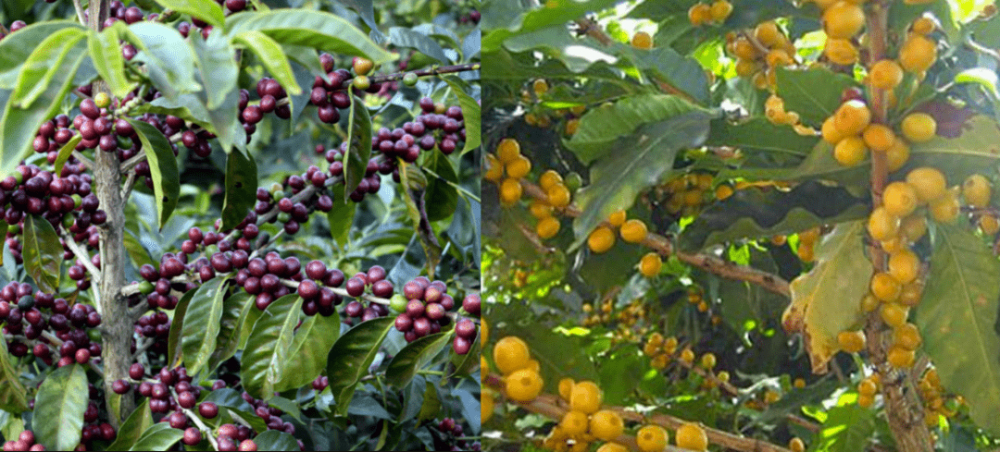
Brazil's harvest coincides with the dry season, which makes it ideal for drying coffee as a natural. Traditional natural processing meant spreading everything on the ground, which often lent earthy, woody off-flavors and produced uneven quality. After 1990, Brazil promoted the pulped natural method (also called semi-washed): defective and floating cherries are removed in water channels, the skin, pulp, and some of the mucilage are stripped mechanically, the beans are washed, then sun- or machine-dried. Compared with full washing, pulped natural saves water and labor — and it dramatically raised Brazilian coffee quality, overturning the old reputation of rough-tasting naturals.
The Brazil Green Coffee Grading System
With production this large and origins this numerous, no single grading standard could work. Brazilian coffee is therefore graded on several axes at once: defect count, screen size, and cup quality all factor into a lot's classification.

1. Grading by Defect Count
Grades are assigned by counting defects in a 300-gram sample of green beans under a point-deduction system. Brazil follows the New York standard, abbreviated NY, with classes running NY2, NY2/3, NY3, NY3/4 and so on — the smaller the number, the fewer defects and the higher the grade. A lot with 4 or fewer deduction points qualifies as NY2, the top grade. NY.1 would mean absolutely defect-free, but such lots can't be supplied consistently, so NY.2 is treated as the highest practical grade.

2. Screen Size
Sizes are measured on sieves calibrated in 1/64-inch increments, from 14 up to 20. The screen size reflects the bean's short side — its width. The largest screen for Brazilian beans is 19, but volume is limited, so 17/18 is considered the highest commercial grade.
NY.2 SC-17/18 NY.2/3 SC-14/16 NY.3/4 DD Quality NY.4/5 SC-14/16
3. Cup Quality and Body
After defects and size, Brazilian green coffee is roasted and cupped, and graded on two axes: body and flavor. Body categories run across five steps: Strictly Soft (very smooth), Soft (smooth), Softish (somewhat smooth), Hardish (harsh), and Rioy (iodine-like harshness). Flavor grades are Fine Cup (FC), Fine, Good Cup (GC), Fair Cup, Poor Cup, and Bad Cup, with Fine Cup and Good Cup the most common.
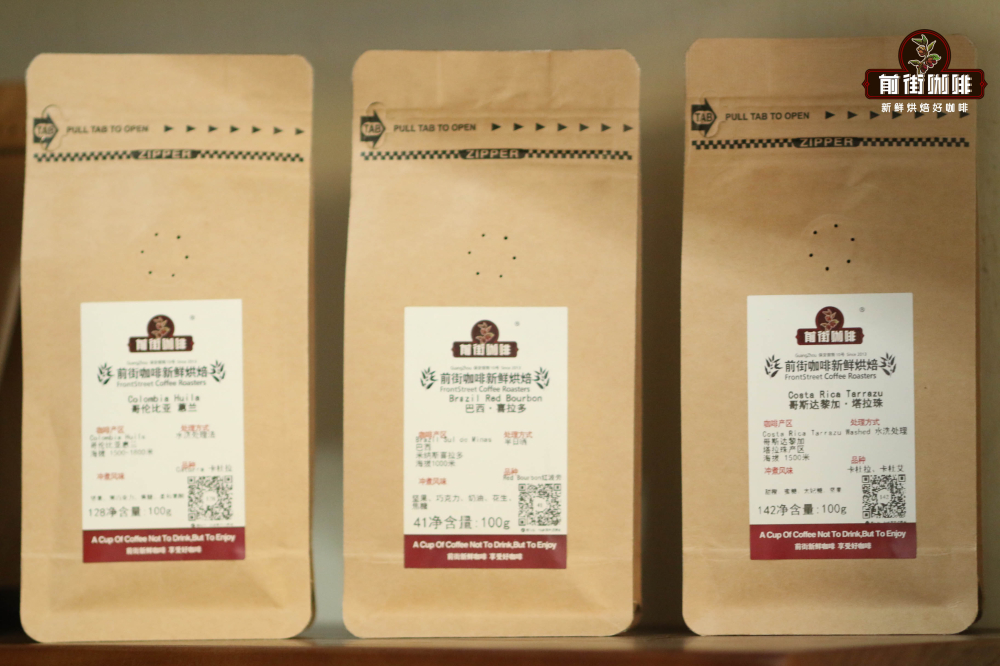
Putting it together, FrontStreet Coffee's Brazil Cerrado bags are marked "Brazil NY.2 SC – 17/18 FC Cerrado": from the Cerrado region, screen 17/18, very smooth body, fine cup, defect grade NY.2.

Brazil Cerrado Coffee Flavor
These beans are meant to showcase the nutty, toasted-bread, and creamy character of Brazilian coffee with low acidity, so FrontStreet Coffee roasts them medium-dark. Whichever beans you brew, freshness is what decides what ends up in the cup. To taste Brazil at its best, choose beans roasted within the last 1.5 months. Coffee needs 4-7 days of degassing after a high-temperature roast before it enters its optimal flavor window; past that window, much of the aroma fades and many flavors become hard to extract. Beans shipped by FrontStreet Coffee are roasted no more than 5 days before dispatch, so they arrive just as their prime window opens.
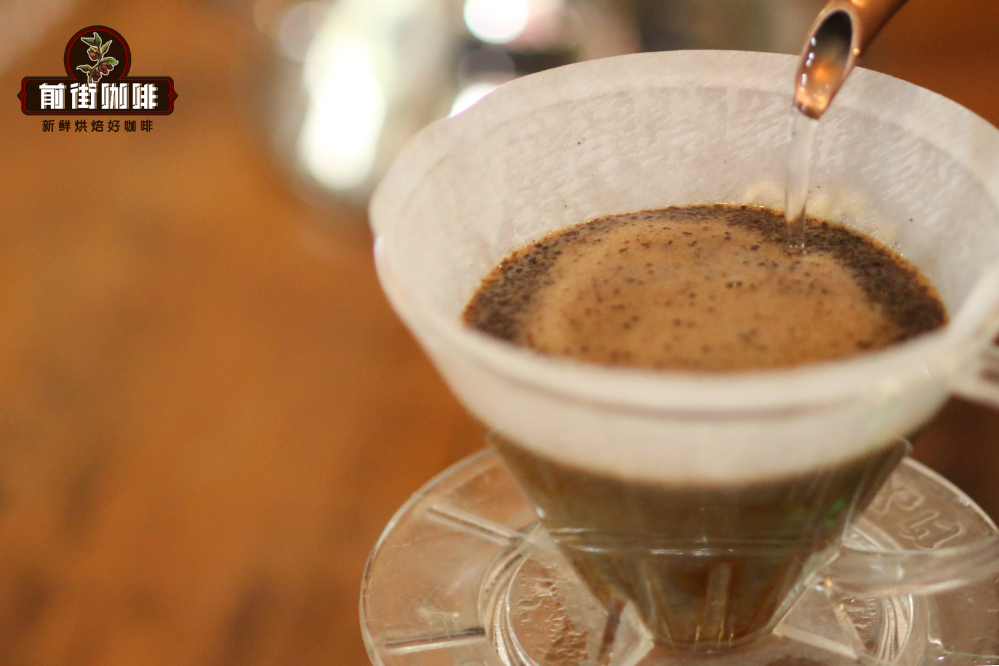
Because a darker roast has a looser internal structure that absorbs water quickly and releases bitterness fast, FrontStreet Coffee's baristas brew it with a lower water temperature and a relatively coarse grind to avoid over-extraction. A KONO dripper brings out the body of Brazilian coffee especially well.
Water Temperature: 88°C
Coffee Amount: 15g
Coffee-to-Water Ratio: 1:15
Grind Size: 70% pass-through on a #20 sieve
Three-Pour Method: Start with 30g of water to saturate the bed evenly and bloom for 30 seconds. For the second pour, add 95g of water in steady circles from the center outward. Once the level drops to two-thirds of the bed, begin the third pour of 100g. Keep the flow small throughout, and remove the dripper once dripping finishes, at roughly 2 minutes total.
Flavor Notes: Freshly ground, this Cerrado Red Bourbon gives off rich nut and toasted-bread aromas, with caramel sweetness surfacing as soon as water hits the grounds. In the cup, nuts, cream, and peanut lead, with a dark-chocolate finish that lingers — smooth on the palate and full in body.
FrontStreet Coffee Recommendation
If you simply want a first taste of Brazil, FrontStreet Coffee's pulped natural Cerrado Red Bourbon is the classic starting point. Roasted medium, it shows intense cream-and-peanut, toasted bread, caramel, and hazelnut aromas, with a rounded mouthfeel, no sourness, and only a light touch of bitterness. It works as a pour-over single origin but is equally at home in a moka pot, as an espresso SOE, or through a siphon or French press.
For something different, FrontStreet Coffee also carries the Queen Estate Yellow Bourbon from Mogiana, near the southern Minas border, where fertile red volcanic soil feeds exceptionally full aromatics. A natural mutation of Red Bourbon, the Yellow Bourbon delivers a cleaner fruit character, and brewed by pour-over, moka pot, or home espresso machine it reveals a sugarcane sweetness you won't find in other Brazilian origins, alongside fruit and chocolate notes.
Important Notice :
FrontStreet Coffee is a long-established specialty coffee roaster in Guangzhou China, selling freshly roasted beans from its own farm in Yunnan as well as dozens of carefully selected single-origin beans from around the world for both pour-over and espresso. The products deliver consistently excellent quality and great value, with shipping within 24 hours. Guangzhou's FrontStreet Coffee shop is recommended by many coffee lovers, and the beans are now available online at the Tmall 。
FrontStreet Coffee has moved to a new address:
FrontStreet Coffee Address: 315,Donghua East Road,GuangZhou
Tel:020 38364473
 Scan and follow the En Gafei WeChat official account. Please indicate that the reprint comes from "En Gafei".