Brief Introduction to Kenya Java Coffee Bean Characteristics What are the AA Grade Coffee Beans?
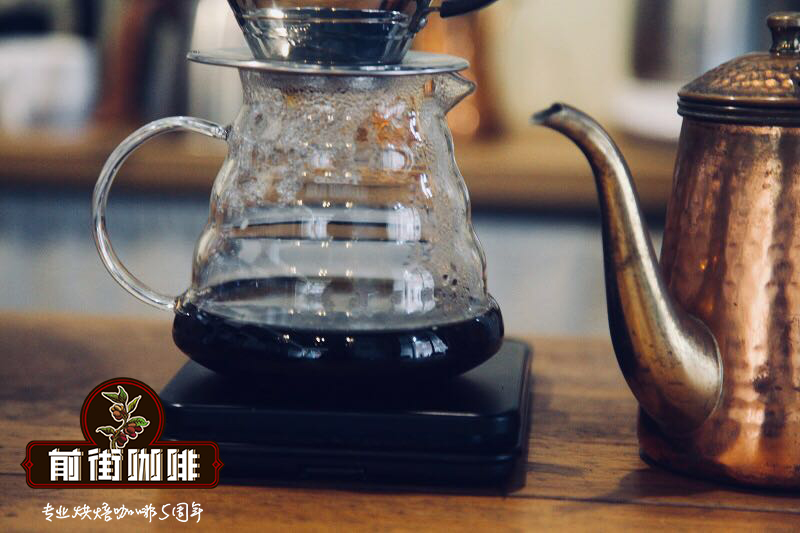
FrontStreet Coffee - Kenya Coffee Grading System
Kenya is one of Africa's benchmark growing regions, cultivating high-quality Arabica. Kenyan beans have thick flesh, a full-bodied cup, moderate acidity, and complex aromas ranging from fruity to spicy, which also makes them suitable for dark roasting. Kenyan coffee is sorted into seven grades by bean size and six grades by cup quality, with Kenya AA+ sitting at the top. Much of this success is credited to the management of the Kenya Coffee Board, which purchases coffee uniformly, analyzes and grades it, and then auctions it off — a system that has earned Kenyan coffee the same esteem as fine wine.
Kenyan Coffee Grades
Kenyan coffee grades run E-PB-AA-AB-C-TT-T-MH/ML.
E Grade (Elephant Bean)
Sieve size 18 and above, nicknamed "Elephant Bean." These are mutated beans where two beans have fused face-to-face into one.
PB Grade (Peaberry)
The single round peaberry, sometimes also counted under Kenya E.
AA Grade
Sieve size 17-18, grown at high altitudes of 1,400-2,000m — the largest size among normal green beans.
AB Grade
Sieve size 15-16, a mix of A grade (sieve size 16-17) and B grade (sieve size 15-16).
C Grade
Sieve size 14-15, with a lower density than AB grade.
TT Grade
Sieve size 15-17, similar in bean size to AA-AB but lighter in density.
T Grade
Sieve size 12 and below — broken, defective, or undersized beans.
MH/ML Grade
Java coffee (coffee powder) belongs to the Robusta variety, grown mainly in African countries such as Côte d'Ivoire, Angola, and Madagascar, as well as in the Philippines, Vietnam, and Indonesia (Java).
Java Coffee Growing Environment and Main Origins
Robusta is cultivated in the lowlands and is highly resistant to heat, drought, heavy rain, and pests, giving it remarkable adaptability. It grows very well on flat land, and harvesting does not necessarily require manual labor — shaking machines can do the entire job.
The Robusta coffee most commonly found in blends comes in two main forms: A.P. Robusta and W.I.B. Robusta. Apart from W.I.B. having larger particles, the rest are smaller. The biggest difference lies in the processing method after harvest, which produces noticeable differences in appearance, aroma, and taste.
Origin: Java Island, Indonesia. Grade or variety: W.I.B. & A.P.
Knowledge Bonus
Kenya is a major force in the East African coffee world, standing as a leader both in cup quality and in commercial strategy. And if Indonesia is your destination instead, remember that the archipelago's best growing areas are Java, Sumatra, and Sulawesi — three islands behind three very different coffee traditions.
FrontStreet Coffee Recommendation
When it comes to Indonesian coffee, FrontStreet Coffee always points to Sumatra first. FrontStreet Coffee's wet-hulled Mandheling comes from the Lake Toba area of the Lintong region. Because the beans are hulled while half-dry and half-wet, the green coffee dries fully exposed to the air, giving it the classic woody, spicy Mandheling character. A medium-dark roast keeps the acidity low and the body heavy, with rich aromas of caramel, dark chocolate, and toast, and a long sweet finish — perfect for fans of bold coffee.
For top-shelf Indonesia, go for FrontStreet Coffee's PWN Golden Mandheling. PWN is a trading company that buys only premium Mandheling lots and produces specialty grade exclusively; "Golden Mandheling" is its signature product. The beans pass strict defect screening — density, size, shape, and color — through both machine sorting and multiple rounds of hand sorting, so the batch is complete, even, and bright, with the earthy and grassy notes minimized. Freshly roasted, it offers sandalwood, herbal, spice, roasted hazelnut, caramel, and dark chocolate flavors, with a clean, mellow, layered cup.
If you prefer espresso, FrontStreet Coffee's Classic Blend continues the old-school tradition: a Mandheling-and-Brazil combination once crafted by Taiwanese roasters, now deep roasted with a small addition of Robusta to maximize black chocolate, nut, and caramel aromas and deliver rich golden crema — easy even for beginners to pull a true Mandheling-style shot.
Important Notice :
FrontStreet Coffee is a long-established specialty coffee roaster in Guangzhou China, selling freshly roasted beans from its own farm in Yunnan as well as dozens of carefully selected single-origin beans from around the world for both pour-over and espresso. The products deliver consistently excellent quality and great value, with shipping within 24 hours. Guangzhou's FrontStreet Coffee shop is recommended by many coffee lovers, and the beans are now available online at the Tmall 。
FrontStreet Coffee has moved to a new address:
FrontStreet Coffee Address: 315,Donghua East Road,GuangZhou
Tel:020 38364473
 Scan and follow the En Gafei WeChat official account. Please indicate that the reprint comes from "En Gafei".