How Should Coffee Be Stored for Best Results? What Are the Common Types of Coffee Packaging on the Market?

How to Store Coffee Beans
Plenty of people are unsure how to store coffee beans. What do you do when you can't finish a bag? Into the refrigerator? A sealed jar? A vacuum bag? Our usual advice is a sealed bag at room temperature, which is basically all you need. Freshly roasted beans normally keep at room temperature for about a month, and the flavor shifts across that month are quite interesting — it is also the best tasting window for the bag.
In fact, if you pay close attention on the first day after roasting, you will notice a grass-like aroma, somewhat heavy and muted, as if the flavor were held down. A couple of days later, smell it again and the beans' sweet aroma is suddenly very active. Once the beans have sat for a week, that sweet fragrance peaks, then gradually fades.
On the whole, coffee beans show a distinct personality and lively changes over the first few days. After about a week, their character turns milder. Some drinkers insist on catching that early personality, while others prefer to let the beans rest at room temperature for a week and enjoy the gentler side.
If you can finish your beans within two weeks of roasting, we suggest keeping them at room temperature. That way you can follow the flavor changes in a single bag and sharpen your sense of how fresh a bean is. Everyone knows a refrigerator's low temperature slows spoilage, so it is tempting to think coffee belongs there too. But the air inside a refrigerator is cold and dry, which pulls moisture out of the beans and costs you flavor. There are also too many stray odors in there. And whether you refrigerate or freeze, another problem is the temperature difference between the cold refrigerator and the room: water vapor clings to the bag's surface, and when you open it, that moisture goes inside. Putting the bag back in the refrigerator then causes moisture absorption, and damp beans are more prone to mold. So storing coffee beans in the refrigerator is generally not recommended.
Under normal circumstances, then, store at room temperature rather than the refrigerator. Many people, especially those just getting into specialty coffee, buy pre-ground coffee, and most of it cannot be used up at once.
That is extremely damaging to flavor. Never mind whether the merchant's beans were freshly roasted — even if they were, once ground, the surface area exposed to air increases dramatically and oxidation runs fast. Freshness is lost almost immediately, and the original rich flavor gradually disappears.
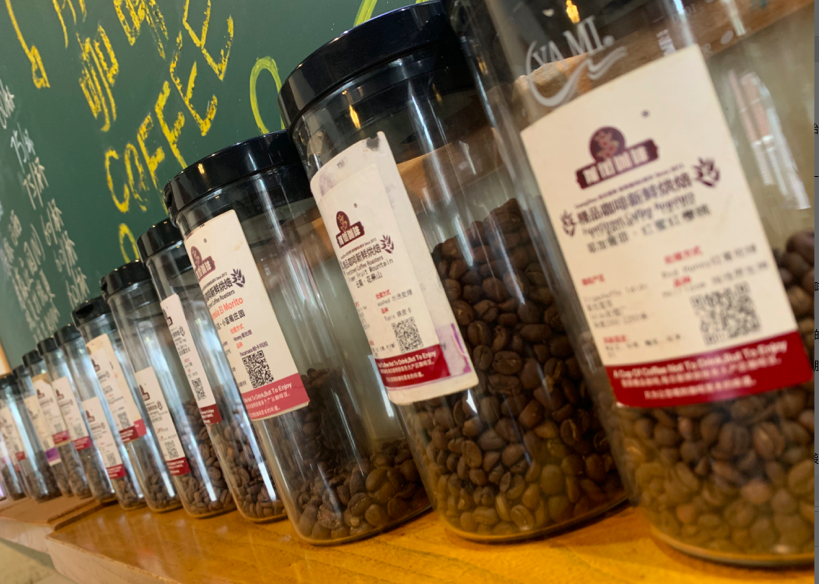
Freshly roasted beans that are ground will change flavor completely within two to three days. So if you are after more than a caffeine hit — if you want to taste what each origin actually offers — we suggest not buying pre-ground coffee. Unless you can use it up within a week, buy whole beans and a grinder, and grind just before brewing.
Common Packaging Types
With that in mind, here are the four common packaging types on the market.
1. Flexible Non-Airtight Packaging
The most economical option, usually used by small local roasters who can guarantee rapid supply and know the coffee will be consumed in time. Beans packaged this way can only be stored for a short period.
2. Airtight Packaging
The coffee is filled and vacuum-sealed. Because carbon dioxide forms during roasting, this can only be done after the coffee has been left to degas for a period, so a few days of storage interval is required. Beans last longer than ground coffee, and since no air separation is needed during storage, the cost is lower. Coffee packaged this way should be used within 10 weeks.
3. One-Way Valve Packaging
Roasted coffee goes into special packaging fitted with a one-way valve, which lets gas escape but not enter. No separate storage phase is needed, though there is some flavor loss through degassing. It prevents stale flavors from forming but cannot stop aroma loss.
4. Pressurized Packaging
The most expensive method, and it can preserve coffee for up to two years. Within minutes of roasting, the coffee can be vacuum-packed; after some inert gas is added, a suitable pressure is maintained inside. Beans are preserved under pressure, which lets aroma compounds infuse into the oils and improves the flavor of the drink.
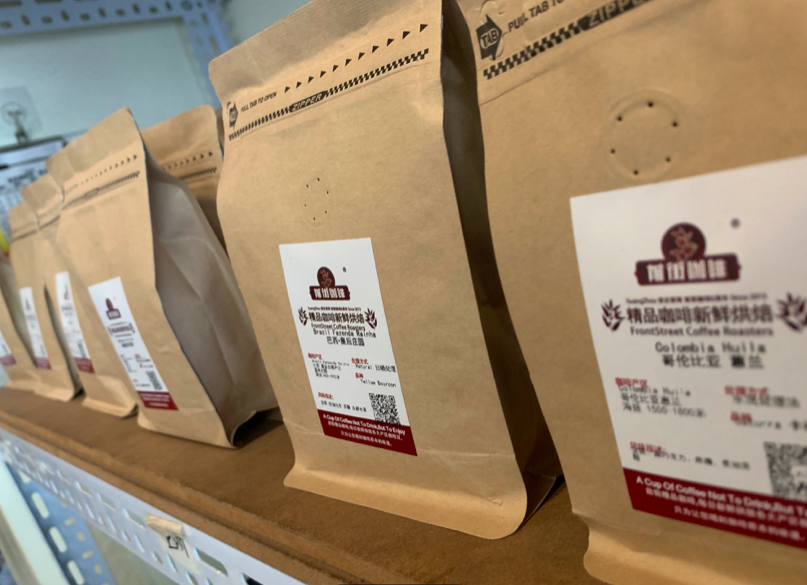
At FrontStreet Coffee, all our roasted beans use one-way valve packaging. The valve serves two purposes: to release gases and to keep outside air from entering the bag.
Generally speaking, after roasting, carbon dioxide and other volatile gases make up about 2% of a coffee bean's total weight. That 2% gradually escapes from the bean's fiber structure, and the release time depends on the roast.
As the beans release carbon dioxide inside a one-way valve bag, the internal pressure builds; once it reaches a certain threshold the valve opens to let gas out until the pressure drops below the threshold. The valve then closes and the bag returns to a sealed state.
FrontStreet Coffee Recommendation
Since storage is really about protecting flavor, it pays to start with beans that age well at room temperature. FrontStreet's medium roasts are a good fit: FrontStreet Brazil Queen's Estate is a yellow Bourbon from Brazil, clean and gently sweet, with creamy peanut, chocolate, toast, and sugarcane after a medium roast, and it works in a pour-over or a moka pot. FrontStreet Strawberry Candy, a medium-roasted blend of a Costa Rican honey coffee and a washed Panama Geisha, brings orange-blossom honey and rounded sweetness and suits cold brew, pour-over, or espresso — a smart choice if the bag moves slowly. FrontStreet 2013 Yunnan Typica, also medium-roasted, keeps the balanced, soft Yunnan character with nuts, brown sugar, black tea, and dried apricot. Whichever you pick, keep it sealed at room temperature and drink it within the month.
Important Notice :
FrontStreet Coffee is a long-established specialty coffee roaster in Guangzhou China, selling freshly roasted beans from its own farm in Yunnan as well as dozens of carefully selected single-origin beans from around the world for both pour-over and espresso. The products deliver consistently excellent quality and great value, with shipping within 24 hours. Guangzhou's FrontStreet Coffee shop is recommended by many coffee lovers, and the beans are now available online at the Tmall 。
FrontStreet Coffee has moved to a new address:
FrontStreet Coffee Address: 315,Donghua East Road,GuangZhou
Tel:020 38364473
 Scan and follow the En Gafei WeChat official account. Please indicate that the reprint comes from "En Gafei".