Kenya Coffee Geographical Growing Environment & Flavor Profile of African Kenyan Coffee Beans
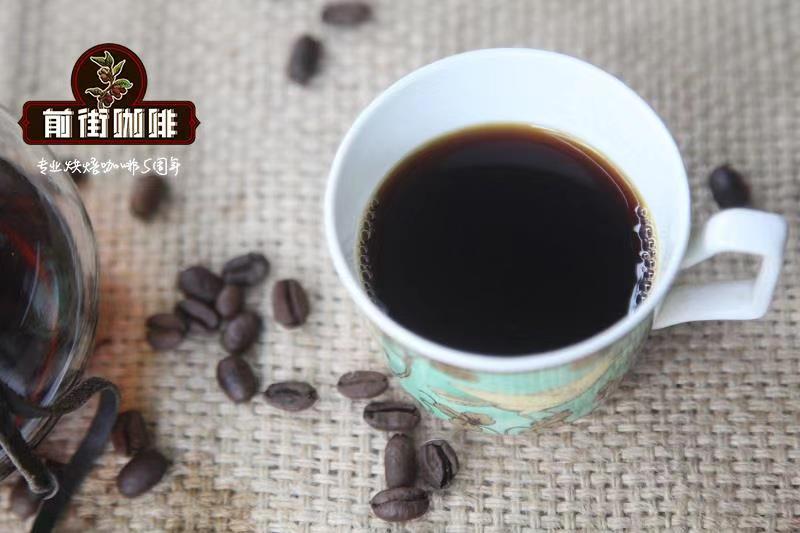
FrontStreet Coffee - Kenya's Coffee Geography and Its Signature Beans
Kenya sits in eastern Africa, with the equator crossing its center and the Great Rift Valley running north to south. It borders Somalia to the east, Tanzania to the south, Uganda to the west, and Ethiopia and Sudan to the north, with the Indian Ocean to the southeast. Although Kenya touches Ethiopia—the birthplace of coffee—its own coffee history spans only a little over 100 years, arriving more than 1000 years after Ethiopian cultivation began.
Coffee reached Kenya while it was still a British colony. The colonial government promoted coffee cultivation widely to earn foreign exchange, shipping the harvest to London for sale. It wasn't until 1933 that Kenya passed the Coffee Act and established the Coffee Board, after which coffee sales were brought back under Kenyan control.
Kenyan coffee is grown mainly in volcanic areas at 1600-2100 meters, from around the capital Nairobi into the Kenyan highlands. That altitude suits flavor development perfectly: cooler mountain temperatures slow the trees' growth, letting the beans' aromatic compounds develop fully—producing more pronounced fruit acidity and a harder, denser bean. This crescent-shaped belt of fertile, coffee-dedicated land is where Kenya's premium beans come from, including Nyeri and Ruiru in the central region.
Premium Kenyan beans generally come from small farms, where each farmer produces only about 20 to 70 bags per season. Too small to invest in their own washing stations, hundreds or even thousands of households band together into cooperative farms, with the government funding the construction of washing stations. These small farms are extremely rigorous in green-bean processing, with the entire workflow overseen by the official Coffee Board—that oversight is what guarantees Kenyan coffee's quality. Their famous double-washing method has long been the model among producing countries. So while Kenya's production is not large, it remains a top pick for the world's best coffee buyers.
Kenya is also known for grading coffee by bean size. There are generally nine grades. By shape, there is PB (Peaberry), about 10% of total production. By size, there are E (Elephant), AA, AB, C, T, TT, MH, and ML. And through tireless work, the Kenyan Agricultural Research Institution's Scott Laboratory bred two outstanding hybrid varieties—SL-28 and SL-34—overturning the old prejudice that bred varieties can't match natural ones. SL-28 and SL-34 gave Kenyan coffee its unique flavor signature and its flawless reputation in the coffee world.
Kenyan Coffee Grades
AA Plus (AA+): AA grade with particularly outstanding cup quality (flavor, mouthfeel)
AA: Screen size 17-18
AB: Screen size 15-16, making up the majority of production
Knowledge Bonus:
Kenyan coffee beans are almost always washed-processed. As a rule, washed coffee has the purest flavor, the fewest off-notes, and the best fruit aroma and acidity. Even more remarkable, Kenya practices a special method called "double washing," in which the beans undergo two washings and two fermentations.
FrontStreet Coffee Recommendation
Kenya and Ethiopia may share a border, but their cups speak different languages. If Kenyan coffee's bold, berry-charged acidity is what you love, it's well worth tasting the other side of that border. Ethiopia is the world's most famous specialty coffee origin and, as the birthplace of coffee, home to countless native varieties—a treasure land that coffee lovers follow faithfully for its flavor.
Start with FrontStreet Coffee's Washed Yirgacheffe: clear jasmine florals and bright citrus acidity, from a small town in southern Ethiopia where spring-like weather, mist, and cool humidity let thousands of coffee trees flourish. The result is floral-and-fruit-acid interplay with a light, elegant, tea-like body—like a refreshing, clean lemon tea. For a richer expression, FrontStreet Coffee's Natural Blossom (Huakui) from the Hambella region of Guji, Sidamo is sun-dried for 21 days on raised beds with constant turning and hand-sorting every three to five days. After a medium-light roast it shows a faint fermented wine note, florals, citrus, and mango, with thick honeyed sweetness, cocoa undertones, a hint of spice, and a long-lasting finish.
Important Notice :
FrontStreet Coffee is a long-established specialty coffee roaster in Guangzhou China, selling freshly roasted beans from its own farm in Yunnan as well as dozens of carefully selected single-origin beans from around the world for both pour-over and espresso. The products deliver consistently excellent quality and great value, with shipping within 24 hours. Guangzhou's FrontStreet Coffee shop is recommended by many coffee lovers, and the beans are now available online at the Tmall 。
FrontStreet Coffee has moved to a new address:
FrontStreet Coffee Address: 315,Donghua East Road,GuangZhou
Tel:020 38364473
 Scan and follow the En Gafei WeChat official account. Please indicate that the reprint comes from "En Gafei".