What is the Impact of Water Quality on Coffee Extraction: A Brief Analysis of How Hot Water Amount Affects Coffee Extraction
Professional coffee knowledge exchange. For more information on coffee beans, follow Coffee Workshop (WeChat public account: cafe_style).
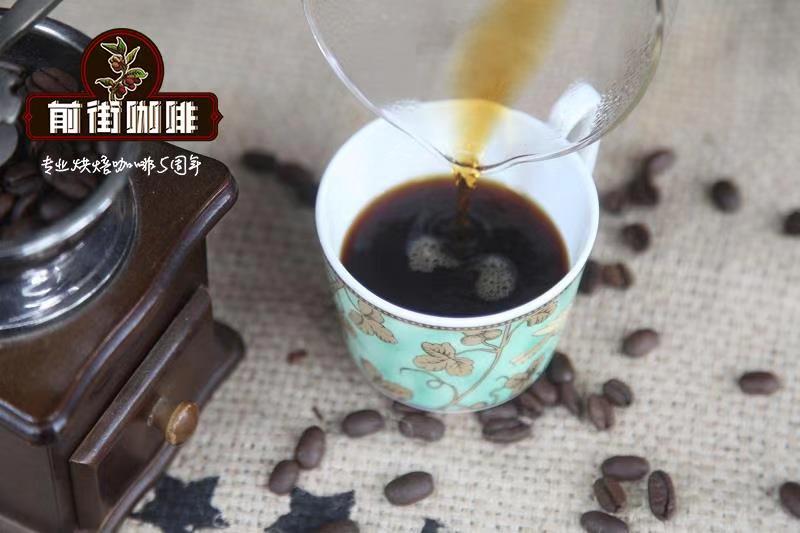
FrontStreet Coffee: The Impact of Water Temperature and Volume on Coffee Extraction
Water quality covers factors such as total hardness, alkaline hardness, pH value, and water source. In coffee extraction, "water quality" generally means "total hardness." This article explains the related terms in the simplest possible language and lays out a minimal but scientific way of thinking about how water hardness affects coffee.
1. Extraction Is Not the Same as Dissolution
Extraction, in essence, means that ions from substance A displace the ions of substance B out of B and into A. For a long time, the word "extraction" as used in coffee circles referred only to physical "dissolution," without taking the chemical concept of extraction into account. In other words, only saturation was considered.
2. Saturation
This is the maximum amount of a water-soluble substance that can dissolve in water at a given temperature, generally measured by weight.
The saturation point of any water-soluble substance is not fixed. It changes with temperature and pressure, as happens in espresso.
Assume the same bean is perfectly extracted in both espresso and pour-over. The extremely high concentration of espresso depends on its far higher saturation of various water-soluble substances compared with pour-over, thanks to the pressure in the portafilter. When the espresso liquid reaches the cup at normal pressure, some supersaturated substances precipitate and crystallize, while others do not have time to crystallize. This is precisely what creates the different tactile sensations compared with pour-over, such as thickness, graininess, silkiness, or other distinctly different textures.
3. Total Water Hardness
This is the total concentration of calcium, magnesium, carbonates, chlorides, and other salts in the water. After heating, carbonate substances decompose and precipitate and are no longer counted in total hardness.
The common unit for water hardness in coffee circles is the same as in the United States, namely ppm, which means 1 ppm when 1 milligram of calcium carbonate is present in 1 liter of water.
In general, the hardness of water used for coffee falls between 100 and 140 ppm. Slightly higher or lower values are also acceptable, depending on the coffee itself and the brewing method, so there is no single standard hardness value.
4. The Extraction Capacity of Total Hardness
In theory, the higher the water hardness, the stronger its extraction capacity, making coffee easier to extract, not harder. Why?
First, here we are discussing only hardness, that is, the calcium ions, magnesium ions, chlorides, and so on in the water, not "saturation."
Second, the chemical nature of extraction is displacement. The higher the water hardness, the more of these ions it contains, and the stronger its displacement capacity, so the stronger its extraction capacity and the easier it is to extract coffee. For example, under identical conditions, extracting with 100 ppm water produces a higher extraction rate than extracting with 0 ppm water.
If the water temperature for extracting coffee is too high, it will pull out flavor substances too early, ultimately leaving the coffee with excessive extracted material. The amount of water used for extraction also affects the overall flavor and can make the coffee taste thin.
FrontStreet Coffee Recommendation
Since water and the dripper together shape the cup, it pays to pair good water with a brewer that suits the coffee. The Hario V60, designed by the Tokyo glassmaker Hario, was reworked in 2004 and released the following year, named for its distinctive 60-degree cone. That cone angle and V shape force the water to travel to the center before dripping into the server, extending contact between water and grounds so aroma and flavor can be fully extracted. Its signature single large hole lets water flow without obstruction, which means the flow rate depends largely on the brewer's control and shows up directly in the cup.
That fast, controllable extraction suits floral and fruit-forward coffees especially well, because it brings out a more three-dimensional aroma and livelier acidity. FrontStreet Gotiti, with its classic Yirgacheffe profile, FrontStreet Flower Queen, rich in tropical fruit, FrontStreet Strawberry Candy, with its Geisha-like character, and FrontStreet Mozart, with its raisin notes, are all excellent matches for the V60. Among the many materials available, FrontStreet favors the resin version: resin effectively limits heat loss, and in standardized industrial production it is the easiest material to shape with the smallest tolerances, even though ceramic, glass, copper, and stainless-steel versions all share the same structural design and differ mainly in looks, weight, and heat conductivity.
Important Notice :
FrontStreet Coffee is a long-established specialty coffee roaster in Guangzhou China, selling freshly roasted beans from its own farm in Yunnan as well as dozens of carefully selected single-origin beans from around the world for both pour-over and espresso. The products deliver consistently excellent quality and great value, with shipping within 24 hours. Guangzhou's FrontStreet Coffee shop is recommended by many coffee lovers, and the beans are now available online at the Tmall 。
FrontStreet Coffee has moved to a new address:
FrontStreet Coffee Address: 315,Donghua East Road,GuangZhou
Tel:020 38364473
 Scan and follow the En Gafei WeChat official account. Please indicate that the reprint comes from "En Gafei".