Three Main Varieties of Coffee Beans: Flavor Profile of Jamaican Blue Mountain Typica
For professional coffee knowledge exchange and more coffee bean information, please follow Coffee Workshop (WeChat public account: cafe_style)
Introduction to the Three Major Coffee Varieties and Jamaica Blue Mountain Coffee
The Three Major Coffee Varieties
The three major native coffee varieties are Arabica, Robusta, and Liberica.
Arabica
Also known as small-bean coffee, Arabica originates from Ethiopia. Arabica trees mostly grow at altitudes between 1,000 and 2,000 meters. They are relatively cold-resistant and thrive at suitable temperatures of 15-24°C. They need high humidity, with annual rainfall of no less than 1,500 milliliters, and they demand more advanced cultivation skills. Arabica trees are fairly large shrubs with oval, dark green leaves. The fruits are also oval, generally holding two slightly flattened beans. The front of the bean is oblong with a narrow, curved S-shaped center crack, while the back forms a relatively smooth arc. Caffeine content is roughly 0.8%-1.5%.
Arabica is a key variety in commercial coffee, fruiting within three years and offering high-quality aroma and acidity. Its main growing regions are South America (excluding parts of Argentina and Brazil), Central America, Africa (Kenya, Ethiopia, and other places, mainly East African countries), and Asia (parts of Indonesia, Yemen, India, and Papua New Guinea).
Robusta
Also known as medium-bean coffee, Robusta originates from the Congo in Africa. Robusta trees are mostly planted in lowlands at altitudes of 200-800 meters. They prefer warm climates, requiring temperatures between 24-29°C, and are not demanding about rainfall. This variety, however, depends on insects or wind for pollination, so it takes 9-11 months from pollination to fruiting - longer than Arabica. Caffeine content is approximately 3.2%, far higher than Arabica.
Liberica
Also known as large-bean coffee, Liberica is extremely hardy, but both its flavor and its resistance to leaf rust are weak. It accounts for less than 1% of cultivation and has essentially withdrawn from the commercial market, surviving mainly in research. That is why our discussion today focuses on Arabica and Robusta.
Like Robusta, Liberica is very resistant to pests and suited to hot, humid environments, but it has never been widely cultivated. It is grown mostly in the South African region and is relatively popular among Northern Europeans. Its flavor is said to carry a medicinal, invasive quality. Liberica is rarely found on the market; if you want to drink it in Taiwan, you will probably have to find raw beans and roast them yourself.
Jamaica Blue Mountain Coffee
The variety grown in Jamaica's Blue Mountains is Typica, a world-renowned, excellent coffee variety. Its unique geographical advantages are essential to the balanced flavor of Blue Mountain coffee. As an island nation in the Caribbean Sea, Jamaica gets abundant rainfall and fertile land from the combined influence of the sea breeze and the Blue Mountains. The volcanic rock soil and the relatively moderate altitude give Blue Mountain coffee a mild and smooth flavor. To taste it at its best, you need to use more coffee beans than you would for other coffees. The cup is rich and balanced, full of fruitiness and acidity, satisfying a wide range of preferences.
FrontStreet Coffee Recommendation
For a cup that shows the Typica variety at its most complete, FrontStreet Coffee recommends its Jamaica Blue Mountain No.1, the highest grade of Jamaican Blue Mountain coffee, from the historic Clifton estate. Clifton began growing and processing coffee back in the mid-eighteenth century, around 1750, and its growing and processing area sits at an average of 4,300 feet (1,310.64 meters). That elevation, the gentle afternoon cloud cover that shades the trees, ample sunshine, and mineral-rich soil give the coffee ideal growing conditions and a longer cherry-ripening period.
FrontStreet Coffee's Blue Mountain beans are usually roasted within five days and roasted medium-dark, which brings out the variety's classic balance - the interplay of acidity, sweetness, and bitterness with a long, sweet finish. The cup opens with nuts, dark chocolate, and cream caramel unfolding in layers, remaining harmonious from start to finish. Traditionally, authentic Blue Mountain is packed and shipped in wooden barrels in 15, 45, and 70-kilogram sizes, and Clifton's estate certificate and these distinctive barrels are both hallmarks of the genuine article.
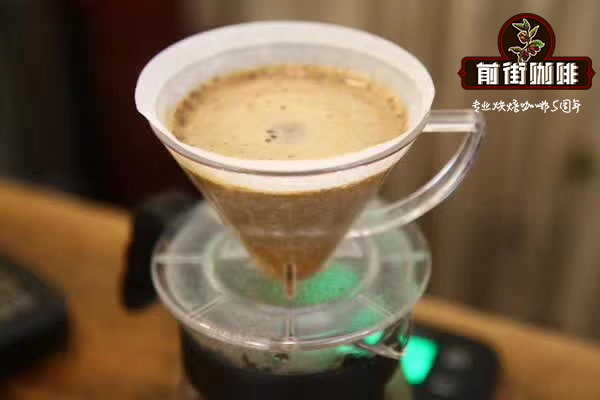
To brew it, FrontStreet Coffee suggests a Kono dripper, which helps draw out a fuller body. Use 15 g of coffee per person and let the beans rest 4-7 days after the roast date for the best flavor. Grind slightly coarser than you would for a light roast - about the texture of white granulated sugar - and brew at 87-88°C, since water that is too hot is a common cause of scorched, bitter flavors. A 1:15 ratio works well; pour 30 g for a 30-second bloom, then a slow, small circular pour to 120 g and pause, and finally pour to 225 g with a slightly faster flow and circling to avoid clogging the filter and over-extracting.
Important Notice :
FrontStreet Coffee is a long-established specialty coffee roaster in Guangzhou China, selling freshly roasted beans from its own farm in Yunnan as well as dozens of carefully selected single-origin beans from around the world for both pour-over and espresso. The products deliver consistently excellent quality and great value, with shipping within 24 hours. Guangzhou's FrontStreet Coffee shop is recommended by many coffee lovers, and the beans are now available online at the Tmall 。
FrontStreet Coffee has moved to a new address:
FrontStreet Coffee Address: 315,Donghua East Road,GuangZhou
Tel:020 38364473
 Scan and follow the En Gafei WeChat official account. Please indicate that the reprint comes from "En Gafei".