Is Guatemala Geisha Coffee Delicious? Proper Brewing Methods and Flavor Characteristics of Guatemala Geisha Coffee Beans
When it comes to Geisha, most people immediately name Panama's Hacienda La Esmeralda as the definitive source. But Geisha is, in the end, coffee — and brewed well, it often drinks more like a rich fruit tea. Geisha now grows all over the world, from Costa Rica and Colombia to Guatemala and Ethiopia itself, and its flavor shifts noticeably with each origin.
Coffee is an agricultural product, inseparable from the environment and climate of the farm. Guatemala is high-altitude volcanic terrain — some of the most ideal coffee country there is — which is why Guatemalan coffee often carries a subtle smoky note. The Geisha here traces back to the wild Ethiopian variety, a genuinely rare premium coffee. This lot comes from the Nueva Granada farm in San Marcos, where the trees grow at about 5,000 feet, between the volcanoes Tacaná and Tajumulco, rooted in rich volcanic soil. Guatemalan Geisha shows low acidity with chocolate and nutty flavors. The annual harvest is limited, the farm is Rainforest Alliance certified, and the roast is medium. The cup: crisp, elegant, and sweet — notes of baker's chocolate, lemon blossom, muscat, dried peach, and almond.
Coffee Growing Environment

Guatemalan coffee ranks among the world's best. Thanks to the high volcanic terrain, connoisseurs prize this coffee's layered profile with its distinctive spicy accents. The extra-hard beans (SHB) from this region are a rare treat — full, flavorful, and evenly balanced — and the country's famously large beans have earned Guatemala extra attention in their own right.
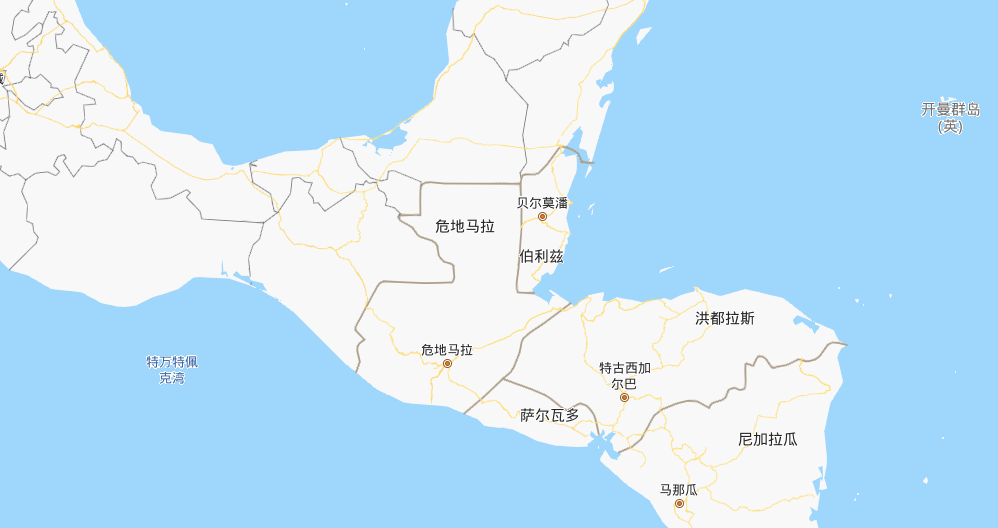
Guatemala sits at the hinge between North and South America, with a land area of about 108,899 square kilometers. Its terrain spans highland volcanoes, lowland tropical forest, the volcanic-sand Pacific coastal plain, and the wild Caribbean shore. The Sierra Madre range crosses the country east to west, covering about two-thirds of it and dotted with 34 volcanoes. Rivers and lakes thread the landscape, forests blanket the land, and undeveloped volcanic beaches line both coasts. With its high average elevation, the coffee belt lies above 1,500 meters — ideal for growing extra-hard beans.
Coffee reached Guatemala in 1750, introduced by Jesuit priests, and by the late nineteenth century German settlers had built the industry into what it is today. Most production now takes place in the southern part of the country.
Guatemalan Coffee Growing Regions
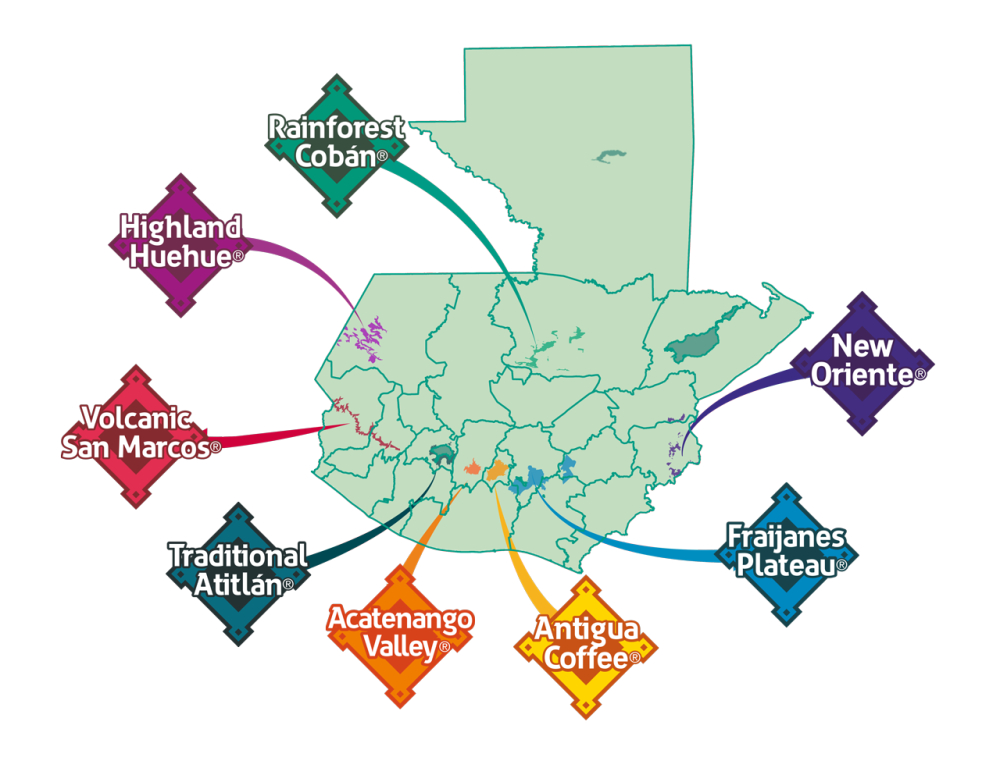
Guatemala has eight major growing regions — five volcanic and three non-volcanic. The volcanic five are Antigua, Acatenango, Atitlán, Volcanic San Marcos, and Fraijanes; the non-volcanic three are Huehuetenango, Cobán, and New Oriente. The country claims more than 300 microclimates, more than anywhere else on earth. Each region's coffee tastes different, but Guatemalan coffee as a whole shows a mild, mellow texture, elegant aroma, and a special, pleasant fruit-like acidity — the aristocrat of coffees, with Antigua Classic the most celebrated of all.
Antigua
Antigua is one of the oldest and most beautiful cities in the Americas. As early as 1543 it served as the colonial capital of Central America, seat of the Spanish Governor's Palace. The earthquake of 1773 destroyed much of the city and the capital moved to Guatemala City. Antigua lies about 40 kilometers west of the modern capital; its colonial buildings, damaged by earthquakes, were preserved as they stood — a living museum of history.
Today Antigua is a renowned coffee region. Rich volcanic soil, low humidity, strong sunlight, and cool evening breezes define it, while the valley is ringed by three spectacular volcanoes — Agua, Acatenango, and Fuego. The active Fuego occasionally veils the area in volcanic dust, and roughly every 30 years an eruption enriches the already fertile soil with nitrogen. Generous rain and sunshine complete a landscape made for coffee.
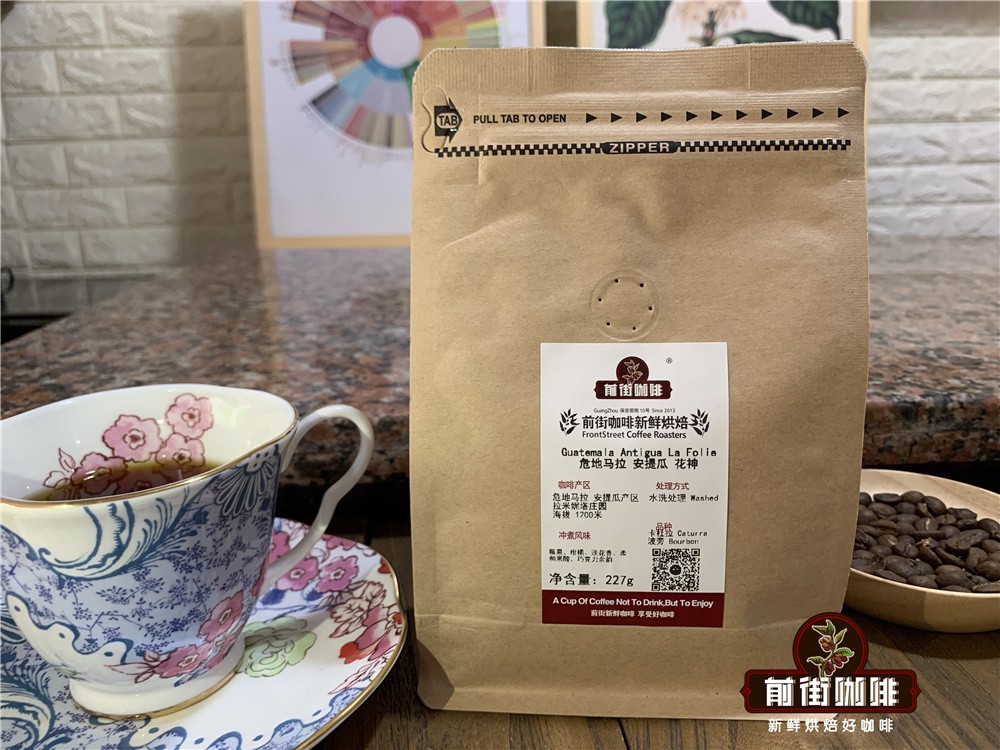
Antigua's coffee is grown at the Camona estate, where the finest lot is El Pulcal. Beyond its sheer quality, it stands out among Latin American coffees for its completeness: rich layers and stunning polish. Paired with chocolate, it yields unexpected discoveries. Above all, its flavor is deep and complex, with a captivating note of tobacco — praised as "the most perfect coffee bean." FrontStreet Coffee's Guatemalan Flora belongs to this tradition.
Huehuetenango
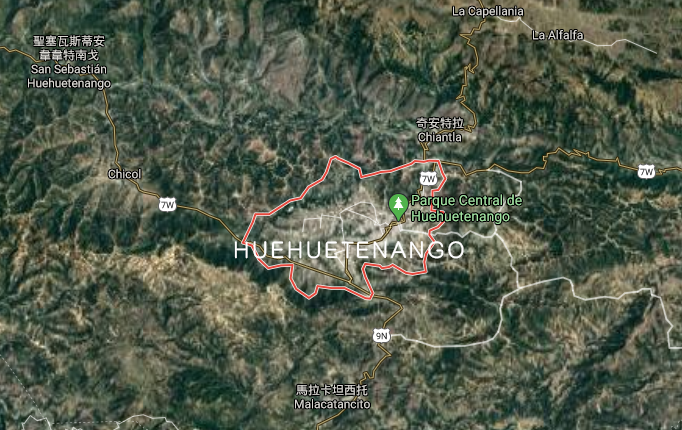
Huehuetenango lies in the northwestern highlands, at growing altitudes of 1,800–2,100 meters — the highest coffee region in the country, famous for outstanding bean quality. Dry, hot winds from Mexico's Tehuantepec plateau shield the crop from frost, and farmers plant at close to 2,000 meters, a true gift of nature. Though the climate is dry, streams crisscross the region, supplying clean water for irrigation and for the washing stations, so coffee can be processed right on the mountains during harvest. Thanks to this abundance of water, most coffee here is washed. Harvest runs from January to April.
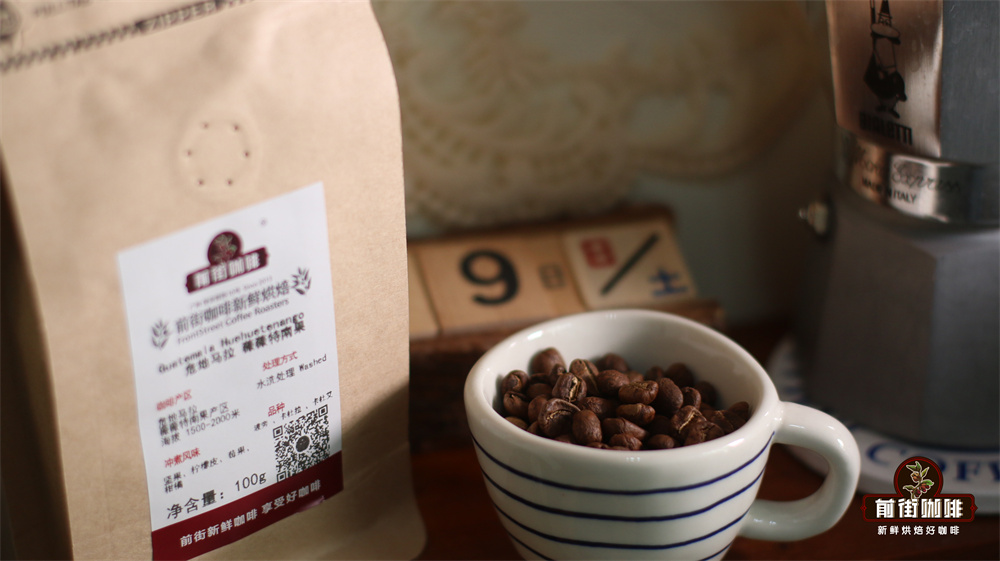
FrontStreet Coffee has chosen washed Huehuetenango as its representative Guatemalan coffee: distinct citrus notes, the acidity of lemon peel with the richness of berries, and nutty flavors in the finish.
Coffee Varieties
Guatemala mainly grows Bourbon, Typica, Caturra, and Catuai — the first two the oldest Arabica varieties and fixtures of the specialty scene.
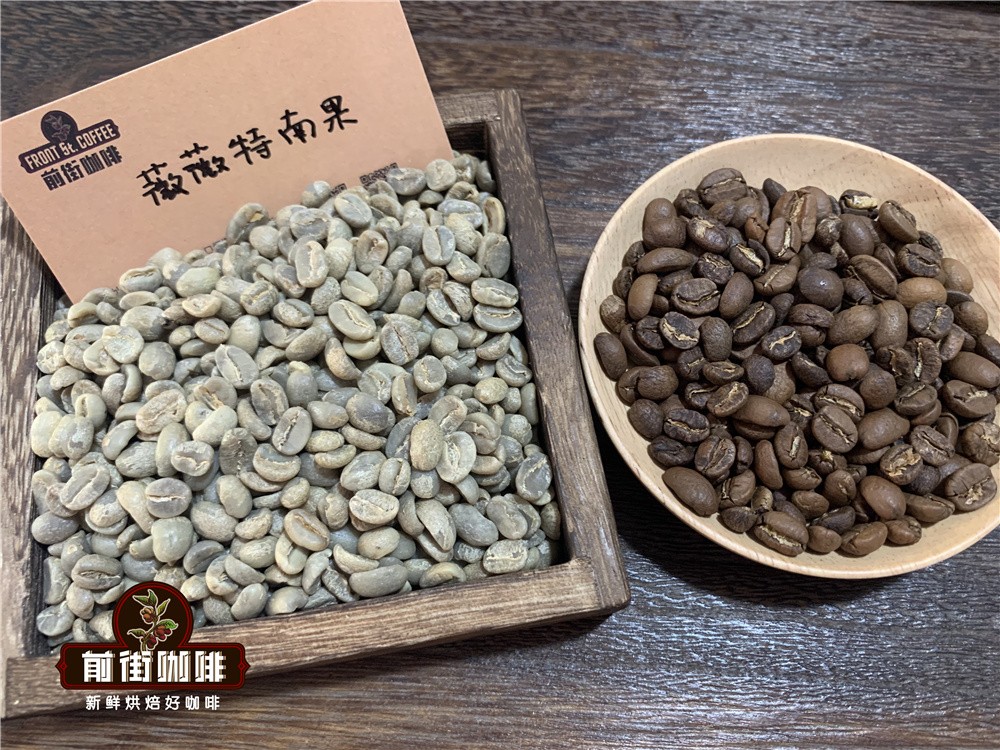
Bourbon: A natural mutation of Typica. Ripe cherries turn wine-red, and the beans are rounder. High-altitude Bourbon typically shows better aroma, bright acidity, and winey flavors — like FrontStreet Coffee's everyday Brazil and single-origin Brazil Queen lots.
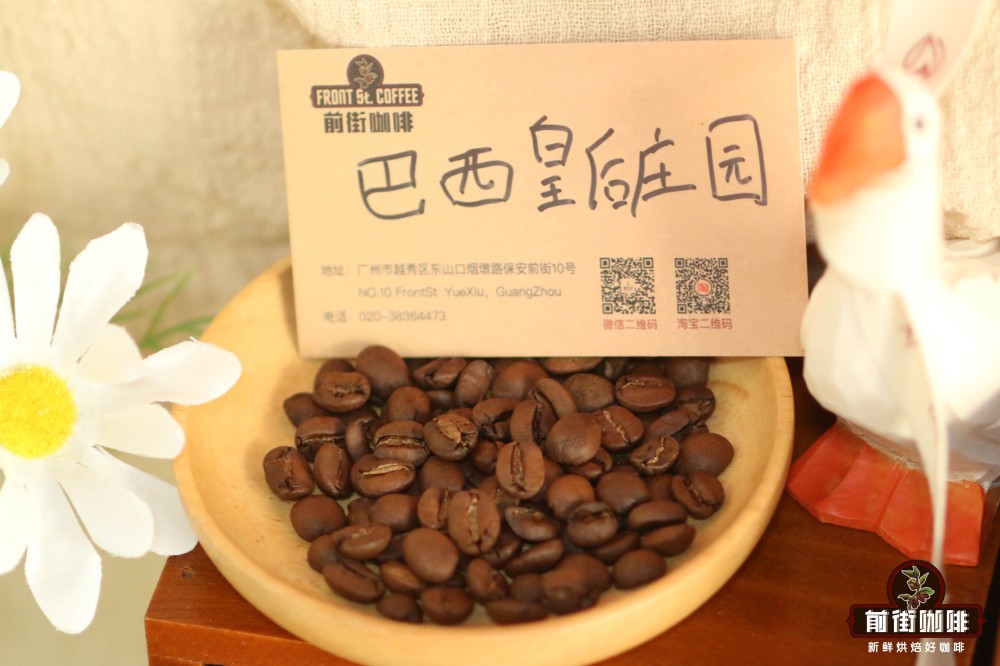
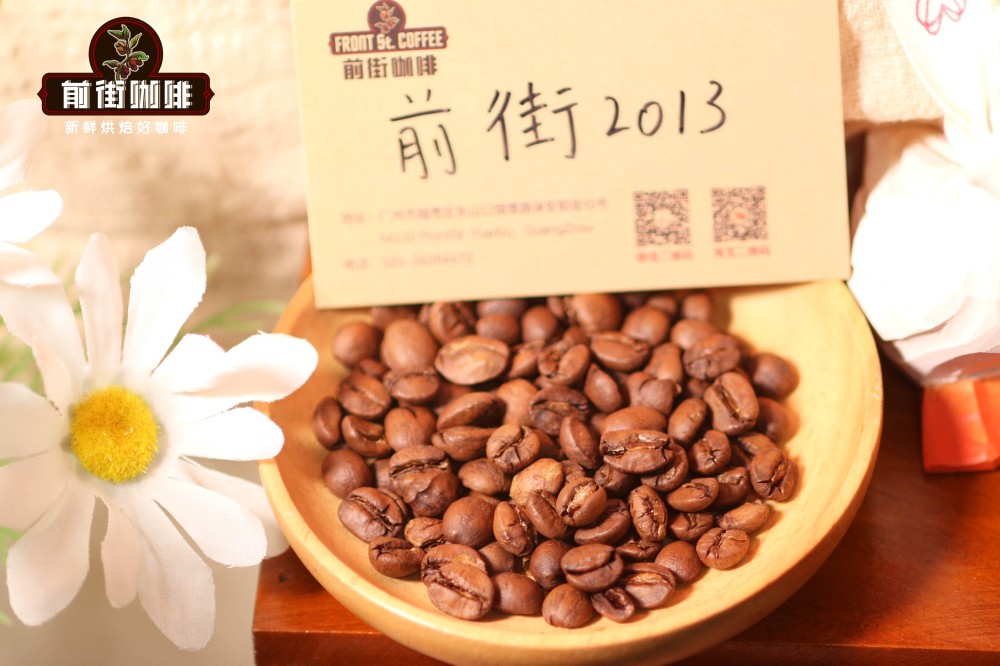
Typica: Excellent flavor and universally recognized as a specialty variety, but very low-yielding and prone to rust, demanding intensive management. Typica originated in southeastern Ethiopia and Sudan and became the most widely planted variety in the Western Hemisphere. The plants are vigorous but intolerant of strong light, and the copper-colored top leaves give it the name "copper-top coffee." Examples include Blue Mountain, Panama Elida, and FrontStreet Coffee's own estate-grown 2013 natural Typica.
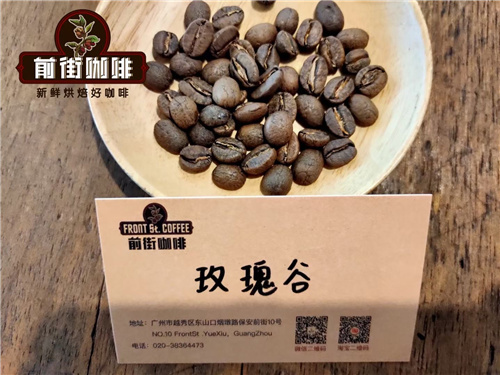
Caturra: A natural Bourbon mutation discovered in Brazil in 1937. The plant is more compact than Bourbon; it inherits Bourbon's relatively weak disease resistance but yields more. Ironically, Caturra never suited Brazil's growing conditions and was never planted at scale there, but it spread widely through Central and South America, with Colombia, Costa Rica, and Nicaragua all growing it extensively. FrontStreet Coffee's Colombian Moonlight Night and Rose Valley are both Caturra.
Catuai: An artificial cross of Caturra and Mundo Novo. Catuai keeps Caturra's compact structure, needs no shade, and is easy to grow and harvest, while withstanding natural disasters better than Mundo Novo. Its acidity is good, and the variety comes in both red and yellow fruit types.
Guatemalan Coffee Bean Processing Methods
Guatemalan coffee beans are mainly washed.

After harvest, selected cherries go into the depulper to strip away skin and pulp. The beans, still coated in mucilage, then ferment in water for about 24 hours before being washed clean in flowing channels. They are sun- or machine-dried to a moisture content of about 12%, moved to warehouses, and finally hulled for sale. The result is a very clean cup — and since washed coffee expresses an origin's fundamental character most faithfully, FrontStreet Coffee considers it the ideal starting point for beginners learning what Guatemala tastes like.
FrontStreet Coffee Roasting Recommendations
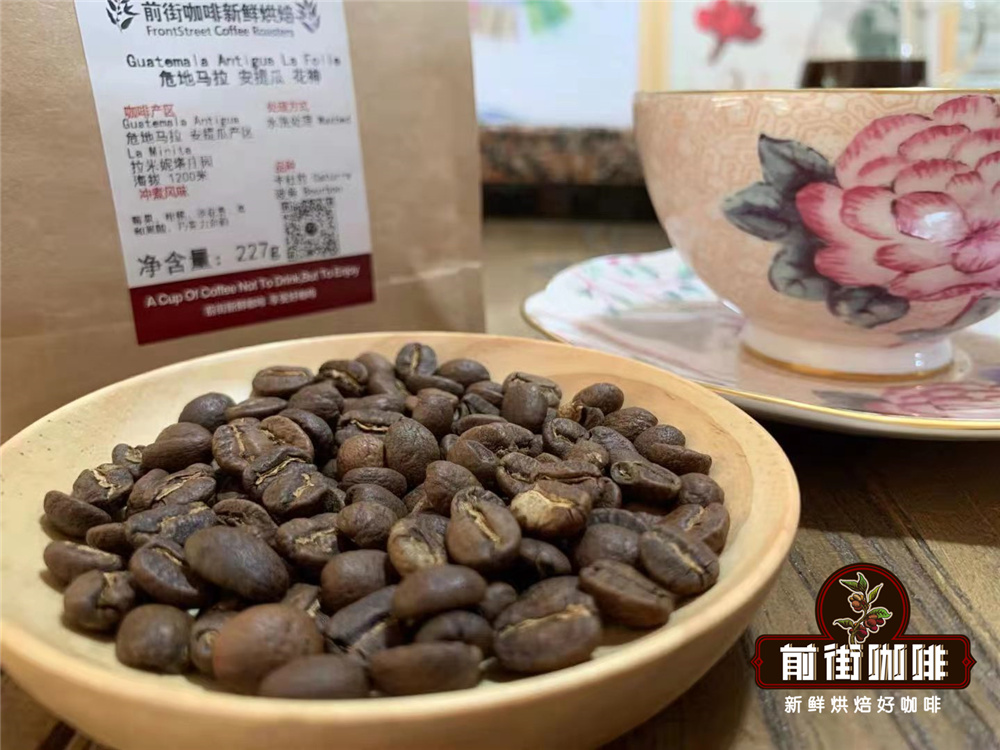
FrontStreet Coffee carries two Guatemalan coffees: the everyday Huehuetenango (Bourbon, Caturra, and Catuai) and the single-origin Guatemalan Flora (Caturra and Bourbon). Both carry the nutty and cocoa notes typical of Latin America, with light florals and soft fruit acidity. A medium-light roast preserves those floral and fruity aromas while keeping the acidity clean and bright.

FrontStreet Coffee Brewing Parameters for Guatemala Coffee:
These beans are medium-light roasted, and lighter beans are less soluble than darker ones. FrontStreet Coffee therefore recommends a V60 dripper with its faster flow, paired with higher water temperature and a finer grind.
Use a medium-fine grind — fine-sugar consistency, about 80% pass-through on the China No. 20 standard sieve — with 15g of coffee in the V60, 91°C water, a 1:15 ratio, and a three-pour technique.

Bloom with twice the coffee's weight in water — 30g for 30 seconds — to let the grounds release their carbon dioxide and stabilize the extraction that follows. Then pour in small circles to 125g, continue to 225g, and stop. Once the dripper has drained, remove it. Total extraction time from the first pour is 2 minutes. Swirl the server to homogenize the brew, then pour and taste.

Guatemalan Huehuetenango flavor: citrus and berry acidity, lemon peel, nuttiness through the middle, and a tea-like finish.
Guatemalan Flora flavor: berry acidity, citrus, light chocolate, rich layering, and a smooth texture.
FrontStreet Coffee Brewing Recommendations:
Freshness above all: FrontStreet Coffee ships beans roasted within the past 5 days, so every order arrives near its flavor peak. The ideal resting period is about 4–7 days from the roast date, which is exactly when the coffee reaches full expression.
For those who need pre-ground coffee, one note: grounds shipped right after roasting need no resting, since the carbon dioxide pressure in the sealed bag mellows them in transit — you can brew immediately on arrival. But ground coffee oxidizes quickly once opened, and its flavor fades fast. FrontStreet Coffee therefore recommends buying whole beans and grinding fresh before each brew for the best possible cup.
FrontStreet Coffee Recommendation
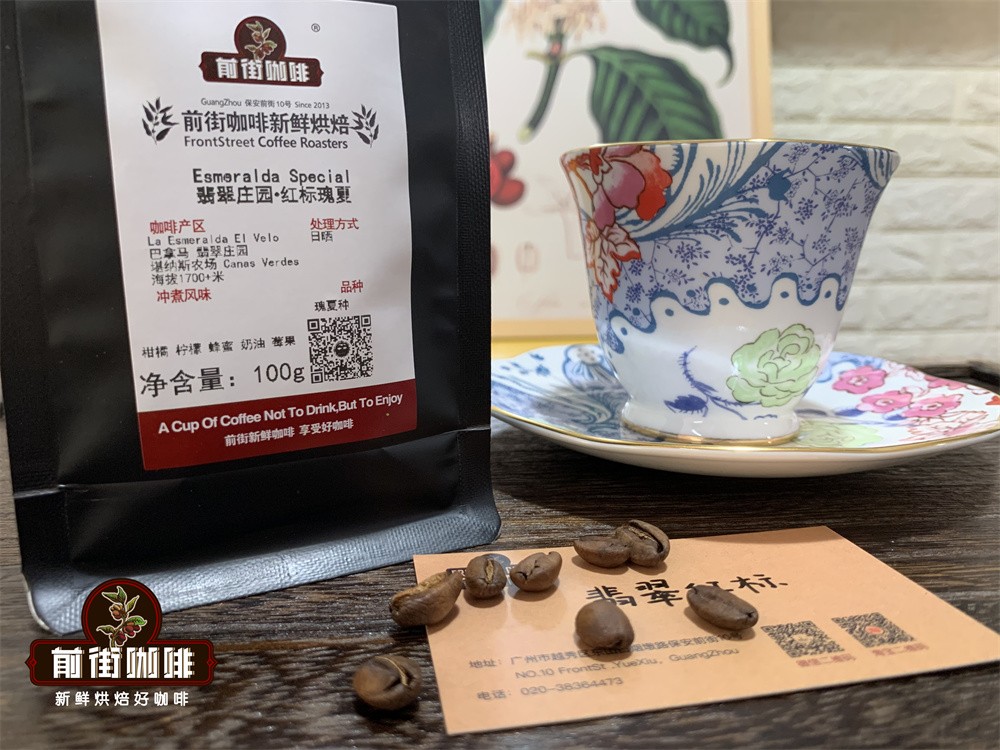
Guatemala is one of many homes Geisha has found beyond Panama — and if this article whets your appetite for the variety itself, FrontStreet Coffee's Panama Geisha lineup is the place to start. The Red Label ("Esmeralda Special," from single high-altitude plots like Jaramillo at 1,600–1,800 meters, every batch cupping above 90 points) and the more affordable Green Label ("Private Collection") showcase Panama's signature orange-blossom honey character with juicy fruit acidity and a tea-like finish, while the entry-level Boquete Geisha offers that classic profile at a friendlier price.
For Geisha from its birthplace, FrontStreet's medium-light roasted Granja La Genlana lot from Yirgacheffe brings bright citrus, elegant ginger-flower aroma, and ripe fruit sweetness. Because Geisha is a hard, dense bean that can clog the dripper, brew it with a medium-coarse grind (about 78% pass-through on the #20 sieve), 91°C water, and 15g at 1:16 in a small V60, using a three-pour structure of 30g bloom, 125g, then 225g for a clean, layered cup.
Important Notice :
FrontStreet Coffee is a long-established specialty coffee roaster in Guangzhou China, selling freshly roasted beans from its own farm in Yunnan as well as dozens of carefully selected single-origin beans from around the world for both pour-over and espresso. The products deliver consistently excellent quality and great value, with shipping within 24 hours. Guangzhou's FrontStreet Coffee shop is recommended by many coffee lovers, and the beans are now available online at the Tmall 。
FrontStreet Coffee has moved to a new address:
FrontStreet Coffee Address: 315,Donghua East Road,GuangZhou
Tel:020 38364473
 Scan and follow the En Gafei WeChat official account. Please indicate that the reprint comes from "En Gafei".