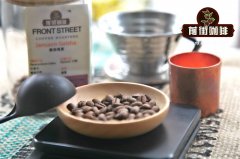
Introduction to Indonesian Sumatra Coffee - Flavor Profile and Taste Notes of Aged Sumatra Coffee Beans

Professional Coffee Knowledge Exchange
For more coffee bean information, read on — Indonesia's story is one of coffee history's great plot twists.
FrontStreet Coffee's Brief History of Indonesian Sumatra Coffee
For most coffee enthusiasts, the word Indonesia triggers one immediate association: the wild, bold character of Mandheling coffee — fragrant, mellow, unmistakable. In today's specialty coffee wave, a coffee that prioritizes body and taste over delicate aromatics certainly stands out. But beyond Mandheling's fame, Indonesia holds an undeniable place in coffee's milestones: it not only produces high-quality coffee, it is the origin of modern commercial coffee and the birthplace of both the washed processing method and the wet-hulled (Giling Basah) method.
In 1696, the Dutch governor of Malabar in India sent a batch of coffee seedlings to the Dutch governor of Batavia (now Jakarta) — Indonesia's first coffee cultivation. Sadly, that first batch was destroyed by floods. In 1699 Batavia received a second shipment, and this time the seedlings survived, welcoming their first harvest in 1701. Indonesian coffee was later introduced to the Netherlands and France. In 1718 a French officer stole coffee seeds and planted them on the French territory of Martinique; coffee then spread quickly to Brazil and onward through Central and South America.
In 1740, the Dutch invented the washed processing method while growing coffee on Java. Indonesian farmers found that coffee processed this way tasted remarkably clear and bright, with far fewer uncontrollable off-flavors, and they promoted the washed method accordingly. (For more, see "Coffee Processing Class: Washed Method.") Washed coffee from Indonesia is quite rare today, however.
Besides giving birth to the washed method, Indonesia adapted to its local conditions and created the unique wet-hulled method (Giling Basah) to cope with its peculiar, constantly rainy weather. (For details, see "Coffee Processing Class: Wet Hulling Method Giling Basah.") The method saves both time and water — and creates the herbal intensity and flavor found nowhere else but Indonesia.
Aged Mandheling
In Indonesia, there is a magical coffee called Aged Mandheling.
"Aged" doesn't mean simply sitting in a warehouse for two years. Aged beans must be carefully selected, high-quality green coffee, stored for more than 2-3 years in well-ventilated warehouses or special temperature- and humidity-controlled facilities, with the bags regularly turned and inspected to keep the beans drying evenly.
Aged Mandheling shows a more golden color and lower acidity.
As time passes, the coffee's acidity gradually converts into sugar, leaving a solid aftertaste and sweet finish. The flavor becomes as captivating as Pu'er tea.
FrontStreet Coffee Recommendation
Sumatra today produces over 60% of Indonesia's arabica and robusta, with the high-altitude provinces of Aceh and North Sumatra specializing in arabica — the beans the world calls Mandheling. The Aceh region centers on the Gayo mountains near Lake Tawar, where thousands of hectares of vegetation surround the farms; this newer Mandheling region is known for delicate aroma and a bright cup. The traditional Mandheling heartland is the Lintong region around Lake Toba in North Sumatra, where diverse plant varieties, suitable altitude, the special wet-hulled process, and local microbial fermentation create the mysterious, classic Mandheling profile: intense aroma, heavy body, and forceful flavor. The wet-hull method exists because Indonesia's rainy season overlaps with the coffee harvest — humidity runs 70-90% year-round and annual rainfall tops 2,000mm, making the 2-3 week sun-drying used in Africa impossible. So producers hull off the skin and pulp, wash briefly, and dry; when the beans are half-dry, machines strip away the parchment, exposing the green beans directly to the air to speed up drying — and to absorb wild yeasts that give Mandheling its one-of-a-kind character.
The gold standard among Mandhelings is FrontStreet's PWN Golden Mandheling from Indonesia's PWN company. PWN works to exacting standards: selecting only beans above screen size 18, with fewer than 3 defect beans per 300g green sample to meet the top G1 grade, followed by machine sorting and three rounds of hand-sorting to remove every defect — raising both cleanliness and sweetness. Golden Mandheling is famous but mostly supplied to the Japanese and American markets, so genuine lots are scarce; FrontStreet displays PWN's certificates and PWN-stamped bags as proof of authenticity. After medium-dark roasting it offers rich roast aromas and a clean, full-bodied black coffee — perfect for anyone who dislikes acidic coffee. For pour-over, FrontStreet suggests water at 87-88°C, 15g of coffee at a 1:15 ratio, a coarse granulated-sugar grind, and a three-stage pour: 30ml to bloom and degas, 100ml to lift the bed and wash out the golden foam, then a final gentle center pour of 95ml to boost sweetness — yielding a thick, full body with caramel sweetness, chocolate, and nuts. If you'd rather brew Mandheling in an espresso machine, the most re-ordered choice is FrontStreet's Classic Blend, which layers medium-dark Mandheling over Brazilian cream-and-nut notes for standout butter, roasted chestnut, and caramel flavors, with a touch of Robusta for richer crema — effortless for latte art or a layered Dirty.
Important Notice :
FrontStreet Coffee is a long-established specialty coffee roaster in Guangzhou China, selling freshly roasted beans from its own farm in Yunnan as well as dozens of carefully selected single-origin beans from around the world for both pour-over and espresso. The products deliver consistently excellent quality and great value, with shipping within 24 hours. Guangzhou's FrontStreet Coffee shop is recommended by many coffee lovers, and the beans are now available online at the Tmall 。
FrontStreet Coffee has moved to a new address:
FrontStreet Coffee Address: 315,Donghua East Road,GuangZhou
Tel:020 38364473
 Scan and follow the En Gafei WeChat official account. Please indicate that the reprint comes from "En Gafei".