El Salvador Coffee - Montes El Corozo Estate Honey Process Special Feature
Finca Montes El Corozo
Finca: Montes El Corozo
Altitude: 1800-1950M
Variety: Kenya SL28
Processing Method: Honey Process
Grade: SHB
El Salvador, the "Land of Volcanoes," is the smallest and most densely populated country in Central America. It is also the only Central American nation without a coastline on the Atlantic, bordered by Guatemala to the northwest and Honduras to the northeast.
Salvadoran coffee has a flavor profile all its own, marked by a pleasing aroma, moderate acidity and sweetness, rich fragrance, and charming tonal depth.
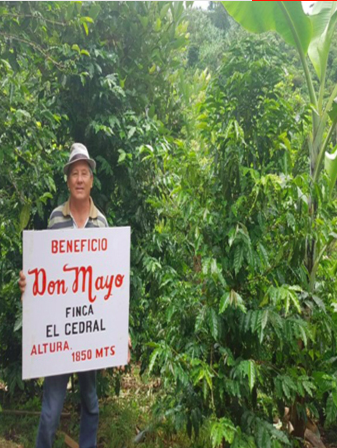
El Salvador is divided mainly into five producing regions: Apaneca, Central Belt, Chichontepec, and the Tecapa & Cacahuatique mountain range. These areas mostly sit on volcanic-ash-covered slopes or plateaus above 1,200 meters, and most use shade-grown cultivation. The advantages are clear: cherries ripen uniformly, the mucilage content rises, bean weight increases, and there is more opportunity for the polyphenols that contribute to sweetness to form, letting the bean's main components develop fully. By contrast, trees left under excessive sun develop curled leaf edges and lose moisture, which hampers photosynthesis, reduces carbon dioxide uptake, and lowers sugar formation.
Montes El Corazo Estate
Montes El Corazo Estate began growing coffee in 1930, around the famous "LOS VOLCANES" Volcano Group National Park. Rare volcanic flowers grow near the farm, alongside wildlife from the park such as domesticated reindeer, raccoons, and wild boars, forming a lively ecosystem.
Because the estate sits on a volcano, it enjoys exceptionally fertile volcanic soil and terrain. In 2006 the Ilamapepec volcano erupted and ash fell directly over the estate. The plantation was damaged at the time, but a few years later the fertile ash layer created an even richer growing environment.
Since 2016, Montes El Corazo has been a fully organic farm and also holds Rainforest Alliance certification. Production follows traditional methods: washed with clean water and dried in clay courtyards.
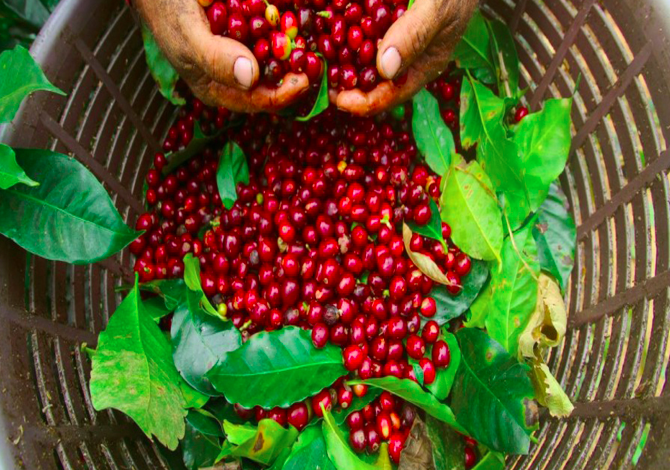
Montes El Corazo cultivates coffee using El Salvador's century-old heritage methods. Local Ingas trees, pomelo trees, and olive trees serve as shade, with more than 75 tree species interplanted to create a natural forest threaded through the coffee. The nourishment of this volcanic soil sustains a remarkably beautiful plantation. The bean is mainly Kenya SL28, one of two highly respected varieties bred by Kenya's Scott Laboratories in the 1930s. Although Scott Laboratories no longer exists—it is now the National Agricultural Laboratory under Kenya's Agricultural and Livestock Research Organization—its legacy lives on. Both varieties descend from Bourbon, though from different lineages: SL-28 was developed from drought-resistant plants originally grown in Tanganyika, part of modern Tanzania. It is generally considered the highest-quality option, though its yields are lower than other commercial Arabica varieties. The SL varieties all show bronze-colored young leaves. SL28's yield falls short of expectations, but its bronze leaf color and kidney-shaped beans deliver wonderful sweetness, balance, and complex, varied flavors with notable citrus and plum notes. In the cup it brings strong, rich fruit acidity, a full mouthfeel, and beautiful balance.
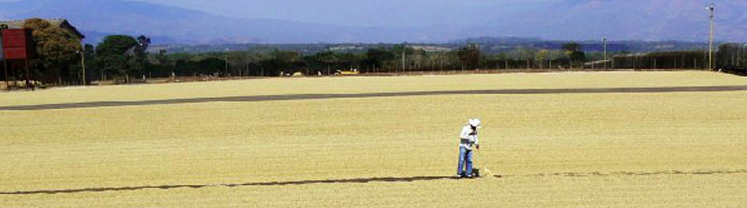
Honey Processing Method
This bean uses the honey process, widely practiced across Central America. Because the mucilage layer on the bean surface is extremely sticky and high in sugar, people usually call it "honey." In honey processing, the coffee keeps some or all of that "honey" during drying. After the cherries are picked, graded, and pulped, they are laid on drying beds.
Coffee processed this way has slightly higher acidity than washed coffee, but much lower acidity than either the washed or the natural sun-dried methods.
Roasting Analysis
Roaster: Yangjia 800N (300g batch size)
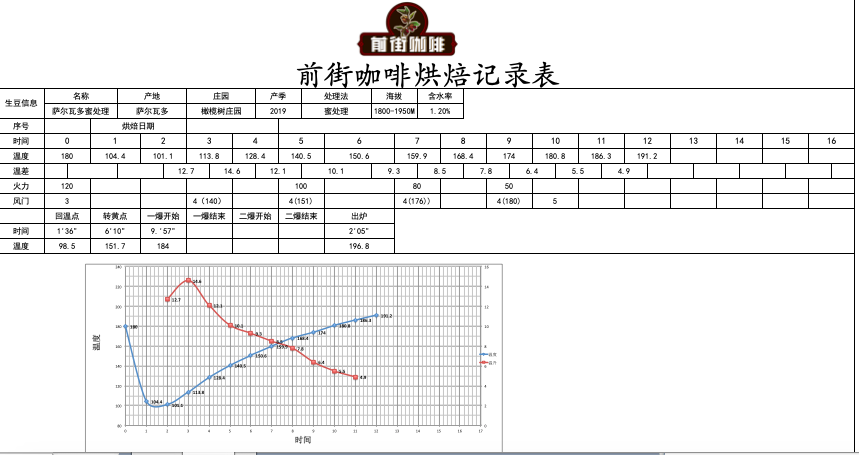
Preheat the roaster to 180°C, set heat to 120, and open the airflow valve to 3. The temperature returns to 140°C at 1'36", at which point the airflow valve is opened to 4 while the heat stays unchanged. When the temperature reaches 151°C, the bean surface turns yellow and the grassy smell disappears completely, marking the dehydration stage. At 176°C, drop the heat to 80 while leaving the airflow unchanged.

At 8'34", ugly wrinkles and black markings appear on the bean surface, and the toast aroma clearly shifts toward coffee aroma. This marks the prelude to first crack, so listen carefully for the sound. First crack begins at 9'57"; keep the airflow unchanged, develop for 2'05" after first crack, and drop at 196.8°C.
Cupping Notes
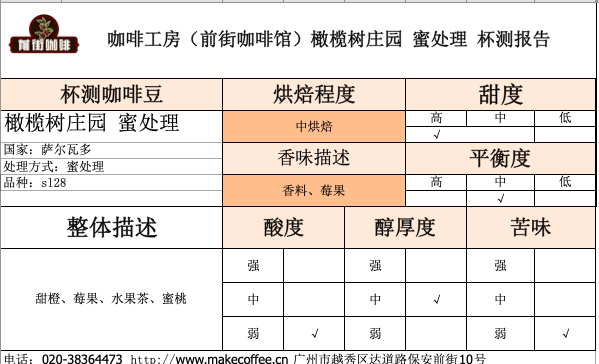
Flavor: Sweet orange, berries, fruit tea, honey peach
Pour-over Brewing Suggestions
FrontStreet Coffee recommends brewing method: Pour-over
Dripper: V60
Water Temperature: 88-90°C
Coffee-to-Water Ratio: 1:15
Grind Size: BG 6S (58% pass-through rate on a Chinese standard #20 sieve), which is a medium-fine grind
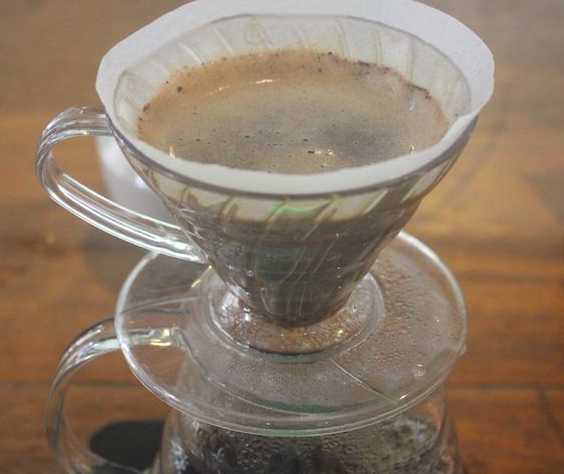
Brewing Technique: Stepped extraction. Use 33g of water for a 30-second bloom. Pour with a small circular motion up to 125g, creating a step. Continue pouring to 228g once the water level drops and is about to expose the coffee bed. Stop, wait for the level to fall and just expose the bed, then remove the dripper. (Timing starts at the bloom.) Extraction time is 1'56".
Flavor: Sweetness leads throughout. The berries, peach, and sweet orange at the entry taste like fruit tea as the temperature changes, with a honey peach aroma in the aftertaste.
FrontStreet Coffee Recommendation
Honey processing grew out of the semi-washed, or pulped natural, method: coffee is depulped and then dried, which shortens drying time while avoiding the off-flavors of poorly controlled fermentation. FrontStreet's Cerrado is a classic Brazilian pulped natural, carrying clear notes of cream, peanut, nuts, and chocolate. Brazil's success caught Costa Rica's attention, and growers adapted the approach—adjusting how much mucilage is retained and how long drying lasts—into today's honey process, which in turn split into distinct black, red, yellow, and white honey styles.
FrontStreet's Costa Rica Blackberry uses a distinctive black honey process that removes almost no mucilage, dries longer (at least two weeks), and relies on shade covers to keep the sun from drying the cherries too fast, so sugars convert fully; the beds are turned at intervals to prevent uneven heat and over-fermentation, all of which makes black honey far more labor-intensive. Roasted medium-light, Blackberry releases intense floral aromatics when ground and pours with grape, berry, and ripe blackberry flavors. If you like something sweeter, FrontStreet's Strawberry Candy is a blend of Panama Geisha and Costa Rican coffee: the Geisha supplies the classic orange-blossom honey character, while the Costa Rican component uses raisin honey processing with 100% mucilage retained and no water used. On harvest day the cherries go into a large tank, where fully ripe fruit sinks and underdeveloped or overripe beans float and are skimmed off; the sorted cherries dry on raised beds for at least three days, then are depulped, kept with their mucilage, and dried further with constant turning for evenness. The result has Geisha's floral-tea lift along with grape and dried blueberry, soft fruit acidity, an almond finish, and pronounced sweetness. For a bolder variation, FrontStreet's Costa Rica Mozart uses the raisin honey method—cherries dry whole on raised beds for at least three days before being depulped, keeping 100% of the mucilage and demanding stricter timing than even black honey. It brings fragrant osmanthus, pineapple, and raisin notes to pour-over, cold brew, or moka pot alike.
Important Notice :
FrontStreet Coffee is a long-established specialty coffee roaster in Guangzhou China, selling freshly roasted beans from its own farm in Yunnan as well as dozens of carefully selected single-origin beans from around the world for both pour-over and espresso. The products deliver consistently excellent quality and great value, with shipping within 24 hours. Guangzhou's FrontStreet Coffee shop is recommended by many coffee lovers, and the beans are now available online at the Tmall 。
FrontStreet Coffee has moved to a new address:
FrontStreet Coffee Address: 315,Donghua East Road,GuangZhou
Tel:020 38364473
 Scan and follow the En Gafei WeChat official account. Please indicate that the reprint comes from "En Gafei".