What are the characteristics of Sumatran coffee? A brief story of Sumatran coffee. Is Mandheling Americano black coffee?

Mandheling is one of Indonesia's flagship coffees - so famous, in fact, that the name has become shorthand for Indonesian coffee as a whole. At FrontStreet Coffee, Mandheling serves as the representative Indonesian coffee in our daily bean lineup, the natural starting point for anyone exploring what Indonesia has to offer. Beyond the standard Mandheling, we also carry Indonesia's premium Golden Mandheling.

Indonesian beans tend to be large and dense, with a rich, mellow flavor. Curiously, "Mandheling" is not a place name, a region, or a botanical variety - it's a phonetic twist on the Mandailing people who originally lived in Sumatra, and the name's origin is a charming misunderstanding. During the Japanese occupation of Indonesia in World War II, a Japanese soldier tasted a wonderfully aromatic coffee at a small café. When he asked the owner what the coffee was called, the language barrier led the owner to think he was being asked where the coffee came from, and he replied: "Mandailing." After the war, the soldier remembered the "Mandheling" he had drunk in Indonesia and arranged for an Indonesian coffee exporter to ship 15 tons to Japan - where it became an instant hit. The name has stuck ever since.
History of Sumatra Mandheling Coffee Cultivation
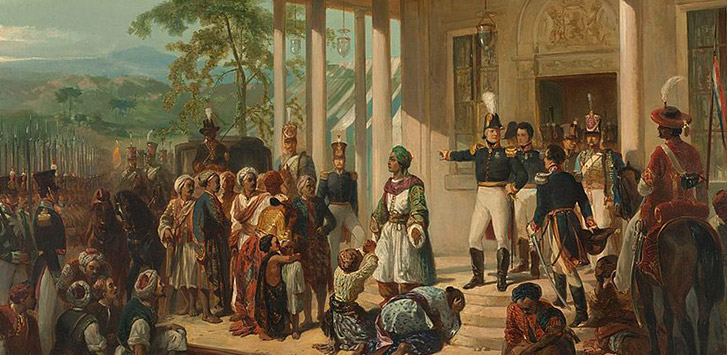
Sumatra, one of Indonesia's largest islands, is home to roughly 55 million people and is also one of the country's most important coffee-producing regions. Coffee from Sumatra accounts for about 74.2% of Indonesia's total output, while the country's second-largest producing region contributes only around 12%. Indonesia was never the original home of coffee, however - the Dutch colonial government introduced it to the archipelago in the early colonial period, after wresting control from the Portuguese. Two centuries later, during the depths of World War II, food-security concerns led farmers to replace large swaths of coffee with staple crops such as rice, corn, and cassava; by 1950, local coffee production had fallen to just one-eighth of its pre-war level. Since then, coffee has rebuilt itself into a pillar of the local economy.
Indonesian Sumatra Coffee Regions
Sumatra is the world's sixth-largest island, lying in northwestern Indonesia and stretching from northwest to southeast, with the equator crossing its middle. The terrain rises in the northwest, where the Barisan Mountains run the length of the island and Arabica varieties dominate - this is the heartland of Mandheling production. The southeast is lower, mostly flat or marshy, and is planted mainly with Robusta. More than 90 volcanoes and numerous volcanic lakes dot the island, endowing the soil with exceptional fertility. Thanks to its geography, Sumatra also enjoys the country's earliest harvest season, running from November to March.

Mandheling coffee comes from Sumatra in Indonesia - hence the alternative name "Sumatra coffee." Indonesian coffee is grown on several islands, including Java, Sulawesi, and Sumatra, and about 90% of the national crop is Robusta. The finest traditional Arabica coffees from northern Sumatra are marketed under the names Lintong and Mandheling. More precisely, Lintong refers to coffee grown in a small area of the Lintong administrative district southwest of Lake Toba, where smallholdings are scattered across a high, undulating, fern-covered clay plateau. Lintong coffee is grown without shade, without chemicals, and almost entirely by small private landholders. "Mandheling" is the broader umbrella that covers Lintong coffee and similar coffees from Diari (whose capital is Sidikalang) and the northern Lake Toba growing areas.
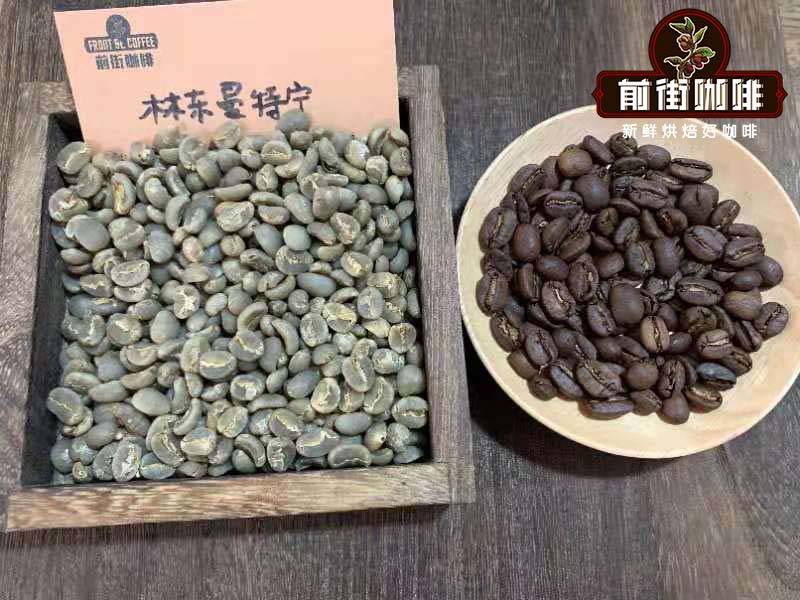
Lintong Mandheling comes from the Lintong highlands of north-central Sumatra, near Lake Toba, and it is the standard expression of Sumatra Mandheling. FrontStreet Coffee's daily-bean Mandheling is a Lintong Mandheling.
Lake Toba lies in central North Sumatra Province. In 1888, Dutch colonists moved "Java Mandheling" north to the Lake Toba region, laying the foundation for the modern Mandheling story.
Lake Tawar, in central Aceh Special Autonomous Region, sits at the northern tip of Sumatra and covers less than one-tenth of Lake Toba's area.

Today, the finest beans in the entire Sumatra region come from the Gayo mountain area, much of it grown on old-tree varieties. The Gayo Mountains sit in the Aceh region of northern Sumatra, at elevations between 1500-2500 meters, and most of the farmers belong to the indigenous Gayo people. The area offers ideal growing conditions - high altitude, fertile soil, abundant rainfall, and the rich water resources of Lake Tawar - and coffee is widely cultivated with organic methods and no chemical fertilizers, earning it a reputation as a "green coffee" origin. Gayo coffee is therefore often marketed as green coffee or Gayo organic coffee.
Golden Mandheling Coffee
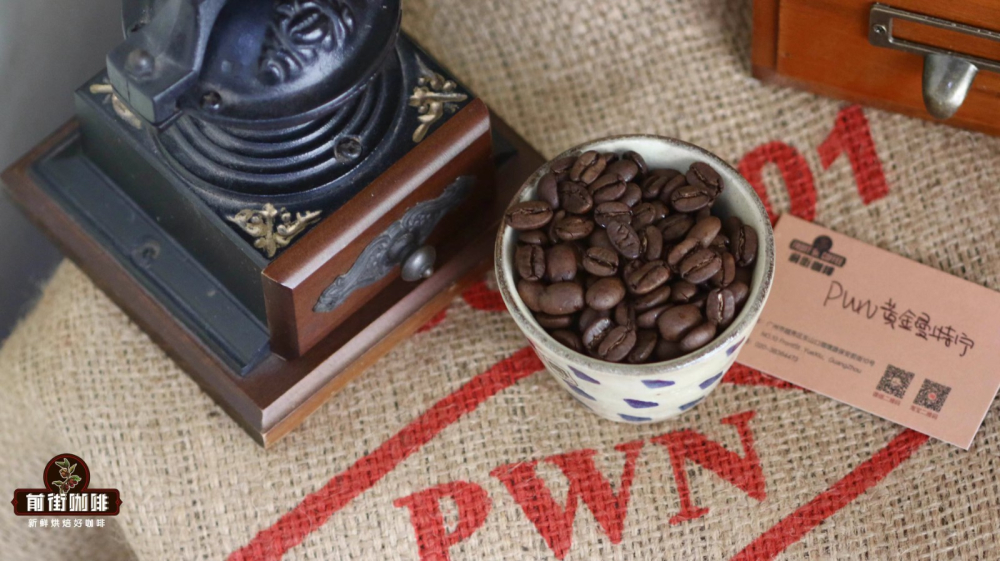
FrontStreet Coffee's new-season Golden Mandheling comes from the Gayo Mountains in Aceh, North Sumatra - specifically, Golden Mandheling beans from the PWN company. Golden Mandheling carries stricter quality requirements than ordinary Mandheling: first, the beans must screen at size 19 and be full and uniform, meeting the highest G1 grade. PWN beans are a deeper green, with a regular, flat shape. They then pass through one machine sorting and three rounds of hand selection to guarantee fewer than 3 defective beans in a 300g green-bean sample.

What Variety is Mandheling Coffee?
The classic Mandheling variety is Typica. As early as 1658, the Dutch transplanted descendants of "European Typica mother plants" to Sri Lanka, though that effort failed. Later, in 1699, they moved Malabar coffee trees from eastern India to Java; this trial succeeded, and Typica established itself firmly on Java. In 1718, the Dutch carried the proven Javan Typica on to Sumatra and Sulawesi. But just as Indonesian Typica reached its peak after more than a century of cultivation, a leaf-rust epidemic swept through most of the country's Typica at the end of the 19th century, forcing growers to introduce the more disease-resistant Robusta.
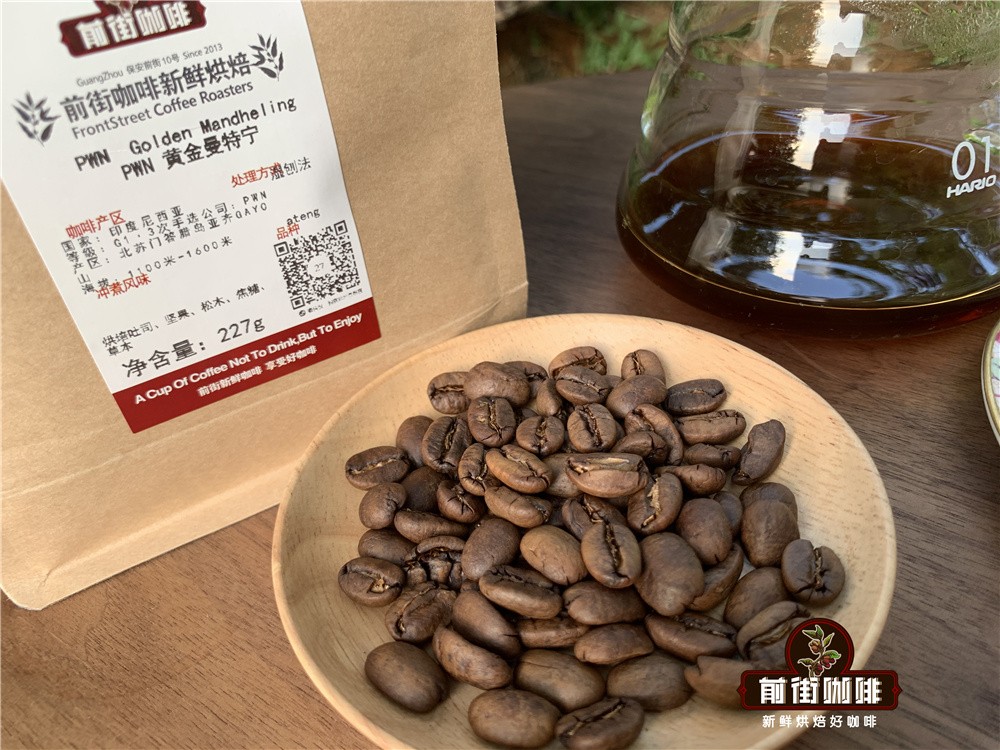
FrontStreet Coffee's Lintong Mandheling is listed with the variety "Tim Tim Ateng," while our Golden Mandheling is listed simply as "Ateng." What are these? Ateng is an Arabica-Robusta hybrid widely grown across Sumatra and the other Indonesian islands - in effect a local branch of the Catimor family (Ateng is simply the local name). What Indonesians call Tim Tim is the same variety the rest of the world knows as Timor. Ateng is very well suited to cultivation and flavor development in the Aceh region. Because of these localized naming conventions, Mandheling coffee labels often look unfamiliar - but they're usually just different names for varieties you already know.
Mandheling Coffee Bean Processing Method

Mandheling's distinctive character owes as much to its processing as to the local climate. Indonesia sits in a true tropical rainforest zone: rainfall is frequent, sunshine is brief, and traditional sun-drying is impractical. Meanwhile, the general economic conditions of local farmers made full washed processing - with its water demands and infrastructure costs - equally out of reach. Farmers therefore developed a semi-washed method known as wet-hulling, or giling basah. It is rare worldwide, and it is precisely what created Mandheling's signature low acidity, thick body, and mellow depth.
How to Brew Mandheling Coffee?
FrontStreet Coffee has written before about how roast level shapes pour-over brewing: light and dark roast beans call for different water temperatures and dripper choices. Golden Mandheling is a dark-roast bean, so the water temperature should not be too high, and a Kono dripper is the better choice. The lower temperature keeps us from pulling out undesirable flavors - much of the aromatic potential has already been developed in the darker roast, and pushing light-roast temperatures through it would tip into over-extraction. As for the dripper, the V60 flows too quickly: at lower water temperatures it is easy to under-extract. The Kono's few ribs sit low near the base, and the filter paper hugs the wall of the cone, restricting airflow and lengthening the contact time between water and grounds. The grounds extract more fully, which reinforces that mellow, full-bodied texture.
FrontStreet Coffee's Golden Mandheling Brewing Parameters:
Water temperature: 88°C, coffee dose: 15g, coffee-to-water ratio: 1:15, grind size: medium-fine (75% pass-through rate through the #20 sieve).
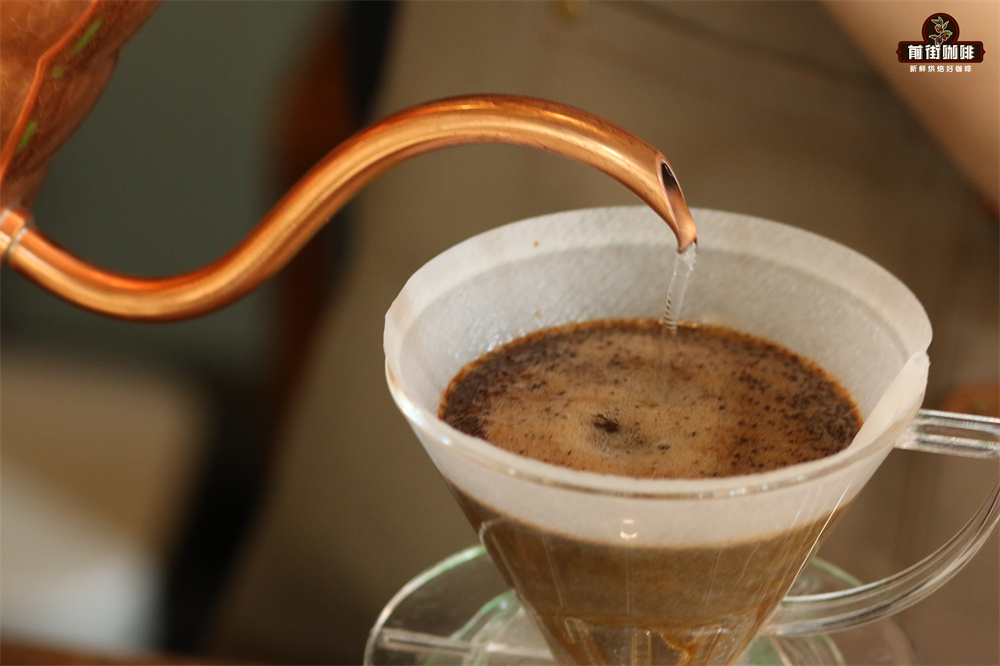
Brew with segmented pours: bloom with twice the coffee's weight in water - that is, 30g of water for 30 seconds. The bloom lets the grounds release their trapped carbon dioxide, so the later pours extract more evenly. With a small flow, pour in circles up to 125g, then continue pouring to 225g and stop. Remove the dripper once the bed has drained. Timing from the start of the first pour, total extraction time is 2'00". Finally, pick up the server and swirl the coffee to blend it evenly before pouring it into your cup to taste.
[PWN Golden Mandheling Coffee Flavor]: Multi-layered, rich, and clean, with intense nutty and caramel aromas, chocolate notes, a long finish, and excellent balance.
How to Make Mandheling Americano?
The Americano is arguably the simplest espresso-based drink on the menu: just espresso and water, with ice added for the iced version. But don't underestimate it - the simplest things are often the most technically revealing. Among espresso drinks, the Americano exposes a barista's extraction skills more nakedly than any milk-based beverage.

Because there's no milk to mask anything, an Americano shows the true taste of the beans themselves. Many baristas order one when visiting another café - first because it's quick and convenient, and second because it tells you exactly where the house espresso stands.
Making one is simple in principle: pour espresso over water. The espresso itself should be dialed in to the bean's characteristics, and every bean demands its own parameters. At FrontStreet Coffee's stores, for instance, the house "Warm Sun Blend" - 60% sherry-barrel-aged coffee beans blended with 40% natural Yirgacheffe - is dialed to a recipe of 20g of coffee in, 40g of espresso out, in 27-28 seconds, adjusted daily as the beans age in order to highlight that sherry-cask character.

For a hot Americano, preheat the cup with hot water, pour in the hot water, and finish with the freshly extracted espresso. The Americano ratio generally falls between 1:6 and 1:8, and after repeated testing FrontStreet Coffee settled on 1:6 - that is, 40g of espresso mixed with 240g of hot water.

For an iced Americano, pre-chill the cup with ice, add the water, then pour in the espresso. Because ice comes into play, FrontStreet Coffee's iced Americano uses a 1:7 ratio - 40g of espresso mixed with 280g of an ice-and-water combination, made up of 180g of ice and 100g of water.
FrontStreet Coffee Recommendation
If the wet-hulled flavor profile sounds like your kind of coffee, we'd first point you to FrontStreet's PWN Golden Mandheling. PWN specializes in buying top-grade Mandheling green beans, running them through one machine sort and multiple rounds of hand selection to leave only full, defect-free beans. The result is a boutique-grade, evenly sized, plump bean with a very low defect rate; after medium-dark roasting it shows rich roasted aromas, and the brewed cup is clean, full-bodied, and mellow - perfect for anyone who prefers their coffee without acidity. For a slightly wilder cup, our Lintong Mandheling daily bean delivers intense, bold flavors with clove and woody notes, the low acidity typical of medium-dark roasted Mandheling, spicy and minty accents, and a strong, persistent sweetness.
Mandheling also shines on the espresso machine. Our most-reordered Classic Blend layers medium-dark roasted Mandheling over Brazil's creamy, nutty base, bringing out butter, roasted chestnut, and caramel, while the Mandheling lifts the body and adds sandalwood, herbal, and spice notes; a touch of Robusta boosts the crema. Whether you're pouring latte art or building a layered Dirty, it handles both with ease.
Important Notice :
FrontStreet Coffee is a long-established specialty coffee roaster in Guangzhou China, selling freshly roasted beans from its own farm in Yunnan as well as dozens of carefully selected single-origin beans from around the world for both pour-over and espresso. The products deliver consistently excellent quality and great value, with shipping within 24 hours. Guangzhou's FrontStreet Coffee shop is recommended by many coffee lovers, and the beans are now available online at the Tmall 。
FrontStreet Coffee has moved to a new address:
FrontStreet Coffee Address: 315,Donghua East Road,GuangZhou
Tel:020 38364473
 Scan and follow the En Gafei WeChat official account. Please indicate that the reprint comes from "En Gafei".