Flavor Characteristics of Kenya's Pour-Over Coffee Beans and Factors Influencing the Taste of Kenya SL28 and SL34 Varieties
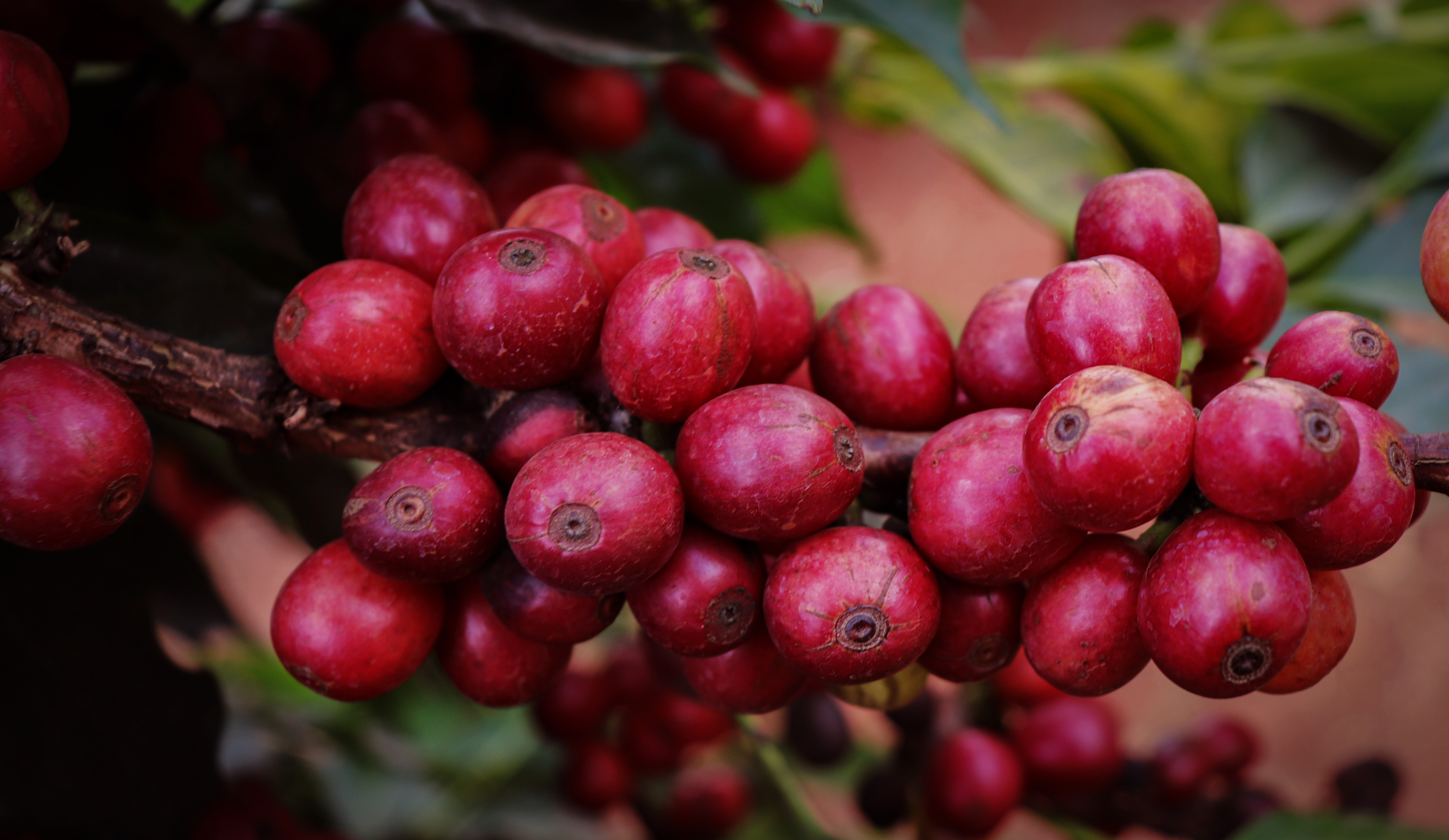
When the world's best coffees are ranked, only a handful of growing regions consistently land at the top — and FrontStreet Coffee counts Kenya among them. Coffee's history in Kenya is short compared with other producing countries, but the country's complete production-to-sales chain and its structure of small-scale growers are major reasons for its rapid rise. Kenyan coffee cultivation is centered on the highlands and hills surrounding Mount Kenya.
FrontStreet Coffee regards Kenyan coffee as an extreme coffee — those who love it are crazy about it, and those who don't simply can't warm to it. In our view, Kenyan coffee sits at the elite tier of the coffee world because it delivers full-bodied, delicate, complex flavors as a whole. Those qualities are no accident. Kenyan farmers have many factors working in their favor, from ideal growing conditions to savvy commercial strategy. Today, using FrontStreet Coffee's Little Tomato beans as our example, we'll dig into what makes Kenyan coffee culture so compelling.

FrontStreet Coffee's Kenyan Little Tomato
Although FrontStreet Coffee has bought many different Kenyan coffees since opening, we find that Kenyan beans are not only excellent in quality but also among the most common single-origin offerings on the market. Currently, our bean menu carries just one Kenyan coffee, called "Little Tomato" — and you can probably imagine its flavor from the name alone. Here are the details:

Kenya Asali AA Top Little Tomato
- Country: Kenya
- Region: Thika
- Processing Station: Asali Processing Station
- Altitude: 1550–1750 meters
- Soil: Volcanic soil
- Varieties: SL28, SL34
- Processing Method: 72-hour washed
Flavor Characteristics
So what does this coffee taste like? Coffee lovers will know that Kenyan coffee is famous for its full-bodied, balanced profile — though beans from different regions show subtle differences depending on where they're grown, the variety, and the processing method.

Depending on variety, the flavors range from berry notes like blackcurrant to citrus. FrontStreet Coffee's Asali beans have a medium body, rich caramel sweetness, very bright acidity, a subtle cherry-tomato flavor, and a more prominent dark plum note — clean from start to finish. In recent Kenyan crops, we've only been able to detect the cherry-tomato note faintly. FrontStreet Coffee attributes this mainly to changes in the soil properties of Kenya's recent growing regions. The high acidity of Kenyan coffee, meanwhile, is one of the qualities that so fascinates its admirers — a trait we link to the high altitude and volcanic soils of its growing regions.
The Relationship Between Altitude and Coffee Bean Flavor
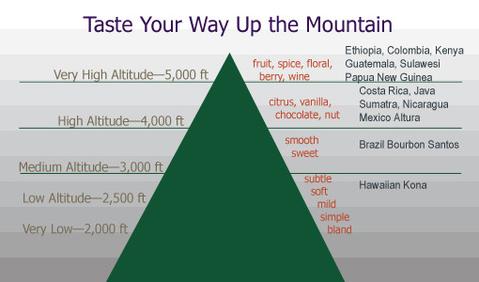
It is widely believed that the higher a coffee grows, the better its quality. Some countries — Honduras and El Salvador, for instance — even grade coffee by growing altitude, with quality rising with height. Why? FrontStreet Coffee explains: higher altitude means lower temperatures, and just like so much in life, good coffee cannot be rushed. Cooler temperatures slow the growth of the beans and slow the ripening of the cherries around them.
That extra time lets the fruit develop complex flavors. The slower the coffee grows, the denser the bean and the better the taste. Higher altitudes also mean better drainage, and better drainage reduces the moisture in the coffee, concentrating its sweet flavors. Coffee plants at high altitude are also less prone to pests and diseases (leaf rust among them), meaning fewer defects — another boost to overall quality.

The Relationship Between Volcanic Soil and Coffee Bean Flavor
Volcanoes give plants many gifts. Volcanic soil is rich in nutrients and minerals, providing remarkably fertile ground for coffee: phosphorus, potassium, boron, iron, zinc — everything coffee needs to thrive is present. The soil is also light and fluffy, draining well. Beyond the soil itself, volcanoes provide shade that slows cherry maturation, plus the altitude and microclimates that help coffee flourish in every way.
Kenyan Coffee Varieties
Anyone familiar with FrontStreet Coffee will have noticed that our Kenyan bags list varieties unlike those of other origins: SL28 and SL34 — names that sound like robots. "SL" stands for Scott Laboratories, the Kenyan research center that first developed these varieties in the 1930s. While many more "official" SL varieties are recognized by World Coffee Research, SL28 and SL34 remain the favorites of specialty coffee, and recent research has traced this line back to the Bourbon genome.
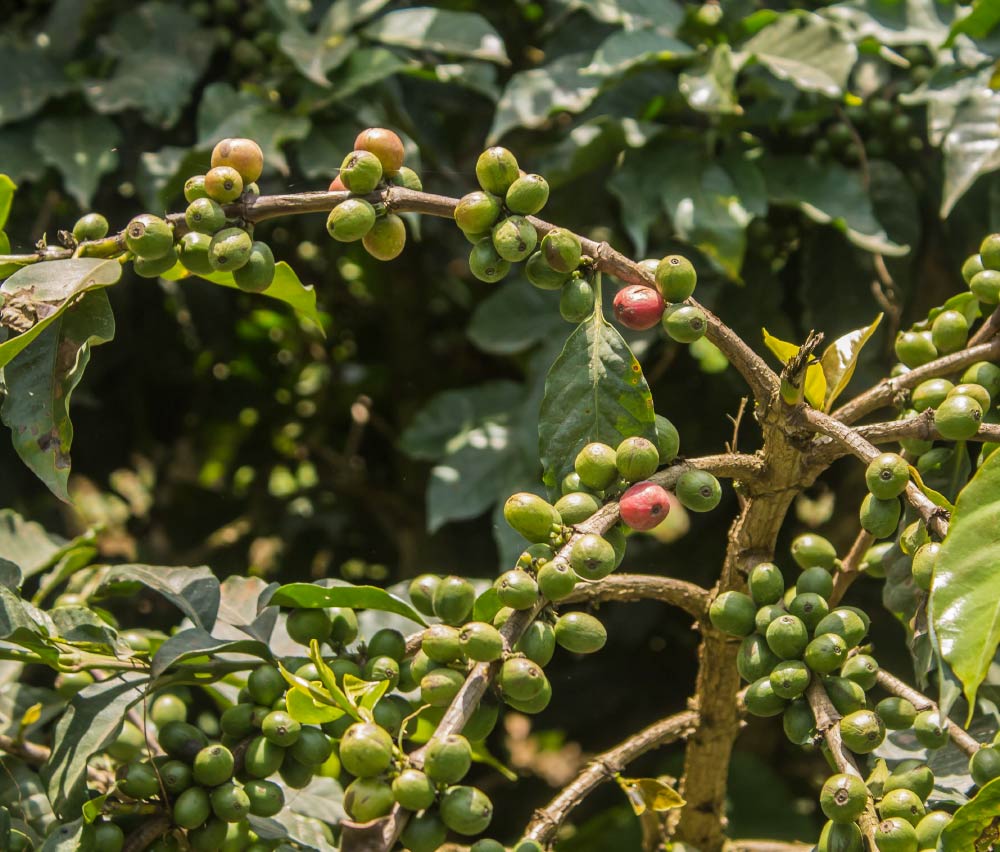
SL-28 trees are tall with green leaf tips, high-yielding, and cup beautifully. They need almost no fertilizer and tolerate drought, but are susceptible to coffee leaf rust, coffee berry disease (CBD), and soil nematodes. SL-28 bears large cherries from its third year, and well cared for, its "milling outturn" is very low-loss (the ratio of parchment to green coffee is favorable). SL-34 trees are structurally similar to SL-28.
The main visual difference is that SL-34 has deep bronze leaf tips rather than green. SL-34 has higher nutritional requirements and slightly lower yields. Like SL-28, it is also vulnerable to CBD, leaf rust, and pests. The SL varieties have been cultivated in Kenya for decades — far longer than the country's other popular varieties — and are naturally suited to its climate. Today, an estimated 80% of all coffee exported from Kenya is SL-series.

Brewing Kenyan Coffee
Kenyan coffee isn't easy to brew. Many customers who take beans home tell us their cups come out either too sour or too bitter, nothing like what they drink in the shop. Here are FrontStreet Coffee's standard brewing parameters:
FrontStreet Coffee's Brewing Parameters:
- Filter: V60
- Water Temperature: 91°C
- Water-to-Coffee Ratio: 1:15
- Coffee Amount: 15g
- Grind Size: medium-fine (80% pass on the Chinese #20 standard sieve)

FrontStreet Coffee's Brewing Technique:
Bloom with 30g of water for 30 seconds, then continue pouring in small circles to 125g and pause. When the water level drops to just short of exposing the coffee bed, pour on to 225g and stop. When the bed is about to show again, remove the dripper (timing from the start of the bloom). Total extraction time: 2'00". Treat this as your baseline, then adjust to taste — with a little practice at home, you'll absolutely be able to brew delicious Kenyan coffee.
FrontStreet Coffee Recommendation
If bright, fruit-forward light roasts like Kenyan coffee are your thing, FrontStreet Coffee recommends two more from the same family:
FrontStreet Kenya Little Tomato — a washed Kenyan from Thika, grown at 1,550–1,750 meters on SL28 and SL34 and processed with the local 72-hour double-wash fermentation to maximize fruit while keeping the cup pristine. Light-roasted to preserve its lively acidity: dried cherry tomato and florals in the dry aroma, then clear cherry tomato and dark plum with bright, juice-like acidity, mid-palate sweetness of snow pear and black plum, and a long, clean finish with yellow sugar and a hint of green tea.
FrontStreet Yirgacheffe Guodingding (Ethiopia) — the gateway washed Yirgacheffe we recommend to anyone who loves vivid acidity. Expect bright citrus, berry, and floral notes with a green-tea-like sweet finish; its acidity is soft and luminous, like fruit itself rather than sharp sourness. Brewed on a V60 with a medium-fine grind and 91°C water, it makes an elegant companion cup to any Kenyan.
Important Notice :
FrontStreet Coffee is a long-established specialty coffee roaster in Guangzhou China, selling freshly roasted beans from its own farm in Yunnan as well as dozens of carefully selected single-origin beans from around the world for both pour-over and espresso. The products deliver consistently excellent quality and great value, with shipping within 24 hours. Guangzhou's FrontStreet Coffee shop is recommended by many coffee lovers, and the beans are now available online at the Tmall 。
FrontStreet Coffee has moved to a new address:
FrontStreet Coffee Address: 315,Donghua East Road,GuangZhou
Tel:020 38364473
 Scan and follow the En Gafei WeChat official account. Please indicate that the reprint comes from "En Gafei".