FrontStreet Coffee Bean Sourcing Journal | Costa Rica Dota El Diosa Geisha Special Report
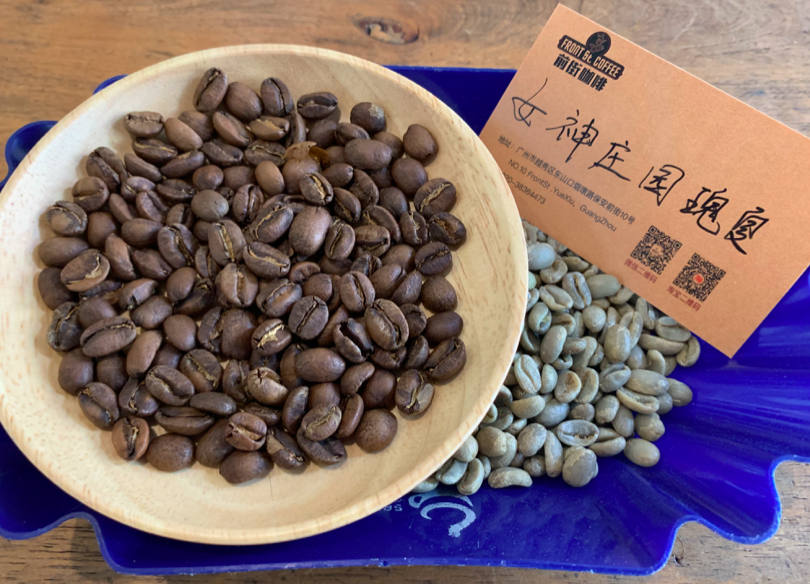
Costa Rica Dota El Diosa Geisha
Origin: Costa Rica
Region: Tarrazu
Estate: Dota El Diosa
Variety: Geisha
Altitude: 1800m
Processing: Anaerobic Enzyme Washed
Region Introduction
Costa Rica's coffee lands are volcanic, with fertile volcanic ash soils, mild temperatures, and steady, abundant rainfall - together making coffee one of the country's leading agricultural products. High-altitude Costa Rican beans are world-renowned for being rich yet mild in flavor, with lively acidity. Careful post-harvest processing is the reason they reach such quality.
The harvest divides into two seasons each year: the dry season from December to April is picking time, while the rains run May through November. Micro-mills have multiplied in recent years - they need only about 5% of the water a traditional washed mill consumes, with no large tanks or expansive drying patios, so the investment is modest. Honey-processed coffee, with its lower acidity, greater complexity, and sweet, richly aromatic cup, has become one of the most sought-after styles in coffee as a result.
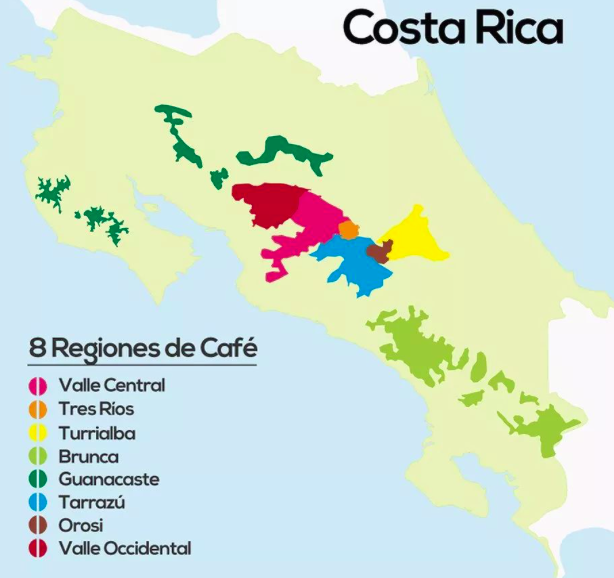
Situated south of the capital San Jose, Tarrazu is one of Costa Rica's most treasured growing regions - a name with enormous prestige in specialty coffee and one of the great producing regions of the world.
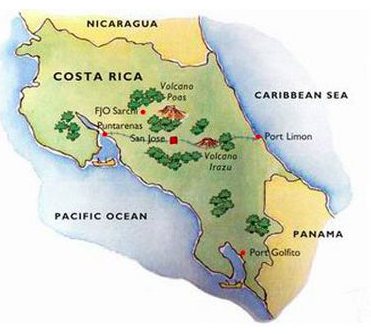
Tarrazu lies in the fertile volcanic highlands of Central America: humid climate, rich volcanic-rock soil, abundant rainfall, high altitude, and dense natural forest shade combine into an exceptionally advantageous environment. No pesticides or synthetic fertilizers are used. Nearly 95% of the coffee from Tarrazu's high mountains qualifies as Strictly Hard Bean (SHB), typically grown above 1,500 meters.
Diosa Estate
Diosa Estate sits in the Dota area of Costa Rica's most famous region, Tarrazu, and is known for producing micro-lots of the Geisha variety.
As early as 1865, the Dota area was already celebrated for fine Costa Rican coffee. When the highway pushing out from the capital reached the Dota Valley, it had to pass through Tarrazu - so when the Costa Rican Coffee Institute later formalized its regional designations, the custom of labeling it "Dota Tarrazu" stuck. The terrain is classic highland, with soil and temperature-humidity conditions close to ideal for coffee.

Diosa Estate dates to the 1960s. Its owner is a close friend of Pachi Serracin - "Don Pachi," now celebrated as the father of Panamanian Geisha - who brought the Geisha variety back from CATIE, Costa Rica's world-leading coffee research collection. Diosa grows its coffee organically, using native and fruit trees as shade.
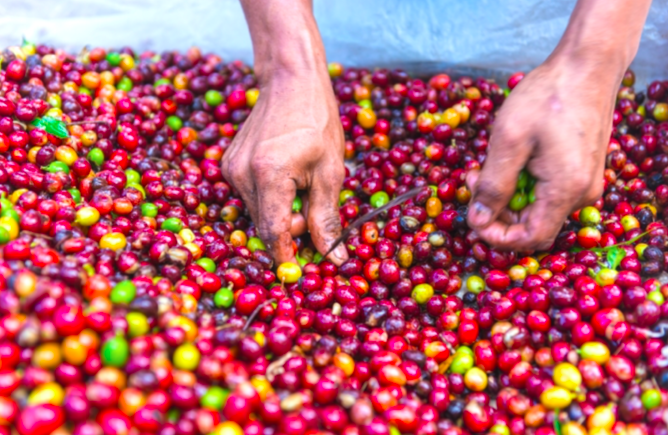
Even the fertilizer is organic: coffee pulp mixed with molasses and mineral-rich soil from the nearby mountains, fermented with microorganisms into a fertilizer that strengthens the plants' disease resistance. California earthworms are used to till the soil and serve as a core nutrient source during fertilization. Multiple varieties are interplanted, only fully ripe red-purple cherries are selectively picked, and the team tightly controls soaking and fermentation with a signature constant-temperature process. The degree of fermentation - never too much, never too little - strikes an exquisite balance between clarity and complexity, yielding remarkably stable and utterly captivating flavor.
Geisha Variety
Geisha is pronounced the same as the Japanese word "geisha," which is why the variety is also written "Geisha." Because the trees grow taller than typical coffee, they were originally planted in small estate plots as windbreaks.
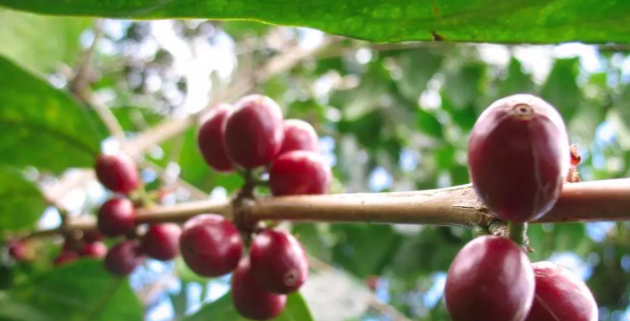
The variety was collected in the Geisha forest of southwestern Ethiopia in 1931 and sent to Kenya's Coffee Research Institute. In 1936 it reached Uganda and Tanzania, and in 1953 it arrived in Costa Rica. For decades Geisha drew little attention - until Don Pachi's introductions and the variety's later spread to Panama, where Hacienda La Esmeralda isolated it from other varieties and won the national competition with it. The rest is history.
Processing Method
Anaerobic Enzyme Washed
In anaerobic enzyme washed processing, fully ripe red cherries are harvested and the pulp and mucilage removed with mechanical washing equipment; enzymes are then added to the fermentation tank to heighten the coffee's flavor and sweetness.
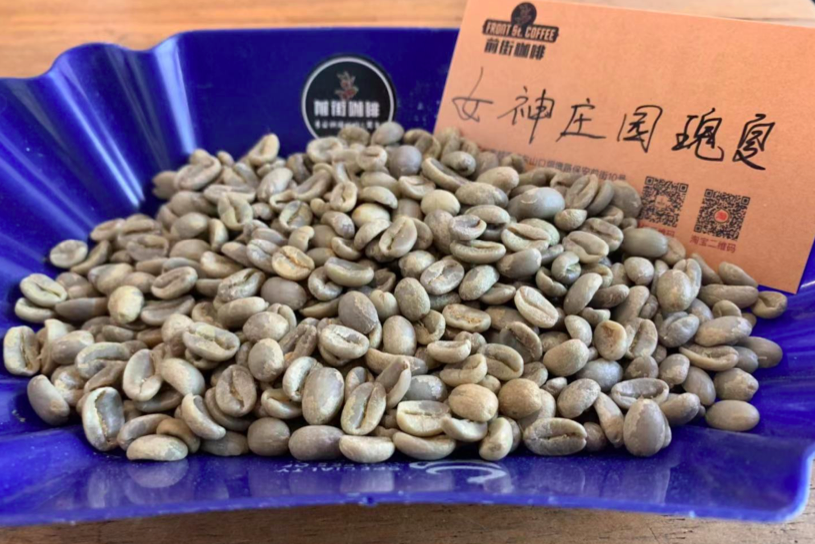
Green Bean Analysis
The green beans are elongated and light green. Rather than the usual grassy smell of most greens, this Geisha carries clear notes of bergamot and berries alongside it.
Roasting Analysis
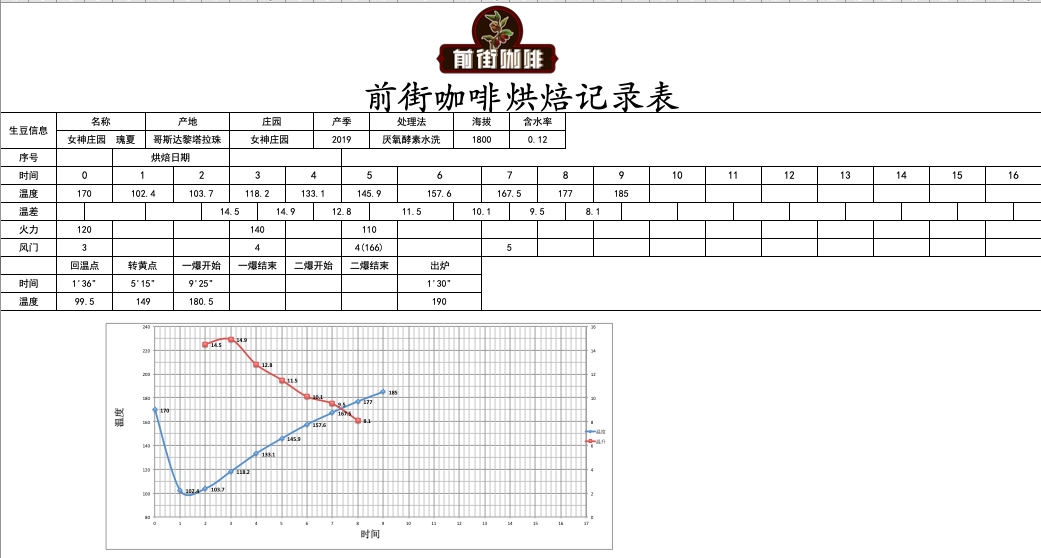
Costa Rican beans are generally hard with moderate moisture, so FrontStreet Coffee's roaster chose a high-charge roast with rapid dehydration and a brisk overall rhythm to express this Diosa Geisha's fruit and florals.
Roasting machine: Yangjia 800N (300g batch size)
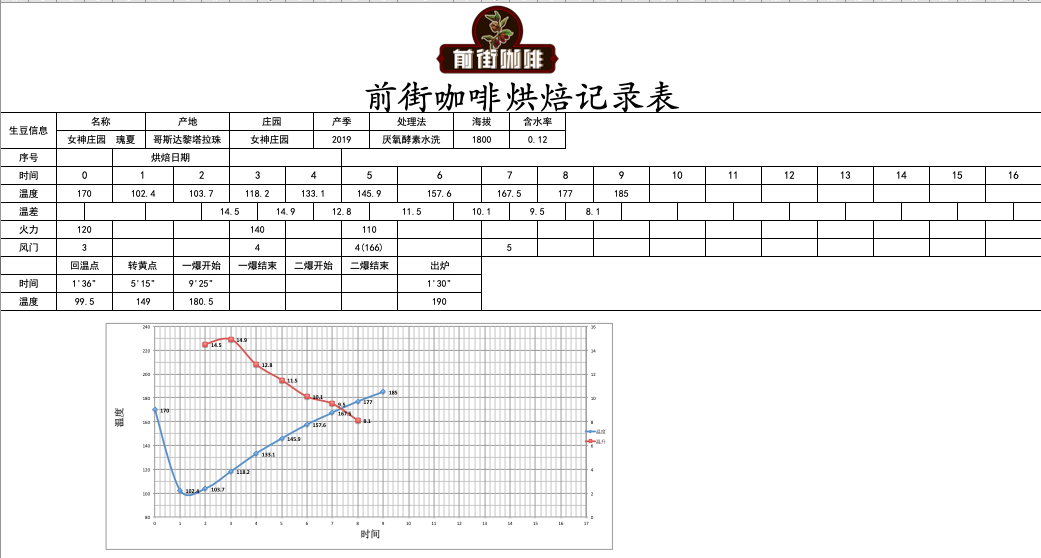
Charge at 170°C drum temperature, heat at 120, damper at 3. Turning point at 1'36"; when the drum reads 140°C, open the damper to 4 with heat unchanged. At 149°C the bean surface yellows, the grassy smell disappears completely, and dehydration ends. At 166°C, reduce heat to 110, damper unchanged.
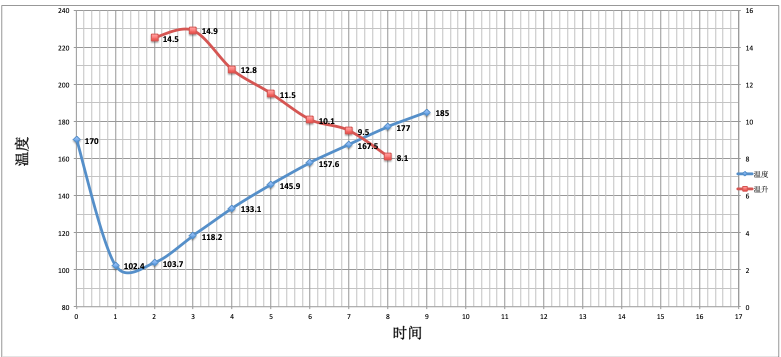
At 7'09", wrinkles and a few dark spots appear on the bean surface and the toast smell turns unmistakably to coffee aroma - the prelude to first crack. Listen carefully from here. First crack begins at 8'25"; open the damper to 5 (adjust heat very carefully - never so low that the cracking dies out). Develop 1'30" past first crack and drop at 190°C.
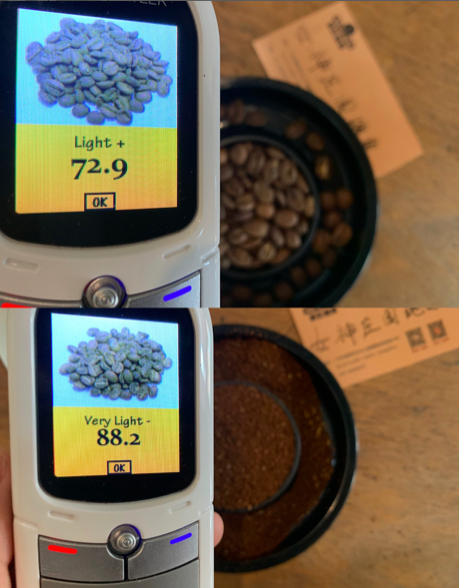
Agtron bean value 72.9 (upper image), Agtron ground value 88.2 (lower image), roast delta 15.3.
Cupping Report
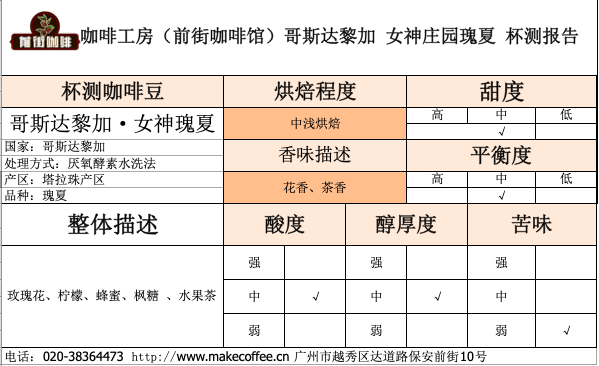
Flavor: Rose, lemon, honey, maple, fruit tea
Brewing
Recommended brewing method: Pour-over
Dripper: Hario V60
Water temperature: 90-92°C
Dose: 15g
Ratio: 1:15 / 1:16
Grind size: Medium-fine (BG 7T: 58% pass rate on China standard #20 sieve)
Brewing technique: Segmented extraction - bloom with 30g of water for 30 seconds, then pour in small circles to 124g and pause. When the level drops and the bed is about to show, pour to 227g and stop. Remove the dripper once the bed is about to be exposed again. (Timing starts from the bloom.) Extraction time: 2'01".
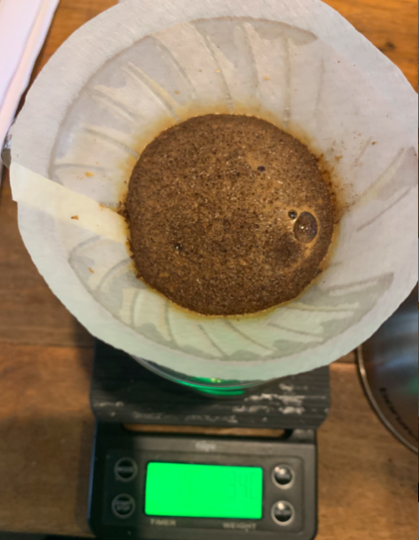
Flavor: The florals lead, joined by lemon and fruit tea. The entry brings citrus and cream, with a refreshing, sweet finish.

FrontStreet Coffee Recommendation
If this Panamanian-rooted Geisha story has you hooked, FrontStreet Coffee's Esmeralda Red Label Geisha is the crown of the range: grown at 1,600-1,800m on the Harrimiao plot of Hacienda La Esmeralda, cupped above 90 points, and showing the orange-blossom sweetness and jasmine florals that made the variety legendary.
For Geisha at home in Ethiopia, its birthplace, the FrontStreet Gesha Village Gold Label uses the Gesha 1931 variety with an exquisite natural process - about 10% of the estate's output and the estate's top non-auction coffee, beloved by competing baristas worldwide. And the entry-level FrontStreet Boquete Geisha remains the friendliest way to taste classic "Geisha flavor" for the first time.

Important Notice :
FrontStreet Coffee is a long-established specialty coffee roaster in Guangzhou China, selling freshly roasted beans from its own farm in Yunnan as well as dozens of carefully selected single-origin beans from around the world for both pour-over and espresso. The products deliver consistently excellent quality and great value, with shipping within 24 hours. Guangzhou's FrontStreet Coffee shop is recommended by many coffee lovers, and the beans are now available online at the Tmall 。
FrontStreet Coffee has moved to a new address:
FrontStreet Coffee Address: 315,Donghua East Road,GuangZhou
Tel:020 38364473
 Scan and follow the En Gafei WeChat official account. Please indicate that the reprint comes from "En Gafei".