Explanation of Arabica Flavor Characteristics | What is Arabica Variety | Characteristics of Arabica Coffee Beans

Major Coffee Varieties
The world's coffee beans are divided mainly into three major species: Arabica, Robusta and Liberica. The most common are Arabica (elegant flavor, the backbone of specialty coffee) and Robusta (also known as the strong bean, with a rough flavor and high caffeine content, and not considered specialty coffee).
Most specialty coffees are Arabica varieties, such as FrontStreet Coffee's Jamaica Blue Mountain Coffee, Gesha Coffee, and FrontStreet Coffee's 2013 Natural Typica Coffee. Arabica varieties offer good flavor, good texture and high sweetness, which makes them the favorite of coffee enthusiasts. Arabica is one of the three major coffee species and accounts for 70% of the coffee consumption market, making it one of the most widely consumed coffee beans in the world, while Robusta and other species account for the remaining 30%.

The Arabica species was the first coffee variety to be discovered. Although the name "Coffea Arabica" originated from Arabia, the plant comes from coffee's birthplace, Ethiopia, and is considered the best quality among coffee bean varieties. It is currently the world's primary coffee bean variety, produced in Central and South American countries, Africa, Asia and other regions. After discovering coffee, Ethiopians would chew the leaves to refresh themselves, and the fruit was used as medicine as well. Later, through the research of Arab scholars, people developed the habit of drinking coffee after roasting it. In the sixteenth century, Arabs spread it around the world through trade, gradually turning it into the popular beverage it is today.
Specialty Coffee Standards
The specialty coffee referred to in the third wave specialty coffee trend is judged on four aspects: variety, altitude, processing method and cupping score. Among these, coffee bean varieties are primarily Arabica species.
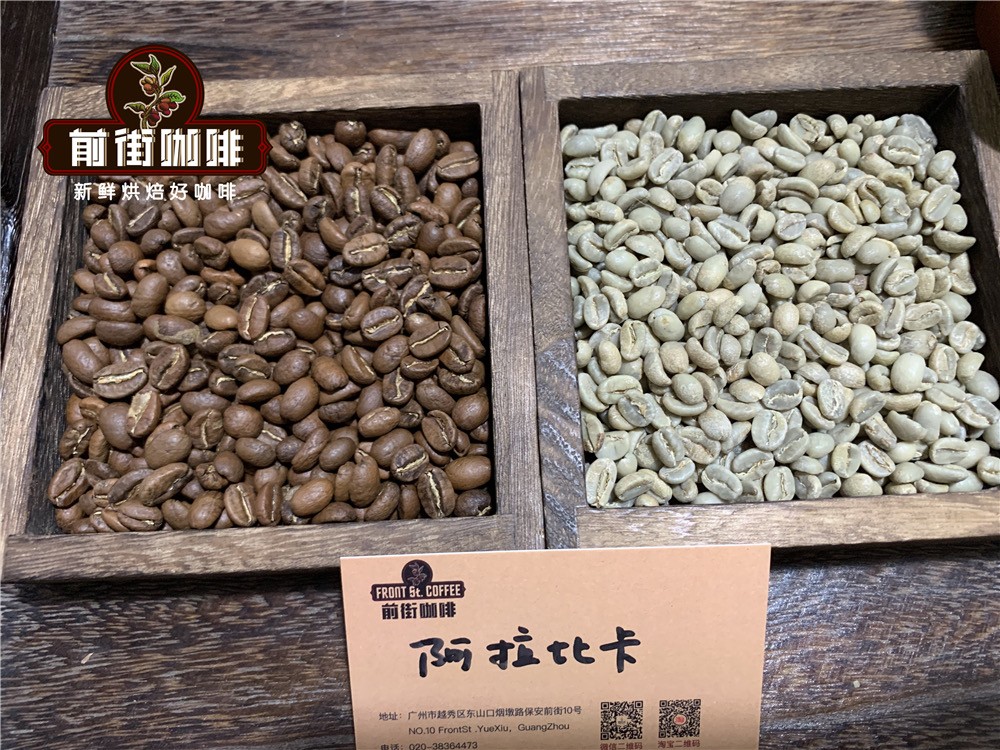
Arabica varieties have higher requirements for their growing environment, unlike Robusta, which is undemanding. Arabica coffee typically grows between 2.5 and 4.5 meters tall, tolerates low temperatures but cannot withstand frost, has weak drought resistance, larger beans, a clean flavor, a mellow taste and low caffeine content. The most obvious and famous examples are Panama Geisha Coffee and Jamaica Blue Mountain Coffee, whose geographical environments have created their unique flavors and made them among the most expensive coffees in the world.
Arabica species generally produce two slightly flat beans, with an oval front face and a narrow, curved crack in the middle forming an S-shape. The back of the bean has a relatively flat arc shape. The caffeine content is about 0.8%-1.5%.
Robusta Variety
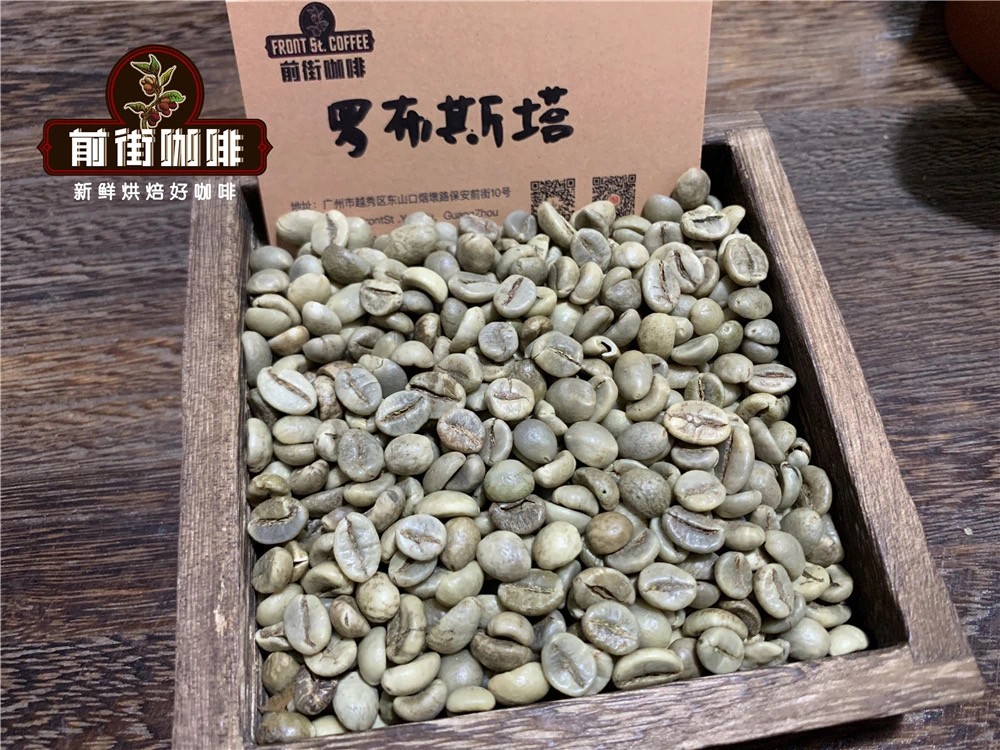
The Robusta variety is relatively less heard of, and is generally understood not to taste as good as Arabica and not to count as specialty coffee. Robusta is typically used in commercial beans; FrontStreet Coffee's commercial blends, for example, include Vietnamese Robusta beans. The Robusta coffee species should actually be called Canephora, with Robusta being a widely cultivated subspecies of Canephora, which is why Robusta has almost completely replaced Canephora as the term for this species. Robusta originated in the Congo Basin of West Africa and is widely cultivated because it grows at low altitude, yields heavily and is easy to farm. Its coffee production accounts for about 30% of global coffee production.

Arabica Subvarieties
Arabica has many subspecies, all derived from Ethiopia's most ancient Typica and Yemen's Bourbon, which were transplanted to Central and South America or Asia and then mutated. With such a wealth of varieties, Ethiopia can be called the genetic bank of Arabica coffee varieties. FrontStreet Coffee will introduce some of the familiar ones.
Ancient Native Varieties
Typica
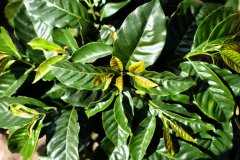
The oldest native variety from Ethiopia, and the one from which all Arabica varieties are derived. Typica has bronze-colored top leaves, and the beans are oval or slender and pointed. Its flavor is elegant, but the plant is weak in constitution, has poor disease resistance and gives a low fruit yield. Jamaica Blue Mountain Coffee, Sumatra Mandheling Coffee, Panama Elida Estate Coffee and FrontStreet Coffee's 2013 Natural Typica Coffee are all excellent Typica coffees. The bronze-colored top leaves are one of its hallmarks.

Bourbon
A variety developed from early Typica after it was transplanted to Yemen, with the bean shape changing from slender and pointed to round. In 1715, after France transplanted the round beans from Yemen's Mocha to Bourbon Island off the east coast of Africa (renamed Reunion Island after the French Revolution), the variety was named Bourbon. Round Bourbon beans were carried indirectly to Brazil and Central and South America in 1727, and in 1732 Britain transplanted Yemen's Mocha to St. Helena Island (later where Napoleon was imprisoned), which also produced round Bourbon beans. Bourbon is the perennial champion in American specialty coffee cupping. Bourbon is divided into Red Bourbon, Pink Bourbon and Yellow Bourbon. FrontStreet Coffee's Brazilian coffee is Red Bourbon, and Brazil Queen Coffee is Yellow Bourbon.

Kenya "SL28" and "SL34"
Kenyan specialty coffee uses washed processing, which results in clean and bright flavors with more prominent acidity. Many small farmers still insist on high quality control and produce excellent specialty coffees. Kenya's phosphate-rich soil seems to suit these two Bourbon varieties, SL-28 and SL-34, which contribute the unique prune-like acidity. The distinctive prune fragrance, citrus aroma and wine-like taste, mixed with sugarcane sweetness, give a strong yet elegant fragrance, clear and distinct layers, and complex, deep flavors, full of personality and acidity—showing what makes Kenyan specialty coffee extraordinary. FrontStreet Coffee's Kenya Assalia Coffee is one example.

Caturra
Caturra is a natural mutant of the Arabica Bourbon variety, discovered in Brazil in 1937. Its plant is not as tall as Bourbon and is more compact. Although it inherited Bourbon's bloodline, its disease resistance is relatively weak, though its yield is higher than Bourbon's. Although it was discovered in Brazil, Caturra is not well suited to growing there, so it was not cultivated on a large scale, but it became popular in Central and South America, with large-scale cultivation in countries such as Colombia, Costa Rica and Nicaragua.

Catuai
Catuai is a hybrid of Mundo Novo and Caturra—a second-generation hybrid, so to speak. It inherits the advantage of Caturra's short plant height and also compensates for Arabica's weak, fragile fruit, giving a solid fruit that does not easily drop in strong wind. Its biggest regret is that its overall flavor is slightly more monotonous than Caturra's. Catuai also has red fruit and yellow fruit varieties, with the red fruit winning more awards than the yellow. Catuai, Caturra, Mundo Novo and Bourbon are the four main coffee varieties in Brazil.

Sumatra Typica / Sumatra Mandheling
Indonesia's main coffee production areas include Sumatra Island, Java Island and Sulawesi Island, with Sumatra's "Mandheling" being the most famous.

Mandheling is also known as "Sumatra Coffee." The northern Lake Tawa area is called Aceh coffee or Lake Tawa coffee, while the Lintong and Lake Toba areas can be called Mandheling. Mandheling has a heavy taste, with a rich, mellow body and lively dynamics, neither astringent nor acidic, with the mellow body and bitterness fully expressed. Mandheling coffee beans may be the most unsightly of all, but coffee fans say that the uglier Sumatra coffee beans look, the better, mellower and smoother they taste. FrontStreet Coffee carries Indonesian Mandheling Coffee and Golden Mandheling Coffee.
Geisha
The famous Geisha belongs to the Typica family's derived varieties. It was exported from Ethiopia's southern Geisha Mountain in 1931 (Geisha has the same pronunciation as the Japanese word "geisha"), went unnoticed in many countries, was transplanted to Panama in the 1960s, and only began winning cupping competitions frequently in 2005.

Today the most famous Geisha producing region is Panama's Boquete region, a small city on the eastern foothills of Baru Volcano. In the Boquete region, the best-known Geisha coffee estates are the renowned La Esmeralda, Elida Estate and Panama NPGE Estate. Although Geisha variety coffee is grown around the world, including even in Taiwan, China, its flavor still does not match Panama's remarkable quality. FrontStreet Coffee has La Esmeralda's Red Label Geisha and Green Label Geisha, plus Boquete Pichilla.
Arabica vs. Robusta
As the two most common varieties on the market, Arabica belongs to the small-grain species while Robusta belongs to the medium-grain species. Compared with other Robusta coffee beans, which have 22 chromosomes, Arabica has 44 chromosomes (22 pairs). The double chromosomes not only give Arabica coffee a superior aroma but also bring rich, unique sweet and sour flavors, making it taste better than Robusta.
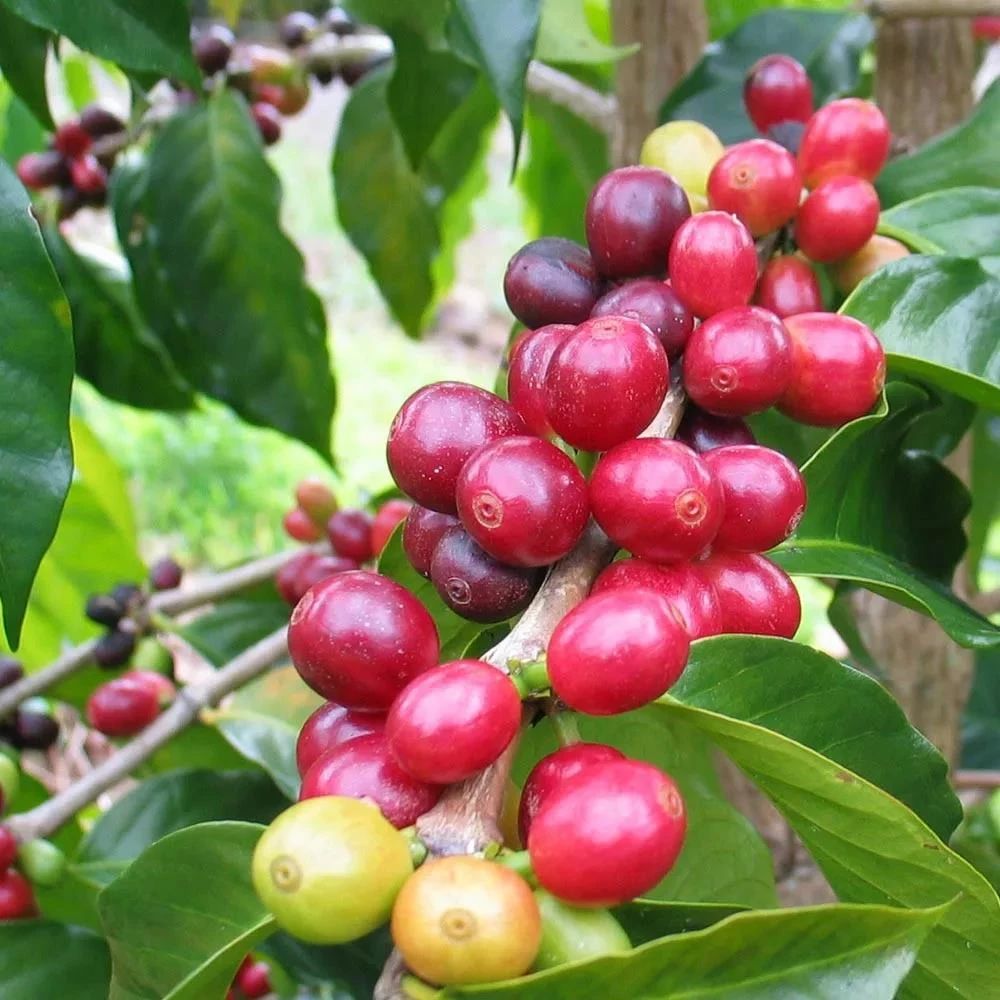
Arabica needs to be grown at altitudes of 800-2200 meters in frost-free highlands. The higher the altitude, the more significant the temperature difference, which slows the maturation of coffee cherries and helps flavor compounds accumulate better, developing fuller aromas. The microclimates of the various coffee-producing regions give Arabica diverse growing conditions and form unique flavor profiles. At the same time, higher altitudes make coffee more susceptible to pests and climate effects. Coffee trees planted in higher areas generally produce fewer fruits and mature more slowly. High-quality Arabica coffee requires more labor for management and harvesting, which raises production costs.

Compared with "delicate" Arabica, Robusta's caffeine content ranges from 2.7%-4%, double that of Arabica. Caffeine acts as a natural pesticide for the plant, protecting it from most insect damage, which makes Robusta easier to cultivate and cheaper. Combined with its higher amino acid and chlorogenic acid content, it has a rich, deeper bitterness and flavors of walnut, peanut, hazelnut, wheat and grains. When processed poorly, it can also have earthy flavors, which makes it less popular, and it is often used in dark roasted espresso blends or instant coffee.
Some Arabica varieties have low yields but balanced flavors and are very expensive, while others have high yields, average flavors and relatively moderate prices. Although Arabica is superior, not every Arabica variety is good coffee.

FrontStreet Coffee Brewing Suggestions
Most coffees on the market are Arabica varieties, and specialty coffees in particular are almost all Arabica. Although Arabica variety coffee has good flavor, brewing a delicious cup still depends on the freshness of the beans. FrontStreet Coffee has always believed that coffee bean freshness is closely related to coffee flavor, so FrontStreet Coffee ships coffee beans roasted within 5 days. FrontStreet Coffee's roasting philosophy is "Freshly Roasted Good Coffee," ensuring that every customer receives the freshest coffee when their order arrives. The coffee degassing period is about 4-7 days, so by the time customers receive their coffee it is at its peak flavor.

For friends who need ground coffee, FrontStreet Coffee gently reminds you: if coffee beans are ground in advance, there is no need for degassing, because during transportation the pressure from carbon dioxide in the packaging also makes the coffee flavor mellow, so you can brew a cup as soon as you receive the grounds. Coffee grounds do need to be brewed promptly, however, because they oxidize quickly when exposed to air, which means the flavor dissipates relatively fast and the coffee will not taste as good. FrontStreet Coffee therefore suggests buying whole beans and grinding fresh for each brew, so you can taste the coffee's flavor at its best.
Professional coffee knowledge exchange. For more coffee bean information, please follow Coffee Workshop (WeChat public account: cafe_style)
For more specialty coffee beans, please add FrontStreet Coffee's private WeChat account: qjcoffeex
FrontStreet Coffee Recommendation
If the Typica family and the ideal of a perfectly balanced Arabica are what interest you, the clearest expression of both is FrontStreet's Jamaica Blue Mountain No.1. It is grown from the Typica variety on Jamaica's historic Clifton Estate, where coffee has been cultivated since roughly 1750, at an average of 4,300 feet (1,310.64 meters), with adequate altitude, gentle afternoon cloud for shade, ample sunlight and mineral-rich soil extending the ripening of the cherry. FrontStreet gives it a medium-dark roast: on the one hand it brings out the rich body and the classic bitter-then-sweet character of traditional coffee, and on the other it leaves the cup balanced rather than dominated by any single note. Expect nuts, dark chocolate, creamy caramel and soft sweetness, with acidity, bitterness, sweetness and aroma arriving in harmony and a gentle, sustained finish. It works as a pour-over, and it is just as convincing in a moka pot or as espresso, where it also performs beautifully with milk in a latte or flat white.
Because Arabica is naturally lower in caffeine—roughly 0.8%-1.5% in the case of this species—Blue Mountain is a cup you can linger over rather than one that hits hard, and it rewards a gentler hand: use a KONO dripper to build body, 15g of beans rested four to seven days after roasting, a grind a touch coarser than white sugar, and water at 87-88°C. Pour in three stages—30g to bloom for 30 seconds, then to 120g, then to 225g—and keep the temperature low, since water that is too hot is the usual reason a cup like this turns bitter and scorched.
Important Notice :
FrontStreet Coffee is a long-established specialty coffee roaster in Guangzhou China, selling freshly roasted beans from its own farm in Yunnan as well as dozens of carefully selected single-origin beans from around the world for both pour-over and espresso. The products deliver consistently excellent quality and great value, with shipping within 24 hours. Guangzhou's FrontStreet Coffee shop is recommended by many coffee lovers, and the beans are now available online at the Tmall 。
FrontStreet Coffee has moved to a new address:
FrontStreet Coffee Address: 315,Donghua East Road,GuangZhou
Tel:020 38364473
 Scan and follow the En Gafei WeChat official account. Please indicate that the reprint comes from "En Gafei".