What is Laurina Pointed Bourbon | How Does This Once-Extinct Pointed Bourbon Coffee Taste

Introduction to Laurina: The Naturally Low-Caffeine Coffee
When it comes to decaffeinated coffee, most people think of coffee that has undergone special processing to reduce its caffeine content. However, in nature, there exists a coffee variety with naturally low caffeine content, containing only 0.5% caffeine - that is Laurina (Bourbon Pointu), which FrontStreet Coffee is introducing to you today!
What is Laurina Coffee?
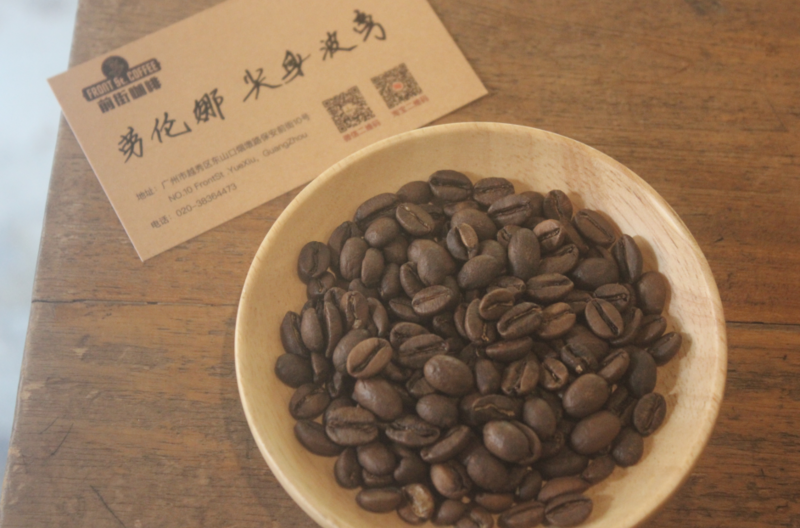
Laurina, academically known as "Coffea Laurina," is commonly called Bourbon Pointu. This name comes from its bean shape, which is relatively slender and pointed at both ends.
Why Does Laurina Have Such Low Caffeine Content?
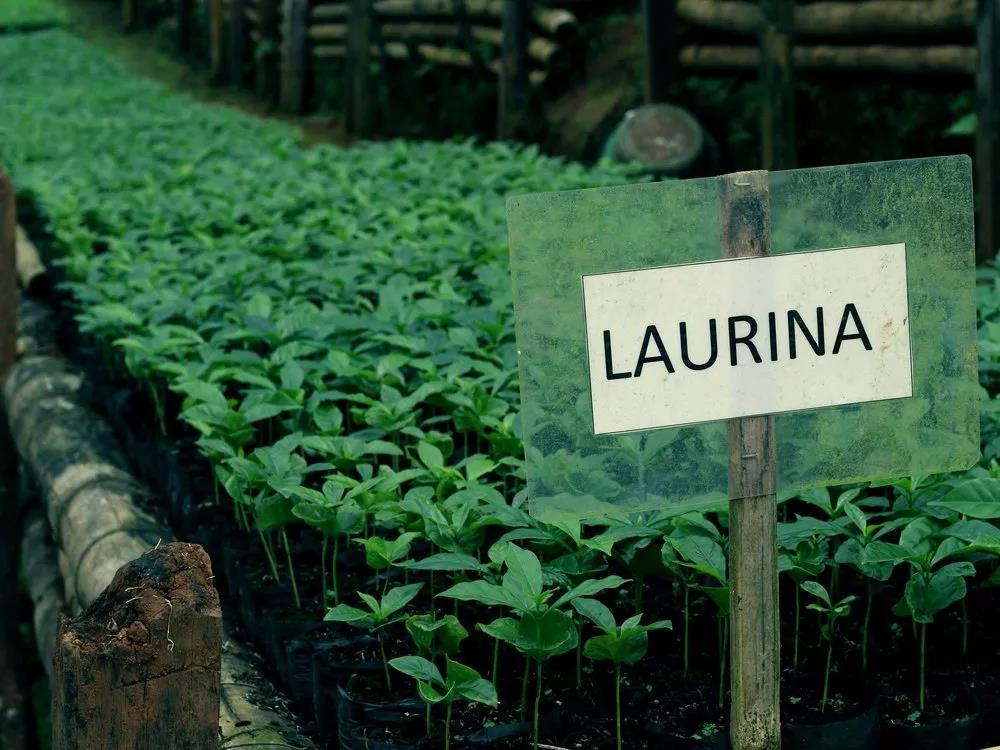
Unlike other artificially processed decaffeinated coffees, Laurina's low caffeine content is due to genetic degeneration, making it lower in caffeine compared to regular Bourbon coffee trees, with superior flavor. However, its yield is extremely low, which is why Laurina is rare and expensive. The Laurina variety is particularly susceptible to leaf rust and black spot disease, which is the main reason for its low yield. For this reason, Laurina is very precious and mostly cultivated in laboratories.
The Historical Rise and Fall of Laurina
As early as the 18th century, Laurina had already gained worldwide popularity. Even French King Louis XV and the famous novelist Balzac were its "fans"! During the two hundred years from the 18th to the 19th century, Laurina was widely cultivated on Bourbon Island. In 1800, Laurina reached a peak annual production of 4,000 metric tons!
However, a series of disasters followed - hurricanes, fire ants, leaf rust, and more - leading to a gradual decline in cultivation. Finally, in 1942, the last batch of Laurina shipped back to France amounted to only a pitiful 200 kilograms. Since then, Laurina disappeared without a trace, and even official documents no longer mentioned it. Laurina was once extinct!
The Rediscovery and Revival of Laurina
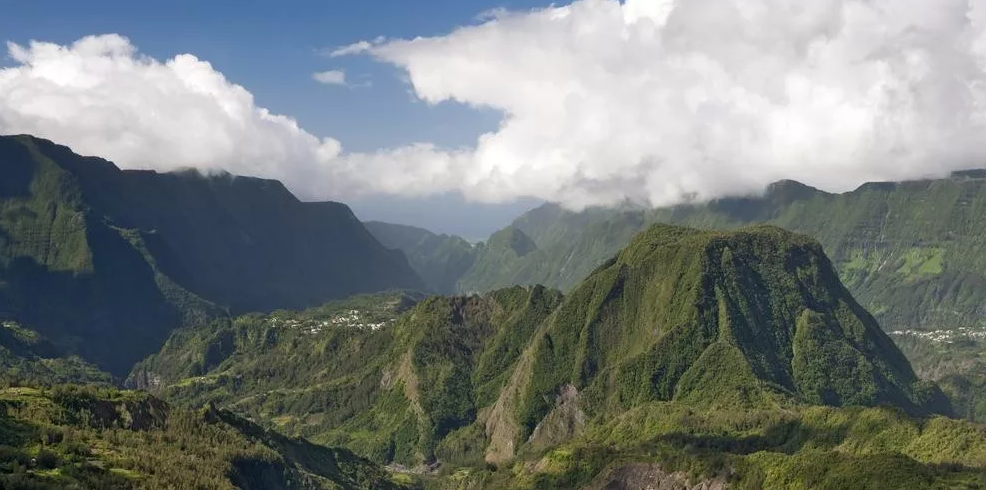
After Laurina had disappeared for decades, Yoshiaki Kawashima, a coffee expert from Ueshima Coffee (UCC) of Japan, heard coffee farmers in El Salvador mention that "low-caffeine coffee trees might still survive on the French Bourbon Island," which gave him the idea of searching for Laurina.
So in 1999, while on a research trip to Africa, he visited Bourbon Island in search of the legendary low-caffeine coffee trees. However, things did not go as smoothly as imagined. The young people on the island had never heard that Bourbon Island once had coffee crops, so he had to leave his contact address with local farmers and officials before departing.
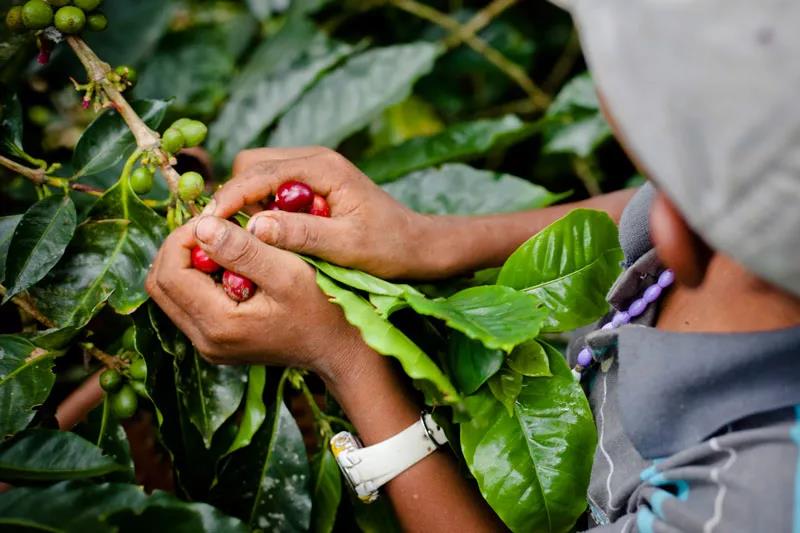
Finally, two years later, in 2001, Kawashima received a call from farmers on Bourbon Island, stating that they had discovered more than thirty unknown coffee trees in the wild!
Later, expert identification confirmed that these were the Laurina coffee trees of that time. Therefore, French scientists and Japanese Ueshima Coffee cooperated to launch a revival plan for natural low-caffeine coffee trees. Finally, in 2006, the first small batch of Laurina coffee beans was produced. After screening, they were sold in 2007, mainly for the Japanese market, at high prices - said to be four times more expensive than top-grade Blue Mountain coffee!
Laurina's Success in Modern Coffee Competitions
At the 2018 World Brewers Cup, Emi Fukahori from Switzerland, with a semi-carbonic maceration processed Laurina from Brazil, stood out among many Panama Geisha coffees, becoming another memorable chapter in coffee competition history.
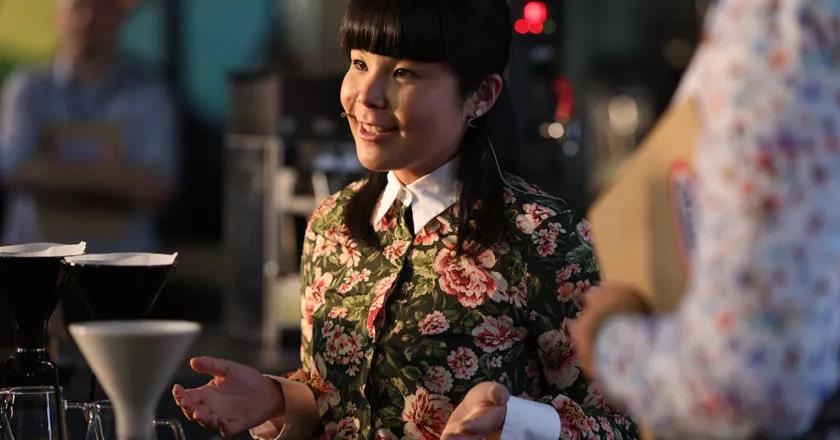
The beans she chose were from the Daterra Estate in Brazil's Cerrado Region - a Laurina (also known as Bourbon Pointu). During the presentation, she explained that this coffee variety contains 50% less caffeine and 20% less chlorogenic acid than other Arabica varieties, thus having much less bitterness. At that time, Emi Fukahori described the flavor and aroma as: red grapes, orange blossom, pineapple, rum, and green apple. Being able to surpass numerous Geisha coffees and ultimately win the WBrC championship, Laurina is a variety that should not be underestimated.

Characteristics and Flavor Profile of Laurina
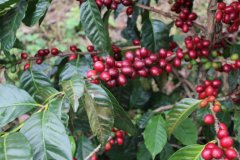
The Laurina coffee tree resembles a small Christmas tree, with shorter branches and narrow leaves, containing only 0.5% caffeine. It is particularly susceptible to leaf rust and black spot disease, which is the main reason for its low yield. The red fruit matures earlier than other varieties.
Although today's Laurina no longer has the exaggerated price of the past, it is still a very precious bean. So what exactly is the flavor of such expensive Laurina?
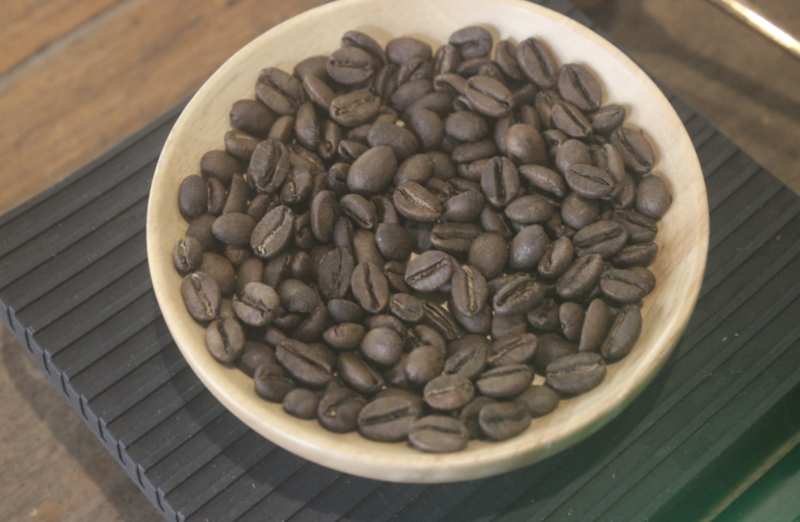
Observing the roasted beans, you can see that FrontStreet Coffee's Laurina beans are overall small and uniform, with a slender shape that is pointed at both ends, resembling wheat grains.
FrontStreet Coffee brewed a pot of natural process FrontStreet Coffee Laurina, with parameters and flavor description as follows:
Brewing Parameters:
Dose: 15 grams, Filter: Hario V60, Water temperature: 90°C, Grind: medium-fine, Ratio: 1:15
Brewing Method:
Segmented extraction. Use 30g of water for blooming, end the bloom when the surface of the coffee bed changes from wet to dry, blooming time is 30 seconds; small water flow center pour to 125g for segmentation, when the liquid level drops and is about to expose the coffee bed, continue pouring to 225g and stop, when the liquid level drops and is about to expose the coffee bed, remove the filter cup (timing starts from the beginning of blooming), extraction time is 2 minutes.
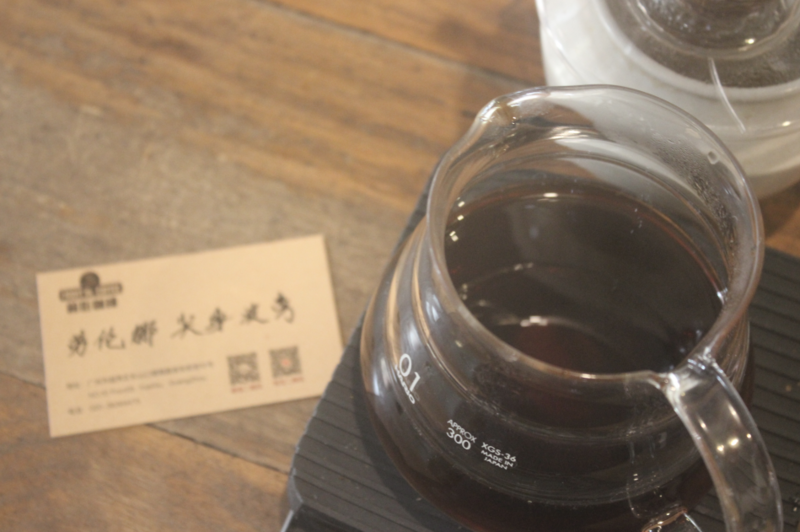
FrontStreet Coffee Laurina Flavor:
Dry aroma has fermented fragrance, spices, nuts, and tropical fruit aromas. Wet aroma has obvious floral notes. Smooth entry with red fruits, plums, and pine nut flavors. Persistent sucrose aftertaste.
FrontStreet Coffee Recommendation
Buying a lower-caffeine pour-over bean is simpler than it sounds. The first rule is to avoid Robusta and choose only Arabica. As the main species in the world's coffee supply, Arabica needs to grow at 800-2,200 meters without frost; the bigger temperature swing at higher altitude slows cherry ripening and helps the fruit build flavor, so the aroma becomes more solid. Every region's microclimate then adds its own terroir.
From Indonesia, FrontStreet Coffee's PWN Golden Mandheling is a classic example. Sumatra's wet-hulled method exists for local reasons, but it is exactly what sets FrontStreet Coffee's Mandheling apart from other dark roasts, with its distinctive herbal, spice and wood notes. The Golden Mandheling goes through three rounds of hand-sorting plus machine sorting to remove defects as far as possible, so the body and sweetness are fuller and the aroma more prominent. It suits a moka pot, SOE, pour-over, drip bags, Americano and latte.
From Ethiopia, FrontStreet Coffee's natural Huakui has a delicate floral note and especially prominent fruit aromas - creamy strawberry, mango, jackfruit, citrus and blueberry - with the ripe tropical-fruit character typical of a Sidama natural bean. The lot that won first place in that year's TOH green bean competition was prized for exactly this rich berry fragrance, and Huakui combines great flavor with real value. It suits pour-over, cold brew, a moka pot and SOE.
Also from Ethiopia, FrontStreet Coffee's washed Gedeb cooperative coffee is a top G1 grade and uses the classic washed process, with every step from selection, pulping and fermentation to rinsing and drying aimed at higher green bean quality. After a medium-light roast it shows elegant white floral notes, citrus, orange and green tea. It suits pour-over, drip bags and cold brew.
From China's Yunnan region, FrontStreet Coffee's Yunnan small bean shows nutty notes plus herbal, chocolate and caramel, with a light fruit acidity in the finish. Roasted medium, it highlights the coffee's caramelized flavors while keeping some fruit acidity, so the cup is soft and smooth with a comfortable sweetness. From Colombia, FrontStreet Coffee's washed Huila coffee shows dark chocolate, cream, hazelnut and toffee; Colombian coffee is consistent and plump with a distinctive heavy body, and its rich aroma is widely loved, with a taste that runs from sweet-acidic to lightly bitter and gains complexity with the roast level. Huila is Colombia's best-known region, above 1,800 meters, with a climate well suited to coffee and the classic chocolate and hazelnut aromas that make it essential to specialty coffee.
Important Notice :
FrontStreet Coffee is a long-established specialty coffee roaster in Guangzhou China, selling freshly roasted beans from its own farm in Yunnan as well as dozens of carefully selected single-origin beans from around the world for both pour-over and espresso. The products deliver consistently excellent quality and great value, with shipping within 24 hours. Guangzhou's FrontStreet Coffee shop is recommended by many coffee lovers, and the beans are now available online at the Tmall 。
FrontStreet Coffee has moved to a new address:
FrontStreet Coffee Address: 315,Donghua East Road,GuangZhou
Tel:020 38364473
 Scan and follow the En Gafei WeChat official account. Please indicate that the reprint comes from "En Gafei".