What are the characteristics of Colombian coffee? What are the main growing regions of Colombian coffee?

Although Colombia, the world's second-largest coffee producer, yields far less than top-ranked Brazil, its quality is superb. Colombia is the world's largest producer of washed arabica, known for mild flavor, sweetness, and subtle cocoa notes when properly processed.
Colombian beans tend to be larger, more uniform, and more attractive than average. Grown at low latitudes and high altitudes in volcanic soil, they show balanced profiles with rich acidity, fairly full body, and occasional red-wine notes and admirable fruit character. This is also why Colombian beans appear so often in blends. FrontStreet Coffee's premium blend (Brazilian + Colombian), for instance, offers a rich mouthfeel with excellent notes of nuts, cream, dark chocolate, and caramel.

Colombia's Coffee Growing Regions
Colombia sits in northwestern South America, bordering Panama. Between 3 and 8 degrees north latitude, it has a tropical climate that varies with terrain, rich volcanic soil, 2000-3000mm of annual rainfall, mild temperatures, and humid air. This diversity allows harvesting somewhere in Colombia all year round. The eastern plains, the south, and the Pacific coast have a tropical rainforest climate; mountainous areas at 1000-2000 meters have a subtropical climate; and the northwest has a tropical savanna climate. Average annual temperatures range from 15.8 to 20.5°C, while coffee-region averages vary between 18°C and 22.5°C.

Colombian coffee shows strong regional character and can be graded into more than 200 categories. The most famous trio—Medellin, Armenia, and Manizales—is collectively known as "MAM." The premium bean-producing regions lie mainly in the south, at elevations above 1500 meters: San Augustin in Huila, Popayan in Cauca, Nariño, and Tolima. Coffees from these areas offer refined acidity, berry notes, caramel aroma, and abundant sweetness.
The most renowned specialty region is undoubtedly Huila, in the southern part of Colombia's central mountain range.

Huila, in the mountainous southwest, is the country's most famous specialty coffee area. A region of hills ringed by mountains, it contains an active volcano that erupted in 2008, blanketing the soil with mineral-rich volcanic ash. Coffee grows above 1500 meters, and Colombia's most important rivers converge here, bringing abundant water and moisture. Contrary to the generic impression of Colombian coffee as smooth and balanced, many smallholder micro-batches show distinct regional character. In recent years, as the international market has demanded higher quality, the old size-based grading has gradually given way to micro-regional selections from small-farmer organizations, whose lots combine dozens of individual harvests—allowing buyers to single out specific excellent producers through batch-by-batch cupping.
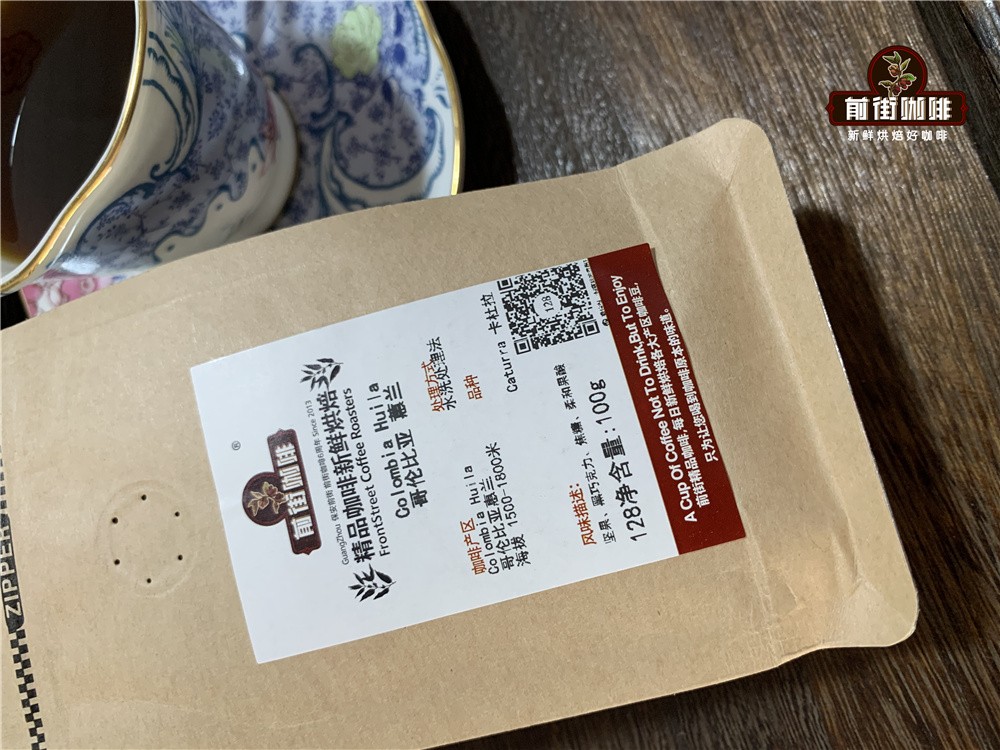
Huila naturally has the richest volcanic ash soil, and soil nutrition matters as much as variety and altitude for refined flavor. Huila beans carry refined fruit acidity, nutty flavors, and a caramel aftertaste—the signature of southern Colombia.
FrontStreet Coffee's daily-blend Colombian Huila comes from this region.

FrontStreet Coffee's Colombian "Flower Moon Night" comes from the Acevedo Garden Estate in the town of Acevedo, Huila. The owner, Ramirez, comes from a coffee-growing family and began working in coffee production at 18, holding professional roles in Acevedo before buying the estate, where he grows Caturra.

Notable Coffee Departments
Cauca is a certified Colombian coffee origin with an average elevation of 1758m and maximum elevations up to 2100m. Its topography, precipitation, temperature, and volcanic soil are ideal for coffee. 80% of the area is mountainous, with parallel ranges in the east and center belonging to the Andes; the central range holds two main volcanoes, Sotara and Petacas. Like other southwestern regions, Cauca has a distinct monomodal rainfall pattern, with the dry season mainly from August to September. The following rainy season concentrates coffee flowering, followed by a concentrated harvest the next year.
Its most striking climatic feature is the wide diurnal swing: average daily temperature 11°C versus an average daytime temperature of 18°C. This variation is key to quality—cooler nights and higher altitudes slow the trees' growth so the seeds absorb more nutrients from the fruit, producing better acidity and Cauca's famously praised sweetness.

Nariño lies in the far southwest, bordering the Pacific to the west and Ecuador to the south. The Andes run through the entire department, with coffee grown in the high-altitude cloud belt between 1600-2300 meters in fertile volcanic soil; the beans are smaller but full, with a vibrant green color. Most of Nariño's annual output is bought by large American coffee merchants, though of roughly 150,000 bags produced each year, only about 6,000 bags qualify as premium selected beans. The department's majestic mountains, beautiful scenery, and south-flowing rivers nurture many smallholder specialty-coffee farmers.
Tolima borders Huila and Cauca, crossed by the north-south trending Andes (M. Andes) and Cordillera (M. Cordillera), between which the Magdalena River (R. Magdalena) flows from south to north. The name comes from the earliest inhabitants, the Pijao people, in whose language "tolima" means "snowed." Tolima's farms, at about 10-15 hectares, are generally somewhat larger than those in other southern regions, and cooperatives are popular here: farmers deliver fresh cherries to cooperative processing plants, though some process their own coffee with small-scale facilities sized for the day's harvest.

Additional Notable Regions
Medellin: In northern Colombia, offering rich flavor, moderate acidity, and intriguingly high sweetness. Medellin exported through the FNC shows higher uniformity and cleanliness than regular Medellin.
Santander: In northern Colombia, bordering the Magdalena River to the west, with cultivation at about 1400-1600m across 30,537 square kilometers. Through cupping, FrontStreet Coffee has found its beans known for intense flavor, a long aftertaste, and unique fresh grassy notes.

Rose Valley Coffee Beans
FrontStreet Coffee's Colombian Rose Valley comes from the Big Tree Estate in Santander—Colombia's first coffee-growing province, a very important but rarely mentioned department that today accounts for about 5% of national production. Its beans are known for intense flavor, a long aftertaste, and unique fresh grassy notes.
Colombian Coffee Varieties
Colombia is the world's largest producer of washed arabica, the second-largest arabica producer, and the third-largest coffee producer overall, with annual output roughly one-third of Brazil's—about 12% of world production. That places it behind only Brazil and Vietnam, but unlike those two, Colombia grows almost exclusively high-end arabica.
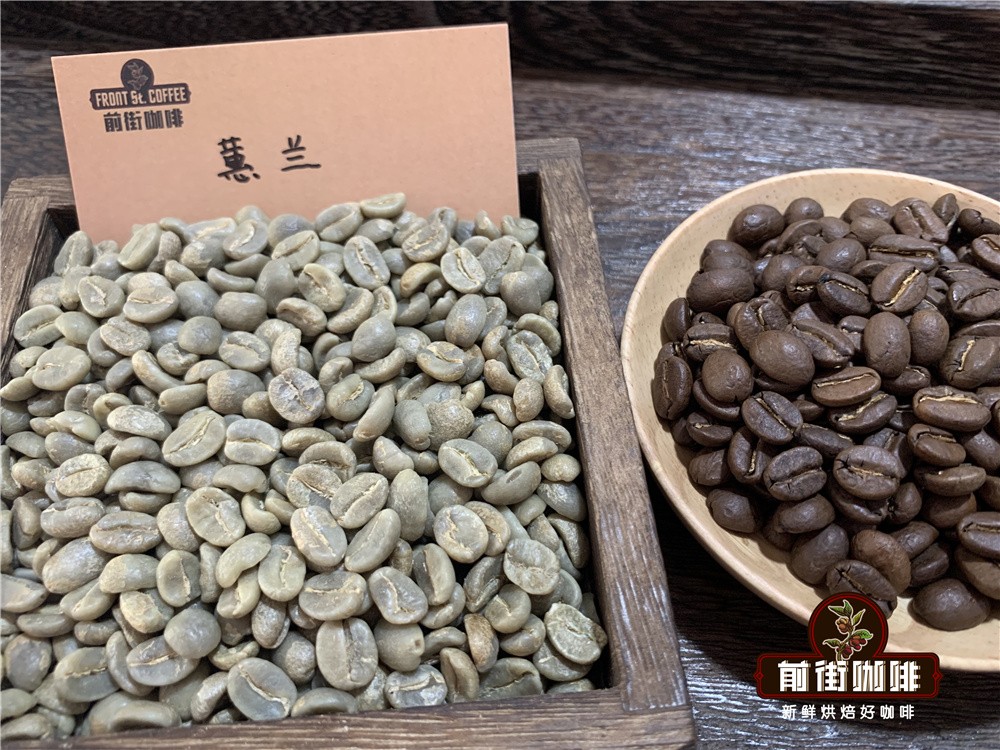
Caturra is a natural dwarf mutation of arabica Bourbon, discovered in Brazil in 1937. More compact than Bourbon and higher yielding, it inherited Bourbon's relatively weak disease resistance. Although discovered in Brazil, it never suited Brazilian conditions and was not widely planted there; instead it spread across Central and South America, with large-scale cultivation in Colombia, Costa Rica, and Nicaragua.
Besides the common American varieties—Caturra, Bourbon, Typica, Pacamara—Colombia also has three unique disease-resistant varieties: Castillo, Tabi, and the Colombia variety (named after the country, developed by Cenicafe). There are also rare treasures such as Gesha, small-grained Mocca, Rume Sudan, Eugenioides, Laurina, and Maragogipe.

Colombian Coffee Processing Methods
Colombia's abundant water makes it ideal for washed processing, and the vast majority of Colombian coffee is washed. Unlike other South and Central American countries, most growers process coffee at their own micro-mills. Each smallholder family has a small processor (Ecomill or Eco-Pulper) that removes skin, pulp, and most of the mucilage with very little water. The parchment beans, still carrying a little mucilage, then go into a small pool or container—sometimes a (partly tiled) concrete tank, sometimes a stainless-steel barrel—for overnight fermentation to loosen what remains. The next morning they are rinsed clean, completing the wash. Processing everything at home gives growers full control over quality.

With the rise of specialty coffee, many farms have added meticulous natural and honey micro-batches as well as experimental processes. FrontStreet Coffee's hugely popular "Flower Moon Night," for example, shows rich berry-jam fermentation notes, while Rose Valley offers charming rose aromatics and sweet peach. Though these novel processes have genuinely special aromas, they can mask the original regional character. FrontStreet Coffee believes the classic washed process best showcases the clean taste of high-altitude Colombian coffee, which is why we chose washed Colombian Huila as our representative Colombian.
FrontStreet Coffee Brewing Parameters
FrontStreet Coffee's parameters for Colombian Flower Moon Night and Rose Valley:
V60 dripper, 1:15 coffee-to-water ratio, medium grind (about coarse-sugar texture, 80% pass on the China #20 standard sieve), 91°C water.

Use segmented extraction: bloom with twice the coffee weight in water (30g for 30 seconds) so the grounds release their carbon dioxide and the rest of the extraction stays stable. Pour in small circles to 125g, continue to 225g, and stop. Remove the dripper once fully drained. Timed from the first pour, extraction is 2'00". Then swirl the whole server gently before pouring cups.
FrontStreet Coffee's Colombian Rose Valley flavor notes: wine chocolate, rose, cranberry, peach, cream.
FrontStreet Coffee's Colombian Flower Moon Night flavor notes: rich strawberry jam, sweet rose aromatics, with abundant strawberry, jam, and liqueur-filled chocolate in the cup.
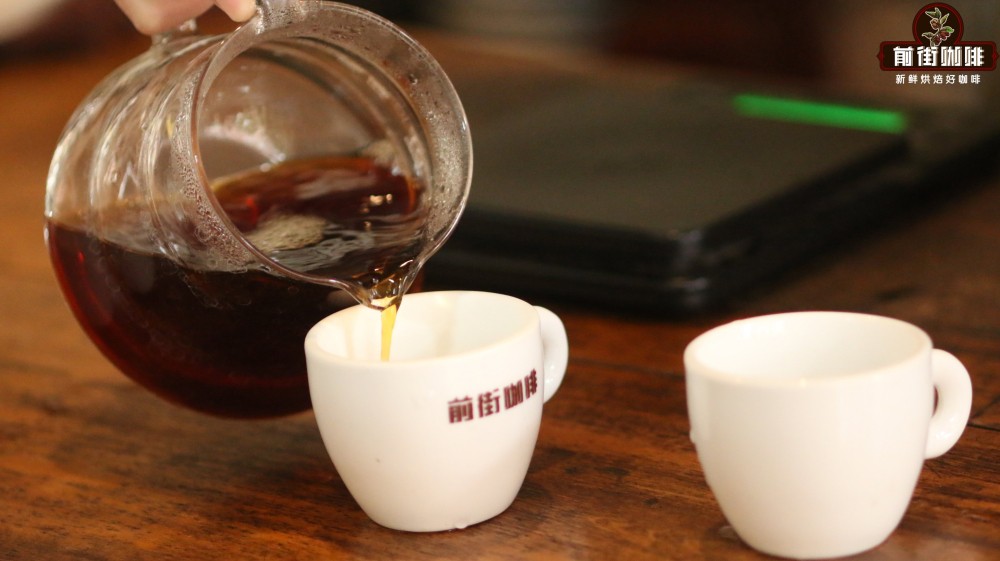
Colombian Huila, meanwhile, serves both as a daily coffee and as one of FrontStreet Coffee's premium blend components. Brewed alone it can taste quite strong, with prominent nuts, dark chocolate, and fruit acidity; as a blend bean it is absolutely delicious and smooth. Brewing style, of course, comes down to personal preference. FrontStreet Coffee stocks over fifty single origins from many regions, covering every taste.
FrontStreet Coffee Brewing Recommendations
FrontStreet Coffee has always believed bean freshness greatly affects flavor, so we ship beans roasted within 5 days. Our roasting philosophy—"Freshly Roasted Good Coffee"—ensures every customer gets fresh coffee on arrival, and since the resting period runs about 4-7 days, coffee lands right at peak flavor.

A kind reminder for those buying ground coffee: pre-ground beans need no resting, because during shipping the pressure of built-up carbon dioxide in the packaging helps round out the flavor—you can brew immediately on receipt. But ground coffee must be brewed promptly, since it oxidizes quickly once exposed to air and its flavor dissipates. FrontStreet Coffee therefore recommends whole beans ground just before brewing for the best flavor.
FrontStreet Coffee Recommendation
To see the other side of the blend that opens this article, look at the Brazilian component. Brazil, the world's largest coffee producer, grows an enormous range of beans marked by moderate acidity and a beautiful balance of sweetness, bitterness, and body—perfectly suited to medium roasting that brings out nutty aromatics and a mellow, softly acidic cup for single-origin or blending alike. For a first taste, try the FrontStreet pulped-natural Cerrado Red Bourbon, a classic Brazilian single origin from the renowned Cerrado region. Roasted medium, it shows cream, peanut, toast, caramel, and hazelnut aromas with a round, non-sour, lightly bitter body, working across pour-over, moka pot, espresso SOE, siphon, and French press. For something rarer, the FrontStreet Fazenda Rainha Yellow Bourbon comes from Mogiana, near southern Minas, where fertile red volcanic soil feeds full aroma development; Yellow Bourbon, a mutation of Red Bourbon, gives a cleaner fruit character with a sugarcane sweetness plus fruit and chocolate notes you will not find elsewhere. And for espresso, Brazil anchors many of FrontStreet's blends—the crema-rich Classic Blend, the nutty Specialty Blend, the balanced Black Cocoa Blend favored by baristas, and the cafe-focused Commercial Blend all contain Brazilian beans, which contribute chocolate and cream aromas, gentle sweet-sour-bitter balance, and more stable extraction.
Important Notice :
FrontStreet Coffee is a long-established specialty coffee roaster in Guangzhou China, selling freshly roasted beans from its own farm in Yunnan as well as dozens of carefully selected single-origin beans from around the world for both pour-over and espresso. The products deliver consistently excellent quality and great value, with shipping within 24 hours. Guangzhou's FrontStreet Coffee shop is recommended by many coffee lovers, and the beans are now available online at the Tmall 。
FrontStreet Coffee has moved to a new address:
FrontStreet Coffee Address: 315,Donghua East Road,GuangZhou
Tel:020 38364473
 Scan and follow the En Gafei WeChat official account. Please indicate that the reprint comes from "En Gafei".