Honduras Finca Moca Lychee Orchid Brandy Barrel Fermented Washed Coffee Brewing Recommendations
Introduction to Honduras Lychee Orchid Coffee
Ever since FrontStreet Coffee introduced a new coffee bean with wine-like aromas, coffee enthusiasts have been captivated. This bean is the FrontStreet Honduras Lychee Orchid from Honduras. Because it undergoes barrel fermentation, the beans possess fermented wine aromas and delightful sweetness. So how can coffee fans brew this Lychee Orchid as pour-over to fully express its flavors? FrontStreet Coffee shares some pour-over techniques in this article.

FrontStreet Coffee: Honduras Lychee Orchid Coffee Bean
Country: Honduras
Region: Masaguara (Moca Estate)
Altitude: 1500-1700m
Varieties: Caturra, Catuai
Processing: Fine washed + brandy barrel fermentation
Flavor Notes: Brandy, dark chocolate, berries, gentle fruit acidity, honey
First, some background on this Honduras bean, because whether pour-over coffee tastes good is complementary to the beans themselves: alongside superb pour-over skills, you need quality beans as the foundation. As FrontStreet Coffee has noted in previous articles, the production of high-quality beans depends on region, variety, and processing method. Let's examine these three points to see what kind of bean this Lychee Orchid really is.
FrontStreet Honduras Coffee Bean Region
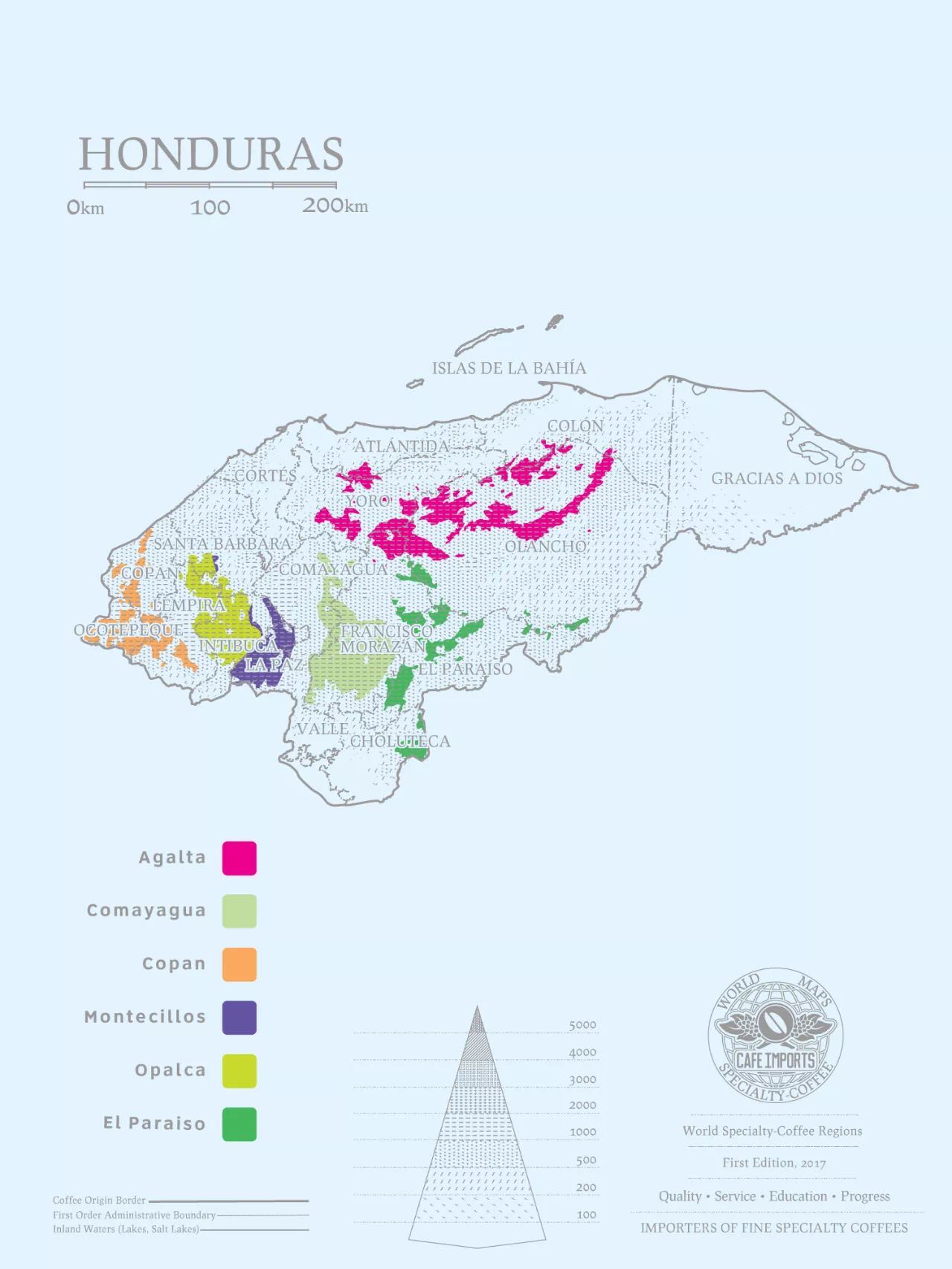
Honduras is located in northern Central America. Since 2011, it has been the highest coffee-producing country in Central America. Its neighbors - Nicaragua, El Salvador, Guatemala, and others - are also coffee producers. However, most Honduran beans are exported to Germany and the United States, with the remaining majority consumed domestically, so in the coffee market Honduran coffee is still considered a niche origin.
Most of Honduras' territory consists of mountains or highlands in a typical tropical climate zone. The coastal areas have a tropical rainforest climate, making the country well suited to growing high-quality single-origin beans. According to FrontStreet Coffee's understanding, Honduras' coffee plantation area reaches up to 280,000 hectares, with small cultivation estates accounting for more than half of the country's production.

Most Honduran coffee is grown on mountainsides with abundant sunlight, high altitude, large temperature swings, and high rainfall - all very suitable for coffee. But because it grows on mountainsides, cherries must be harvested entirely by hand, which is labor-intensive. The advantage is that manual picking ensures all harvested cherries are fully mature fruit, guaranteeing bean quality - one of the reasons Honduran coffee has entered the specialty market.
The Lychee Orchid that FrontStreet Coffee acquired comes from a small estate in Masaguara, Honduras - Moca Estate. Masaguara is a municipality in the Intibucá department, situated in the southern part of the Jesús de Otoro Valley, surrounded by mountains and hills. It is dedicated primarily to coffee cultivation, which drives the local economy, while the valley areas correspondingly focus on basic grains and livestock. As for the name: according to Mr. Alberto Membreño's "Indigenous Place Names," Masaguara means "place with deer." The area's average altitude is 853 meters, with high-altitude zones reaching over 1500 meters. Moca Estate sits in the highest-altitude part of Masaguara, so the quality of the cherries produced here is excellent - one of the reasons FrontStreet Coffee brought in this bean.

Honduras Coffee Varieties
The varieties cultivated in Honduras are all Arabica, including Bourbon, Caturra, Catuai, and Pacas.
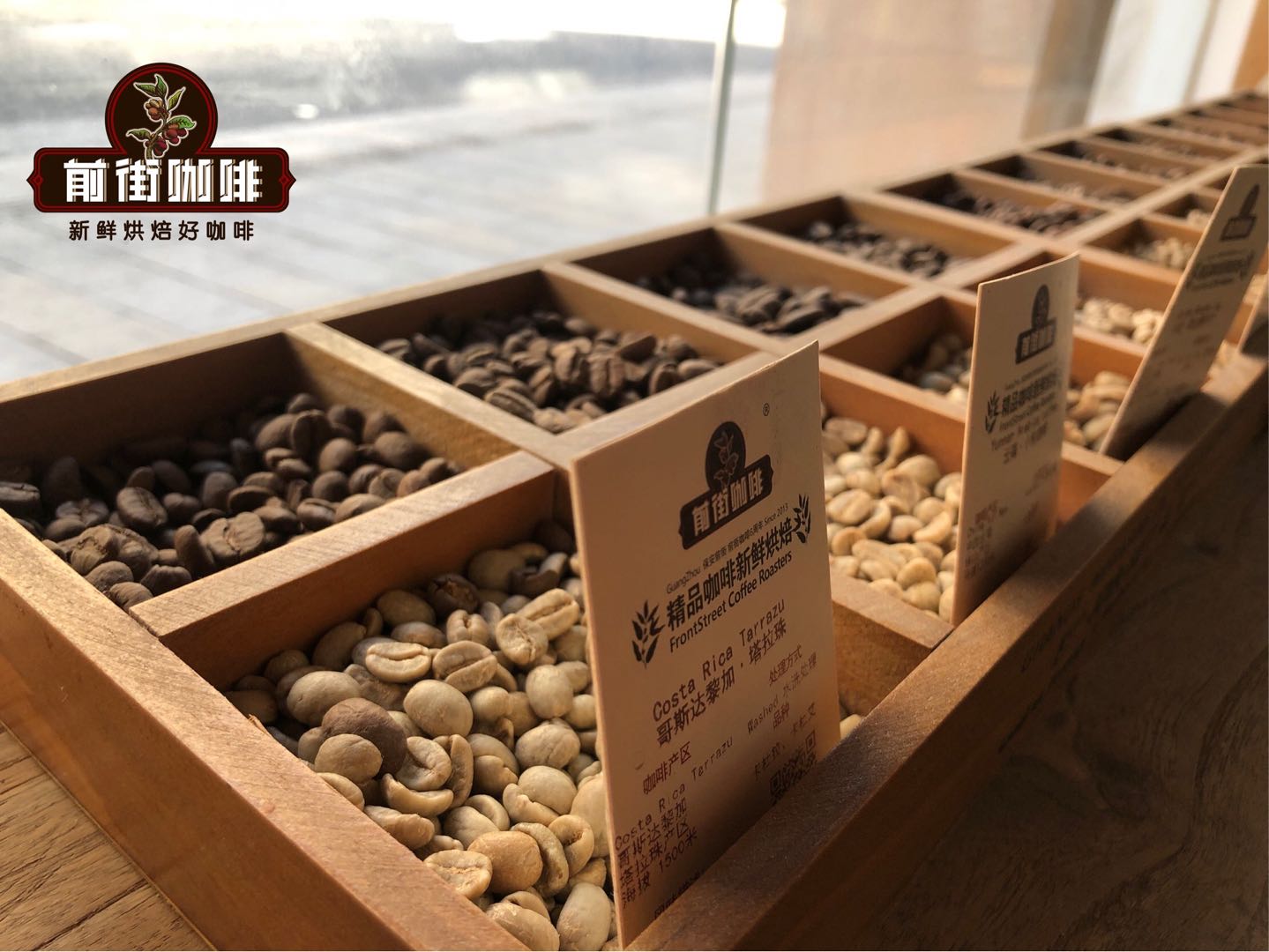
This Lychee Orchid bean uses the country's most common varieties, Caturra and Catuai. Caturra was discovered in 1937 in the Brazilian town of Caturra, from which it takes its name. Its yield and disease resistance surpass Bourbon, and it inherits Bourbon's advantages of low tree height and easy harvesting. Catuai is a hybrid created by crossing Caturra with Mundo Novo; it has better disease resistance but a slightly inferior flavor and mouthfeel compared with Caturra.
Caturra
Caturra is a single-gene variant of Bourbon, discovered in Brazil in 1937. Its yield and disease resistance are both better than Bourbon's, and the plants are shorter, making harvesting convenient. Unfortunately, like Bourbon, it suffers biennial yield fluctuations, and its flavor is comparable to or slightly below Bourbon beans. More importantly, it has extremely strong adaptability - it doesn't need shade trees and thrives under direct strong sunlight, commonly known as full-sun cultivation. It can adapt to high-density planting but requires more fertilization, raising costs, so initial acceptance among farmers was not high.

Catuai
Catuai is an Arabica hybrid, a cross between Mundo Novo (New World) and Caturra. It resists natural disasters better, especially wind and rain. It inherits Caturra's low tree height while correcting Mundo Novo's shortcomings; another advantage is its solid fruit set that doesn't easily drop in strong winds, compensating for Arabica's fragile fruit. However, its overall flavor is more one-dimensional than Caturra's - and also flatter than Mundo Novo's, with less body - which is its greatest regret. Its productive fruiting lifespan is only about ten years, another weakness.

FrontStreet Honduras Lychee Orchid Processing Method
As noted above, this Lychee Orchid has fermented wine aromas because it is processed using barrel fermentation and washed processing. So what exactly does that involve?

Barrel Fermentation Processing
The barrel fermentation method draws inspiration from winemaking. In wine production, the greatest influence comes from achieving structural stability through moderate oxidation while the barrel incorporates its aromas into the wine. Coffee beans undergo similar effects while fermenting in barrels.
Because barrels allow tiny amounts of air to pass through the walls, the beans experience moderate oxidation. The oxygen entering also accelerates fermentation, smooths tannins, and gradually develops fresh fruit aromas into rich, complex mature wine notes. The barrel's moderate hardness ensures good waterproofing and storage safety. Additionally, the barrel contains a certain amount of tannins; while the green beans rest inside, these tannins penetrate the beans, giving the coffee layered complexity and rich wine aromas.

FrontStreet Lychee Orchid Processing Flow
During processing, freshly harvested cherries first undergo fine washing, then are placed in brandy oak barrels for low-temperature fermentation for 30-40 days (at approximately 15-20°C), allowing the green beans to absorb the barrel's flavors. Finally, they are shade-dried. After brandy barrel fermentation, the beans carry the gentle sweetness of lychee and honey along with full-bodied brandy aromas and oak scents - which is why the estate owner named this barrel-fermented bean "Lychee Orchid." The estate also produces another bean fermented in whiskey barrels, the FrontStreet Honduras Sherry, which performs excellently as well; interested coffee lovers might want to try it too.

Above is FrontStreet Coffee's rundown on the Honduras Lychee Orchid, hoping it helps enthusiasts understand the bean better. Next, FrontStreet Coffee shares how to brew it as pour-over to bring out its full flavors.
FrontStreet Coffee Pour-Over Brewing Data
Cake Dripper

The cake dripper has a flat bottom with three small holes, using the creases of the filter paper in place of flow channels. This reduces the contact area between dripper and paper, letting water flow evenly and smoothly - extraction becomes more reliable, cooling slows, and the coffee turns out smoother and more balanced overall.
Parameters & Technique: 15g of coffee; medium-fine grind (fine sugar: 80% pass-through rate on China standard #20 sieve); water temperature 90°C; ratio 1:15. Bloom with 30g of water for 30 seconds, then pour a small stream in the center to 125g. When the level drops and the bed is about to be exposed, pour to 225g. When the level drops again and the bed is about to show, remove the dripper. (Timer starts from the bloom.) Extraction time is 1 minute 58 seconds.

[FrontStreet Lychee Orchid] Flavor: Brandy, gentle berry acidity, creamy dark chocolate aftertaste.
Hario V60 Dripper

The bottom of the Hario V60 has one large outlet, and its internal ribs form a curved vortex structure running from bottom to top. This makes the flow rate relatively fast, but the curved ribs also slow the coffee liquid to a degree, increasing contact with the grounds and better showcasing the bean's flavor layers.
Parameters & Technique: 15g of coffee; medium-fine grind (fine sugar: 82% pass-through rate on China standard #20 sieve); water temperature 90°C; ratio 1:15. Bloom with 30g of water for 30 seconds, then pour a small stream in the center to 118g. When the level drops and the bed is about to be exposed, pour to 228g. When the level drops again and the bed is about to show, remove the dripper. (Timer starts from the bloom.) Extraction time is 1 minute 56 seconds.
[FrontStreet Lychee Orchid] Flavor: Brandy, dark chocolate, gentle berry acidity, with a honeyed sweet aftertaste.

French Press
The French press fully immerses the coffee in the pot, then uses a plunger with a metal filter to separate liquid from grounds. This method preserves the coffee's texture and oils, and it is a relatively convenient, easy-to-use device.
Parameters & Technique: 20g of coffee; medium-fine grind (BG 6S: 58% pass-through rate on China standard #20 sieve); water temperature 90°C; ratio 1:15. Pour water directly to 300g, steep for 3 minutes, then press and filter, pouring out all the coffee. Extraction time is 3 minutes 14 seconds.

[FrontStreet Lychee Orchid] Flavor: Brandy, chocolate, honey, with some oils and a slight powderiness in the mouthfeel (the powderiness comes from the metal filter pressing fines through; for a cleaner cup, add filter paper to the metal filter).
Conclusion
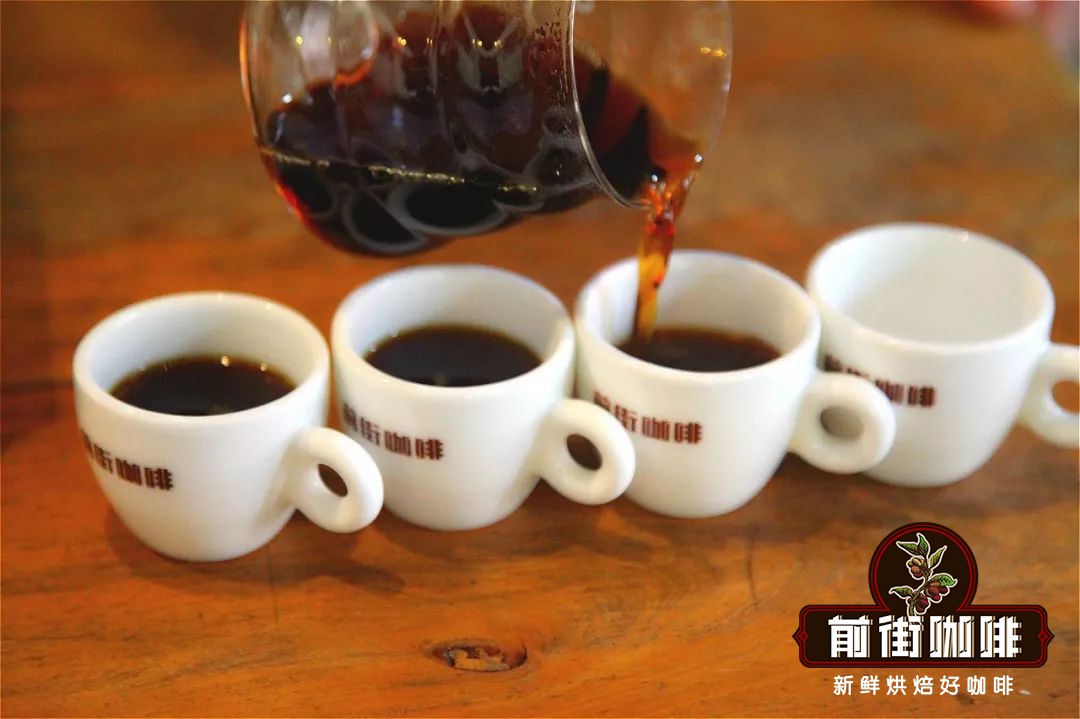
Coffee brewed with the cake dripper has a smoother mouthfeel with gentle fruit acidity;
Coffee brewed with the V60 has more complete flavors, with rich wine aromas, gentle berry acidity, and a honeyed sweet aftertaste;
Coffee brewed with the French press offers rich wine aromas plus a slight oily sensation.
For more specialty coffee beans, please add FrontStreet Coffee on private WeChat, WeChat ID: kaixinguoguo0925
FrontStreet Coffee Recommendation: Beans That Shine in a V60
Lychee Orchid clearly loves the V60 - and so do these FrontStreet Coffee beans. The classic washed Ethiopia Yirgacheffe Guodingding rewards the V60's fast, even extraction with white jasmine florals, bright citrus and lemon acidity, and a tea-like sweetness, making it the ideal first specialty bean for newcomers. The natural Ethiopia Huakui goes further: its tropical fruit burst of strawberry, passion fruit, jackfruit, and lychee, with silky, juice-like sweetness and almost no bitterness, is precisely the kind of delicate aromatics the V60 was built to reveal. Then there's the Strawberry Sugar blend, whose Geisha-derived floral elegance adds yet another dimension to what the V60 can reveal. Whichever you choose, freshly roasted and ground just before brewing, these floral-fruity beans show why the V60 remains the pour-over gold standard.
Important Notice :
FrontStreet Coffee is a long-established specialty coffee roaster in Guangzhou China, selling freshly roasted beans from its own farm in Yunnan as well as dozens of carefully selected single-origin beans from around the world for both pour-over and espresso. The products deliver consistently excellent quality and great value, with shipping within 24 hours. Guangzhou's FrontStreet Coffee shop is recommended by many coffee lovers, and the beans are now available online at the Tmall 。
FrontStreet Coffee has moved to a new address:
FrontStreet Coffee Address: 315,Donghua East Road,GuangZhou
Tel:020 38364473
 Scan and follow the En Gafei WeChat official account. Please indicate that the reprint comes from "En Gafei".