Which is Better: Mandheling or Blue Mountain Pour-Over Coffee? Is There a Proper Way to Drink Mandheling Coffee?
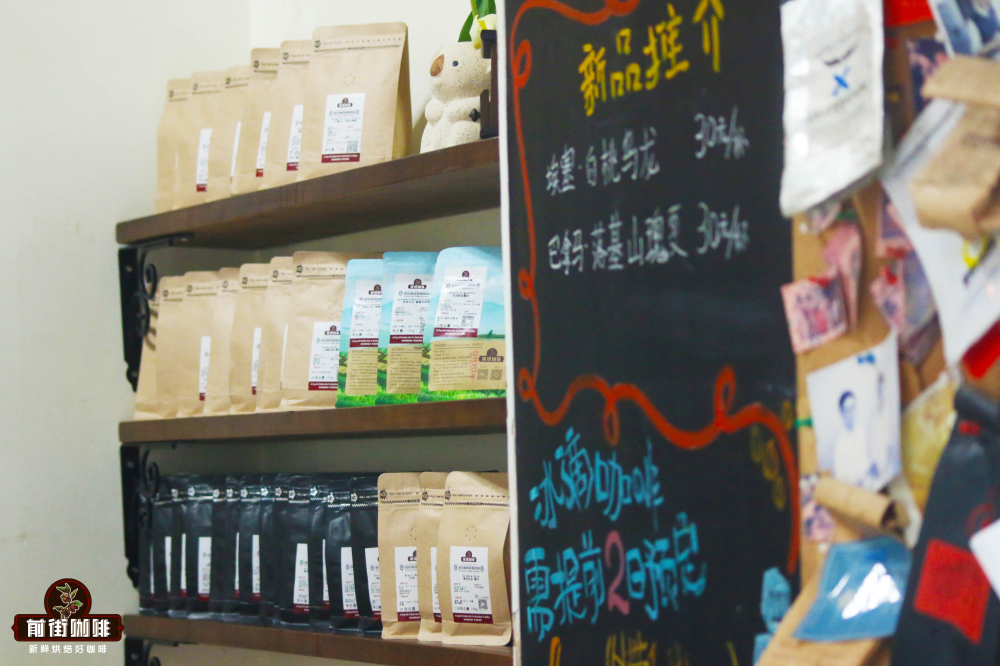
While fresh and light coffee has its appeal, rich and mellow brews also command a substantial following. Today's premium coffees are often Panama Geishas, whereas previously, the definition of premium coffee followed Japanese standards, characterized by richness and smoothness. Consequently, Blue Mountain coffee and Mandheling coffee became synonymous with premium coffee.
This naturally sparks curiosity: if both represent richness and mellow character, what distinguishes Blue Mountain coffee from Mandheling coffee? Those who have purchased both may have noticed that Blue Mountain coffee typically commands a significantly higher price. Does that mean one is superior to the other? Below, FrontStreet Coffee introduces the differences between these two coffee beans one by one.
Blue Mountain Coffee
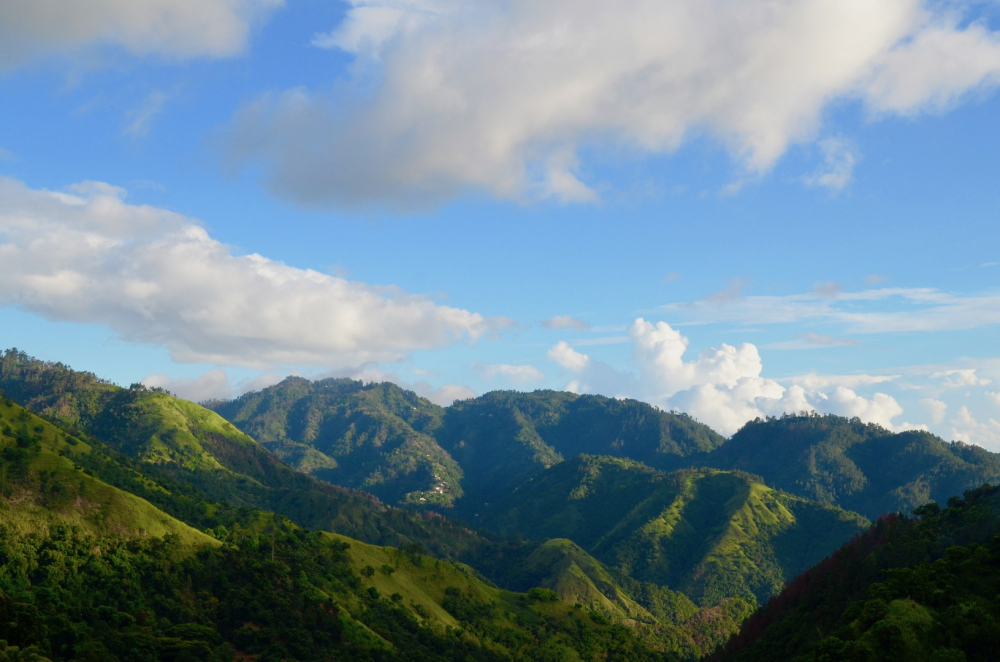
Blue Mountain coffee beans come from the Blue Mountain region of Jamaica. As single-origin beans, coffees grown in different regions exhibit distinct flavor profiles. The Blue Mountains, where Blue Mountain coffee is cultivated, are located in eastern Jamaica. Surrounded by the Caribbean Sea, on clear sunny days the sun's rays reflect off the azure sea surface, creating a brilliant blue glow on the peaks - hence the range's name. The Blue Mountain coffee-growing region benefits from fertile volcanic soil, fresh air, a humid climate, and year-round mist and rain, creating the world-renowned Jamaican Blue Mountain coffee.
Blue Mountain coffee beans are of the Typica variety. Typica was smuggled by a French naval officer and escorted to Martinique, subsequently flourishing throughout Central and South America. Jamaica's coffee cultivation history dates back to the 18th century: in 1717, French King Louis XV ordered coffee cultivation in Jamaica; in the mid-1720s, Jamaica's governor introduced Arabica seeds from Martinique and began promoting cultivation in the St. Andrew region.
Although the Blue Mountains reach heights exceeding 2,100 meters, not every bean grown in the region can be called Blue Mountain coffee. Jamaican coffee beans are classified into three main categories based on cultivation altitude: Jamaican Blue Mountain Coffee, Jamaican High Mountain Coffee, and Jamaica Prime Coffee.
Jamaican Blue Mountain Coffee: According to CIB standards, only coffee grown at altitudes between 1,000 and 1,700 meters can be called Jamaican Blue Mountain coffee. This grade is further classified by quality and bean size into four levels: No.1, No.2, No.3, and PB. Among these, Blue Mountain No.1 is the highest grade - 17/18 screen size, defective bean ratio not exceeding 2%, harmonious flavor, balanced acidity and bitterness, rich and mellow - recognized worldwide as an exceptional product. Such high standards are clearly reflected in FrontStreet Coffee's Blue Mountain coffee pricing.
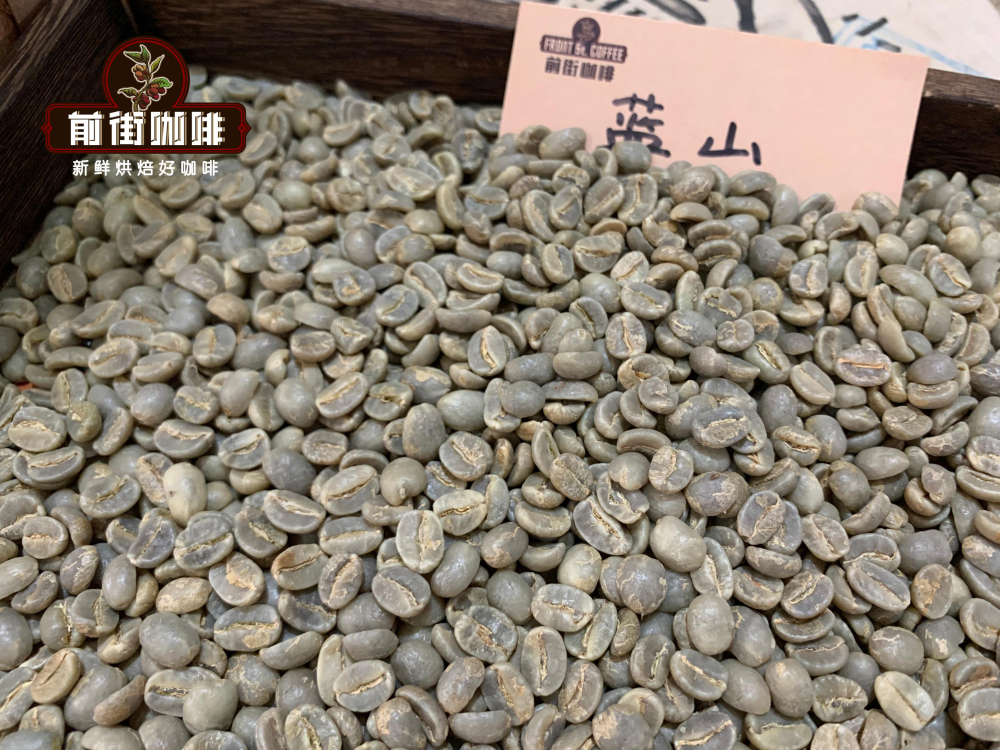
Jamaican High Mountain Coffee: Beans grown at altitudes of 500 to 1,000 meters in the Jamaican Blue Mountain region are called High Mountain Coffee, with quality second only to Blue Mountain. Given the scarce production of authentic Blue Mountain, High Mountain Coffee is an excellent alternative for experiencing Jamaican coffee flavors.
Jamaica Prime Coffee: Coffee grown outside the Blue Mountain region, at altitudes below 500 meters, is classified as Jamaica Prime Coffee.
As such a classic premium coffee, Jamaican Blue Mountain naturally occupies a spot on FrontStreet Coffee's menu of nearly fifty coffee bean varieties. FrontStreet Coffee's Blue Mountain beans are Blue Mountain No.1 grade - large, uniform beans with a fragrant aroma, a clean and mellow mouthfeel, and balanced acidity and bitterness.

FrontStreet Coffee Jamaican Blue Mountain No.1 Coffee Beans
Region: Jamaican Blue Mountains
Farm: Clifton
Altitude: 1,310 meters
Variety: Typica
Grade: No.1
Processing Method: Washed
Because some merchants deliberately blur the lines between "Blue Mountain coffee," "Blue Mountain flavor," and "Blue Mountain blend" - labeling similar-tasting beans with "Blue Mountain" branding - many customers worry about buying authentic Blue Mountain coffee.
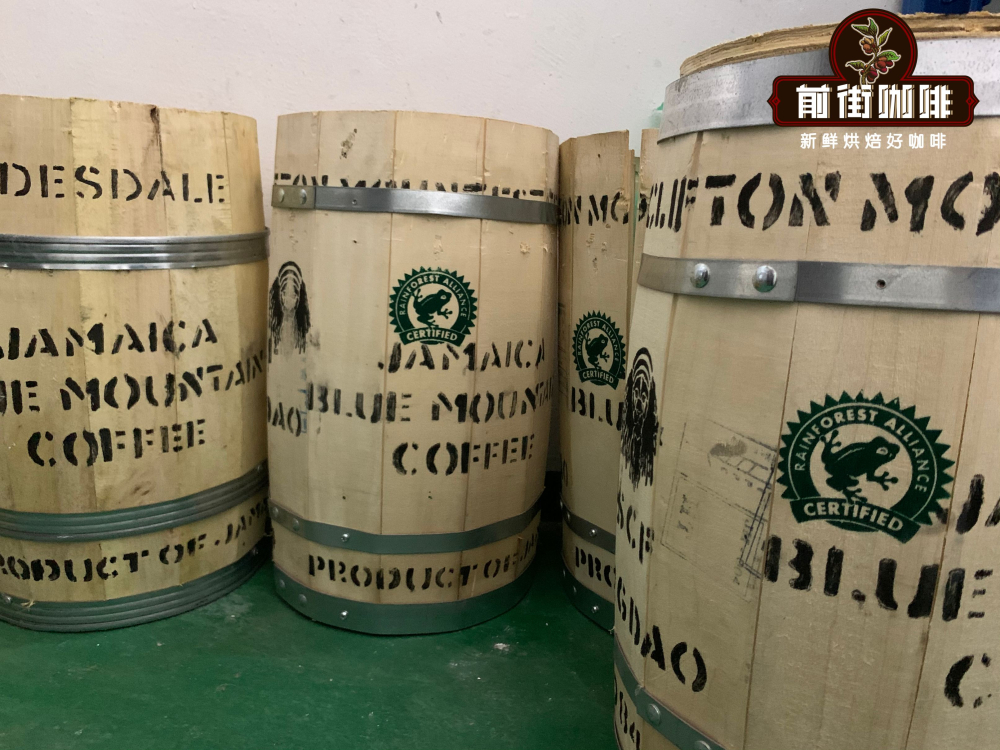
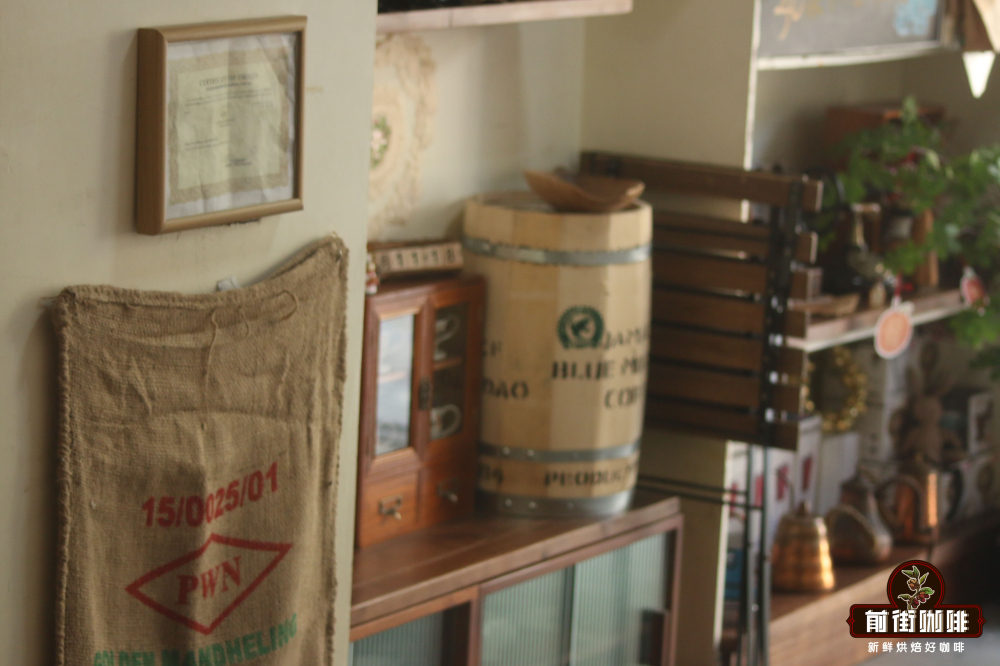
However, those who purchase Blue Mountain beans from FrontStreet Coffee can rest assured. Authentic Blue Mountain coffee comes with certificates issued by the Jamaican Coffee Board (CIB), certificates of origin for Jamaican Blue Mountain coffee, authorized sales certificates from the Blue Mountain producers, and wooden barrels bearing the Blue Mountain coffee emblem. FrontStreet Coffee's stores display the relevant certificates, and interested customers are welcome to visit and verify them.
Mandheling
Mandheling coffee beans come from the Sumatra region of Indonesia. The name "Mandheling" actually resulted from a double misunderstanding. Thanks to its rich character, Mandheling became hugely popular in the Japanese coffee market.
When discussing Mandheling, what most people hear about is Golden Mandheling. However, "Golden Mandheling" has long been registered as a trademark by Indonesia's PWN company - meaning only Golden Mandheling from PWN is truly Golden Mandheling in the authentic sense.
FrontStreet Coffee has acquired several beans labeled "Golden Mandheling," and in blind tasting, FrontStreet Coffee's baristas could accurately identify PWN's Golden Mandheling - because the cleanliness of PWN Golden Mandheling is simply incomparable.
FrontStreet Coffee Indonesian Golden Mandheling Coffee Beans
Region: North Sumatra, Indonesia
Company: PWN
Grade: G1
Altitude: 1,100-1,600 meters
Variety: Ateng
Processing Method: Wet-hulled
The exceptionally clean taste of PWN Golden Mandheling stems from PWN's extremely strict production standards. Beans at screen size 18 or above, with fewer than 3 defective beans per 300-gram green coffee sample, qualify for the highest G1 grade, showing a dark green color and uniform, regular shape. On this basis, PWN's Golden Mandheling undergoes three rounds of manual sorting to completely remove defective beans. Through such rigorous screening, Golden Mandheling lacks the earthy impurities of regular Mandheling, offering a clean, bright entrance and more intense sweetness.
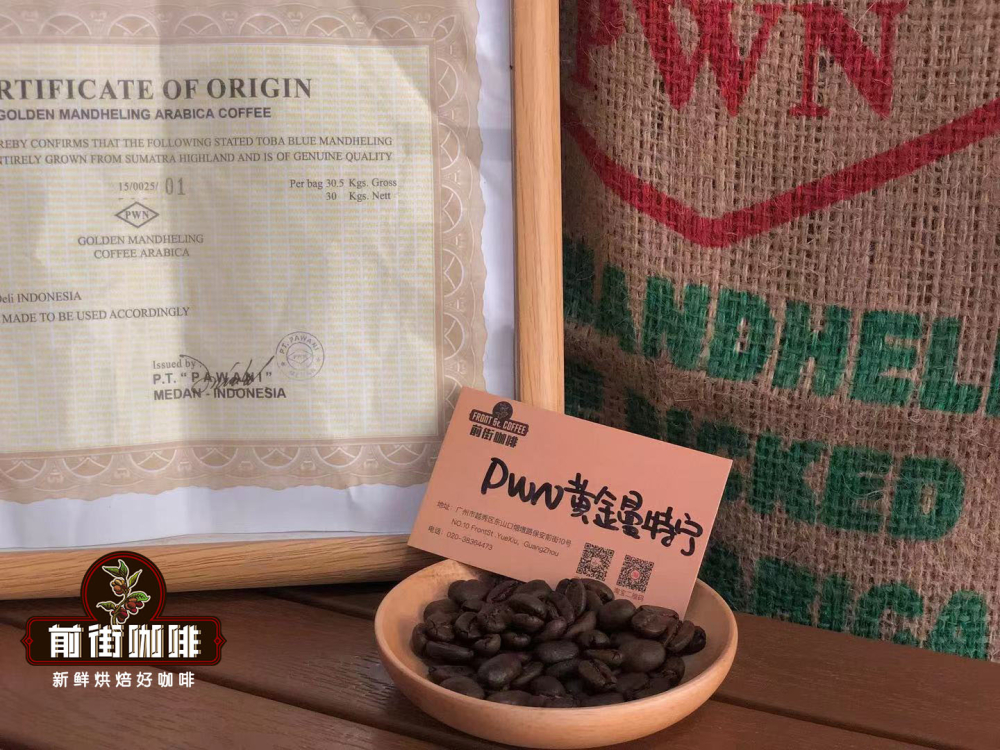
The superior quality of PWN Golden Mandheling has led some unscrupulous merchants to pass off regular Mandheling processed to similar screening standards as the real thing. To verify whether your beans are genuine PWN Golden Mandheling, you can ask the merchant for the PWN Golden Mandheling green bean gunny sack and the certificate of origin issued by PWN. FrontStreet Coffee's store walls display these certificates, and interested customers are welcome to visit and examine them.
Many coffee enthusiasts who have tasted FrontStreet Coffee's Blue Mountain and Mandheling in our stores ask our baristas how to brew them to fully express their flavors. In fact, the finest ingredients often require only the simplest preparation. FrontStreet Coffee follows this philosophy, with these brewing parameters:
Dripper: KONO
Water Temperature: 88°C
Dose: 15 grams
Coffee-to-Water Ratio: 1:15
Grind Size: 70% pass-through rate on the China standard #20 sieve
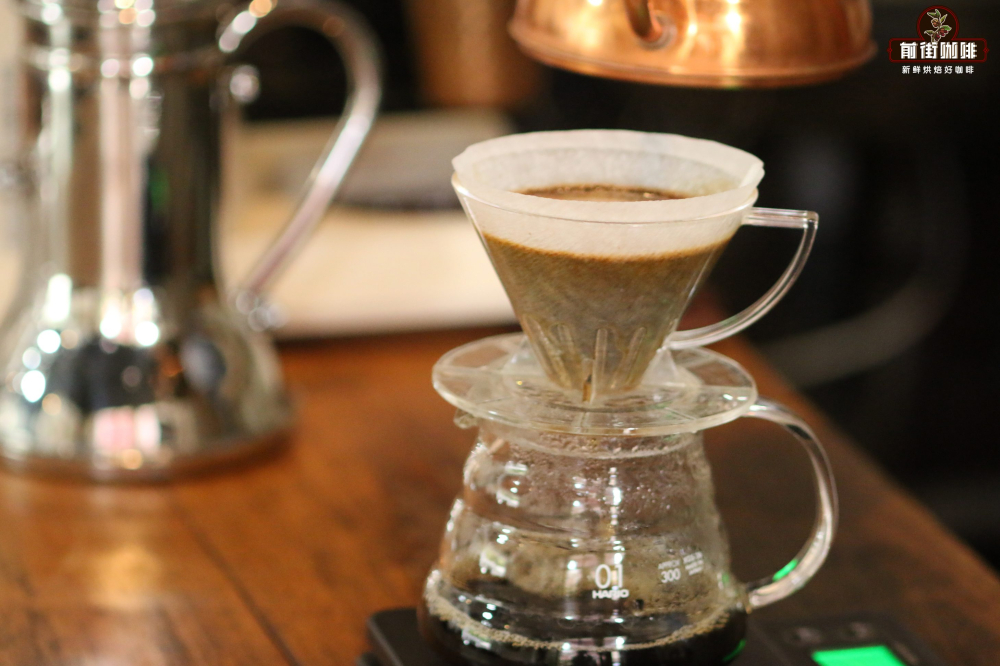
Since both Mandheling and Blue Mountain beans are dark roasted, FrontStreet Coffee recommends drippers with immersion functionality, such as the KONO, to brew a rich, smooth cup. Because dark-roasted coffee compounds extract easily, FrontStreet Coffee chooses a grind with a 70% pass-through rate and uses 88°C water to avoid extracting bitter, burnt flavors.
First pour 30 grams of hot water for a 30-second bloom, then pour in a slow, fine stream from the center, spiraling outward to 125 grams. Wait until the water level drops to just above the coffee bed, then continue spiraling to 225 grams. Total extraction time is approximately 2 minutes.
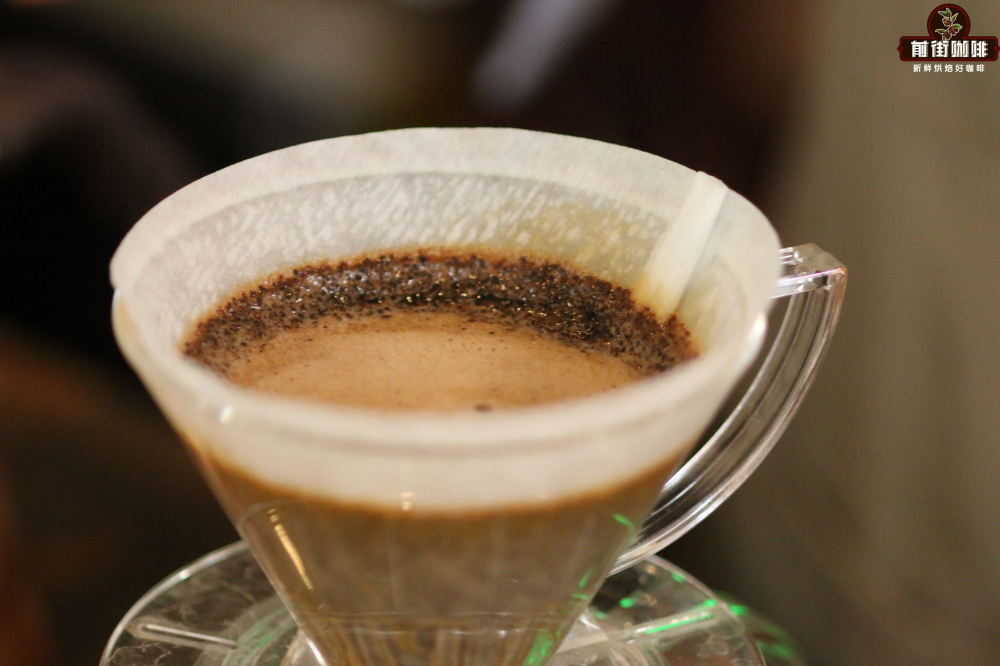
When customers place orders, FrontStreet Coffee ships beans roasted within 5 days. Upon arrival, the beans have already gone through a 4-7 day degassing period and are at their flavor peak - the ideal brewing window. FrontStreet Coffee recommends a 30-second bloom to fully release carbon dioxide from the coffee particles, ensuring more stable extraction in the later stages.
Additionally, for customers without a grinder at home, FrontStreet Coffee provides a grinding service. However, once beans are ground, degassing accelerates and aromatics dissipate faster, so FrontStreet Coffee recommends grinding fresh just before brewing for the best flavor.
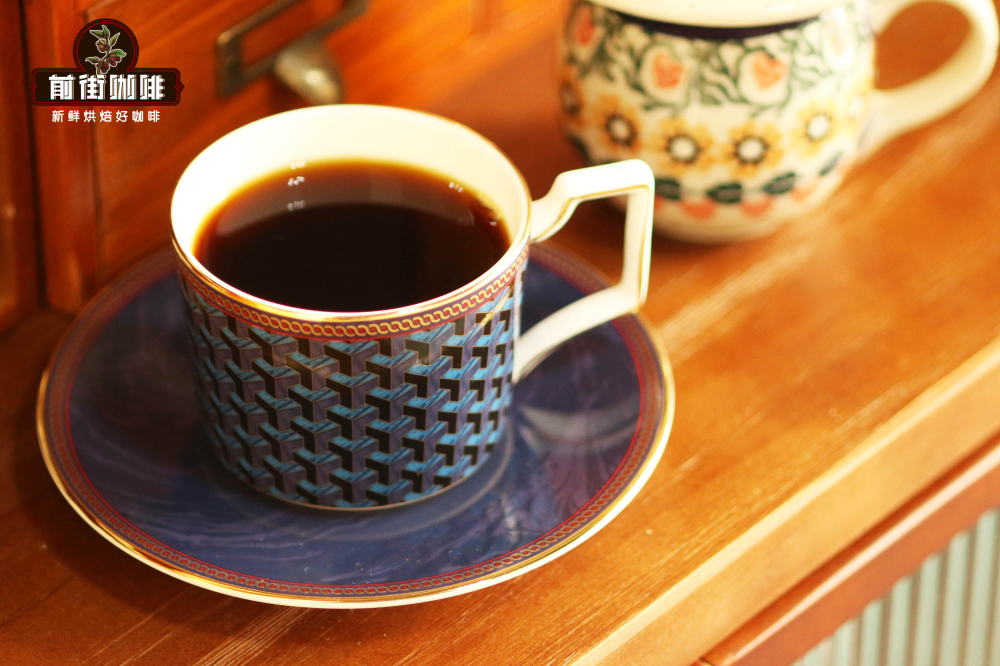
A delicious cup of Blue Mountain shows balanced acidity and bitterness, with neither aspect overpowering or lacking. FrontStreet Coffee's Blue Mountain presents just that balance, with rich nutty and chocolate notes and a mellow, smooth mouthfeel. By comparison, FrontStreet Coffee's PWN Golden Mandheling offers sweet herbal notes and cinnamon-like spice aromatics, rich and full-bodied with caramel sweetness. As the cup cools, herbal fragrances and subtle spice notes emerge, with a strong cantaloupe aroma.
FrontStreet Coffee Recommendation
Can't decide between the two? FrontStreet Coffee's PWN Golden Mandheling is the benchmark of its kind - G1 grade beans at screen size 18+, fewer than 3 defects per 300g sample, and three rounds of hand sorting produce a clean, syrupy cup with caramel sweetness, best brewed at 87-88°C, 15g at 1:15 in three pours. For those drawn to balanced elegance, FrontStreet Coffee's Jamaica Blue Mountain No.1 from the Clifton farm (1,310m, washed Typica) delivers harmonious acidity, bitterness, nut, cream, and chocolate notes - the archetypal "coffee everyone loves."
Important Notice :
FrontStreet Coffee is a long-established specialty coffee roaster in Guangzhou China, selling freshly roasted beans from its own farm in Yunnan as well as dozens of carefully selected single-origin beans from around the world for both pour-over and espresso. The products deliver consistently excellent quality and great value, with shipping within 24 hours. Guangzhou's FrontStreet Coffee shop is recommended by many coffee lovers, and the beans are now available online at the Tmall 。
FrontStreet Coffee has moved to a new address:
FrontStreet Coffee Address: 315,Donghua East Road,GuangZhou
Tel:020 38364473
 Scan and follow the En Gafei WeChat official account. Please indicate that the reprint comes from "En Gafei".