【FrontStreet Coffee Barista's Notes】El Salvador Santa Ana Chocolate Lover's Estate Coffee Special Report
El Salvador · Santa Ana
- Farm: Finca Guayabo Chocolate Lover Estate
- Variety: Bourbon
- Altitude: 1450m
- Grade: SHB
- Processing: 50% washed, 50% honey process
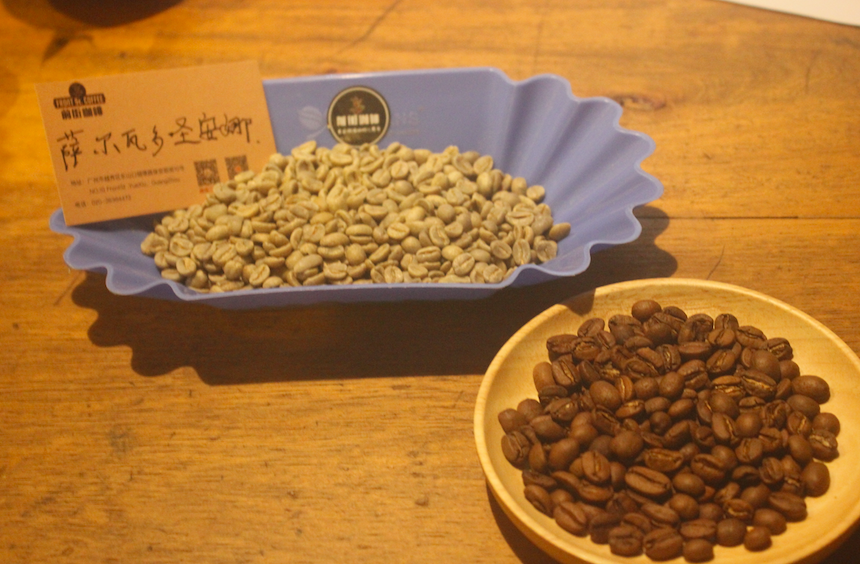
Bean Information
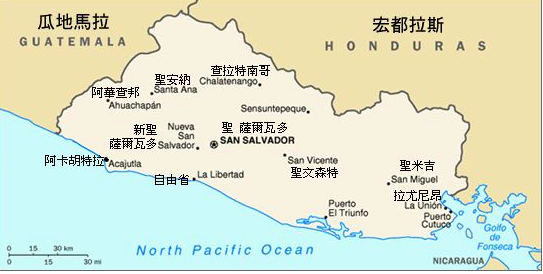
Santa Ana Volcano is a volcano in Santa Ana, El Salvador. At 2,381 meters it is the highest volcano in the country. Its summit features four nested calderas and craters, with small volcanic lakes between them.
El Salvador has six major coffee-producing regions, mostly on high mountain slopes or plateau areas covered by volcanic ash above 1,200 meters. The harvest season runs from November to April of the following year.
Because coffee prefers a mild climate, El Salvador's trees are predominantly grown under the shade of tall, dense trees (shade-grown coffee) to avoid the high temperatures and direct sun that would hurt bean quality. The coffee belongs to the Arabica species, with Pacas and Bourbon as the main varieties. These are large beans with sweet flavors and excellent taste profiles.
Estate Introduction
Chocolate Lover Estate EL GUAYABO is a farm in El Salvador's Santa Ana volcanic zone, sitting at 1,300-1,500 meters on the mountainside of the volcanic belt and extending along the valley. The microclimate created by the winding mountain terrain produces coffee with very delicate flavors.
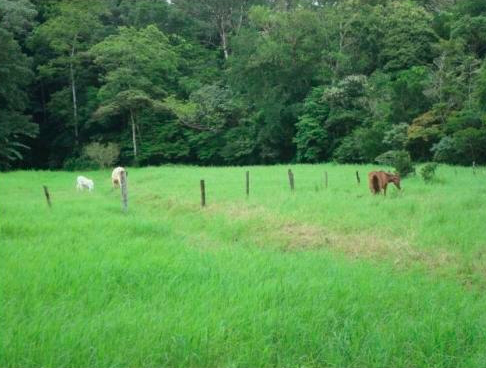
The farm primarily grows the Bourbon variety across the whole mountainside. Thanks to the well-preserved original forest vegetation in the area, the farm often receives visits from nearby birds, reptiles and other wildlife.
Variety
Bourbon is a sub-variety that mutated from Typica, and both belong to the oldest existing coffee varieties. When the green fruits mature, they turn bright red. Compared with Typica, Bourbon plants have wider leaves and grow more densely. Although the yield is higher than Typica's, the harvest period is still two years, making it a low-yield variety. It offers excellent quality, though, with wine-like acidity and a sweet aftertaste.
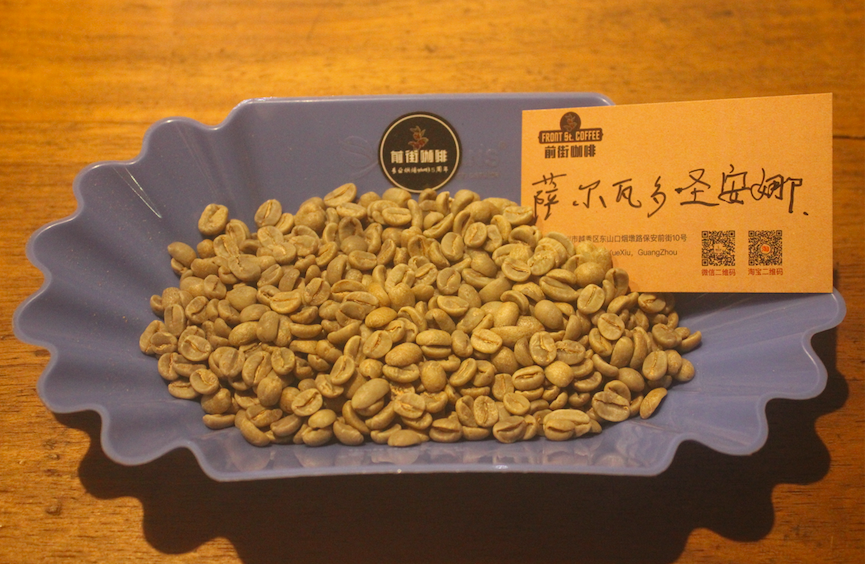
The beans are relatively large, uniform in shape and glossy with an even color. For harvesting convenience, farmers prune the trees so they don't exceed 150 centimeters in height.
Processing Method (50% washed, 50% honey process)
Finca Guayabo mainly uses different post-harvest processing to showcase this bean. Working with 100% Bourbon but two different approaches — 50% honey process and 50% washed — the original variety presents different flavors through each method, creating a multi-layered, milk-like smoothness with cocoa and chocolate notes: the "Chocolate Lover" profile.
The honey process involves transporting the beans to a honey-processing facility at about 1,800 meters. Processing at this lower altitude is done because the area is less prone to fog, with ample sunlight and strong ultraviolet rays, letting the beans absorb enough heat to develop excellent aroma. This dries the coffee quickly and lets it express its flavors better.
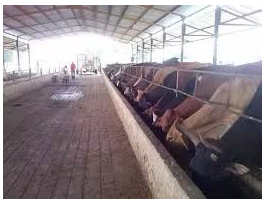
The washed method uses the region's abundant water to give the coffee a very clean taste. Combining 50% honey process with 50% washed creates a single origin with real character — this is the profile the farm sets out to express, a coffee full of chocolate, cocoa and nut notes that they named the "Chocolate Lover" series.
Roasting Analysis
When FrontStreet Coffee's roaster received these green beans from El Salvador · Santa Ana, they observed that the beans had high density. During roasting they used medium heat to extend the dehydration time. After first crack they appropriately extended the caramelization reaction to bring the beans' sweetness forward.
Roasting machine: Yangjia 800N (300g batch size)
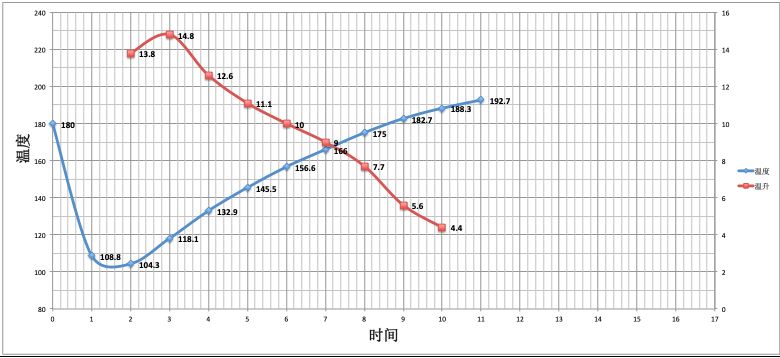
Charge temperature: 180°C, heat at 125, damper at 3; turning point at 1'39", when the temperature reached 140°C the damper was adjusted to 3.5 and heat reduced to 100; at 151.2°C the bean surface turned yellow and the grassy aroma disappeared completely, entering the dehydration phase. When the temperature reached 156°C, heat was reduced to 80, damper unchanged; at 166°C heat was reduced to 50, damper unchanged; after first crack the damper was opened to 5.
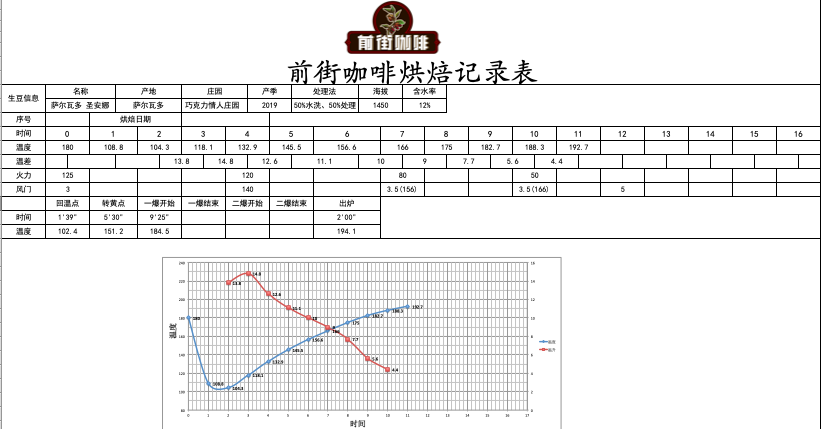
At 8'38", ugly wrinkles and black spots appeared on the bean surface, with the toasted bread aroma clearly transforming into coffee aroma — the prelude to first crack. At this point, listen carefully for the first crack. First crack began at 9'25", the damper opened to 5, with 2'00" development after first crack, discharged at 194.1°C.
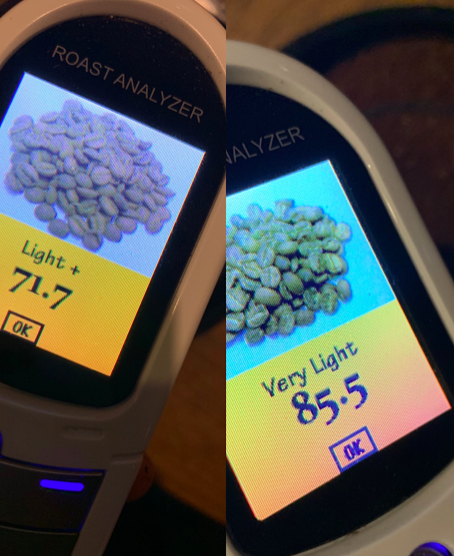
Agtron bean color value: 71.7 (left image), Agtron ground color value: 85.5 (right image), Roast Delta value: 13.8.
Cupping Notes
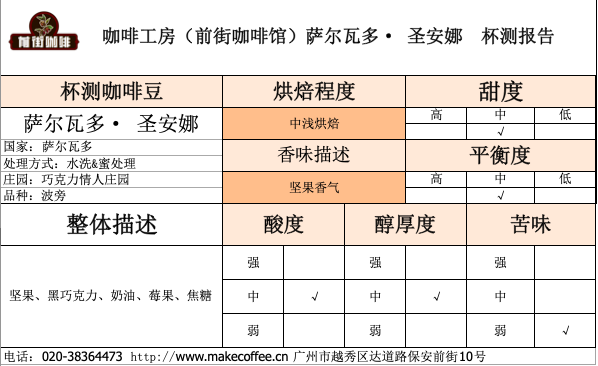
Cupping flavors: nuts, dark chocolate, cream, berries, caramel
1. Flavor descriptions vary by individual and are influenced by water temperature and brewing methods. This cupping report provides descriptions limited by the flavor wheel under identical brewing equipment and parameters, intended for reference purposes.
2. Content will be promptly updated based on new information, with the latest updates prevailing.
Brewing Guide
Recommended brewing method: pour-over
- Dripper: V60
- Water temperature: 88-90°C
- Coffee-to-water ratio: 1:15
- Grind size: BG -6T (57% retention on the China standard #20 sieve), i.e., medium-fine grind
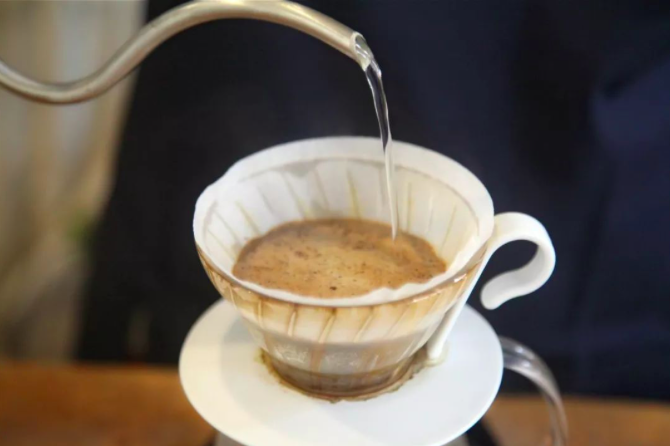
Brewing technique: segmented extraction. Use 33g of water for a 30-second bloom, then continue pouring with small circular motions to 127g before segmenting. When the water level drops and is about to expose the coffee bed, continue pouring to 228g and stop. When the water level drops and is about to expose the coffee bed again, remove the dripper (timing starts from the bloom). Total extraction time: 1'58".
Flavor: Aroma of fruit and nuts, with notes of nuts, cream and caramel on entry, followed by berry and citrus acidity in the aftertaste. Overall the mouthfeel is well balanced.

FrontStreet Coffee Recommendation
If the honey half of this El Salvador coffee is what draws you in, it's worth exploring the style further. Honey processing grew out of the older "semi-washed" method — removing the fruit skin and then drying — which shortens drying time while avoiding the off-flavors of improper fermentation. FrontStreet Coffee's Brazil Cerrado is a classic semi-washed Brazilian, with clear cream, peanut, nut and chocolate notes. Brazil's success caught Costa Rica's attention; Costa Rica borrowed the semi-washed approach and refined it — varying how much mucilage is left on the bean and how long it dries — into honey processing proper, splitting it further into black, red, yellow and white honey.
At the intense end of that spectrum, FrontStreet's Costa Rica Blackberry uses a distinctive black honey process that leaves almost all the mucilage on the bean and dries for at least two weeks under shade cloth so the sugars convert fully. The cherries have to be turned by hand at intervals to prevent uneven heat and over-fermentation, making it one of the most labor-intensive methods around. Roasted light-medium, FrontStreet's Blackberry grinds into a rich floral aroma and brews with grape, berry and ripe blackberry notes.
If you'd like something sweeter and more layered, FrontStreet's Strawberry Candy is a blend of a Panamanian Geisha and a Costa Rican coffee; as the name suggests, the Geisha supplies the classic orange-blossom honey note while the Costa Rican coffee uses a raisin-honey process that keeps 100% of the mucilage after a water-tank sorting and at least three days of raised-bed drying. The result has both Geisha's floral-tea quality and the crisp lift of raisins and dried blueberries, a soft fruit acidity, an almond finish and obvious sweetness.
FrontStreet's Costa Rican Mozart takes a similar raisin-honey route and adds an innovative twist — pre-drying the whole cherry for at least three days before de-pulping — for an even richer warm-fruit sweetness with osmanthus, pineapple and raisin aromas.

Important Notice :
FrontStreet Coffee is a long-established specialty coffee roaster in Guangzhou China, selling freshly roasted beans from its own farm in Yunnan as well as dozens of carefully selected single-origin beans from around the world for both pour-over and espresso. The products deliver consistently excellent quality and great value, with shipping within 24 hours. Guangzhou's FrontStreet Coffee shop is recommended by many coffee lovers, and the beans are now available online at the Tmall 。
FrontStreet Coffee has moved to a new address:
FrontStreet Coffee Address: 315,Donghua East Road,GuangZhou
Tel:020 38364473
 Scan and follow the En Gafei WeChat official account. Please indicate that the reprint comes from "En Gafei".