Introduction to Ethiopian Specialty Coffee Growing Regions: The Bench Maji Zone

When it comes to Ethiopian coffee, many people immediately think of famous classic growing regions such as Yirgacheffe, Sidamo, and Guji Hambela, which are well known in coffee circles. There is actually another region in Ethiopia renowned for its high-quality coffee, however: Bench Maji. Not only does it boast abundant wild forest resources, it is also home to the celebrated Gesha Village Coffee Estate. Today, let FrontStreet Coffee provide a detailed introduction to this "lesser-known" growing region.

Ethiopia
Ethiopia is located in northeastern Africa, bordering Djibouti, Somalia, Sudan, South Sudan, Kenya, and Eritrea. The country is predominantly mountainous plateau, most of it belonging to the Ethiopian Plateau. The central and western regions form the main plateau, accounting for two-thirds of the country. In addition, the Great Rift Valley runs through the entire territory, with mountainous areas averaging nearly 3,000 meters in elevation.
Because of the high altitude, the climate here is pleasant, with an average annual temperature of 16°C. The plateau region has a tropical savanna climate, mountainous areas have a highland mountain climate, and the eastern and northern low-altitude regions have a tropical desert climate. The year is generally divided into dry and rainy seasons, with annual rainfall of 1,237 millimeters. The country has abundant water resources with numerous lakes and rivers, earning it the reputation of "Water Tower of East Africa." With nearly 50 volcanoes, rich water resources, diverse climates, and high-altitude mountainous areas, it is an ideal region for coffee cultivation.
In Ethiopia, coffee growing regions can be roughly divided into three main parts: eastern, southern, and western. FrontStreet Coffee's research shows that the eastern region, centered around Harar, primarily exports coffee to Middle Eastern countries. The southern region includes many of Ethiopia's specialty representatives, such as Yirgacheffe, Sidamo, and Guji, making it the recognized source of high-quality coffee domestically. The western region mainly covers the relatively lower-altitude areas of Jimma and Limmu, along with the forest-based cultivation areas of Kaffa and Bench Maji.

Bench Maji
Administratively, Bench Maji is a zone belonging to the Southwest Ethiopia Region, situated in the western border area of the country, near South Sudan. The place is named after the Bench people, the largest ethnic group in the area, known for their advanced agricultural techniques, particularly in cultivating local staple crops such as teff.
The Bench Maji growing region, also known as the Bebeka region after its capital, is located in southwestern Ethiopia as a zone under the Southwest Ethiopia Region, just a few kilometers from South Sudan. Here lies the renowned Gesha Village Coffee Estate, where Gesha variety trees were found in the wild forests of Bench Maji.

Unlike the central and southern regions famous for specialty coffee, the western highlands consist of vast primary forests. Bench Maji was originally protected more for its biodiversity as a forest, so few people cultivated coffee here in earlier years. In recent years, however, with the growing fame of Gesha Village and Bench Maji, more and more farmers have begun to switch to coffee cultivation.
Compared with other western regions, Bench Maji borders Kaffa, the birthplace of coffee, and its most distinctive feature is its extremely high forest coverage. Coffee production in Bench Maji is supervised by farmers who, out of respect for the natural ecosystem, take measures to minimize intervention in this forest, such as occasionally removing old coffee trees or poorly growing plants and replacing them with new seedlings from the same wild forest.

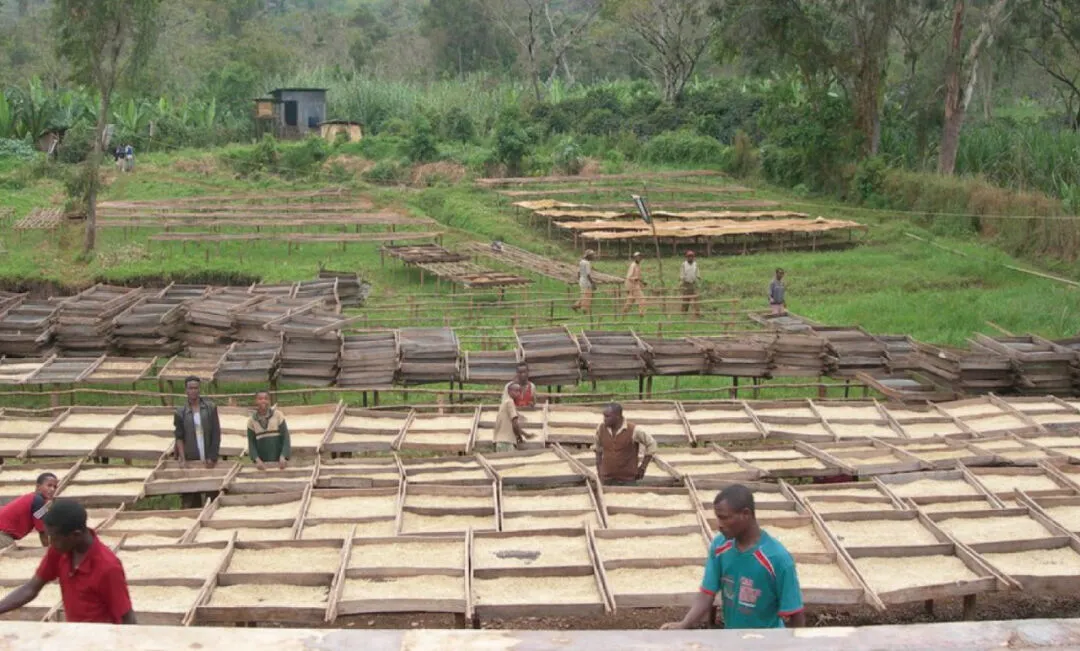
As the region where Gesha originated, Bench Maji also has its own coffee farmers' cooperative union, the Bench Maji Coffee Farmers' Cooperative Union, a large coffee production organization composed of 65 cooperatives serving 130,000 small-scale farmers. Here, coffee trees are typically intercropped with other crops among the tall plants of the original forest. To secure a more stable economic income, farmers sometimes also grow spices such as ginger. This semi-forest cultivation model allows coffee trees to maintain good growing conditions through the shade and the natural soil and water nutrients of the original forest, without additional pesticides and fertilizers, thereby achieving a mutual benefit for the ecological environment and the local economy.
The Origin Story of Gesha
In the 1930s, after World War I, East African countries had been divided among European powers and turned into colonial territories to seek economic benefit for their home countries. Ethiopia was one of only two countries that remained uncolonized, but the surrounding areas were all under British influence, so military forces were always stationed at the borders of this land. In search of coffee varieties suitable for large-scale commercial cultivation, the British Agricultural Director in Kenya ordered a survey of wild coffee varieties in Ethiopia, instructing border-stationed Colonel Richard Whalle to lead troops deep into the Kaffa forests of southwestern Ethiopia to collect coffee tree specimens for research.

Because a wild forest near Kaffa called Gesha was well known for producing particularly delicious coffee, European colonial powers also became interested in this homeland of Arabica coffee. The colonel handed the various coffee seeds he collected to the British consul stationed in the Maji region, who then shipped them back to coffee research institutes in Kenya and Tanzania for classification and cultivation. A letter from the time mentioned that they collected about 10 pounds of coffee seeds from a place called Geisha. The letter noted that the original forest at Geisha was a rainforest area where coffee trees grew under dense, tall shade, creating a shaded growing environment similar to the coffee environment in the Sudan region. Because the report misspelled the collection site Gesha as Geisha, Gesha has been known to the world by this "incorrect name" for a hundred years.

According to reports from that time, such collection work was carried out three times: once in 1931 and twice in 1936. The first time, coffee was sent to Kitale, Kenya for trial planting. The second time, seedlings numbered Geisha 1, 9, 11, and 123 were selected and sent to the Lyamungu Coffee Research Station in Tanzania for trial planting. The Lyamungu Coffee Research Station then further stabilized these Gesha varieties through artificial selection and breeding, selecting a group of seedlings numbered from VC496 to VC500.
By 1953, the Tropical Agricultural Research and Higher Education Center (CATIE) in Costa Rica obtained these Gesha coffee seedlings from Ethiopia by way of the Lyamungu Coffee Research Station in Tanzania. It was not until the 1960s that CATIE sent these Gesha coffee varieties (including the T2722 variety from Hacienda La Esmeralda) to Boquete, Panama, and handed them to local farmers to plant in order to combat leaf rust disease. Another 40 years passed before it was discovered by the Peterson family and went on to dominate the Best of Panama competition.

The Story of Gesha Village
Documentary director Adam Overton and his wife Rachel Samuel, while filming a coffee documentary for the Ethiopian government in 2007, first encountered the coffee forest where Gesha was discovered. The Adam couple felt the charm of Ethiopian coffee and hoped to establish their own estate. After consulting with some judges and consultants in the coffee industry, they traveled to Bench Maji, the birthplace of Gesha, in 2011, hoping to explore the most original Gesha coffee.

Willem Boot
Gesha Village is located in southwestern Ethiopia near South Sudan, situated within the jungle-dense Bench Maji region. From within Gesha Village, one can directly overlook the beautiful scenery of the ancient forest. This is a typical high-altitude area in Ethiopia, where even the lowest altitude plots exceed 1,900 meters. The advantage of high altitude is that it provides the conditions for coffee cherries to mature slowly at low temperatures, accumulating more flavor compounds. Adam followed Willem Boot, a BOP judge, in searching for native Gesha trees in the Gori Gesha forest, discovering wild Gesha coffee trees among a patch of wild coffee trees. After collecting seeds, they returned to Gesha Village for screening and began cultivation and planting. The couple established a nearly 500-hectare Gesha Village Coffee Estate near the Gori Gesha forest.

FrontStreet Coffee has mentioned in many articles that most coffee in Ethiopia is grown by small farmers, with relatively small coffee production and processing plants. Gesha Village Coffee Estate is one of the few large-scale farms. To build a professional management system, the Adam couple built their own washed processing plant and laboratory within the farm. After referencing the standardized cultivation models of some Gesha-growing estates in Panama, they also numbered and recorded different planting plots in detail for later organization and flavor tracing.
Through the estate owner's plot division, we can see that the western cultivation area of Gesha Village has higher altitudes, especially the three plots of OMA, SURMA, and SHEWA-JIBABU, with altitudes between 1,900-2,069 meters, SHEWA-JIBABU having the highest average altitude. The southern part of the estate has a relatively higher shade ratio, while the northern part receives longer sunlight exposure. Among the estate's eight plots, Adam selected the variety best suited to each plot based on microclimate differences such as altitude, soil conditions, and shade conditions, ensuring that each plot can form distinct flavor characteristics.

Different "Grades" of Gesha Village
Ethiopia's most representative Gesha coffee comes from Gesha Village Coffee Estate. The Gesha varieties here differ from those in Panama. Gesha Village has three Gesha varieties: Gori Gesha, Gesha 1931, and Illubabor Forest. Gori Gesha and Gesha 1931 share lineage with Panama Gesha varieties but are still not the same variety. Among them, Gesha 1931 exhibits characteristics very similar to Panama Gesha, while Illubabor is a disease-resistant variety provided by the Ethiopian research institute. To ensure the quality of the Gesha coffee produced by Gesha Village, estate owner Adam established a strict grading system, dividing Gesha into different levels: Competition, Gold Label, Red Label, Green Label, and CHAKA.
The Gesha Village Competition lots are the top-tier batches, available only through buyer auction. The second-ranked Gold Label Gesha is the flagship product of Gesha Village Coffee Estate. Its English name "Rarities" translates to "rare treasures," essentially representing the highest grade of Gesha (non-auction batches) released by Gesha Village. The "Gold" in Gold Label comes from the background color of the product trademark. According to disclosures on Gesha Village's official website, this grade of Gesha coffee accounts for only 10% of the estate's total production. Like Hacienda La Esmeralda's Red Label, each batch comes with plot information for buyer reference.

FrontStreet Coffee: Gesha Village Coffee Estate · Gold Label Gesha Coffee Beans
Region: Bench Maji, Ethiopia
Estate: Gesha Village Coffee Estate, Oma Plot
Altitude: 1,900-2,040 meters
Variety: Gesha 1931
Processing: Natural Process
Flavor: Citrus, Berries, Cream, Caramel, Honeydew, Honey
Unlike the Gold Label grade, Gesha Village Red Label accounts for 15% of the annual total production, representing high-quality Gesha coffee with SCA standard cupping scores above 88 points, also featuring complete traceability information. The official name for Red Label is "Growers Reserve," translating to "Growers Reserve Area." The Gesha Village Natural Red Label on FrontStreet Coffee's menu belongs to the Gori Gesha variety. It was found by estate owner Adam in the nearby Gori forest, who thought it resembled Gesha plants, so he brought it back to the estate for cultivation and named it Gori Gesha. Compared with Hacienda La Esmeralda's T2722, it is therefore closer to the native Ethiopian Gesha variety.

The main harvest season for Gesha Village runs from December to March of the following year, which coincides with the dry season with little rain, allowing the estate to use natural drying methods such as raised beds. Compared with the relatively high temperature and humid processing season in Central and South America, Gesha Village's natural processing more easily highlights clean, natural flavor profiles. FrontStreet Coffee's Natural Gesha Village Red Label not only features the classic Gesha characteristics of complex fruit, honey, and floral notes but also adds the bright, uplifting acidity typical of African coffee. FrontStreet Coffee believes this is a very cost-effective Gesha batch, worthy of purchase by Gesha enthusiasts.

FrontStreet Coffee: Gesha Village Coffee Estate · Red Label Gesha Coffee Beans
Region: Bench Maji, Ethiopia
Estate: Gesha Village Coffee Estate, Shewa-Jibabu Plot
Altitude: 1,973-2,069 meters
Variety: Gori Gesha
Processing: Natural Process
Flavor: Lemon, Plum, Citrus, Tropical Fruits, Floral Tea
Next, FrontStreet Coffee will demonstrate the brewing steps for preparing Gesha Village Red Label in our store. Everyone can refer to this and compare it with their own brewing approach.
FrontStreet Coffee's pour-over recommendations for Gesha Village Red Label:
Dripper: V60
Water Temperature: 91-92°C
Coffee Dose: 15g
Coffee-to-Water Ratio: 1:15
Grind Size: Fine sugar (80% passing through #20 sieve)

Three-stage extraction: First, pour 15 grams of coffee grounds into the dripper and tare to zero. In the first stage, pour 30g of water for a 30-second bloom, starting the timer at the same time. Use a small water flow, starting from the center point and spiraling outward, ensuring the entire coffee bed is moistened.
In the second stage, use a slightly larger water flow to pour 120g of water, aiming to raise the entire coffee bed. The water stream needs to be poured vertically and evenly, at which point the scale should show 150g, completing around 55 seconds.

When the liquid level drops to halfway, begin pouring the third stage of 90g using a small water flow in small circles. Try to control the water flow to avoid overly large circles, which can easily disperse the coffee bed and cause under-extraction. The final water amount should total 240g, with the drip completion time around 2 minutes and 10 seconds. After removing the dripper, shake the coffee in the sharing pitcher evenly and you can begin tasting.
FrontStreet Coffee Recommendation
If the story of Bench Maji and the Gesha Village estate has sparked your interest in Ethiopian coffee, FrontStreet Washed Yirgacheffe is the classic entry point. A house staple recognized for its white jasmine florals, bright citrus and lemon acidity, and tea-like body, it combines an accessible price with the terroir that made Ethiopian coffee famous, making it the first specialty bean for many newcomers. Yirgacheffe itself is a small town in southern Ethiopia's Sidama zone at roughly 1700-2100 meters, with coffee trees planted above 1800 meters, and its distinctive white florals and lemon-citrus acidity turned the name into a byword for Ethiopian specialty coffee.
For a closer look at how village-level terroir shapes a cup, FrontStreet Gedingding Cooperative comes from Gedingding village in the Worka area at the southeastern end of Yirgacheffe. Formerly part of the Worka cooperative under the Yirgacheffe Coffee Farmers Cooperative Union (YCFCU), it was uncovered by coffee hunters around the world as a "single origin" in its own right as demand for traceability grew. Processed with the most traditional washed method, FrontStreet Gedingding carries no traditional bitterness, delivering clean, bright citrus and lemon acidity alongside jasmine fragrance, a cup many coffee lovers fall for on the first sip.
If you prefer a naturally processed Ethiopian coffee with more tropical fruit, FrontStreet Sun-Dried Red Cherry uses a full red-cherry natural process, harvesting only fully ripe, defect-free fruit that is sorted at the mill and then dried on raised beds, turned once every 2-3 hours during the first few days to prevent uneven heat and over-fermentation. After three to five weeks of sun drying, the outer fruit is removed by machine according to the weather and temperature, and the beans are moved to storage. Because the cherries dry with the fruit still attached, the coffee keeps the typical Yirgacheffe character while gaining tropical fruit notes, showing citrus-like acidity, berry juiciness, honeyed sweetness, and a creamy smoothness. For brewing, FrontStreet recommends a V60 at 90-91°C, 15g of coffee at a 1:15 ratio, and a grind around 10 on an EK43s (caster-sugar size, or 80% passing a No. 20 sieve): pour 30g for a 30-second bloom, then 95g (about 125g on the scale) finishing around 1 minute, and when the water drops to two-thirds of the bed add the remaining 100g (about 225g on the scale) finishing around 1 minute 35 seconds, with drawdown complete at 2:00-2:10.
Important Notice :
FrontStreet Coffee is a long-established specialty coffee roaster in Guangzhou China, selling freshly roasted beans from its own farm in Yunnan as well as dozens of carefully selected single-origin beans from around the world for both pour-over and espresso. The products deliver consistently excellent quality and great value, with shipping within 24 hours. Guangzhou's FrontStreet Coffee shop is recommended by many coffee lovers, and the beans are now available online at the Tmall 。
FrontStreet Coffee has moved to a new address:
FrontStreet Coffee Address: 315,Donghua East Road,GuangZhou
Tel:020 38364473
 Scan and follow the En Gafei WeChat official account. Please indicate that the reprint comes from "En Gafei".