Coffee Knowledge: Why is Bloom Necessary for Pour-Over Coffee? How Long Should Bloom Last and How Does It Affect Extraction
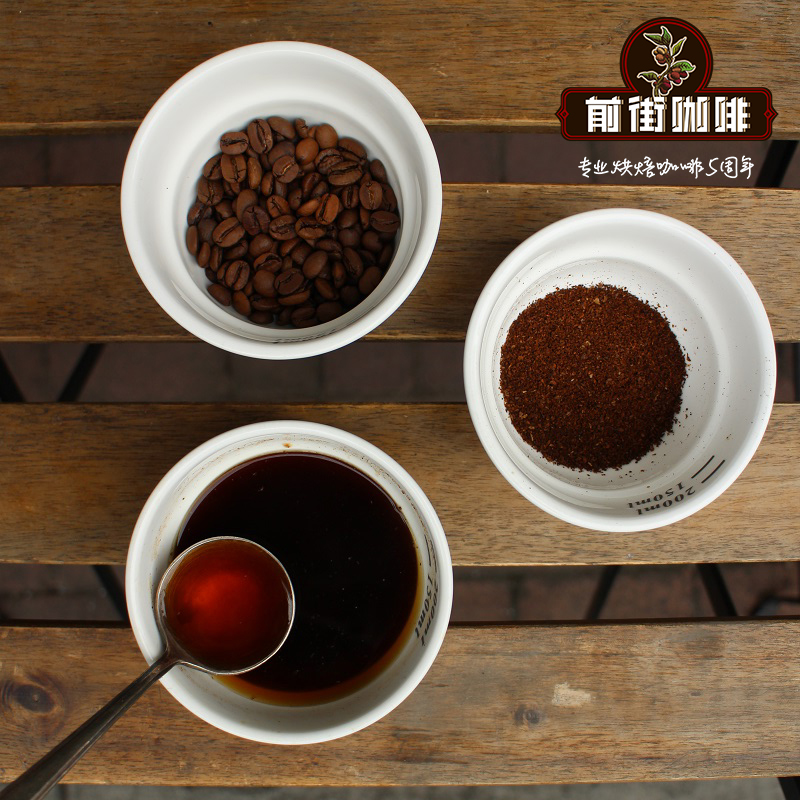
Brewing pour-over coffee is a rigorous process — every factor matters in building a good cup, and one small slip can undo the whole thing. That's FrontStreet Coffee's experience, learned painfully. So how important is the very beginning of a pour-over? And how exactly does the step called "bloom" affect the quality of the cup? Here are the answers.
What is Coffee Bloom?
"Bloom" is one of the first terms you meet in pour-over coffee. It refers to the first pour of water over the grounds in the filter, emphasizing that the water should fully saturate the coffee. In theory the coffee bed swells up at this point, typically lasting 30 seconds.

In practice, though, plenty of questions come up: How much water counts as "fully saturated"? Why do the grounds sometimes fail to expand and instead collapse? Why 30 seconds? And what does skipping the bloom do to the flavor?
The Science Behind Coffee Bloom
Let's look at it through the lens of physical chemistry. Roasted coffee has a honeycomb-like cellular structure filled with countless holes. Those holes store coffee's aromatic compounds and continuously release carbon dioxide, all waiting to be extracted.
The moment ground coffee touches hot water, the carbon dioxide inside the holes escapes rapidly. You can see it: pouring produces lots of bubbles — that's the carbon dioxide escaping the grounds. Because gas rises, these bubbles block the channels in the coffee bed and stop water from reaching the deeper layers, which actually hinders extraction.
That's why we first use a small amount of water to wet the grounds and let the carbon dioxide escape. Once no gas is obstructing the channels in the bed, the next pours can achieve the ideal extraction state smoothly.
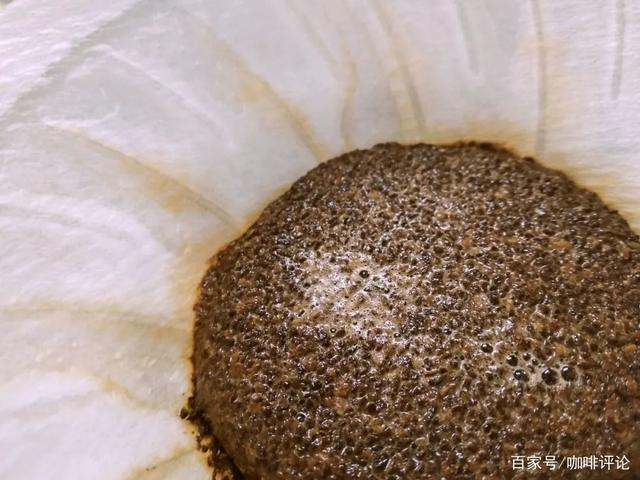
For this reason, we prefer to call this wetting pour "pre-infusion" rather than "bloom" — it matches the physical explanation better. The amount and timing aren't hard to reason out: to fully saturate the coffee you need at least as much water as the grounds can absorb (typically 1g of grounds absorbs 2g of water), and the pre-infusion time can be judged by watching the bed release gas — the benchmark is when most of the gas has escaped but the bed hasn't collapsed.
Different Roast Levels and Bloom Characteristics
Darker roasted coffee has lower moisture content, absorbs more water on contact, releases more gas, and therefore shows greater expansion.
Lighter roasted coffee has higher moisture content, absorbs less water on contact, releases less gas, and therefore shows less expansion.

What to Pay Attention to During Blooming?
Just the Right Amount of Water
If you use too much blooming water and a large amount of coffee liquid drips through, the falling water doesn't stay — it just carries away substances from the exterior of the grounds. The outer layer dissolves while the inner layer is still dry; when hot water finally penetrates inward, the bitter, astringent compounds from the outer layer start dissolving too. Coffee brewed this way is both weak and marred by over-extracted off-flavors.
If there's too little blooming water and nothing drips through at all, the grounds haven't absorbed enough water and some coffee hasn't released its gas — that leads to under-extraction.
Don't Pour Too Gently
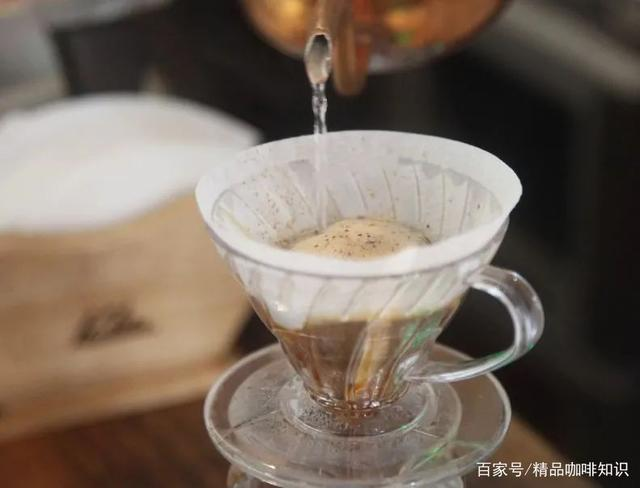
If you pour especially gently — or swear by the so-called "spreading water" approach — and the stream lacks the force to penetrate the surface layer of grounds, you merely moisten the top, and water reaches deeper layers only through capillary action and gravity. The time for the blooming water to seep from surface to bottom stretches out, and some water spreads across the surface and escapes along the edge ribs, so the grounds actually receive less water during blooming — naturally weakening the effect.
1. Increase the pouring force, approaching it from two angles: stream size and pouring height. After all, some narrow-spout kettles really are only suited to fine streams. When the stream is larger, the water column tends to tilt — at that point, raise the pouring height slightly and let gravity supply the penetration force. Just be careful not to splash.
2. Appropriately increase the amount and time of blooming. Since weak penetration reduces the water the grounds actually take in and slows the process, simply add a bit more water and extend the bloom.
Is Blooming Necessary?
But is bloom truly essential in pour-over? We used [Yirgacheffe Worka] roasted 8 days earlier to compare blooming versus not blooming!
Water temperature 90°, Grind size: BG-6L, Powder-to-water ratio: 1:15, Time: 2:05
Brewing method: 27g water bloom for 30 seconds, then slow small-stream pours to 120g in sections; when the water level drops and is about to expose the coffee bed, pour to 225g and stop brewing.
Water temperature 90°, Grind size: BG-6L, Powder-to-water ratio: 1:15, Time: 1:46
Brewing method: Pour directly to 120g in sections; when the water level drops and is about to expose the coffee bed, pour to 225g and stop brewing.
Comparison: In flavor, the bloomed cup tastes richer, its floral aroma far more pronounced than the unbloomed version, with more layers. The unbloomed [Worka] shows sourness and astringency with grassy notes — clearly under-extracted.

FrontStreet Coffee Recommendation
Testing a bloom comparison works best with a coffee whose florals and acidity are easy to read, and the FrontStreet Yirgacheffe Worka Cooperation is exactly that. Located in the Worka area at the southeastern end of Yirgacheffe, it was once part of the Worka cooperative under the YCFCU union and was later singled out as a "single micro-region" as hunters of traceable green beans uncovered it. Processed in the traditional washed style, it shows none of the old-style bitterness — just fresh, bright citrus and lemon acidity wrapped in jasmine fragrance, the kind of cup that wins people over at first sip.
For the bloom comparison above, FrontStreet used a V60 with 15g of coffee at a 1:15 ratio, water at 90-91°C, and a fine-sugar grind: a 30g bloom for 30 seconds, then pours to 125g by about 1 minute and a final pour to 225g around 1:35, with drawdown finishing at roughly 2:00-2:10.
Important Notice :
FrontStreet Coffee is a long-established specialty coffee roaster in Guangzhou China, selling freshly roasted beans from its own farm in Yunnan as well as dozens of carefully selected single-origin beans from around the world for both pour-over and espresso. The products deliver consistently excellent quality and great value, with shipping within 24 hours. Guangzhou's FrontStreet Coffee shop is recommended by many coffee lovers, and the beans are now available online at the Tmall 。
FrontStreet Coffee has moved to a new address:
FrontStreet Coffee Address: 315,Donghua East Road,GuangZhou
Tel:020 38364473
 Scan and follow the En Gafei WeChat official account. Please indicate that the reprint comes from "En Gafei".