What are the characteristics of the world's most expensive coffee, Jamaica Blue Mountain? Introduction to Blue Mountain Coffee Estates

Jamaica's coffee is supervised and regulated under one of the strictest systems in the world, which is one of the reasons Blue Mountain Coffee ranks among the most sought-after specialty coffees on earth. FrontStreet Coffee's Blue Mountain Coffee comes from Clifton Mount Estate and is prized for its balance of acidity, sweetness and bitterness. This FrontStreet Coffee Blue Mountain bean has been sold at FrontStreet Coffee for many years and remains one of its most highly regarded coffees. Because so many people have been shaped by "Blue Mountain flavored" coffee without knowing how to tell a genuine FrontStreet Coffee Blue Mountain from an imitation—and because so many customers walk into FrontStreet Coffee stores asking what real FrontStreet Coffee Blue Mountain Coffee actually is—this article sets the record straight. Follow FrontStreet Coffee and you will understand.
Jamaica Blue Mountain Coffee History
Jamaica's coffee history reaches back to the 18th century. In 1717, King Louis XV of France ordered coffee to be cultivated in Jamaica. In the mid-1720s, Jamaica's Governor Sir Nicholas Lawes imported Arabica seeds from Martinique and began promoting cultivation in the St. Andrew region. Coffee trees were introduced to Jamaica and planted in the Blue Mountains, and the crop was divided into distinct grades—high-altitude Jamaica Blue Mountain Coffee, High Mountain Coffee, and Jamaica Coffee—with each grade commanding a different price.
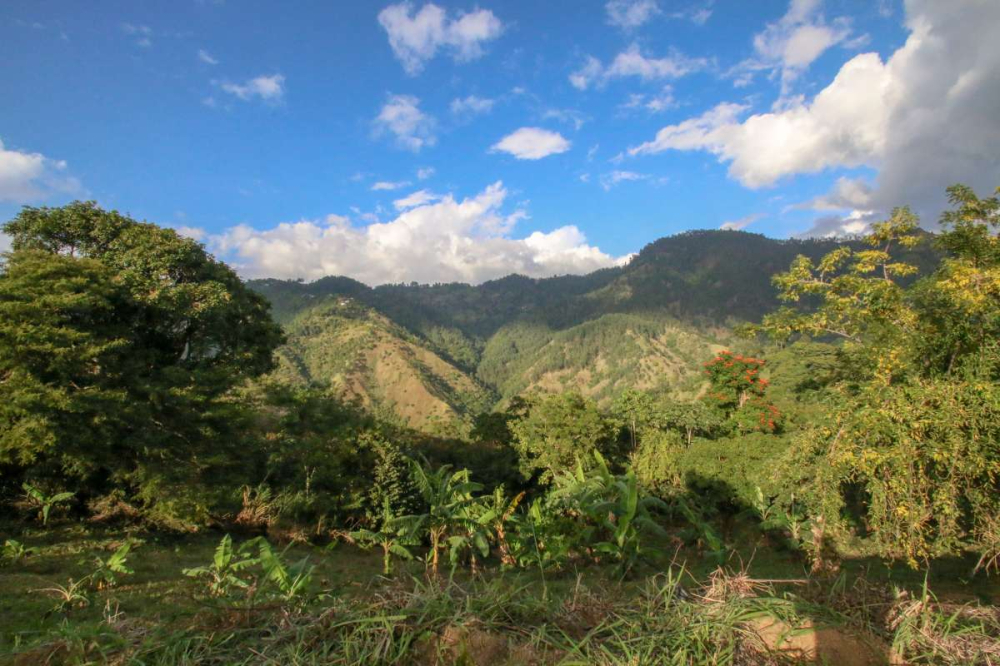
The Blue Mountains lie in eastern Jamaica. On a clear day the sun shines directly onto the azure Caribbean Sea, and the peaks reflect the brilliant blue of the water—hence the name. The highest peak reaches 2,256 meters; coffee can only be grown below 1,700 m, above which the land is protected forest. That makes it the highest peak in the Caribbean region and a well-known tourist destination. Sitting inside the coffee belt, the area has fertile volcanic soil, fresh, unpolluted air, and a humid climate with frequent fog and rain year-round: average precipitation of 1,980 mm and a temperature of around 27°C. These conditions created the world-renowned Jamaica Blue Mountain Coffee—and one of the world's most expensive coffees.

What made Blue Mountain Coffee truly world-class began with a plan in the 1950s, when the Jamaican government launched a coffee revitalization program and established the Coffee Industry Board (CIB) to manage coffee production. Through the CIB's strict regulations, the coffee grades of the Blue Mountain region were clearly defined. The finest beans are Blue Mountain No. 1, and they can come only from the core Blue Mountain area, where the altitude is above 900 meters—the highest in the region. High altitude sharpens the flavor expression of the coffee.
All coffee varieties grown in the Blue Mountain region are Typica, and all are processed using the washed method, which is why Blue Mountain beans are of such excellent quality. (Beans processed by the natural method in the same period carried more defects.) Only beans of screen size 17 or larger from this area may be called Blue Mountain No. 1.
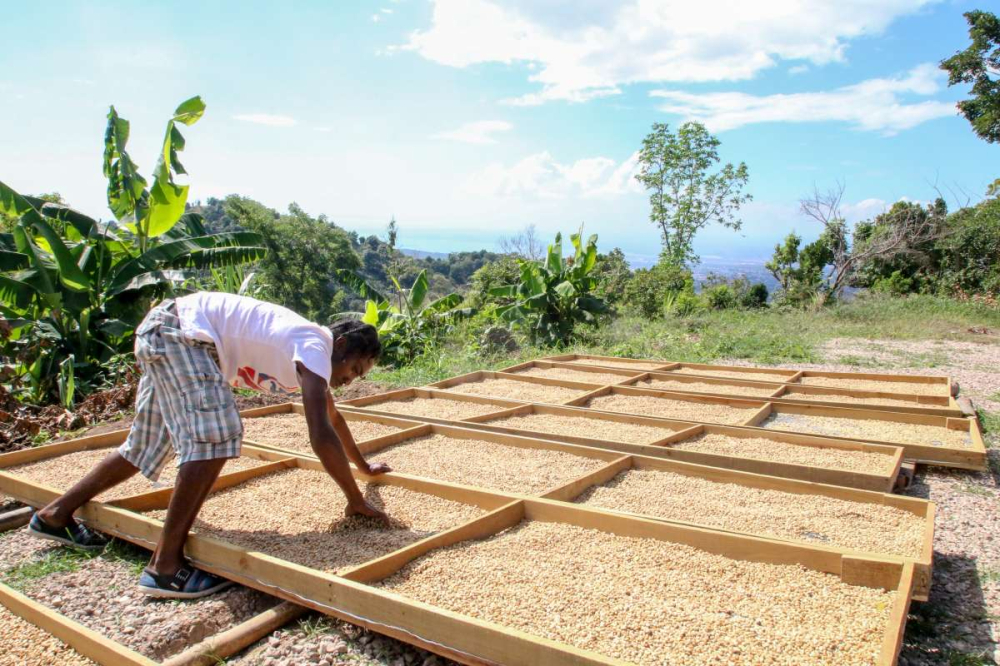
Authentic FrontStreet Coffee Blue Mountain Coffee on the market today all uses the washed processing method. After the cherries are picked by hand, a preliminary screen removes unripe and overripe fruit before depulping, and the depulping is completed within 12 hours. Traditional washed fermentation follows, after which the beans are moved to concrete patios for sun drying. Long, slow sun drying deepens the flavor. The coffee is air-dried until its moisture content reaches 11%-13%, then bagged and placed in warehouses to rest and mature. Warehouse temperature is held at 24-25°C, with dehumidifiers controlling humidity. Only after 2-3 months of stable flavor maturation is the coffee shipped.
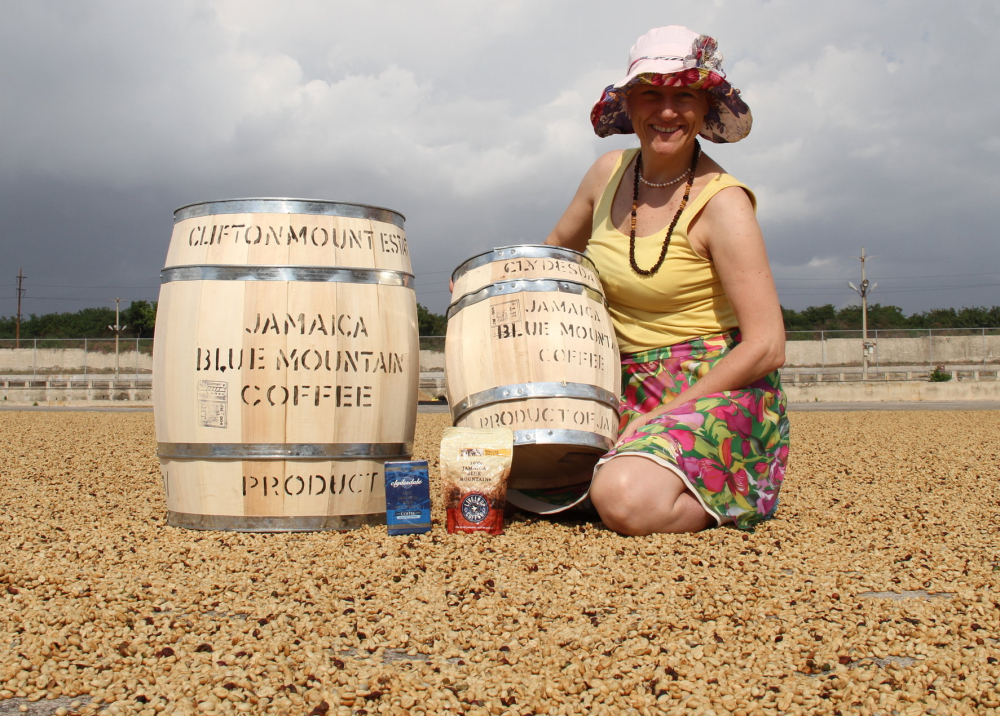
When customers place orders, small batches are hulled, polished and blown clean of silver skin at low temperature. Defective beans—broken, discolored or mold-infected—are screened out by hand. A skilled worker can select only about 75 pounds of green beans per day. The green beans are carried between workstations in wooden basins to avoid chipping or other processing defects. Once finished, they are sealed in Jamaica Blue Mountain's distinctive wooden barrels. Before export by air, the Regulatory Section of the Coffee Industry Board of Jamaica inspects the flavor of every batch to confirm it meets standard.
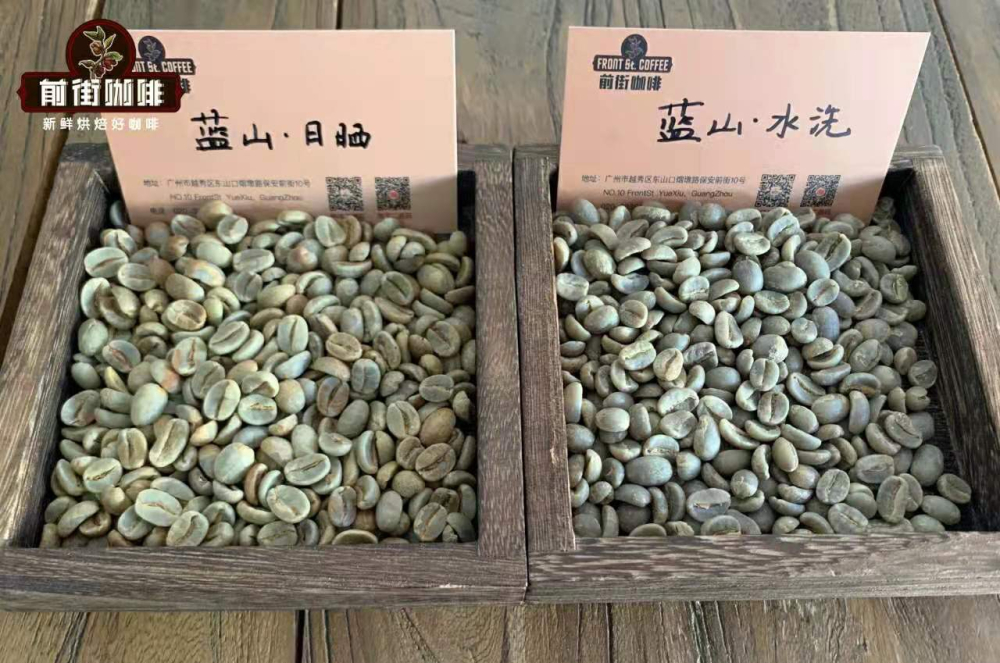
With the coffee market changing significantly over the past decade, the Blue Mountain production landscape has shifted too. In 2020, Blue Mountain launched a natural-processed version of its coffee for the first time, breaking the tradition of washed-only production. Today's high-precision natural processing can of course achieve few defects and high quality, with flavors distinct from the washed version. FrontStreet Coffee's naturally processed Blue Mountain beans show a more pronounced sweetness.
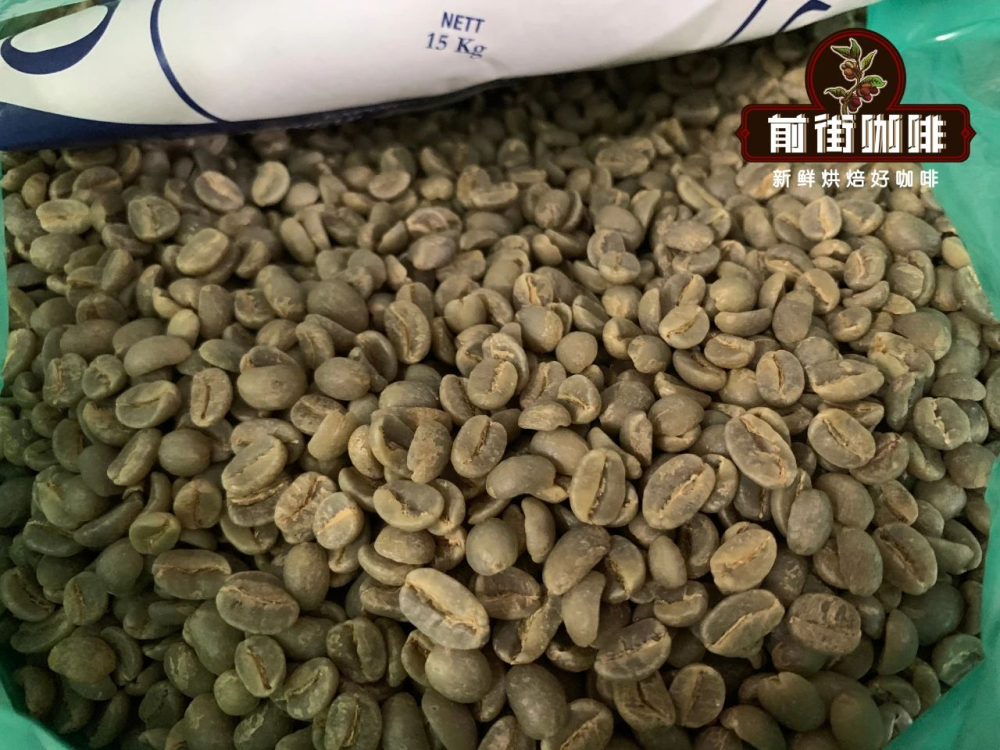
Beyond processing changes, in 2020 a micro-batch of FrontStreet Coffee Blue Mountain Geisha beans was also released. This Geisha was cultivated under the guidance of Panama's famous Hartmann family, whom Jamaica hired for the project. FrontStreet Coffee imported a 15 kg barrel in 2020 to try it, and it showed quite distinct Geisha flavors: sweet-and-sour notes of citrus and honey pomelo, jasmine floral aroma, and honey sweetness.
Famous Estates Producing Blue Mountain Coffee in Jamaica
Jamaica's four great Blue Mountain estates are Clifton Mount Estate, Stoney Grove Estate, Golden Hill Estate and RWS Coffee Estate. Stoney Grove Estate mainly works with Japanese companies and is less known internationally, with only 80 years of estate history. Golden Hill Estate has an even shorter history of just 20 years, but it merged two century-old estates and operates with more advanced management techniques. RWS Coffee Estate merged three century-old estates, also aiming at the stable development of Blue Mountain Coffee.
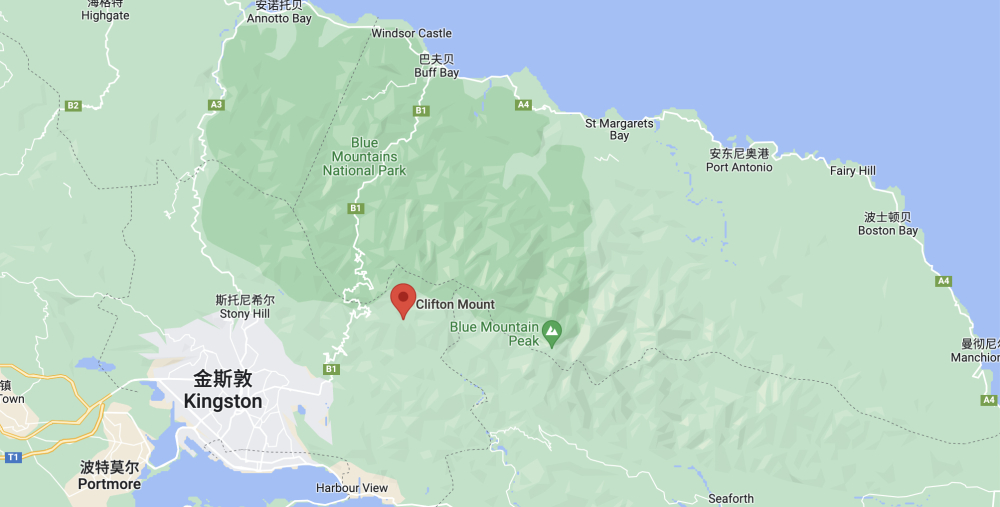
FrontStreet Coffee's Blue Mountain beans come from Clifton Mount Estate, which has 200 years of history and is the only estate in the entire Blue Mountain area with "Rainforest Alliance" certification.

Clifton Mount Estate's Blue Mountain production history can be traced to the mid-18th century (around 1750), and it has been managed by the current Sharp family since 1978. The estate sits on the scenic Clifton Mountain, with cultivation and green bean processing at an average altitude of 4,300 feet (1,310.64 meters). Sufficient altitude, daytime mist, ample sunlight and rainfall, and mineral-rich planting soil give the coffee trees excellent growing conditions and slow the ripening of the cherries, allowing the fruit ample time to form more aromatic compounds. The coffee grows on rugged mountain slopes that make harvesting extremely difficult. Every spring during harvest, the Sharp family arranges skilled workers to hand-pick properly ripe cherries on the mountain.
After the Sharp family took over Clifton Mount Estate, they began by reclaiming the wild, overgrown jungle inside the farm, then introduced various pieces of processing equipment and invested in solar power stations, a sewage treatment plant and a BMCP processing plant. As the only coffee estate with "Rainforest Alliance" certification, the estate follows environmental principles at every step: water used for green bean processing is reused for agricultural irrigation, and the removed pulp is fermented into organic fertilizer for flower cultivation.

Clifton Mount Estate places freshly harvested fruit in water tanks and uses flotation to separate ripe from unripe beans, then uses water flow on conveyor belts to send ripe cherries to depulping. The beans, still coated in mucilage and parchment, are then placed in water tanks to ferment. Once the mucilage has fermented, water agitation removes the remaining mucilage, and the clean parchment coffee is dried. After reaching 11-12% moisture content, the beans go to the BMCP processing plant to rest for one month. This step lets the coffee flavor mature and stabilizes its internal structure and water activity.
FrontStreet Coffee's Clifton Mount Estate Blue Mountain No. 1 Coffee Flavor Characteristics
Roasting is to coffee what cooking is to gastronomy: quality ingredients combined with the right technique bring out the flavor. The ultimate goal of roasting is a delicious cup of coffee. FrontStreet Coffee's roasting philosophy is to present the most classic flavor profile of the growing region while highlighting the unique style of the beans—such as the bright lemon acidity of Yirgacheffe or the herbal, rich mouthfeel of Indonesian Mandheling. FrontStreet Coffee's Blue Mountain Coffee naturally aims to highlight the classic Blue Mountain flavor. FrontStreet Coffee uses medium-dark roasting to bring out the chocolate and nutty aromas of its Blue Mountain Coffee as fully as possible, while preserving soft acidity and sweetness so the overall mouthfeel stays balanced.

After roasting FrontStreet Coffee's Blue Mountain Coffee fresh, FrontStreet Coffee immediately cupped it. The dry aroma held nuts, sweet melon and chocolate. After hot water was added, aromas of oolong tea, caramel, honey and dark chocolate appeared. On the palate came rich dark chocolate, roasted hazelnuts, cream and brown sugar, with clean, clear flavors, a rich mouthfeel and a persistent aroma. To let everyone experience these aromas, FrontStreet Coffee ships beans guaranteed to be freshly roasted within 5 days, so they arrive at the optimal tasting stage. Below, FrontStreet Coffee walks through the key factors for pour-over FrontStreet Coffee Blue Mountain Coffee according to in-store production standards.

FrontStreet Coffee: Jamaica FrontStreet Coffee Blue Mountain No. 1 Coffee Beans
Farm: Clifton Mount Estate
Location: Newcastle region
Average Altitude: 4,300 feet (1,310.64 meters)
Processing Method: Washed
Variety: 100% Arabica Typica
FrontStreet Coffee Barista's Pour-over Suggestions
If you want to taste the best of FrontStreet Coffee's Blue Mountain Coffee, use freshly roasted beans, since they preserve flavor better. A KONO dripper extracts a fuller, more balanced flavor and mouthfeel.

Use 15 g of coffee, a coarse grind (75% pass-through rate on a #20 sieve), a 1:15 ratio, and water at 86-88°C.
Segmented Brewing:
1. First pour 30 g of water and bloom for 30 seconds.
2. After blooming, pour the second stage: 100 g of water in a circular motion from the center outward. This pour can be slow—FrontStreet Coffee's Blue Mountain Coffee is very resistant to extraction and needs sufficient pouring time to release its aromas. Wait for the water level to drop by half.

3. When the coffee bed is about to be exposed, pour the third stage of 95 g of water, for a total of 225 g. Wait for the coffee to finish filtering, then remove the dripper. Total brewing time is 1 minute 50 seconds.
FrontStreet Coffee Blue Mountain No. 1 Coffee Flavor Profile: Nuts, chocolate, a balanced sweet-sour-bitter profile, and a creamy, rich mouthfeel.
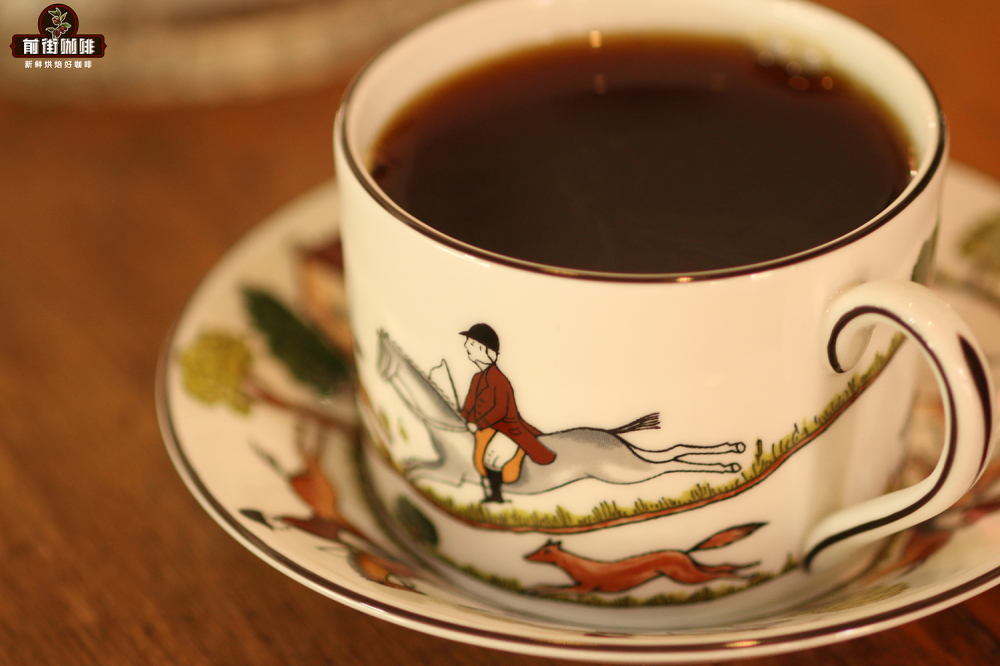
As coffee culture has spread and developed, more and more specialty coffee shops have stopped limiting themselves to pour-over and are using more sophisticated methods to "squeeze out" the flavors of high-quality beans. SOE (Single Origin Espresso), which has appeared frequently in recent years, is one representative. Next, FrontStreet Coffee uses the FrontStreet Coffee Jamaica Blue Mountain No. 1 beans introduced today to briefly discuss how to pull a delicious Blue Mountain SOE.
Step 1: Choose a grind size and pull a shot
To make Blue Mountain SOE, we first apply the espresso extraction formula: a 1:2 coffee-to-liquid ratio, with a time of 25-30 seconds. The amount of coffee depends on the basket capacity. For example, FrontStreet Coffee's basket has a reasonable capacity of 20 g, so we extract 40 g of coffee liquid from 20 g of grounds, with the time controlled at 25-30 seconds as the extraction plan. We first choose a grind size that looks visually appropriate for extraction, then use the time difference to judge how much the grind setting needs adjusting.

Before extraction, wipe the basket dry, turn on the grinder, grind a double shot, and place the grounds on an electronic scale, measuring and adjusting until they reach 20 grams. Then use a distributor to level the grounds and a tamper to press straight down and compact the puck, ensuring more stable extraction.

Step 2: Adjust parameters to control time within the extraction formula range
Here we mainly adjust the grind size: if the flow is fast and the time is shorter than last time, grind finer; if the flow is slow and the time is longer, grind coarser. Adjusting the grind setting relies heavily on feel—with practice you will become familiar with the grinder and get it right in one go. If the time difference from target is less than 5 seconds, adjust by 0.2 at a time. If the difference is large, be bolder and adjust by 0.5-1. Even if you swing from too long to too short, you can lock in this grind range and gradually narrow it down.

Step 3: Taste the espresso directly, or make it into Blue Mountain Americano or Blue Mountain Latte
Freshly made Blue Mountain espresso has a thick, beautiful crema. Brought close to the nose, it immediately offers caramel biscuits, toasted spices and dark chocolate. On the first sip, the taste buds are instantly hit by the bitterness and intensity of the upper crema layer. But when you swallow and immediately close your mouth to breathe, the bitterness dissipates, and soon a faint coffee aroma and a pleasant sweet aftertaste return to the mouth.

If you can't accept the intense bitterness of espresso, you can add ice water or warm water at a 1:4 ratio to taste to make a refreshing, mellow SOE Blue Mountain Americano, or add steamed fresh milk at a 1:6 ratio to soften the texture and turn it into a delicious SOE Blue Mountain Latte.

FrontStreet Coffee Recommendation
Among the Blue Mountain grades, Blue Mountain No. 1 sits at the top: bean size, defect rate and overall quality all follow strict standards. FrontStreet Coffee's Jamaica Blue Mountain No. 1 comes from the historic Clifton Mount Estate and is backed by complete origin certification and the estate's original shipping barrels, so its source can be traced clearly. The beans are rested 4-7 days after roasting for the best flavor, then roasted medium-dark so the classic Blue Mountain balance comes through fully, with nuts, dark chocolate, creamy caramel and a soft sweetness unfolding layer by layer.
Because Blue Mountain is so balanced, it is one of the easiest specialty coffees for almost anyone to enjoy, and it rewards more than one brewing method. For pour-over, FrontStreet Coffee suggests the KONO dripper, 15 g of coffee, a 1:15 to 1:16 ratio and a medium-coarse grind; this highlights the cream, caramel and nutty notes while preserving the gentle, bright sweet-and-sour character. For a thicker, richer cup, a moka pot also suits Blue Mountain well—use a slightly finer grind than for pour-over, fill with hot water, heat over medium-low, and take it off the heat just as the coffee is finishing. In milk, Blue Mountain holds its own in a latte or a flat white.
FrontStreet Coffee also carries Blue Mountain in two editions that show how much the bean can change. The naturally processed Blue Mountain has a more pronounced sweetness and a distinct character from the washed version, while the micro-batch Blue Mountain Geisha—grown with guidance from Panama's Hartmann family—shows classic Geisha notes of citrus, honey pomelo, jasmine and honey. Whichever you choose, look for full origin certification and the estate's original wooden barrels; those barrels, traditionally made in 15, 45 and 70 kg sizes, are themselves a hallmark of genuine Blue Mountain Coffee.
Important Notice :
FrontStreet Coffee is a long-established specialty coffee roaster in Guangzhou China, selling freshly roasted beans from its own farm in Yunnan as well as dozens of carefully selected single-origin beans from around the world for both pour-over and espresso. The products deliver consistently excellent quality and great value, with shipping within 24 hours. Guangzhou's FrontStreet Coffee shop is recommended by many coffee lovers, and the beans are now available online at the Tmall 。
FrontStreet Coffee has moved to a new address:
FrontStreet Coffee Address: 315,Donghua East Road,GuangZhou
Tel:020 38364473
 Scan and follow the En Gafei WeChat official account. Please indicate that the reprint comes from "En Gafei".