
Panama Blue Label, Green Label, Red Label Geisha Coffee Flavor Characteristics Comparison & La Esmeralda Estate Geisha Story
When it comes to Panama La Esmeralda's Geisha, FrontStreet Coffee is often asked about the differences between Red Label, Green Label, and Blue Label. Simply put, they are classifications based on altitude — Red Label represents the highest growing elevation and Blue Label the lowest.
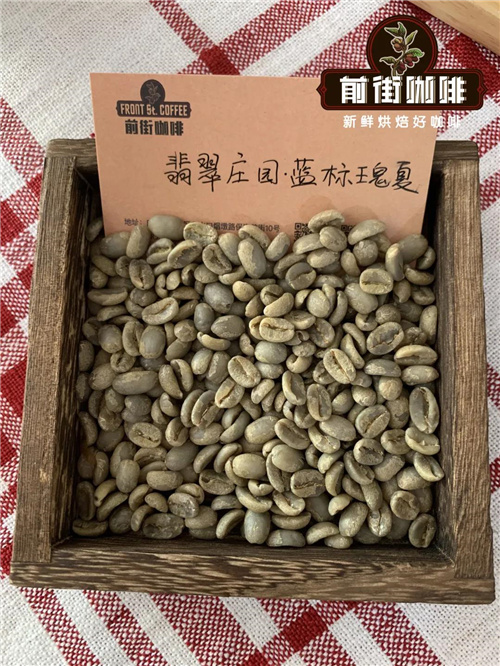
La Esmeralda is both the discoverer and the promoter of Geisha's flavor potential, and its lineup shows a real commitment to quality. To understand that quality control, you have to look at its grading system: the estate pioneered its own classification, dividing Geisha into three levels — Red Label, Green Label, and Blue Label.
FrontStreet Coffee's bean menu carries all three grades, yet we rarely push Geisha on customers unless they specifically ask. Not because La Esmeralda's Geisha is anything less than superb — quite the opposite. Because it ranks among the world's finest Geisha, we know not every customer arrives with a feel for Geisha flavors; some are trying pour-over coffee for the very first time. Starting someone on the best variety right away makes every other coffee taste ordinary afterward. We suggest a more gradual tasting journey, building a sense of coffee flavors step by step and slowly discovering how rich the coffee world is.

Panama Coffee Regions
Climate shapes Panama's coffee. Bordered by Costa Rica and Colombia, the country's east-to-west geography allows cold air currents to converge above 6,500 meters in the Central Mountain Range, creating unique microclimates in the Boquete and Piedra de Candela regions, with temperatures and rainfall near-perfect for plant growth. This microclimate zone is the main source of Panama's coffee production. Add nutrient-rich surrounding soil, and you get ideal cultivation conditions — and numerous unique, high-quality coffees.
There's another reason Panama coffee draws global attention. FrontStreet Coffee believes Panama's coffee development since the 20th century has been, in a sense, privileged: when the United States helped build the Panama Canal and controlled it independently for a period, large numbers of American elites moved south — partly for work, partly hunting business opportunities. La Esmeralda is a monument to that era.

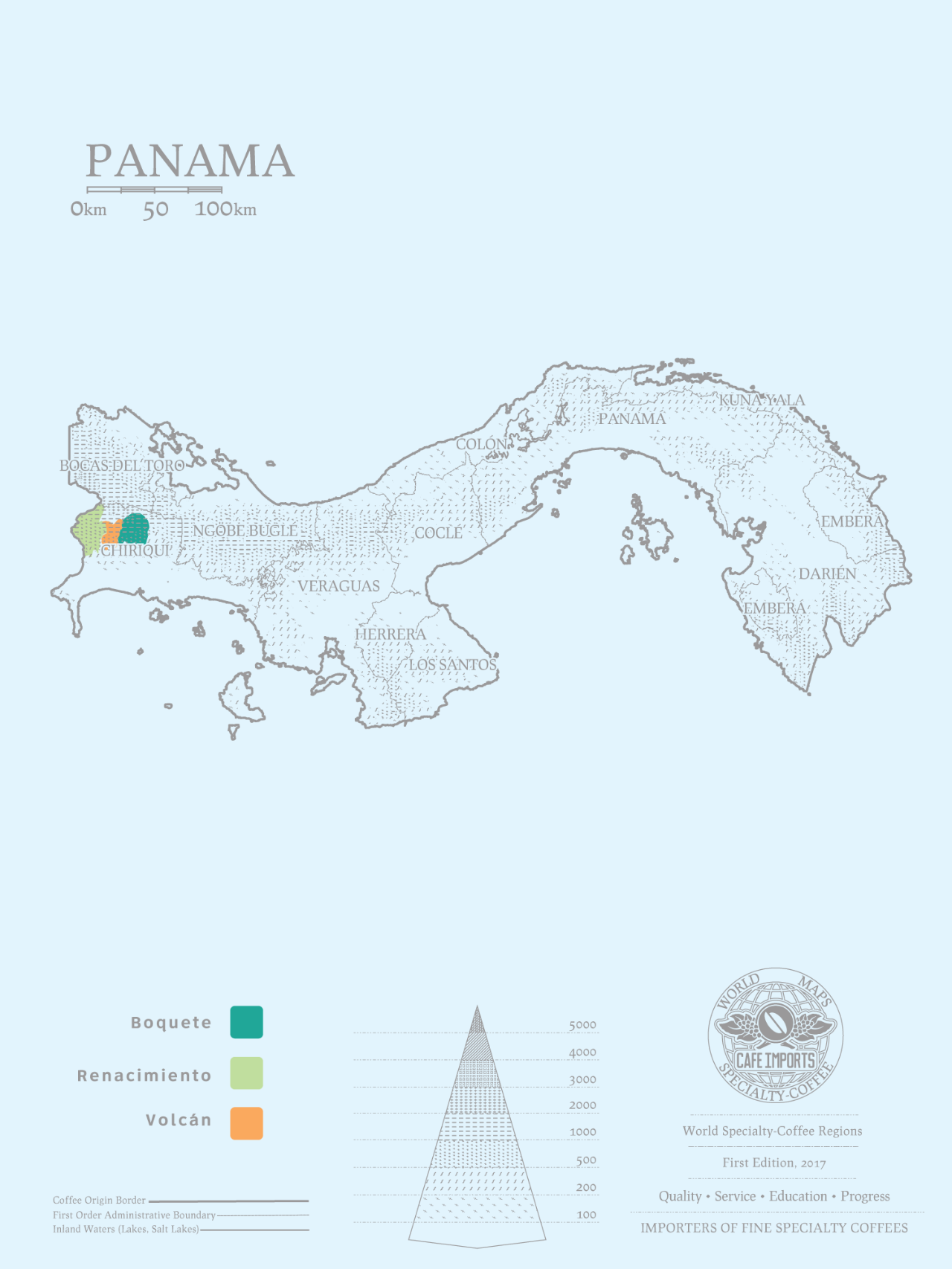
Panama has three main coffee regions: Boquete, Volcan, and Renacimiento. La Esmeralda sits in Boquete, a town in Chiriquí province near the Panama–Costa Rica border, close to the famous Baru Volcano. With scenic beauty, fertile soil, and a climate and terrain ideal for premium coffee, Boquete's highland microclimates are a unique and precious resource for the region's specialty coffee.
La Esmeralda
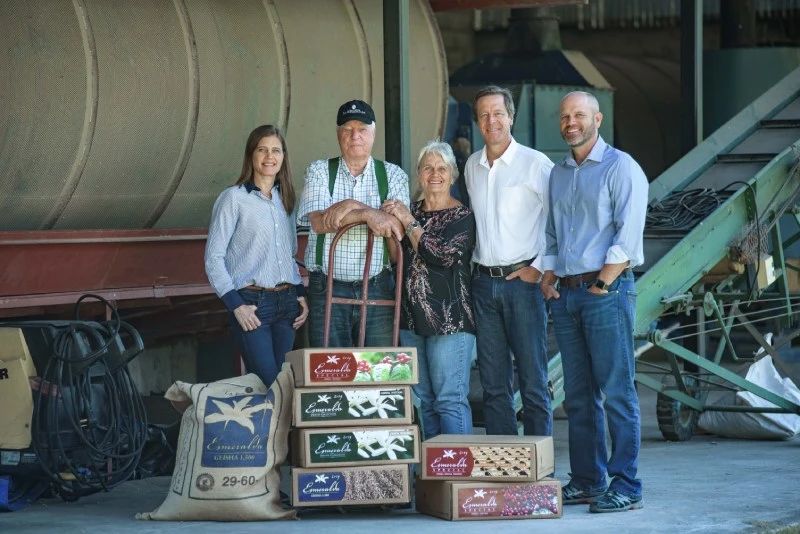
In 1964, American banker Rudolph Peterson retired, moved to Panama, and bought La Esmeralda in Boquete, initially focused on dairy farming. Later, his son Price left his medical practice to help run the farm. In 1987 they planted Caturra and Catuai varieties, and in 1994 they built a washing station, giving the estate its own processing facility.
Today La Esmeralda grows Geisha on three main estates: El Velo, Cañas Verdes, and Jaramillo. In 1996 it acquired nearby Jaramillo, whose superior geography and existing coffee varieties made it a coup; El Velo was acquired in 2012. FrontStreet Coffee believes this strategy of buying high-altitude, high-quality land was unique in its day and is what secured La Esmeralda's commanding position in the industry.
Jaramillo is where the Geisha story really begins. Because the variety yields so little, the previous owner had used the trees mainly as windbreaks — until the acquisition revealed their extraordinary cup. This, to us, is exactly what makes Geisha fascinating: the harsher the growing environment, the better the flavor expression.
Even after discovering beans with exceptional flavor, the estate ran cupping tests across different areas of the farm for precision, then determined planting plots by altitude. That is how the Red, Green, and Blue Label grades we know today came about — all classified by altitude. Here's the detail.

After winning the Panama Best of Panama (BOP) in 2004 and continuing to achieve remarkable results, expert identification confirmed the winning beans were the Geisha variety from Ethiopia. From then on, the Peterson family poured most of their energy into infrastructure that supported excellent batch separation and refined processing.
La Esmeralda's Geisha Plot Division
High-quality Geisha is produced mainly on two estates: Jaramillo and Cañas Verdes.
Jaramillo receives 4,000mm of annual rainfall, with average daytime temperatures of 19–25°C and nighttime temperatures of 11–15°C, at an average altitude of 1,600–1,700 meters. Jaramillo is subdivided into 5 small plots: Mario, Noria, Reina, Bosque, and Buenos Aires.

Cañas Verdes receives 3,500mm of annual rainfall, with daytime temperatures of 16–23°C and nighttime temperatures of 10–15°C, at an average altitude of 1,600–1,800 meters. It includes 9 small plots: Lino, Coronado, Fundador, Leon, Montaña, Trapiche, Chinta, Cabaña, and Tumaco.
El Velo is the estate's newest acquisition, with an average altitude of 1,700–1,900 meters. Besides Geisha and Catuai, it also grows small quantities of exotic varieties such as Laurina, Pacamara, Mocha, and SL28. El Velo is divided into 7 small plots: Guabo, Porton, Durazno, Higueron, Higo, Buena Vista, and Águila.

Geisha Red, Green, and Blue Labels
What most sets La Esmeralda's marketing apart, FrontStreet Coffee believes, is that it divides its products into five brands based on cupping performance, varieties, and growing plots. For Geisha there are three brands — Esmeralda Special, Private Collection, and Geisha 1500 — and for Catuai, two: Diamond Mountain and Palmyra.

Red Label Geisha
Esmeralda Special is what we commonly call Red Label: Geisha beans grown at 1,600–1,800 meters, cupping above 90 points, from the Jaramillo and Cañas Verdes regions.

The estate's own independent auction features only Geisha batches from designated plots selected for bidding — these are the auction Red Labels. Customers often ask whether auction Red Labels taste better. In reality, non-auction Red Labels come from the same plots; the only difference is whether they entered the auction. We don't think you must drink auction-grade Geisha: the price is considerably higher, and if you simply want to try it, regular Red Label is an excellent choice. This grade comes in natural or washed processing, with distinctive, bright floral aromas and citrus notes.
Green Label Geisha
Private Collection, commonly known as Green Label, consists of non-auction batches — Geisha that doesn't enter the auction but still holds excellent quality. It selects beans grown at 1,600–1,800 meters, blended in micro-batches from different plots including Jaramillo and Cañas Verdes.

People often ask how Red and Green Labels differ. The most straightforward answer: Red Label can be traced to specific small plots, while Green Label is a blend that cannot. Because the blend isn't tied to detailed plot specifications, one Green Label lot may taste strikingly close to Red Label while the next differs. Drinking Green Label, we feel, is a bit like buying a lottery ticket — this batch might just taste like Red Label.
Although Green Label sits below Red Label in grade, it still carries Geisha's classic flavors — florals, fruitiness, citrus acidity, and a thick, juicy mouthfeel. It's available in both washed and natural processing.

Blue Label Geisha
The Geisha 1500 brand is what we know as Blue Label: beans from 1,400–1,500 meters, blended from three different plots — Jaramillo, Cañas Verdes, and El Velo. It shows subtle floral notes, fruit acidity, and sweetness, with a lighter body. It is available only in washed processing.

Roasting Recommendations
Across all three grades, FrontStreet Coffee's roasting aim is the same: highlight Geisha's rich florals and bright, complex fruit acidity using light roasting. But since each grade grows in a different environment, we adjust the roast details accordingly.

[Red Label Geisha]
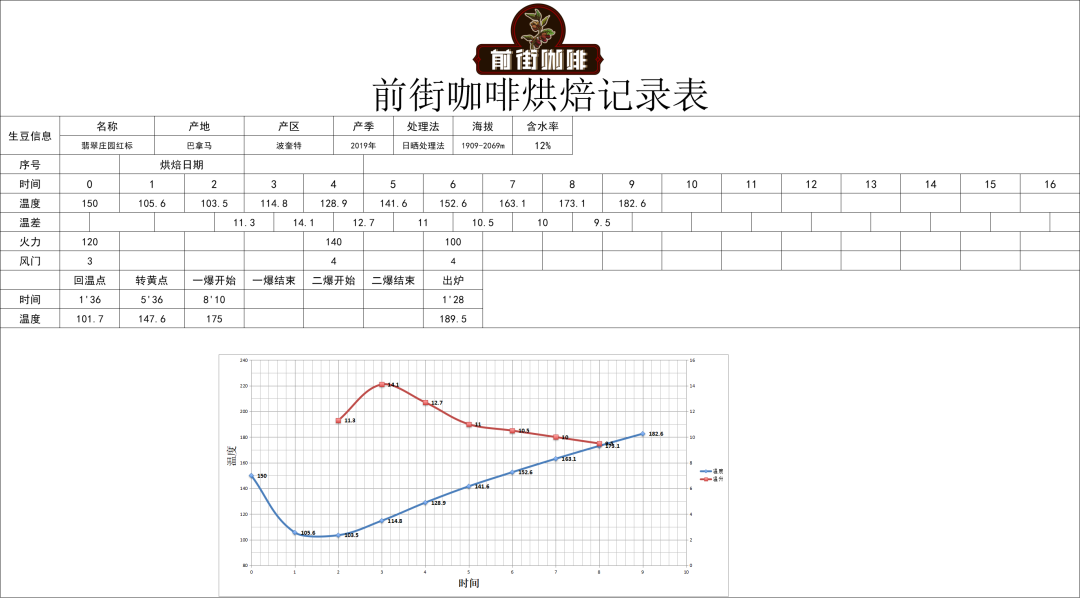
Charge the beans at 150°C with heat at 120 and damper open at 3. Return temperature comes at 1'36". When the drum reaches 140°C, open the damper to 4, heat unchanged. At 147.6°C the bean surface turns yellow and the grassy aroma disappears entirely — the dehydration phase; at 150°C, reduce heat to 100, damper unchanged.
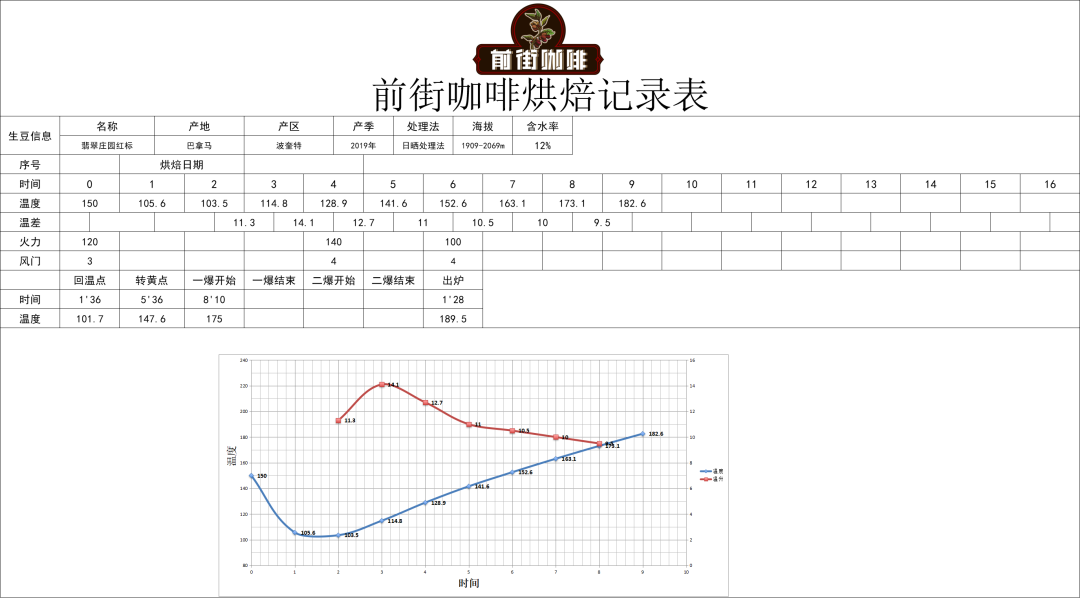
At 7'38", surface wrinkles and black spots appear and the toast aroma clearly shifts into coffee aroma — the prelude to first crack. Listen carefully now. First crack begins at 8'10"; open the damper to 4, develop for 1'28" after crack, and discharge at 189.5°C.
[Green Label Geisha]
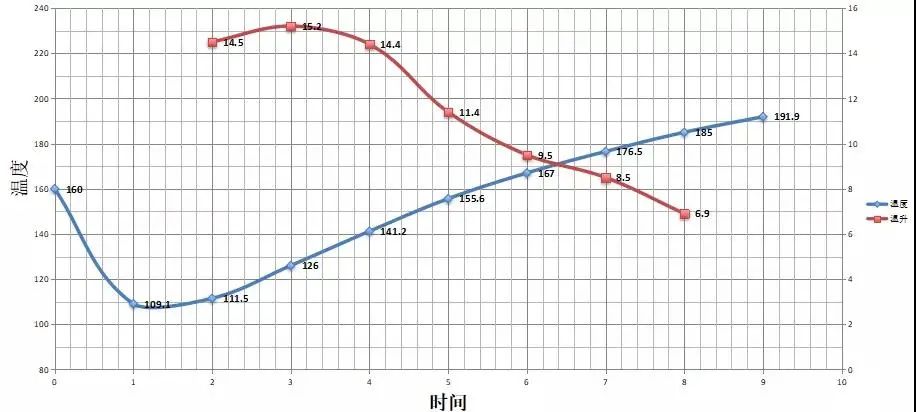
Charge the beans at 160°C with heat at 110 and damper open at 3. Return temperature comes at 1'28"; when the drum reaches 140°C, open the damper to 3.5, heat unchanged. At 153.3°C the beans yellow and the grassy aroma disappears — the dehydration phase; at 161°C, reduce heat to 90, damper unchanged.
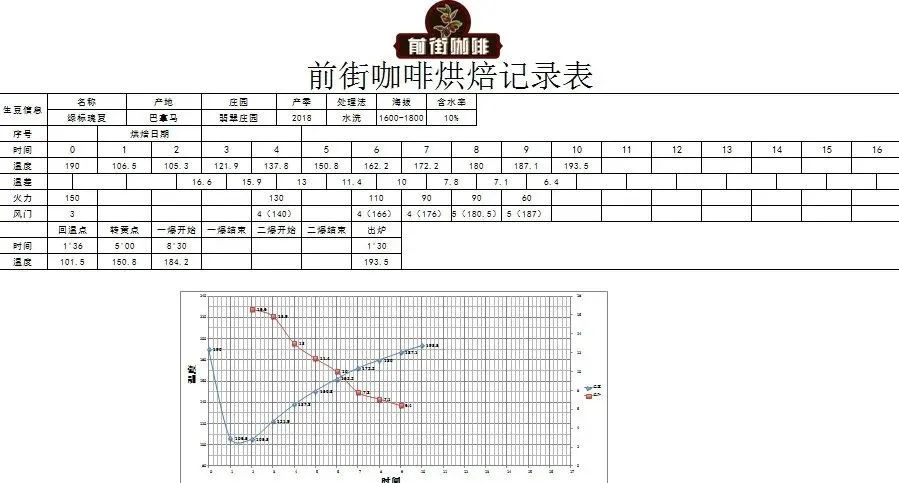
At 6'54", surface wrinkles and black spots appear and the toast aroma clearly shifts into coffee aroma — the prelude to first crack. First crack begins at 7'50"; open the damper to 4, develop for 1'20" after crack, and discharge at 192.5°C.
[Blue Label Geisha]
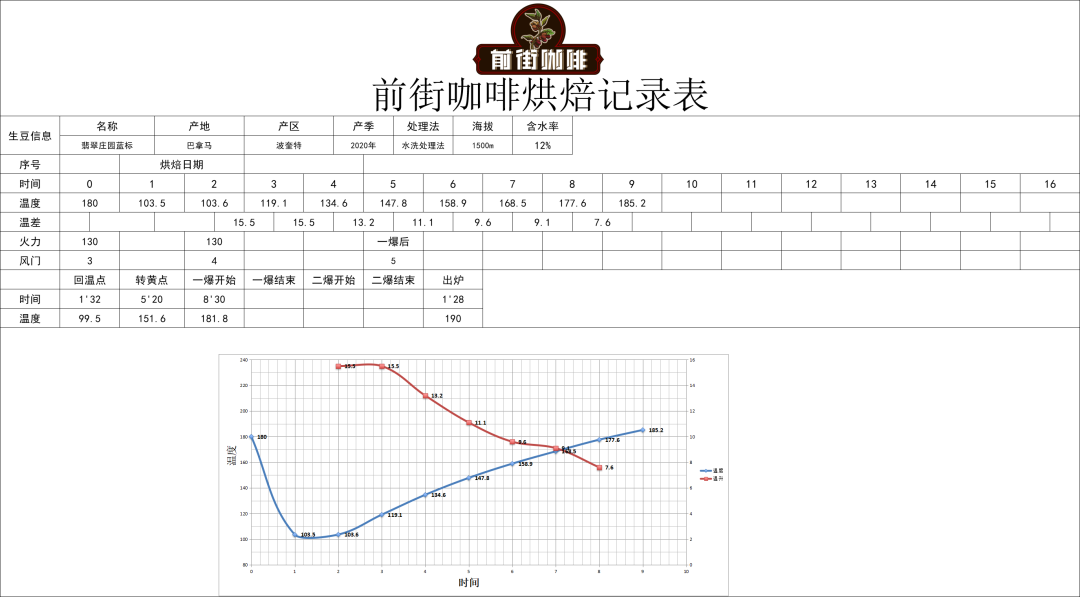
Bean entry temperature 180°C, yellowing point at 5'20" and 151.6°C, first crack at 8'30" and 181.8°C, develop for 1'28" after crack, discharge at 190°C.
Cupping Flavors
[Red Label Geisha]
Dry Aroma: Jasmine, citrus
Wet Aroma: Citrus, lemon, honey
Palate: Lemon, honey, berries, orange peel, mango, cream, citrus, tea-like sensation
[Green Label Geisha]
Dry Aroma: Jasmine, ginger flower
Wet Aroma: Lemon, sweet orange
Palate: Lemon, sweet orange, honey, cream, almond, tea-like sensation
[Blue Label Geisha]
Dry Aroma: Floral, citrus
Wet Aroma: Citrus, lemon
Palate: Citrus, lemon, honey, nuts, tea-like sensation

How FrontStreet Coffee Brews Geisha
| Grade | Red Label | Green Label | Blue Label |
|---|---|---|---|
| Altitude | 1600-1800m | 1600-1800m | 1400-1500m |
| Processing | Natural/Washed | Washed | Washed |
| Roast Level | Light Roast | Light Roast | Light Roast |
FrontStreet Coffee's brewing recommendations for La Esmeralda Red, Green, and Blue Label Geisha:
We suggest: Hario V60 dripper, 90°C water, 15g coffee dose, 1:15 coffee-to-water ratio, grind size BG#4Q (80% pass rate on the China standard #20 sieve).
All three grades are lightly roasted, and light-roast beans yield fewer soluble solids than dark roasts. To extract Geisha's flavors fully, we therefore brew with a relatively high water temperature and a finer grind.

For grinding, we determine the right size by sieving. Based on the Specialty Coffee Association's recommendations for pour-over grind size — combined with our own practical verification — we tested different grind sizes in brewing. The resulting cups differed significantly, and each bean variety wants a different grind. That's the point of sieving.
If you don't have a sieve at home, watch the flow rate instead: fast flow means the grind is too coarse; slow flow means it's too fine.

[Brewing Method]
We use segmented extraction, also called three-stage brewing. Bloom with 30g of water for 30 seconds. Using a small water stream, pour in circles to 125g for the first segment. When the water level drops and the coffee bed is about to be exposed, continue pouring to 225g and stop. When the bed is about to break the surface again, remove the dripper. (Timing starts at the bloom.) Total extraction time: 2'00".

Flavor Descriptions
[Red Label] Bright rose and citrus aromas, brown rice, berries, apricot, complex fruits, honey — a thick, juice-like texture, rich layered flavors, and noticeable sweetness.
[Green Label] Rich jasmine florals, high sweetness, citrus, berries, juice-like texture, cream, green tea, orange peel, cantaloupe — richly layered, with a persistent floral and citrus aftertaste.
[Blue Label] Floral aroma, gentle lemon and grapefruit acidity on entry, honey sweetness in the middle, oolong-tea sensation and brown sugar sweetness in the finish, over a clean, bright mouthfeel.
For more specialty coffee beans, please add FrontStreet Coffee on WeChat: kaixinguoguo0925
FrontStreet Coffee Recommendation
Geisha is a medium-light, floral-fruity coffee with dense beans that tend to sink and clog the drip bed, so FrontStreet recommends a coarse grind — about a 78% pass rate on the Chinese standard #20 sieve (fine-granulated-sugar size) — and water at 91°C.
Our house Geisha recipe uses 15g of coffee in a small Hario V60 at a 1:16 ratio, poured in three stages: pour to 30g and bloom for 30 seconds, then in slow circles to 125g; once the bed drains to half, continue in slow circles to 225g, finishing in about 2 minutes 10 seconds to 2 minutes 20 seconds.
For the full Panama experience, FrontStreet carries the La Esmeralda Red Label (Esmeralda Special) — grown at 1,600–1,800 meters, cupping above 90 points per batch, sourced from single named plots like Jaramillo — alongside the Green Label (Private Collection), whose multi-plot blend delivers the estate's signature high-altitude profile at a friendlier price. First-timers can start with the entry-level Boquete Geisha for a taste of classic orange-blossom honeyed sweetness, oolong-tea character, and delicate fruit acidity.
Important Notice :
FrontStreet Coffee is a long-established specialty coffee roaster in Guangzhou China, selling freshly roasted beans from its own farm in Yunnan as well as dozens of carefully selected single-origin beans from around the world for both pour-over and espresso. The products deliver consistently excellent quality and great value, with shipping within 24 hours. Guangzhou's FrontStreet Coffee shop is recommended by many coffee lovers, and the beans are now available online at the Tmall 。
FrontStreet Coffee has moved to a new address:
FrontStreet Coffee Address: 315,Donghua East Road,GuangZhou
Tel:020 38364473
 Scan and follow the En Gafei WeChat official account. Please indicate that the reprint comes from "En Gafei".

