How Many Levels of Coffee Bean Roasting Are There? How to Define Light, Medium, and Dark Roasts? How Are Coffee Beans Roasted?
Understanding Coffee Roast Levels: A Complete Guide
The roast level of coffee beans determines the direction of their flavor. Many coffee shops label the roast on the beans they sell - light roast, medium roast, cinnamon roast, and so on - which can confuse beginners. In this article, FrontStreet Coffee explains coffee roast levels and flavor profiles, how to identify the roast level of the beans in your hand when the packaging doesn't say, and what grind size, water temperature, and brewing method will make them taste their best.
How Do We Define Roast Levels?
Initially, each country had its own roasting school of thought, with no unified standard - what one region called light, medium, or dark roast bore little relation to another's, making them impossible to compare. So the Specialty Coffee Association of America (SCAA), one of the coffee world's authoritative bodies, teamed up with Agtron Company to use coffee Agtron values as a standard, attempting to unify how roast levels are measured. It has since become one of the standard ways to test roast level.
SCAA Standard Coffee Roast Levels
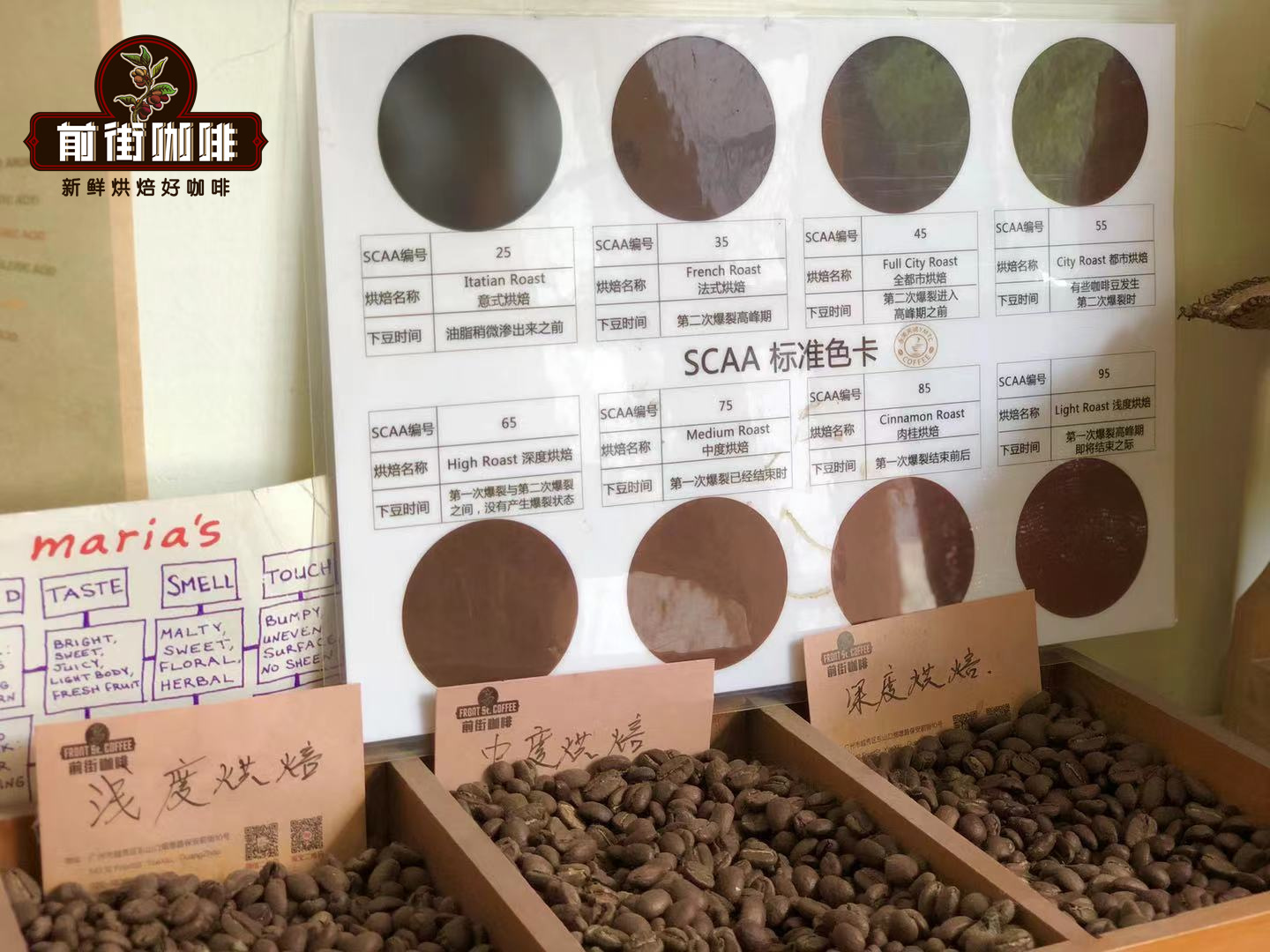
The SCAA uses infrared caramelization measurement technology (Agtron) to measure bean color and thereby determine roast level, dividing the color range from light to dark into eight equal parts to create eight standard color blocks for the coffee industry to use as roasting references. (Note: the caramelization meter (Agtron) is an optical instrument that uses infrared wavelengths to measure coffee roast level. It determines the degree of caramelization of the sugars inside coffee beans and presents it numerically. The range shown on this chart from light roast to dark roast is 25-100, but according to the SCAA's Technical Standards Committee, the recognizable range of coffee flavor is actually 30-90.)
Light Roast (Rich fruit acidity and floral aromas)
Agtron color value #95: Light Roast: Drop time: When first crack becomes dense and is about to end
Agtron color value #85: Cinnamon Roast: Drop time: Around the end of first crack
Medium Roast (Obvious sweetness, balanced flavor)
Agtron color value #75: Medium Roast: Drop time: After first crack ends
Agtron color value #65: High Roast: Drop time: The quiet period between first and second crack
Medium-Dark Roast (Rich and sweet)
Agtron color value #55: City Roast: Drop time: When second crack begins
Agtron color value #45: Full City Roast: Drop time: Before second crack becomes dense
Dark Roast (Rich and intense)
Agtron color value #35: French Roast: Drop time: When second crack becomes dense
Agtron color value #25: Italian Roast: Drop time: When oil begins to seep to the bean surface
Determining Coffee Bean Roast Level from Flavor Descriptions
The packaging of FrontStreet Coffee's beans doesn't state the roast level, because FrontStreet Coffee's roasting mostly falls between light-medium and medium-dark - but you can identify the roast from the flavor descriptions. Citrus, berry, and floral acidic aromas indicate a light-medium roast (think beans from Ethiopia, Kenya, and other African regions, or Panama Geisha). Nutty aromas point to a medium roast (beans from Colombia, Costa Rica, and other Central and South American origins). Descriptions of nutty cocoa with low acidity indicate a medium-dark roast (such as Brazil, Indonesia, and Blue Mountain beans).

How to Brew Coffee Beans with Different Roast Levels
Using FrontStreet Coffee's beans as an example: for light-medium to medium roast beans, we use a medium-fine grind (approximately 75-80% pass rate on a #20 standard sieve) with brewing water at 90-92°C. At this grind and temperature, sweet and sour substances extract fully without sacrificing body.
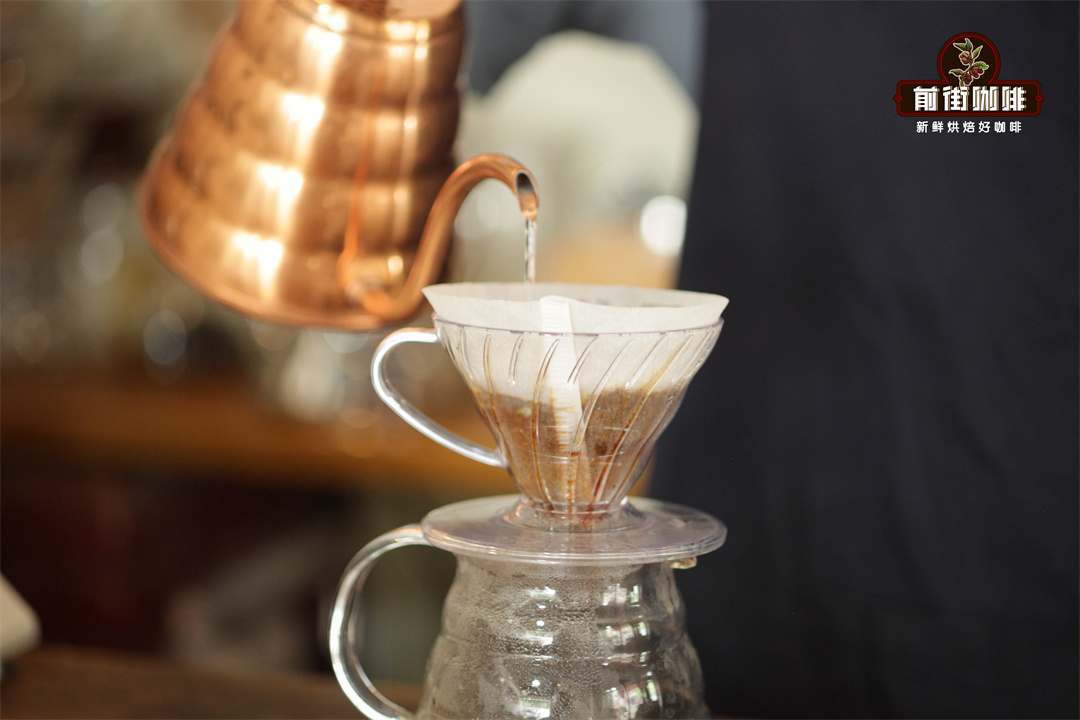
Medium-dark roast beans use a medium grind (approximately 65-70% pass rate on a #20 standard sieve) with water at 87-89°C. At this grind and temperature, the coffee shows rich, thick, and solid characteristics while rarely turning bitter.
FrontStreet Coffee Recommendation
The roast spectrum from light to dark decides where a coffee's charm lies. For balance-seeking drinkers, medium roast is the sweet spot: the darker you roast, the more bitter and heavy the cup; the lighter, the more acidic and delicate. FrontStreet Coffee's medium-roast recommendations are a great starting point.
FrontStreet Coffee's Brazil Fazenda Rainha (Queen Estate) is the pick for those who dislike both sour and bitter. Grown in Brazil, the world's largest coffee producer, it is the country's distinctive Yellow Bourbon variety - quietly sweet and mellow, showing cream, peanut, chocolate, toast, and sugarcane after medium roasting, and working equally well for pour-over, moka pot, or espresso machine.
For a sweeter medium roast, FrontStreet Coffee's Strawberry Sugar is the first choice. It combines honey-process coffee from Costa Rica with washed Geisha from Panama, and the medium roast lets it show both honeyed orange aromatics and rounded sweetness - refreshing in the cup, and suited to cold brew, pour-over, and espresso alike.
And for perfectly balanced flavor, FrontStreet Coffee's Jamaica Blue Mountain No. 1 - grown from world-renowned Typica - is roasted medium precisely so that its unique acidity, bitterness, sweetness, and body blend seamlessly, delivering chocolate, roasted nuts, cream, and caramel from the very first sip.
Important Notice :
FrontStreet Coffee is a long-established specialty coffee roaster in Guangzhou China, selling freshly roasted beans from its own farm in Yunnan as well as dozens of carefully selected single-origin beans from around the world for both pour-over and espresso. The products deliver consistently excellent quality and great value, with shipping within 24 hours. Guangzhou's FrontStreet Coffee shop is recommended by many coffee lovers, and the beans are now available online at the Tmall 。
FrontStreet Coffee has moved to a new address:
FrontStreet Coffee Address: 315,Donghua East Road,GuangZhou
Tel:020 38364473
 Scan and follow the En Gafei WeChat official account. Please indicate that the reprint comes from "En Gafei".