Introduction to Brazilian Coffee Regions: Red Bourbon Coffee Bean Flavor Profile and Brewing Parameters for Brazilian Coffee

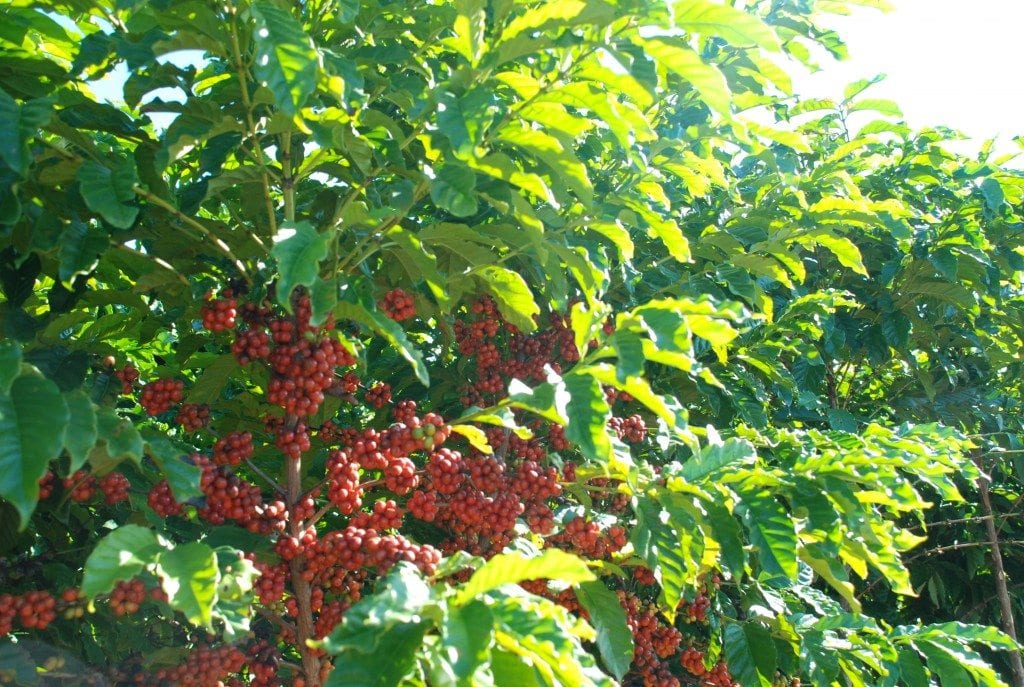
Brazil is the world's leading coffee producer. Although Brazilian coffee production was affected by frost and drought in 2020, the country's cultivation still accounts for roughly one-third of global output. As the world's largest coffee-growing country, Brazil has extremely diverse growing areas and varieties. Some customers have told FrontStreet Coffee that its Brazilian beans taste different from those found in other shops. Setting aside factors like roasting and brewing methods, FrontStreet Coffee believes the growing region is what most closely shapes flavor. Understanding where your Brazilian beans come from gives you deeper insight into their flavor characteristics, aroma, and even overall quality. With that in mind, FrontStreet Coffee now guides you through Brazil's main Arabica growing regions.
Brazil's 13 Coffee Growing Regions
After reviewing numerous sources, FrontStreet Coffee found that the most detailed classification divides Brazil into 13 coffee growing regions: Bahia, Chapada Diamantina, Cerrado Bahia | West Bahia, Planalto de Bahia, Minas Gerais, Cerrado, Sul de Minas, Chapada de Minas, Matas de Minas, São Paulo, Mato Grosso do Sul, Espírito Santo, and Paraná. Each region's beans reflect the character of its growing area. Below, FrontStreet Coffee introduces the coffee from each of them.

Bahia
Look carefully at the map and you will notice this is Brazil's easternmost coffee region. The area is vast, and in recent years a growing number of excellent coffees have come from here: in the 2009 Cup of Excellence competition, five of the top ten lots came from this region, and its coffees have attracted increasing attention ever since.
Chapada Diamantina
"Diamantina" refers to the diamond rush that swept through here in the 19th century, and traces of gold and diamond exploration can still be found in the park today. Many coffees in this region are currently grown using biodynamic methods, an organic farming approach. Nearby is a national park in the Serra do Espinhaço, a quartzite mountain range in the Jequitinhonha River basin, where altitude ranges from 720 meters (2,360 feet) in the north to 1,480 meters (4,860 feet) in the south — excellent for coffee cultivation.

Cerrado Bahia | West Bahia
This region is famous for its large-scale, industrial, artificially irrigated coffee cultivation. In the late 1970s, the government offered small loans and incentives for agricultural projects, attracting many coffee farmers to relocate here. Although the altitude is not particularly high, the stable, warm, sunny climate boosts yields, and coffee cultivation has developed rapidly.
Planalto de Bahia
This is arguably Brazil's most technologically advanced coffee region today. From cultivation to harvest, fully mechanized production is common, and advanced irrigation makes the cherries ripen uniformly — making it nearly Brazil's most productive coffee area. But productivity is not its only distinction: Antônio Rigo de Oliveira of the Chaçará São Judas Tadeu farm in Piatã won the 2015 Cup of Excellence Brazil Pulped Naturals with a score of 91.22 (out of 100) and was awarded the Presidential Coffee Seal for scoring above 90 points. Climatically, the area has high altitudes, warm weather, dry summers, and rainy winters, producing sweet coffee — typically Catuaí — with low acidity and full body.

Minas Gerais
As Brazil's largest coffee-growing state, this region produces nearly half of the country's entire coffee output and is the main source of Brazilian specialty coffees. Minas Gerais contains some of the country's highest mountains, providing the necessary altitude. It sits on a plateau at elevations from 100 to 1,500 meters, with the highest point being the 2,891.9-meter Pico da Bandeira — "Flag Peak."
Cerrado
Longtime fans of FrontStreet Coffee may recall its Brazil Cerrado Fazenda Baicuí coffee. Cerrado is definitely a famous high-quality growing region. Produced on savanna plains at altitudes of 850-1,200 meters with an average annual temperature of around 20°C, distinct dry and wet seasons combined with comfortable low temperatures create this bean's unique flavor. Its processing is relatively refined: Cerrado beans use the traditional Brazilian pulped natural drying method, and because the beans are dried together with their skin, pulp, and mucilage, they retain higher levels of organic matter, minerals, and soluble solids. Brazilian Cerrado beans are characterized by rich aroma, a slightly sweet flavor with chocolate notes, a subtle lemon acidity most people barely notice, moderate body, and a long aftertaste.
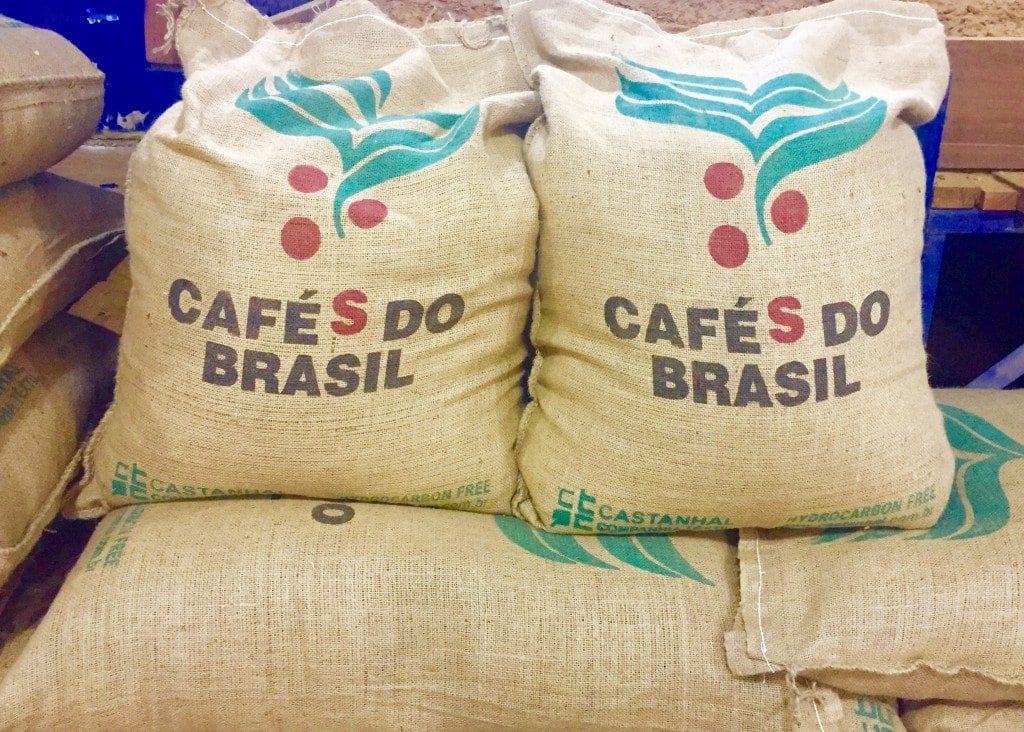
FrontStreet Coffee's Brazil Cerrado Fazenda Baicuí
Region: Cerrado
Variety: Yellow Catuaí, Catuaí
Processing Method: Natural
Altitude: 1000m
Aroma: Gentle and elegant, giving an overall refined impression.
Flavor: Like its aroma, the flavor is relatively mild and elegant among Brazilian coffees, with low acidity, smooth mouthfeel, and balanced body.

Brewing Parameters
Dripper: KONO
Water Temperature: 88°C
Coffee Dose: 15g
Water Ratio: 1:15
Grind Size: 20# sieve with 75% pass-through rate
Brewing Method: Three-stage extraction
Use twice the coffee dose in water (30g) for blooming, for around 30 seconds. With a small water stream, pour in circles from the center outward to 125g. When the water level drops to half of the original liquid surface, continue pouring to 225g to finish. Extraction time is approximately 2 minutes.

Sul de Minas
Sul de Minas (South Minas) has higher altitudes, averaging 950m, and an average annual temperature of around 22°C. It produces about 30% of the country's coffee, mainly on small farms of 10 to 100 hectares — though sizes vary greatly. With many generational small farmers, public cooperatives have flourished here.
Main varieties include Catuaí, Mundo Novo, Icatu, Obatã, and Catuaí Rubi. Flavor-wise, you will typically find coffees with rich body, slight lemon acidity, and fruity notes.
Chapada de Minas
Cerrado de Minas happens to be Brazil's first coffee region to receive Designation of Origin status (Cerrado Mineiro), giving it standing similar to famous wine regions. It is a large area of 55 municipalities located among Alto Paranaíba, Triângulo Mineiro, and Northwest Minas Gerais, with farms ranging from medium-sized (2-300 hectares) to large estates.

The region sits at 800-1,300m with distinct seasons — humid summers, mild dry winters — making it very suitable for specialty coffee. You will find Mundo Novo and Catuaí here, and Cerrado de Minas coffees tend toward higher acidity, moderate body, and balanced sweetness. The plateau areas of Chapada de Minas are dotted with valleys suited to mechanized production, where Catuaí and Mundo Novo are also cultivated.
Matas de Minas
Matas de Minas lies in the Atlantic Forest, with undulating terrain and a warm, humid climate. About 80% of its farms are smaller than 20 hectares. It is known for a growing output of specialty coffee, often carrying sweet caramel or chocolate notes that commentators appreciate. Catuaí and Mundo Novo are cultivated here.

São Paulo
São Paulo is one of Brazil's historic coffee-growing states, and home to the country's main coffee export port, the Port of Santos.
Its main famous growing regions include:
Mogiana
Mogiana's favorable altitude (900-1,100m), mild temperatures (average 20°C), and uneven terrain create high-quality coffee with a very sweet, balanced cup profile. Mundo Novo and Catuaí are grown here.
Centro-Oeste de São Paulo
This hilly region comprises Marília, Garça, Urupês, and Avaré. Like Mogiana, the terrain is quite uneven, and most farms are small to medium-sized. FrontStreet Coffee was drawn to the excellent quality of this growing region — which is why it selected the Yellow Bourbon from São Paulo's Queen Estate, located in Mogiana. Because this estate's beans use a semi-natural (pulped natural) processing method — one FrontStreet Coffee considers close to honey processing — the naturally low-acidity Brazilian coffee gains brighter acidity, combined with Brazil's characteristic dryness, and may even carry tropical fruit aromas. The main notes of the coffee, however, remain nutty and chocolatey.

Paraná
This may be Brazil's southernmost coffee region. Although its area is not large, it produces 25% of Brazil's entire agricultural output and has even changed where Brazilians live: initially most lived in coastal areas, but coffee cultivation has drawn more and more people inland. Although the altitude here is lower, the coastal climate provides favorable conditions for growing coffee.
The above is FrontStreet Coffee's overview of Brazilian growing regions. Brazilian coffee grading has always attracted public interest as well. Green coffee is graded and classified for export with the ultimate goal of producing the best cup quality and thereby securing the highest price. There is no universal system, though — each producing country has its own, which can also serve to set (minimum) export standards.
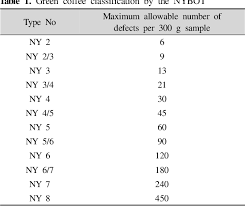
Brazilian grading has many standards, varying by flavor grade, cup quality, defect rate, and bean size. FrontStreet Coffee introduces the classification table provided by the Brazilian authorities:
In Brazil, coffee quality is graded according to two categories: type and cup.
The main evaluation criterion for type is the overall appearance and the number of defects found in a 300-gram sample of processed beans. According to the official classification table, Brazil's type grading follows a descending scale from 2 to 8, each type implying a different number of defects in the sample — imperfect beans or foreign matter. Black beans, considered the worst defect, sit at the bottom of the scale.
Other defects — sourness, pest damage, shell-shaped or stick-shaped beans — are considered secondary. To determine beverage quality, sensory analysis evaluates flavor and aroma through cupping. This method is almost as old as Brazilian coffee history itself: it emerged in the early 20th century and was adopted in 1917 by the Santos Official Coffee and Commodity Exchange. Although considered the most important criterion of quality, sensory analysis sometimes rates "hard coffee" more favorably, and its popularity has hindered research that could ensure more precise grading through chemical analysis. Sensory analysis is typically conducted by trained cuppers who use their senses to distinguish different types of coffee.
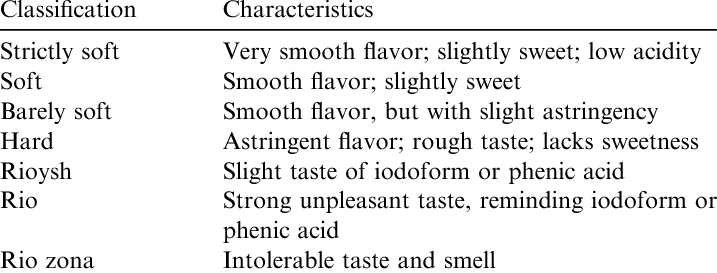
According to the official classification table, coffees are classified in descending order as strictly soft, soft, softish, hard, "riada," "rio," and "rio zona."
FrontStreet Coffee Recommendation
If you want a Brazilian coffee that is milder and more balanced than a punchy Mandheling, FrontStreet Coffee recommends the Brazil Queen Estate beans from Mogiana. They offer clear nut, cocoa, and caramel aromas in a rounded, silky mouthfeel, with low acidity and prominent sweetness. Whether brewed as pour-over, moka pot, or espresso, they deliver a very stable performance — and Brazil's naturally good crema has made them a longtime "daily bean" for home brewers who love traditional coffee flavor.
For the Cerrado Fazenda Baicuí described above, brew it exactly as the parameters suggest: KONO dripper, 15 g of coffee at a 1:15 ratio, water at 88°C, grind at 75% pass-through on a #20 sieve, and three-stage extraction — 30 g to bloom for 30 seconds, then to 125 g, then to 225 g, for roughly 2 minutes of extraction.
Both lots show the signature Brazilian profile of gentle nuttiness and chocolate, but the Queen Estate's pulped natural (honey-like) process adds a brighter, almost tropical fruit lift — taste them side by side to feel how much processing method shapes a country's coffee.
Important Notice :
FrontStreet Coffee is a long-established specialty coffee roaster in Guangzhou China, selling freshly roasted beans from its own farm in Yunnan as well as dozens of carefully selected single-origin beans from around the world for both pour-over and espresso. The products deliver consistently excellent quality and great value, with shipping within 24 hours. Guangzhou's FrontStreet Coffee shop is recommended by many coffee lovers, and the beans are now available online at the Tmall 。
FrontStreet Coffee has moved to a new address:
FrontStreet Coffee Address: 315,Donghua East Road,GuangZhou
Tel:020 38364473
 Scan and follow the En Gafei WeChat official account. Please indicate that the reprint comes from "En Gafei".