Pour Over Coffee Tutorial Equipment Recommendations Three-Stage Pouring Ratio Water Temperature Brewing Process How Beginners Can Learn to Make Coffee

More and more people are beginning to enjoy the pleasure of pour-over coffee, but some steps can feel unfamiliar and some techniques hard to master. In this article, FrontStreet Coffee shares some tips for pour-over coffee.
Pour-over is a brewing method that requires a dedicated dripper and uses filter paper or another filtering medium to hold back the grounds. Before you begin, you need to prepare your equipment and ingredients: freshly roasted coffee beans, mountain or filtered water, a pour-over kettle, a dripper, a server, a grinder, filter paper, a scale, a thermometer, and a relaxed, happy mood.
Freshly Roasted Coffee Beans
The taste and flavor of a cup depend on the freshness of the beans. Based on FrontStreet Coffee's experience, coffee beans are generally at their best flavor window within 4-30 days after roasting.
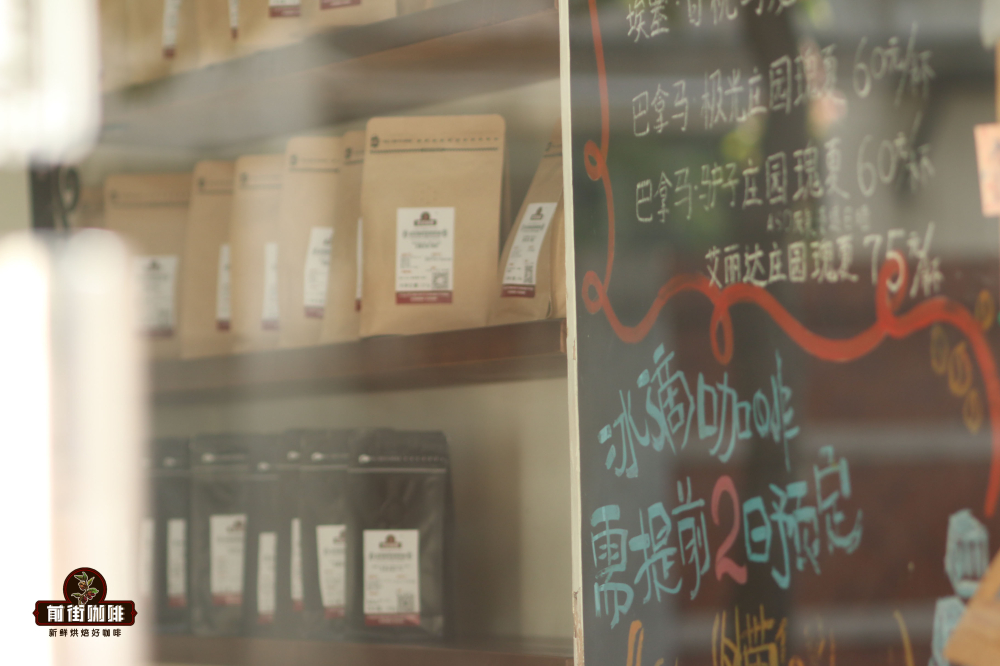
As the time since roasting increases, the aroma and flavor of the coffee gradually weaken. All the coffee beans FrontStreet Coffee currently sells are shipped within 5 days of roasting, so every customer receives 100% freshly roasted beans.
Grinder
A grinder is used to grind the coffee beans, and different roast levels call for different grind sizes. Based on FrontStreet Coffee's brewing experience, light to medium roast beans suit a medium-fine grind (75-80% retention on a China standard #20 sieve), which looks like fine granulated sugar, while medium-dark to dark roast beans suit a medium-coarse grind (65-70% retention on a China standard #20 sieve), which feels closer to coarse granulated sugar.

Mountain Water or Filtered Water
As for water quality, water that is too hard or too soft is not suitable, and different minerals affect extraction in different ways. Simple filtered water or mountain water usually meets the requirements for pour-over.
It is best not to use pure water or mineral water directly, because most either lack minerals entirely or contain too many, and both affect the extraction of coffee flavors. Hard water tends to extract bitterness and astringency, and tap water counts as hard water; soft water tends to extract an overly sour flavor. If you are not sure whether your home water meets the requirement, FrontStreet Coffee suggests buying a bottle of Nongfu Spring water.

Pour-Over Kettle
Beginners are advised to choose a narrow-spouted gooseneck kettle, which makes the water flow easier to control.
Coffee Dripper
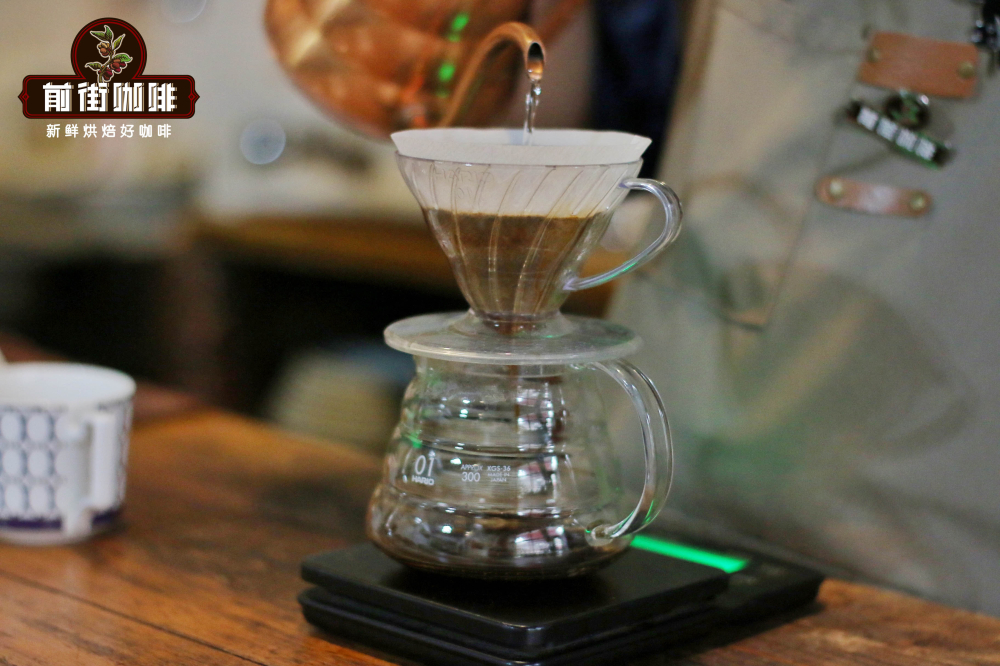
Beginners are advised to use a V60 dripper. Its large hole and spiral rib design not only enhance the layered quality of the coffee but also allow the flow rate to be adjusted according to the flavor you want. It is highly versatile and cost-effective.
Server
You must, must, must choose one that is both heat-resistant and cold-resistant. Do not buy cheap here, or the pot may crack during brewing.

Scale
Used to measure the weight of the grounds for each brew, the weight of the water poured, and the water temperature.

Thermometer
Used to confirm the water temperature for each brew. Different roast levels call for different brewing temperatures. Based on FrontStreet Coffee's experience, light to medium roast beans suit 90-92 degrees Celsius, while medium-dark to dark roast beans suit 87-89 degrees Celsius.

Brew Ratio
Taking FrontStreet Coffee's own offerings as an example, they use 15 grams of grounds and pour 225 grams of water during the brew, which is a brew ratio of 1:15. More grounds require more pouring time and create a thicker bed, so the flow slows down. FrontStreet Coffee chooses the 1:15 ratio because it prefers how coffee tastes at that ratio: more balanced, with the flavors spread more evenly.

Brewing Technique
For those new to pour-over, FrontStreet Coffee recommends segmented extraction. With an appropriate grind and water temperature, segmented extraction can raise the overall extraction rate and give the coffee a fuller body.
FrontStreet Coffee's baristas often share the recipes they use in store: 15 grams of grounds, 225 grams of hot water (a 1:15 ratio), a medium-fine grind, and a three-stage pour. The first stage pours 30 grams of water for a 30-second bloom, the second stage pours to 125 grams with a 10-second interval, and the third stage pours the remaining water to 225 grams. The total extraction time is about 2 minutes once the water has passed completely through the grounds. Below, FrontStreet Coffee demonstrates the specific steps and details by brewing a cup of Panama Geisha from its store.

Geisha coffee, popular worldwide, is known for its rich, elegant floral aroma, citrus, peach, and complex fruit acidity, a cream-like smooth texture, and an aftertaste with the sweet fragrance of oolong tea. Its refined flavor makes it feel less like drinking coffee than tasting a cup of fragrant fruit tea. FrontStreet Coffee often notes that coffee, as an agricultural product, always has a flavor closely tied to variety, climate, altitude, soil, and farm management. It is a natural, authentic reflection of the variety and its terroir, and post-processing and roasting should aim to preserve, restore, and present that truest flavor. Geisha's excellence is therefore inseparable from the combination of all those factors.
Friends visiting FrontStreet Coffee to taste Geisha for the first time are usually steered by the barista toward the Panama region. Not only is it where Geisha became famous, but it is also home to many renowned estates, so the Geisha produced there is more representative and the brewed flavor more elegant, such as the Boquete Washed Geisha that customers love.

The pour-over parameters for Geisha coffee are: Dripper: V60; Water temperature: 91-92 degrees Celsius; Coffee dose: 15g; Brew ratio: 1:15; Grind size: fine granulated sugar (80% retention on a #20 sieve).
Three-stage extraction: first, pour 15 grams of grounds into the dripper and zero the scale. The first stage pours 30g of water for a 30-second bloom while the timer starts. Throughout, use a small flow that begins at the center and moves outward in circles, making sure to wet the entire bed.

For the second stage, use a slightly larger flow to pour 100g of water, with the aim of lifting the whole bed. The stream should be poured vertically and evenly. At this point the scale reads 130g, and the pour should be finished in about 55 seconds.
When the liquid level drops to about halfway, start the third stage with a small flow in small circles, pouring 95g. Try not to let the flow get too large, because it easily scatters the bed and causes under-extraction. The total water poured is 225 grams, and the drawdown finishes in about 2 minutes and 5 seconds. After removing the dripper, swirl the coffee in the server to mix it evenly and it is ready to taste.

The brewed Boquete Geisha has a noticeable white jasmine aroma, with lemon-like acidity on the first sip. The bright citrus notes paired with sweet caramel are very pleasant. As the temperature drops, bergamot and honey flavors emerge, with a green tea-like texture and a refreshing mouthfeel.
FrontStreet Coffee Recommendation
The three-stage pour above is a good recipe for almost any light or medium roast, but the beans themselves decide the character of the cup. If you want to start with something approachable, FrontStreet Coffee's Ethiopia Yirgacheffe Gudingding is a washed coffee that is easy to accept, with citrus, berry, and floral notes and a green-tea sweetness. For a more tropical profile, Hualkui, a natural Ethiopian bean, is loaded with strawberry, passion fruit, jackfruit, and lychee aromas and a juicy body with very little bitterness; many drinkers call it the least coffee-like coffee they have tried.
The Kenya Little Tomato is the choice for bright, complex acidity: a washed Kenyan single origin from the Sika region, grown at 1,550-1,750 m from the SL28 and SL34 varieties and roasted light after a 72-hour double washed fermentation, it shows dried cherry tomato, smoked plum, pear, and black plum over a full, juice-like body. If you prefer a mellow, low-acid cup, the PWN Golden Mandheling and the Brazil Queen's Farm are the fuller, softer alternatives to balance against the fruitier beans.
Whatever you brew, the fundamentals above are worth following: fresh beans, a scale, a thermometer, and a steady circular pour. Grind fresh, use water between 90-92 degrees Celsius for lighter roasts and 87-89 degrees Celsius for darker ones, then adjust the grind a notch finer or coarser until the drawdown lands near the 2-minute mark.
Important Notice :
FrontStreet Coffee is a long-established specialty coffee roaster in Guangzhou China, selling freshly roasted beans from its own farm in Yunnan as well as dozens of carefully selected single-origin beans from around the world for both pour-over and espresso. The products deliver consistently excellent quality and great value, with shipping within 24 hours. Guangzhou's FrontStreet Coffee shop is recommended by many coffee lovers, and the beans are now available online at the Tmall 。
FrontStreet Coffee has moved to a new address:
FrontStreet Coffee Address: 315,Donghua East Road,GuangZhou
Tel:020 38364473
 Scan and follow the En Gafei WeChat official account. Please indicate that the reprint comes from "En Gafei".