Brazil Coffee Bean Origin Regions Characteristics Harvest Time Introduction Brazil Coffee Varieties Origin Story Production Environment Current Status
FrontStreet Coffee's Brazil beans are prized for a smooth, gentle mouthfeel, subtle acidity, and rich nutty flavor - among the easiest coffees for beginners to enjoy, and the first recommendation our baristas make to customers who dislike acidity. If you follow the global coffee market, you'll notice Brazil appears in every report on futures price movements, because it is the world's largest coffee producer. Curiously, though, just over three hundred years ago, Brazil had no coffee trees at all.
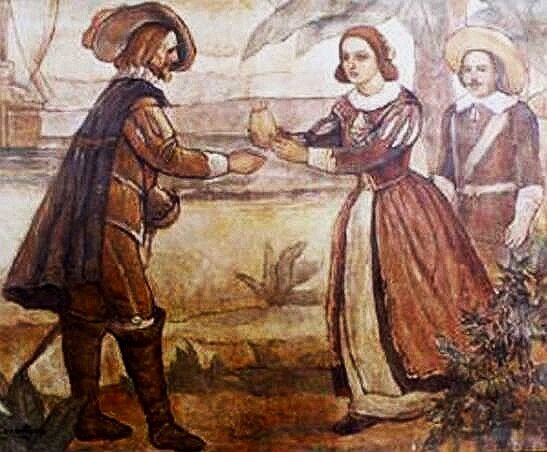
Legend has it that in 1727, a Portuguese officer named Francisco was sent to mediate a territorial dispute between France and the Netherlands in the Guianas. In Cayenne, he caught the eye of the governor's wife, who - as he prepared to depart - presented him with a bouquet of flowers with coffee seeds hidden inside. Those seeds would later take root, sprout, and flourish in Brazilian soil.
The Rise of Brazilian Coffee
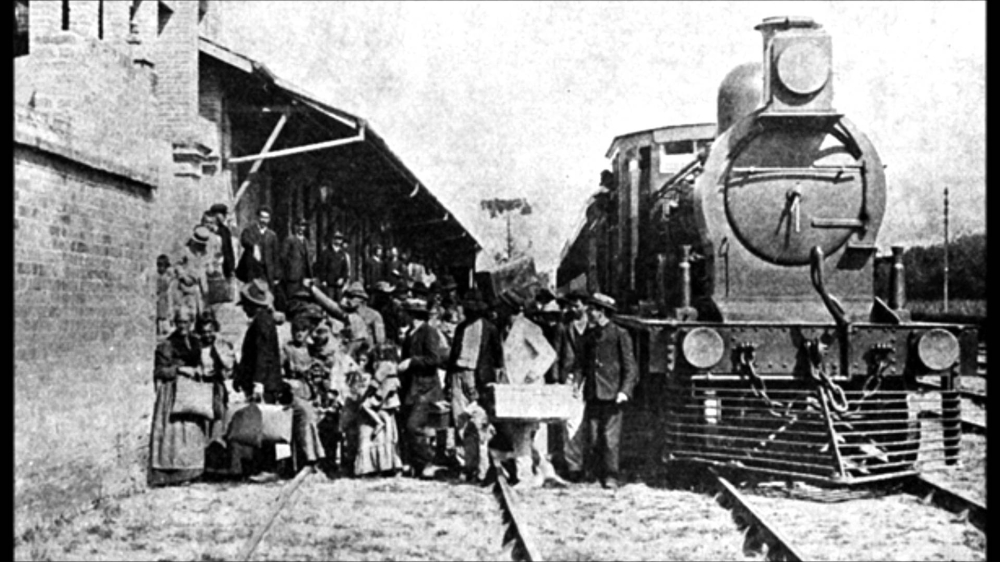
When the American Revolutionary War broke out in the late 18th century, coffee replaced tea as America's patriotic beverage, coffee houses multiplied, and demand for Brazilian beans surged. By the 1820s, coffee had become Brazil's main export crop, bringing enormous economic benefits - railways were built straight from the ports to the plantations. The American Civil War in the 1860s deepened that dependence further, with Brazilian beans becoming essential military supplies.
But because Brazil was then growing mainly Typica, production couldn't keep pace with demand. Growers scoured the world for higher-yielding varieties and ultimately brought in Bourbon from Réunion Island. By the 1870s, Bourbon had become Brazil's dominant cultivar.
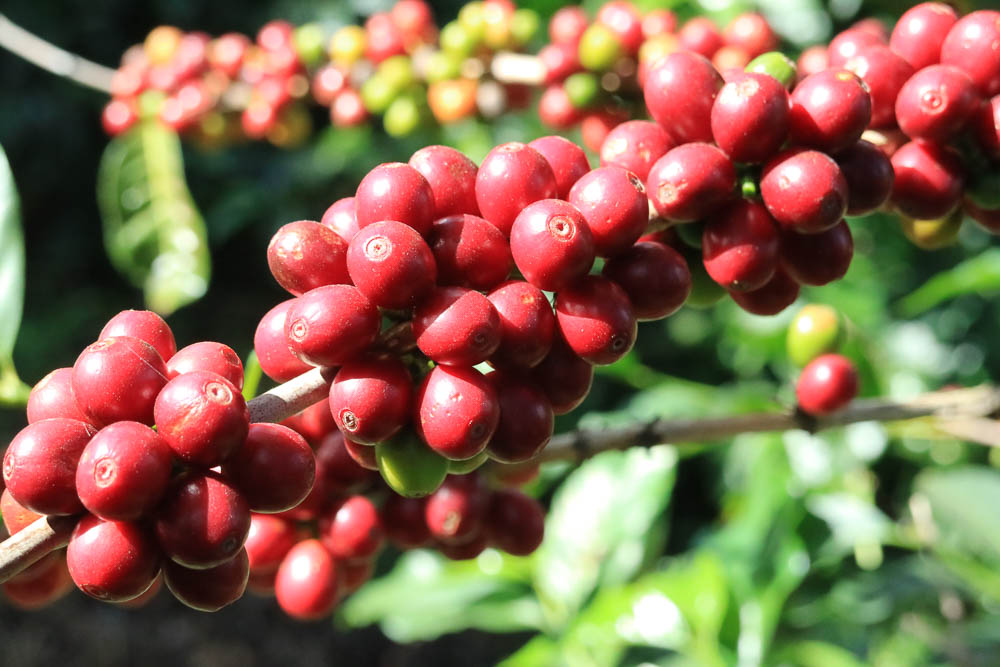
Today, Brazil's coffee regions are spread across six major states: Bahia, Espírito Santo, Minas Gerais, São Paulo, Paraná, and Rio de Janeiro.
On FrontStreet Coffee's menu, all of our Brazil beans are Bourbon - but two distinct kinds. One, from the daily-bean series, is a Red Bourbon; the other, from Brazil's Fazenda Rainha (Queen's Farm), is a Yellow Bourbon.

FrontStreet Coffee · Brazil Fazenda Rainha Yellow Bourbon
Region: Mogiana, São Paulo State, Brazil
Farm: Fazenda Rainha
Altitude: 1400-1950m
Variety: Yellow Bourbon
Processing: Natural
Yellow Bourbon was first documented in São Paulo State in 1871. It was initially thought to be a bottle mutation of Typica; scientific verification later confirmed it as a natural variant of Bourbon. Because Yellow Bourbon carries a thicker mucilage layer than Red Bourbon - one rich in sugars - it shows more pronounced sweetness along with a subtle lemon aroma.
FrontStreet Coffee's Fazenda Rainha Yellow Bourbon comes from São Paulo State, where coffee is a cornerstone cash crop and, thanks to the Port of Santos, one of the historically significant producing regions. Fazenda Rainha sits in Mogiana, São Paulo's most important coffee sub-region: suitable growing altitudes (900-1200m), moderate temperatures (averaging around 20°C), and varied terrain combine to produce Brazilian beans of abundant sweetness.
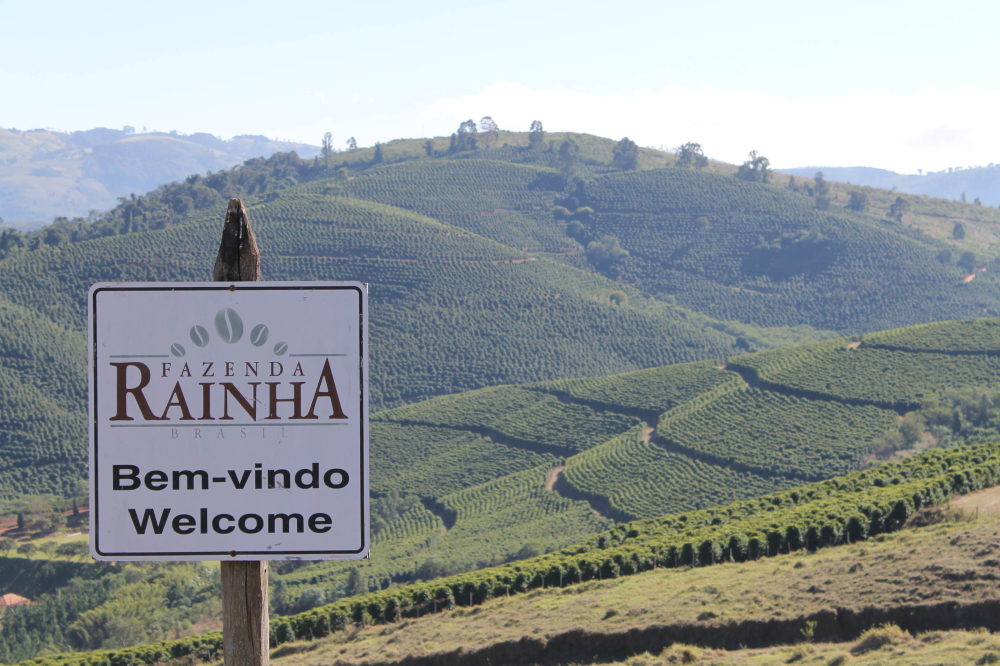
Fazenda Rainha's planting area spans roughly 280 hectares, with more than 200 hectares dedicated to the lower-yielding Yellow Bourbon. FrontStreet Coffee's Brazilian Yellow Bourbon is naturally processed; because natural processing demands longer drying times and more manual labor, the estate processes in small batches to protect quality.
After picking, ripe Yellow Bourbon cherries are spread evenly on raised beds, keeping them off the soil to avoid earthy taints. The cherries are turned frequently to prevent sour or fermented off-flavors from developing.
FrontStreet Coffee Brazil Red Bourbon
The other Brazilian bean we carry is the Brazil Red Bourbon from the daily-bean series, sourced from the Cerrado region of Minas Gerais. Every region in our daily-bean series is an iconic producing area, and to present each region's most fundamental character, most of these beans are washed - except where local tradition dictates otherwise: our Indonesian Mandheling uses Sumatra's distinctive wet-hulled process, while Brazil uses pulped natural.
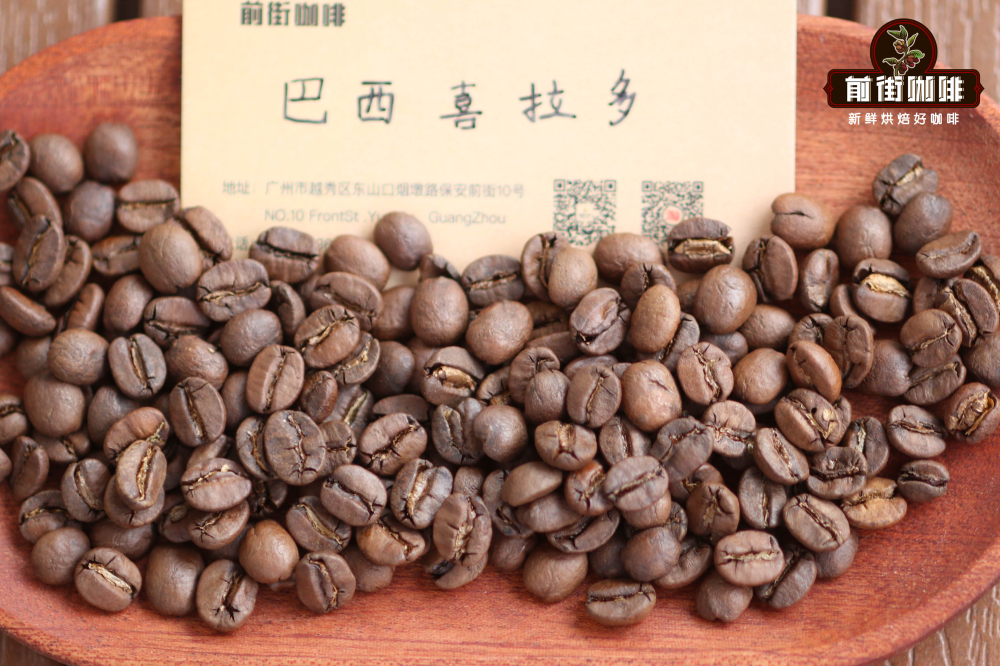
FrontStreet Coffee · Brazil Red Bourbon
Region: Cerrado, Minas Gerais State, Brazil
Altitude: 1100m
Variety: Red Bourbon
Processing: Pulped Natural
Brazil adopted pulped natural processing on a wide scale to boost coffee exports in the late 20th century. Compared with the original natural process, washed processing shortens drying time considerably and improves green-bean quality. But much of Brazil lacks abundant water, and washed processing requires heavy investment - Brazil could satisfy neither requirement of full washing. Adapting to local conditions, growers developed pulped natural processing, often referred to as semi-dry processing.
Pulped natural means removing the cherry skin and pulp, then spreading the beans out evenly to dry. It effectively shortens drying time, improves green-bean quality, and brings a different flavor and mouthfeel to the cup. Sharp-eyed readers will notice its similarity to honey processing - in fact, Costa Rica's honey process was borrowed from Brazil's pulped natural.
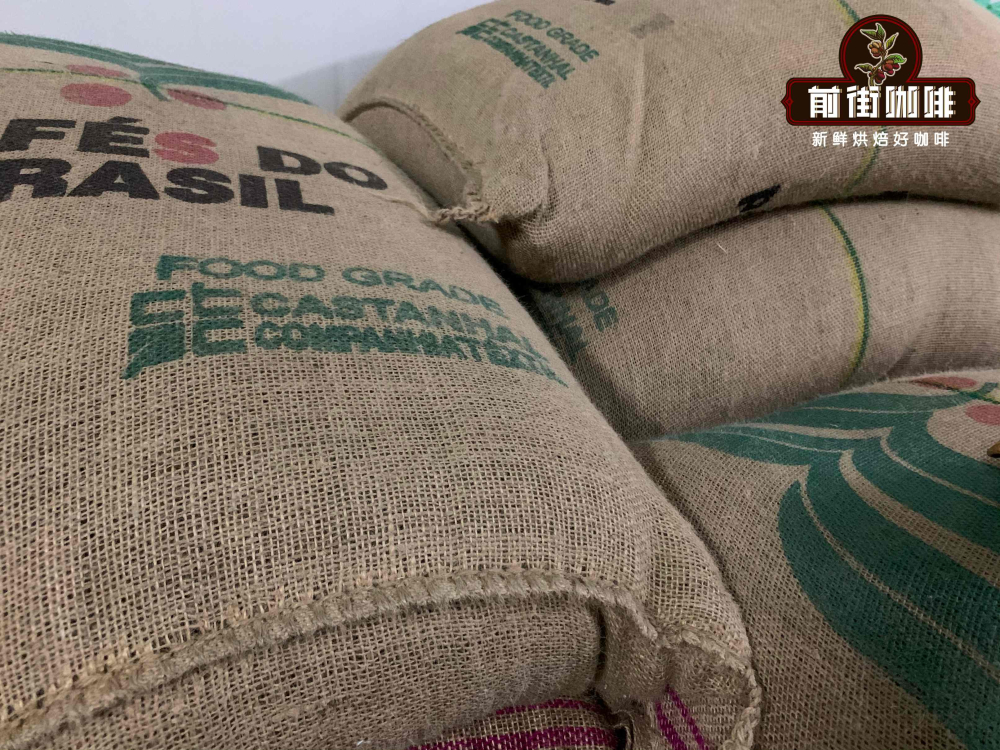
The Cerrado belongs to Minas Gerais, a state whose 2020 coffee production accounted for 40% of Brazil's total - making it one of the country's largest coffee regions. Cerrado was also Brazil's first coffee region to receive Brazilian Geographical Indication certification. FrontStreet Coffee's Cerrado bean is a showcase of classic Brazilian flavors.
Brewing Recommendations
Since both of FrontStreet Coffee's Brazilian beans are medium-dark roasted, we recommend 88°C water, a KONO dripper, and a medium-coarse grind.
Dripper: KONO dripper
Water Temperature: 88°C
Dose: 15g
Ratio: 1:15
Grind: Chinese-standard #20 sieve, 75% pass-through

First, pour 30g of water for a 30-second bloom. Then pour gently from the center in slow spirals up to 125g. Continue to 225g once the coffee bed becomes visible. Total extraction time is about 2 minutes.
[FrontStreet Coffee Brazil Fazenda Rainha] Rich nutty flavors on entry, sugarcane sweetness, a subtle lemon aroma, dark chocolate aftertaste, layered depth, and a smooth, rounded mouthfeel.
[FrontStreet Coffee Brazil Cerrado Red Bourbon] Rich roasted peanut and nut flavors on entry, caramel sweetness, and a silky, creamy mouthfeel.

FrontStreet Coffee Recommendation
If this overview has you craving Brazilian coffee, FrontStreet Coffee's Fazenda Rainha Yellow Bourbon is the connoisseur's pick - natural-processed at 1400-1950m in Mogiana, offering sugarcane sweetness, subtle lemon aroma, and dark chocolate depth. For a dependable everyday cup, the Brazil Cerrado Red Bourbon delivers roasted peanut, nut, and caramel sweetness with a silky body at 1100m from Brazil's first Geographical Indication-certified coffee region. Brew either one at a 1:15 ratio with 88°C water on a KONO dripper and you'll get the classic, low-acid Brazilian profile at its best.
Important Notice :
FrontStreet Coffee is a long-established specialty coffee roaster in Guangzhou China, selling freshly roasted beans from its own farm in Yunnan as well as dozens of carefully selected single-origin beans from around the world for both pour-over and espresso. The products deliver consistently excellent quality and great value, with shipping within 24 hours. Guangzhou's FrontStreet Coffee shop is recommended by many coffee lovers, and the beans are now available online at the Tmall 。
FrontStreet Coffee has moved to a new address:
FrontStreet Coffee Address: 315,Donghua East Road,GuangZhou
Tel:020 38364473
 Scan and follow the En Gafei WeChat official account. Please indicate that the reprint comes from "En Gafei".