Optimal French Press Parameters: Grind Size, Water Temperature, Water Volume, and Time
Understanding Coffee Brewing Fundamentals
Whatever brewing method you use, coffee beans have to be ground before they can be brewed, and the grind size changes with the device. FrontStreet Coffee has specific standards for grind settings, because to enjoy a good cup, grind size, water temperature and the quality of the beans all influence the flavor. The French press is simple to operate, but it is also the brewing method that best reveals the quality of the beans, which is why it is recommended for high-quality specialty coffee.
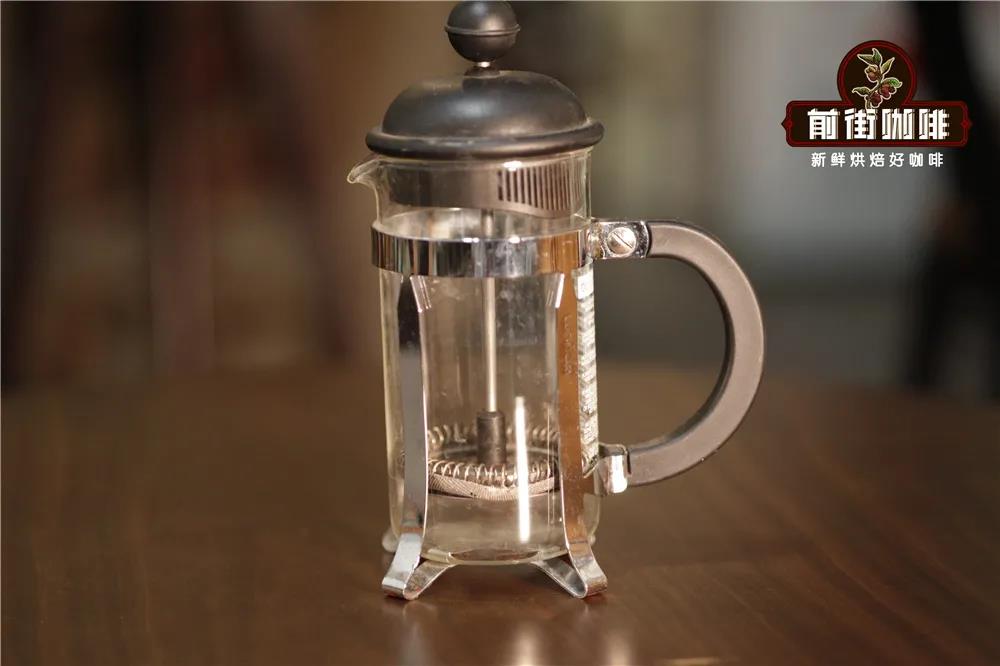
Of course, coffee brewing involves plenty of fine detail, and without it a delicious cup can easily lose its flavor. FrontStreet Coffee now introduces a very simple brewing device - the French press, also known as the "lazy person's brewing method," ideal for coffee beginners. What are the corresponding standards for grind size, water temperature and other parameters? FrontStreet Coffee reveals them one by one. Slight adjustments can of course be made for personal taste.
Understanding the French Press
The French press originated in 19th-century France. In English it is called the "French Press," and in Chinese it can also be referred to as the "French pressure filter pot." Although the exact time of its appearance is unclear, in 1852 the Frenchmen Mayer and Delforge established the "Smith" company, applied for a patent for piston-filtered coffee brewing devices, and named the product "French Press," marking the commercialization of the French press.
Simple and Convenient Design
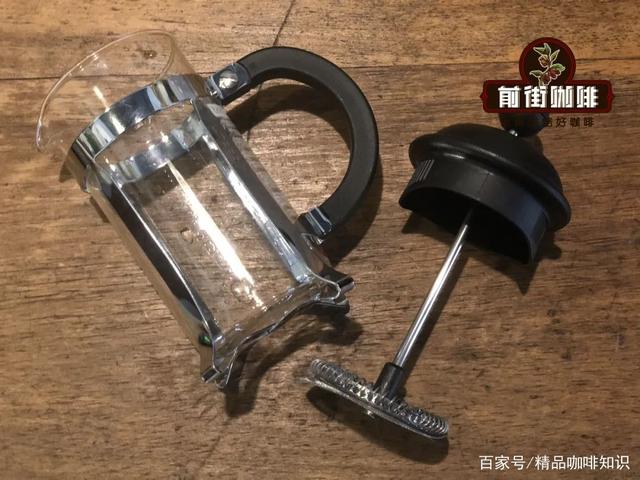
Simple refers to the French press's simple structure, simple principle and simple operation. The whole device consists of a heat-resistant glass container and a metal filter with a plunger. To make coffee, you simply soak coffee grounds and hot water in the glass container, then use the metal filter with the plunger to filter the grounds, leaving a relatively clean cup. The entire manual process is three steps: add grounds, add water, press the plunger.
French Press Grind Size
So what grind does the French press use? It uses a coarse grind.
The grind size of coffee grounds is related to the roast level. The French press (68-75% pass-through rate with a #20 sieve) extracts in a way very similar to cupping, since both are primarily immersion-based, so the chosen grind overlaps heavily with cupping. There is another reason to choose coarser particles: because French press filtering uses a metal filter with visible gaps, a coarser grind aids filtration. Coarseness also varies with roast level - medium-light roast coffee beans can use a finer grind (72-75% pass-through rate), while medium-dark roast coffee beans can be ground coarser (68-71% pass-through rate).
FrontStreet Coffee grind standards by sieve pass-through rate:
Fine: Cold Drip > Pour-over (Medium-light, Medium) Siphon 80% > Mocha American Drip 75-80% > Pour-over (Medium-dark) 75% > Cupping 70-75% > French Press 65-70% Coarse
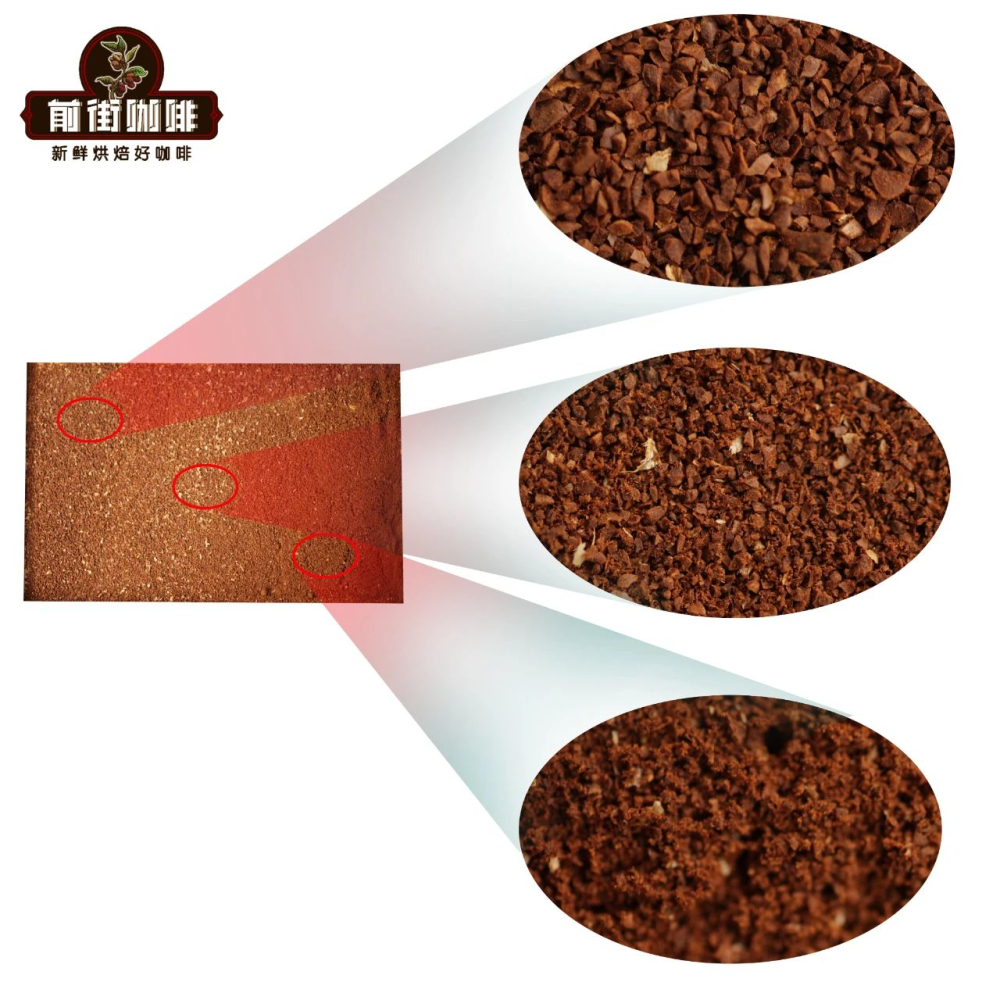
French press extraction is similar to cupping, both being immersion extraction. The advantage is that it minimizes the human factor, best showcasing the original flavor of the beans, and the coffee flavor is more concentrated. What is the human factor? Pour-over coffee, for example, can change its flavor expression through the height and speed of the pour, and different filter cones produce different flavor expressions. That does not apply to the French press - only three factors affect the flavor of French press coffee: grind size, water temperature and steeping time.
FrontStreet Coffee's French Press Brewing Recommendations
Because the French press mainly relies on immersion to extract coffee, within a fixed capacity a certain amount of water evenly dissolves substances from the grounds. During extraction the main influencing factor is time - the longer the steep, the more is extracted, until saturation or a state where extraction becomes difficult. In other words, the longer it steeps, the stronger the flavor.
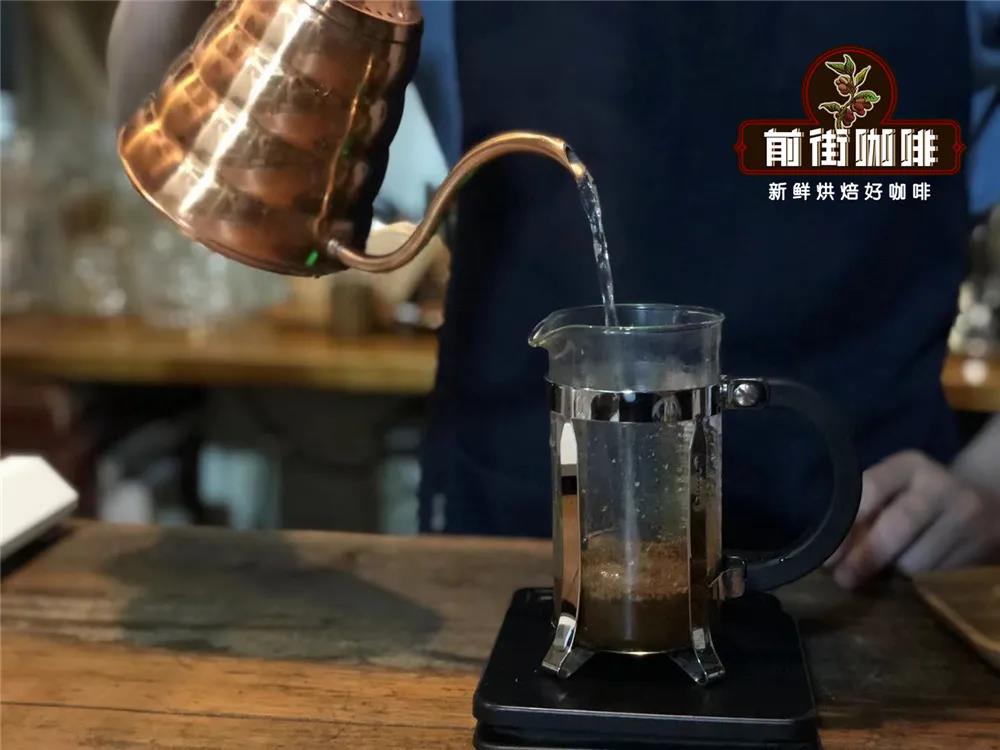
Next comes water temperature. Because the French press uses immersion extraction, during which the grounds and water are relatively static, a higher water temperature is chosen. For the same beans, French press water temperature runs 2-3°C higher than pour-over. For medium-light roast coffee, 91-94°C is recommended, while for medium-dark roast coffee, 88-91°C is recommended.
Finally, steeping time matters a great deal. Through many brewing comparisons, FrontStreet Coffee believes that most coffee beans steeped for about 4 minutes using FrontStreet Coffee's recommended parameters will have the best taste and texture. You can also use these parameters as a template to develop your own favorite settings.
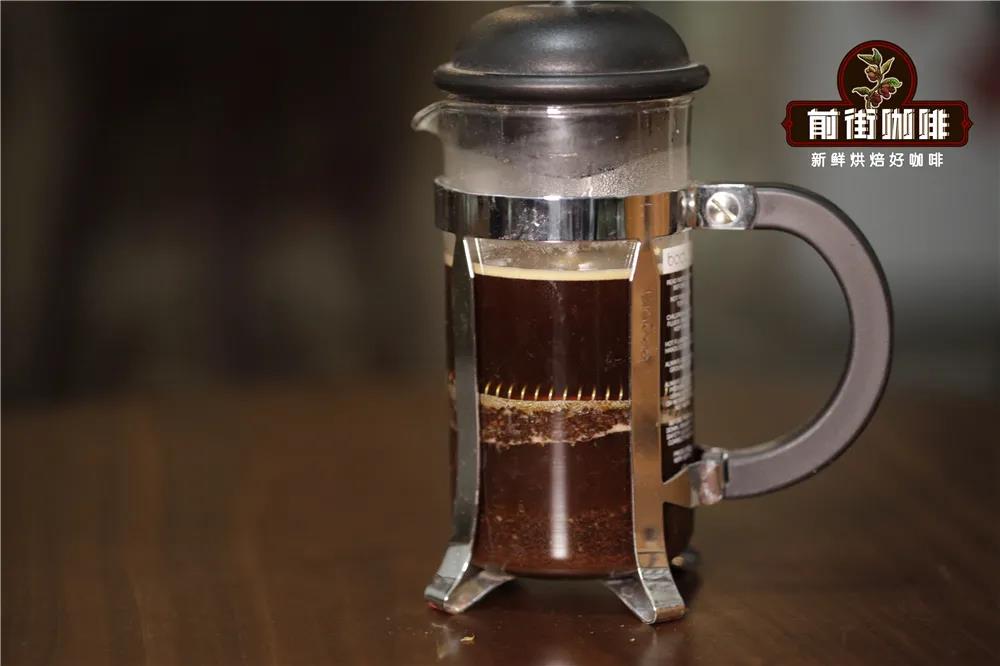
The operation itself is very convenient. Using 15g of coffee grounds as an example: pour the ground coffee into the pot, then pour in 225-240ml of hot water, lift the plunger, cover with the lid and wait 4 minutes. Then slowly press the plunger down until the metal filter reaches one quarter of the pot height, to prevent fine grounds from the bottom rising to the top.
Finally, pour the coffee promptly into a pre-warmed cup for tasting. Some people leave the coffee to keep steeping in the water, which easily leads to over-extraction.
The French Press Can Also Brew Tea
The French press, as a simple device that combines immersion and filtration, can brew coffee and of course black tea as well, and it is very convenient to use. Look carefully and you will find that the tea brewers sold in shops have a structure very similar to a French press.

For French press brewing, FrontStreet Coffee suggests choosing beans with good balance and flavors leaning toward dark chocolate and nuts, such as FrontStreet Coffee Brazil, FrontStreet Coffee Indonesia Mandheling and FrontStreet Coffee Colombia. As for beans with rich flavor layers, such as FrontStreet Coffee Ethiopia Yirgacheffe, FrontStreet Coffee does not particularly recommend them. Because the French press uses immersion extraction, rich layers are difficult to express. Oils determine the aroma and richness of coffee flavor, which also indirectly explains why, in French press coffee, dark roasts have better aroma and a richer texture.
FrontStreet Coffee Recommendation
For immersion brewing, FrontStreet Coffee's PWN Golden Mandheling is a perfect fit. This Sumatran specialty bean is hand-sorted three times and machine-sorted once, and after a medium-dark roast the large, even, translucent beans give off intense spice, caramel, cedar and dark chocolate aromas. Brewed in a French press it shows a full, thick body with generous oils, exactly the low-acid, syrupy cup that immersion favors.
If you prefer a fragrant, fruit-forward cup, try FrontStreet Coffee's Strawberry Candy. This Geisha blend pairs a honey-processed Costa Rican coffee with a washed Panama Geisha, and in a French press it releases aromas of rose, citrus, grape and dried blueberry. Paired with milk, it turns into the scent of strawberry gummy candy.
Important Notice :
FrontStreet Coffee is a long-established specialty coffee roaster in Guangzhou China, selling freshly roasted beans from its own farm in Yunnan as well as dozens of carefully selected single-origin beans from around the world for both pour-over and espresso. The products deliver consistently excellent quality and great value, with shipping within 24 hours. Guangzhou's FrontStreet Coffee shop is recommended by many coffee lovers, and the beans are now available online at the Tmall 。
FrontStreet Coffee has moved to a new address:
FrontStreet Coffee Address: 315,Donghua East Road,GuangZhou
Tel:020 38364473
 Scan and follow the En Gafei WeChat official account. Please indicate that the reprint comes from "En Gafei".