How to Use a French Press to Make Blue Mountain Coffee: Characteristics of Blue Mountain Coffee

The French press is one of the most convenient home coffee brewers, and it is also the brewing method that preserves coffee flavours most completely, which means it easily shows off a coffee's good qualities while just as easily exposing its flaws. That is why it demands higher quality and freshness from the beans. FrontStreet Coffee's Jamaica Blue Mountain coffee has a flavour of nutty notes with dark chocolate, low acidity, a mellow aroma, softness, and a smooth mouthfeel.
Today, using FrontStreet Coffee's Jamaica Blue Mountain No. 1 coffee beans, we will demonstrate how to brew a cup of black coffee with a rich body.

What Grade is FrontStreet Coffee's Blue Mountain No. 1?
Jamaica's certified authentic Blue Mountain coffee region refers to four eastern administrative districts: St. Andrew, St. Thomas, St. Mary, and Portland, which happen to be the foothill areas the Blue Mountains cross. The altitude ranges from 1,000 to 1,700 meters over an area of approximately 6,100 hectares. Only coffee grown in this region and meeting the altitude requirement of 1,000 to 1,700 meters can be considered authentic Blue Mountain. Even if it is grown within these four districts but at an altitude of only 500 to 1,000 meters, it must be downgraded to Jamaica High Mountain coffee. Below 500 meters it becomes the even lower-grade Jamaica Prime Coffee, and coffee from other regions outside this area cannot be called Blue Mountain at all. Jamaica has strict regulations for Blue Mountain coffee, and at most 25% of Jamaican coffee qualifies as Blue Mountain coffee.

Coffee Classification
Coffee from Jamaica's Blue Mountain region has three grades: Blue Mountain Coffee, Jamaica High Mountain Supreme Coffee Beans, and Jamaica Prime Coffee Beans.

Of these, Blue Mountain Coffee and High Mountain Coffee are each further divided into two grades. In terms of quality from highest to lowest, they are Blue Mountain No. 1, Blue Mountain No. 2, High Mountain No. 1, High Mountain No. 2, and Jamaica Prime Coffee. Ranked highest to lowest, they are NO.1, NO.2, NO.3, and PB, where PB stands for Peaberry (round beans). According to CIB standards, the basic criteria for NO.1 Blue Mountain green beans include beans larger than 17 mesh, a defect rate below 3%, and a moisture content of around 13%.
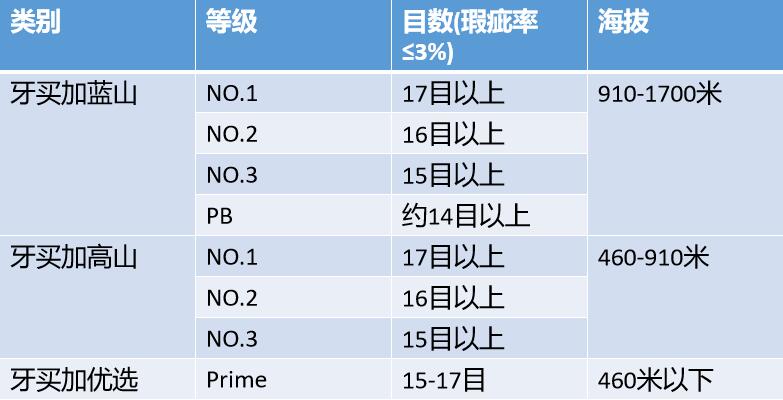
Blue Mountain No. 1, No. 2, No. 3, and Blue Mountain Peaberry are the only coffees in the world exported in wooden barrels, available in three specifications: 70 kg, 30 kg, and 15 kg. Other grades of Jamaican coffee are exported in 60 kg burlap bags. FrontStreet Coffee's Blue Mountain is all NO.1 grade, commonly known as Blue Mountain No. 1.

Clifton Mount Estate
Jamaica Clifton Mount Estate
Owner: The Sharp family
Certification: Rainforest Alliance Certified
Location: Newcastle region
Total Area: 250 acres
Coffee Cultivation Area: 180 acres
Average Altitude: 4,300 feet (1,310.64 meters)
Processing Method: Washed
Variety: 100% Arabica Typica
Flavor: Perfect balance of acidity, body, and aroma
Clifton Mount Estate is the largest estate in this region, and by international standards it still counts as small-scale cultivation. Many estate owners are small landholders whose families have worked this land for two centuries. Through comparison, FrontStreet Coffee believes that Clifton Mount Estate's Blue Mountain No. 1 performs exceptionally well and can serve as one of the outstanding representatives of Blue Mountain coffee.

To highlight the classic flavours of FrontStreet Coffee's Blue Mountain No. 1, FrontStreet Coffee's roasters adopted a medium-dark roast, based on their experience, to present the character of this "King of Coffee." When grinding, you can smell the dense roasted aroma, which first brings to mind roasted nuts and cream. Extracted as black coffee by pour-over, it shows more dark chocolate, caramel, and a slight citrus acidity, with a smooth mouthfeel and rich layers.
French Press Brewing Recommendations for FrontStreet Coffee's Blue Mountain
The French press is also the easiest of all the brewing techniques we know to replicate. With the same French press, the same beans, the same water temperature, the same water amount, and the same brewing time, different people can produce almost exactly the same cup, which pour-over and siphon cannot achieve. It is therefore the method most recommended for beginners to learn.

The French press, also known as a press pot, tea infuser, or lazy pot, is a simple brewing device that originated in France around 1850. It consists of a heat-resistant glass body (or transparent plastic) and a metal filter screen with a plunger. It was initially used mostly for brewing black tea, which is why some people call it a tea infuser.
Now let's learn this simplest French press coffee brewing method.
We use a two-serving French press to make two servings of coffee. The typical ratio of coffee grounds to water is 1:14 to 1:18. Some French presses have water level markings, while others do not, in which case we can use a gram scale. For French presses with markings, pour the water first and then add the coffee grounds to keep the ratio accurate.
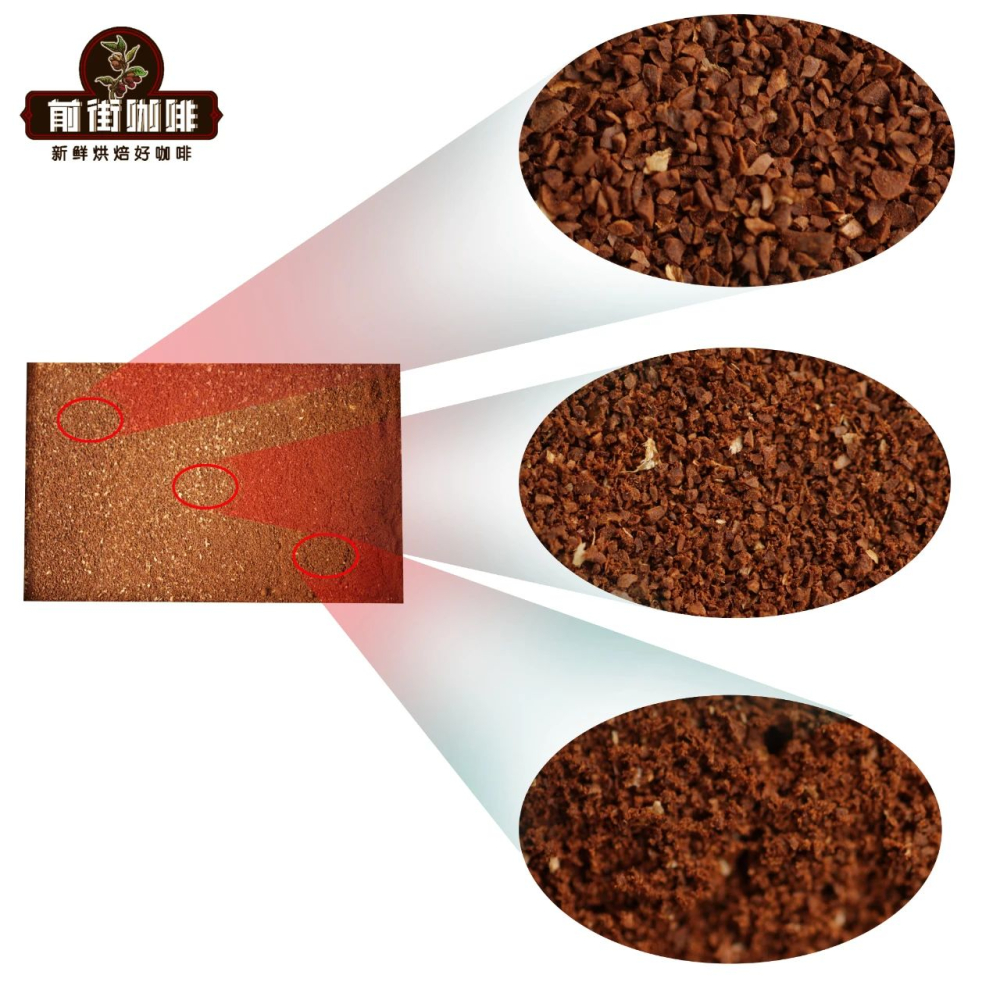
The coarseness of French press grounds should be about the size of raw sugar (coarse grind), and fairly uniform. This relates to how the French press extracts and filters: the metal filter screen has a lower density and easily lets fine particles through, and hot water contacts the grounds directly, so grinding too fine can lead to over-extraction.

Equipment Needed:
French press, pour-over kettle, coffee grinder, thermometer, gram scale, timer, fresh coffee beans, coffee cup.
FrontStreet Coffee's French Press Coffee Brewing Steps:
- Weigh 20 g of fresh coffee beans.
- French press water temperature can generally be controlled between 85 and 95°C. Adjust it according to the roast degree of the beans: for light-roasted beans, use a higher temperature to highlight aroma; for dark-roasted beans, use a lower temperature to suppress bitterness. This calls for judgment based on experience and personal preference.
- Pour the ground coffee into the French press.
- Pour the water in uniform circular motions, much as with pour-over.
 Pour approximately 300 g of hot water, for a coffee-to-water ratio of about 1:15. As mentioned earlier, the French press ratio is roughly 1:14 to 1:18 and can be adjusted to taste. Since this French press has no markings, we use a gram scale: after adding the grounds, zero the scale and weigh the hot water. Although there is some difference between the weight and volume of hot water versus cold water, that error can be ignored under home brewing conditions.
- Stir.
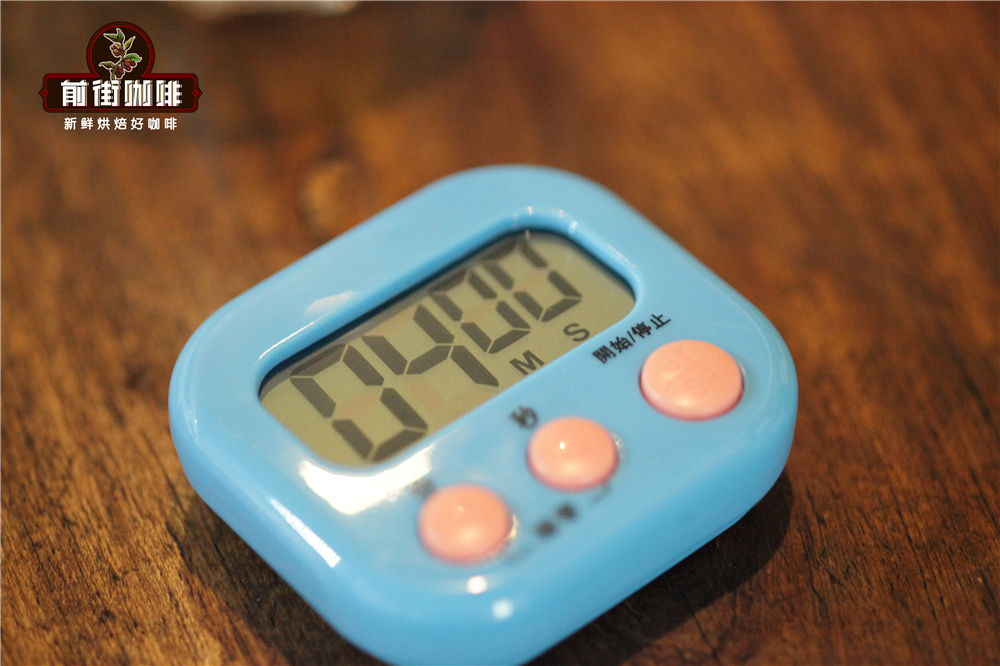
 Put the lid on, but do not press down the filter screen. Let it sit for 4 minutes. A shorter time gives a lighter taste and a longer time a stronger one, so adjust the time to taste.
 Filter: hold the plunger and slowly press it down to the bottom of the pot. This action should be slow to prevent fine particles from passing through the metal filter. Stop when you are close to the bottom; do not press until it will not go any further.
 Pour out the coffee, slowly tilting the French press so the grounds at the bottom do not float up from vigorous shaking and affect the taste.
 Enjoy the French press coffee, with flavours of creamy chocolate, toffee, nuts, and caramel, and a long-lasting aftertaste.
FrontStreet Coffee Recommendation
Blue Mountain rewards a gentle, full-immersion brew, and FrontStreet Coffee's Jamaica Blue Mountain No. 1 is the perfect match: it comes from Clifton Mount Estate in the Newcastle region, is grown at an average 4,300 feet (1,310.64 m), is washed, 100% Arabica Typica, and Rainforest Alliance certified, and is roasted medium-dark so its balance of acidity, body, and aroma comes through fully. Behind the name there is real traceability, since Blue Mountain No. 1, No. 2, No. 3, and Peaberry are the only coffees in the world shipped in wooden barrels (70 kg, 30 kg, and 15 kg), and every FrontStreet Coffee lot is NO.1 grade. If you brew it by pour-over instead, FrontStreet Coffee suggests a KONO dripper with 15 g of coffee, a 1:15 ratio, a grind about the size of white sugar, and 87 to 88°C water in three stages, which brings out creamy chocolate, caramel, and nut notes with a soft, clean sweetness.
Important Notice :
FrontStreet Coffee is a long-established specialty coffee roaster in Guangzhou China, selling freshly roasted beans from its own farm in Yunnan as well as dozens of carefully selected single-origin beans from around the world for both pour-over and espresso. The products deliver consistently excellent quality and great value, with shipping within 24 hours. Guangzhou's FrontStreet Coffee shop is recommended by many coffee lovers, and the beans are now available online at the Tmall 。
FrontStreet Coffee has moved to a new address:
FrontStreet Coffee Address: 315,Donghua East Road,GuangZhou
Tel:020 38364473
 Scan and follow the En Gafei WeChat official account. Please indicate that the reprint comes from "En Gafei".