How to Drink Blue Mountain Coffee Without Bitterness? Can You Add Sugar and Milk to Blue Mountain Black Coffee?

Hand-brewed FrontStreet Coffee Blue Mountain No. 1 shows distinct flavors of dark chocolate, nuts, and caramel, with restrained fruit acidity and a remarkably rich body, finishing with a pronounced almond aftertaste. As the cup cools, roasted hazelnut and a creamy silkiness emerge, accompanied by subtle bitterness and caramel sweetness. The aroma lingers in the mouth with almost no astringency. And for those who love milk coffees, you can absolutely add 50-100g of milk to a hand-brewed FrontStreet Blue Mountain black coffee — it softens the richness and adds another layer of complexity.

FrontStreet Coffee Jamaica Blue Mountain No. 1 Coffee Beans
Origin: Jamaica, Blue Mountains, Clifton Estate
Altitude: 1300 meters
Variety: Typica
Processing Method: Washed
The History of Jamaican Coffee
Jamaica's coffee history stretches back to the 18th century. In 1717, French King Louis XV ordered coffee to be cultivated in Jamaica. In the mid-1720s, Governor Sir Nicholas Lawes imported Arabica seedlings from Martinique and began promoting cultivation in the St. Andrew area. Coffee trees thus arrived in Jamaica and were planted in the Blue Mountains, where the crop was later divided into high-altitude Jamaica Blue Mountain coffee, High Mountain coffee, and Jamaica coffee — different grades commanding different prices.
The Blue Mountain range sits in eastern Jamaica. Surrounded by the Caribbean Sea, on clear sunny days the peaks mirror the brilliant blue glow of the sea, which is how the mountains got their name. The highest peak reaches 2256 meters (coffee may only be cultivated below 1700m; anything above is protected forest), making it the tallest peak in the Caribbean and a famous tourist destination. Situated in the coffee belt with fertile volcanic soil, clean air, a humid climate of year-round fog and rain, average annual rainfall of 1980mm, and temperatures around 27°C, these conditions created the world-famous Jamaica Blue Mountain coffee — once the most expensive coffee on earth.

The Jamaican Coffee Industry Board (CIB) officially designates only coffee of the Typica variety grown at altitudes between 910-1700 meters in designated areas as authentic "Jamaica Blue Mountain coffee." The Blue Mountain coffee on FrontStreet Coffee's bean list grows at 1310 meters, comes from Clifton Estate, is traditionally washed, and is specially selected at the highest quality grade, Blue Mountain No. 1.
All authentic Blue Mountain coffee on the market today is washed. After the cherries are hand-picked, they are first screened to remove underripe and overripe fruit before pulping, with all of this completed within 12 hours. A traditional washed fermentation follows, and the beans are then sun-dried on concrete platforms; this extended, slow sun-drying deepens the coffee's flavor. Drying continues until the moisture content reaches 11%-13%, after which the beans are bagged and moved to warehouses to rest and mature. Warehouse temperature is held at 24-25°C with dehumidifiers controlling the humidity, and only after 2-3 months of stable flavor maturation are the beans shipped.

When customers place orders, small batches are hulled at low temperature, polished, and cleared of silver skin dust, and defective beans — broken, off-color, or mold-infected — are removed by hand. Each skilled worker can sort only about 75 pounds of green beans per day. The beans travel between workstations in wooden basins to avoid breakage or other handling damage. Finally they are sealed in Jamaica Blue Mountain's signature wooden barrel packaging, and the CIB's regulatory section inspects every batch before air export to ensure the flavor meets standard.
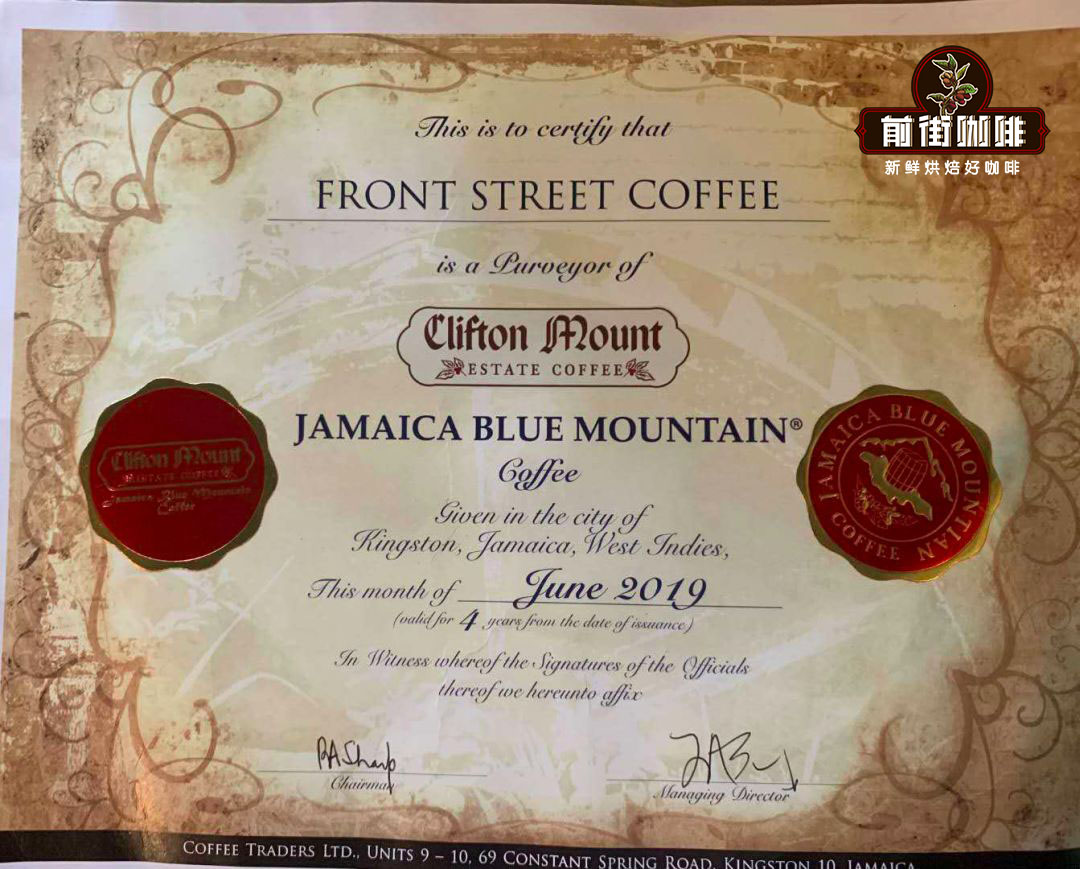
FrontStreet Coffee Clifton Estate Blue Mountain Coffee
The Blue Mountain range lies in eastern Jamaica. Surrounded by the Caribbean Sea, on clear days the peaks glow with the blue reflection of the sea — hence the name. The delicate fragrance and sweetness of Jamaican Blue Mountain, with a mellow, wine-like character, have long been favorites of Japanese coffee connoisseurs, and its scarce production has made it the very emblem of premium coffee.
However, not every coffee grown in Jamaica may carry the Blue Mountain name. In 1953, the Jamaican government established the Coffee Industry Board (CIB) to raise the quality of the country's coffee. Jamaica was the first country to register its coffee-producing regions as a trademark. All coffee exports from Jamaica must be certified by the CIB, and only coffee from specific administrative districts within the Blue Mountains at designated altitudes can earn Blue Mountain certification.

Clifton Mount Estate began cultivating Blue Mountain coffee around 1750, entirely with the Typica variety. It is one of the highest-altitude and oldest estates in the entire Blue Mountain region, and the only single-estate Blue Mountain coffee holding Rainforest Alliance certification. Ample altitude, gentle afternoon clouds and mist shading the mountain forests, abundant sunshine, and mineral-rich soil give the coffee trees excellent growing conditions.

Rainforest Alliance Certification Stands For:
1. Less water pollution
2. Less soil erosion
3. Reduced impact on the environment and human health
4. Protection of wildlife habitats
5. Less waste
6. Less water usage
7. Efficient farm management
8. Protection of farm workers' rights and welfare
9. Protection of farm workers' income and competitiveness
10. Enhanced cooperation between farm workers and environmentalists.
What Grade is FrontStreet Coffee Blue Mountain No. 1?
Compared with other origins, Jamaica was the first country to formally recognize coffee's "terroir." Local standards for grading Blue Mountain green beans cover multiple categories: bean size, defect rate, color, uniformity, and cupping performance after roasting (including dry aroma, wet aroma, acidity, flavor, body, cleanliness, and more).

Bean size is measured with sieves of different apertures — beans that do not pass through the screen meet the size standard. Color is judged both visually and with a colorimeter, with blue-green the highest grade. Combining these standards, Blue Mountain coffee is divided into grades, from highest to lowest: NO.1, NO.2, NO.3, PB, and blend. NO.1 is premium Blue Mountain, known in China as "Blue Mountain No. 1." It must meet specifications of 17 mesh or larger, a defect rate below 3%, and moisture content around 13%, and in cupping it must show rich coffee aroma, a smooth and balanced taste, low acidity, and a persistent aftertaste.

For roasting, the CIB also issues recommendations on roast levels to achieve Blue Mountain's classic flavor, which FrontStreet Coffee's roasters follow. A medium roast lets Blue Mountain No. 1 deliver rich chocolate sweetness while keeping an appropriate, soft fruit acidity.
Can Blue Mountain No. 1 Be Brewed as Black Coffee?
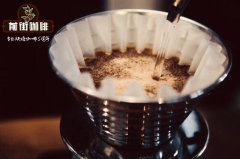
To bring out the rich, rounded mouthfeel of Blue Mountain No. 1, FrontStreet Coffee brews it with a KONO dripper. The KONO's ribs stop short of half the filter's height — a design that makes the filter paper cling tightly to the wall once wet, restricting airflow. This extends the contact time of water with the coffee particles, producing a more even extraction.

Brewing Parameters:
15g of coffee, coffee-to-water ratio 1:15, grind size: EK43s at setting 10.5 (75% pass-through on the China #20 standard sieve), water temperature 87-88°C, brewed in multiple segments.
Place the filter paper in the KONO dripper and pour water to wet it so it fits snugly. Add the coffee and tap gently to level the bed. For the first segment, gently pour 30g of water to bloom for 30 seconds. For the second segment, pour up to about 125g, circling outward evenly and steadily. Then wait for the liquid to draw down — once it has fallen to half, pour the final segment up to 225g. Wait for all the coffee to finish dripping; total extraction time is generally around 2 minutes.
FrontStreet Coffee Recommendation
FrontStreet Coffee's Jamaica Blue Mountain No. 1 comes from the historic Clifton Estate, growing at about 1310 meters (roughly 4300 feet), where high altitude, cool afternoon mist, ample sunshine, and mineral-rich soil extend the cherries' ripening and build the coffee's famous balance. Each batch ships with full origin certification, and the beans arrive in Blue Mountain's traditional wooden barrels, printed with detailed lot information — the surest marks of the genuine article.
These beans are roasted medium-dark to emphasize Blue Mountain's classic mellow character, and every order is roasted fresh within 5 days of shipping, so the beans arrive at peak flavor. Expect a clean, gentle, deeply balanced cup: chocolate sweetness, strong body, moderate and refined acidity with no harsh bitterness, and a long, fruit-toned finish. For best results, rest the beans 4-7 days from the roast date, grind slightly coarser than a light roast (about the texture of white granulated sugar), and brew at 87-88°C with a 1:15 ratio — many "burnt and bitter" results simply come from water that is too hot.
Important Notice :
FrontStreet Coffee is a long-established specialty coffee roaster in Guangzhou China, selling freshly roasted beans from its own farm in Yunnan as well as dozens of carefully selected single-origin beans from around the world for both pour-over and espresso. The products deliver consistently excellent quality and great value, with shipping within 24 hours. Guangzhou's FrontStreet Coffee shop is recommended by many coffee lovers, and the beans are now available online at the Tmall 。
FrontStreet Coffee has moved to a new address:
FrontStreet Coffee Address: 315,Donghua East Road,GuangZhou
Tel:020 38364473
 Scan and follow the En Gafei WeChat official account. Please indicate that the reprint comes from "En Gafei".