How Much Ice to Use for Cold Brew Coffee: Blue Mountain Cold Brew Ratios and Grind Coarseness

Coffee can be extracted with hot water, but it can also be extracted with cold water. Coffee made with cold water is called "cold brew coffee," and it has a charm all its own compared with coffee brewed hot.
Cold coffee drinks fall into two families: cold brew and iced drip. Cold brew means steeping coffee grounds in cold water, while iced drip means extracting coffee drop by drop through a drip tower. Readers often ask FrontStreet Coffee whether cold brew should be made with hot or cold water. Coffee made with hot water cannot be called cold brew. True cold brew is steeped only with room-temperature or iced water, and the steeping environment must stay cold.
Because the grounds only ever meet 4-10°C water, extraction efficiency is very low and the large, bitter molecules are not easily released. The long, cold steep instead draws out sugars and organic acids more thoroughly, giving the cup a better balance of acidity, sweetness, and body.
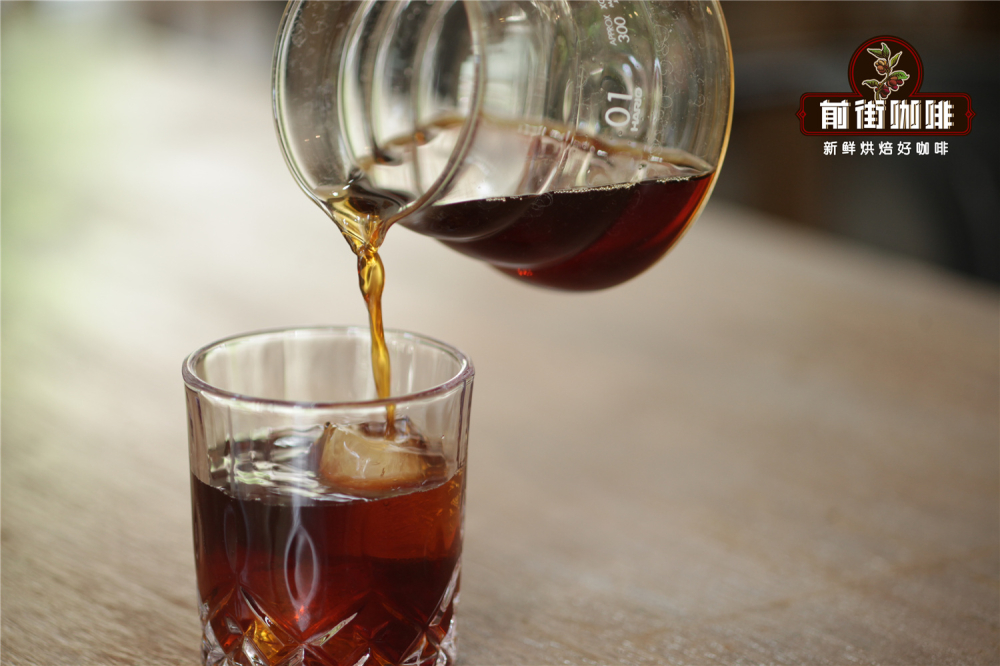
So how should cold brew be made so that it actually tastes good? Here FrontStreet Coffee shares a few practical details.
Choosing Coffee Beans
If you want to avoid mistakes, FrontStreet Coffee suggests light to medium roast beans, which are far more forgiving than medium-dark roasts. The market today offers a huge range of beans with different processing methods and roast levels. As long as they are single-origin beans labeled for pour-over use, they can be used for cold brew. Dark roast coffee brewed hot shows a rich aroma, bitter at first and sweet afterward; made cold, however, it tastes of burnt bitterness and carbonized notes at iced temperatures, and it struggles to reach the refinement of hot coffee.

For that reason, FrontStreet Coffee more strongly recommends light to medium roast beans. For a refreshing, juice-like sensation, choose light-roast washed coffees such as washed Yirgacheffe or Kenya AA. For stronger fruit and wine-like aromas, use barrel-processed or honey-processed coffees such as Colombia Rose Valley or Honduras Lychee Lan. If you dislike acidity and prefer only a balanced "coffee flavor," you can also choose Papua New Guinea's Bird of Paradise.
Today we are using FrontStreet Coffee's Jamaica Blue Mountain No. 1 beans, known as the "emperor of coffees," to see how they taste as cold brew.

The Uniqueness of Blue Mountain Coffee
What makes premium Blue Mountain coffee so popular is its unique Blue Mountain flavor, and the key to that flavor lies in the bean's exceptionally advantageous growing environment. Richard Sharp, manager of Jamaica's Clifton Mountain Estate, which produces Blue Mountain coffee, once described in an interview why Blue Mountain coffee is so good: "It's the specific latitude, longitude, and unique position of the Caribbean island that create a microclimate found nowhere else."

The Blue Mountains lie in eastern Jamaica, in an earthquake zone where volcanic eruptions have left large amounts of mineral-rich, fertile soil. They contain the highest peak in the entire Caribbean, making them a well-known tourist attraction. The air here is clean and pollution-free, and the local year-round rainy, humid, cool climate lets coffee trees grow vigorously in the clouds and mist. The high altitude creates a wide day-night temperature swing, giving the cherries ample time to absorb nutrients and producing coffee with fragrant, mellow, sweet flavors. The Blue Mountains cover a very large area, but the terrain is uneven, so trees are mostly planted on rugged slopes, which makes manual harvesting very difficult. Skilled local women are hired to hand-pick sufficiently ripe cherries on the mountain to safeguard quality.
For many years Jamaica has insisted on planting only Arabica varieties, which has allowed the local Typica to remain unhybridized and unmutated, always keeping a pure lineage. Unlike many other producing regions, Jamaica is a relatively closed island nation that naturally enjoys exceptional microclimates. After more than two hundred years of domestication and adaptation, Blue Mountain Typica has developed better disease resistance—particularly superior resistance to coffee berry disease compared with typical Typica—with more stable yields and quality.

FrontStreet Coffee's Blue Mountain No. 1 uses a medium-dark roast, so whether during grinding or in the brewed cup it always presents the sweet aroma of dark chocolate, caramel sweetness, and soft, elegant acidity. Every flavor is balanced, and the body is smooth and rich, showing very typical Blue Mountain character.
Coffee Grind Size
Because cold brew is made in a low-temperature environment, cold water extracts coffee grounds relatively slowly. Compared with hot-water extraction, bitter substances are not easily released. That means grind size, coffee-to-water ratio, and steeping time do not need the precision of pour-over. Usually, as long as you stay within a general range and choose the right beans, a few simple steps will produce delicious iced coffee.

Taking FrontStreet Coffee's daily cold brew production as an example, the grind is slightly finer than pour-over: about 75-80% passes through a China No. 20 standard sieve. Visually it is roughly the consistency of fine sugar, corresponding to 9.5-10 on the EK43s scale, or about 22-26 on a C40 hand grinder.
Steeping Time
In pour-over coffee we pay special attention to water temperature and time, because water is the main brewing medium and directly affects extraction. Too high or too low a temperature changes the coffee's flavor. Since cold brew contacts only 4-10°C water throughout, extraction is very slow, so a longer steep is needed to release more aromatic compounds and extract sugars and organic acids more thoroughly. The resulting cup shows better balance of acidity, sweetness, and body. Cold brew steeping time is generally best kept between 8 and 18 hours.
FrontStreet Coffee once ran a cold brew experiment using time as the variable, steeping the same coffee for 6, 10, 16, and 24 hours. The 6-hour cup tasted too thin with a flat aroma, while the 24-hour cold brew was obviously bitter with signs of over-extraction. The 10-hour and 16-hour batches performed best, with rich aromas and a full-bodied taste.
Coffee-to-Water Ratio
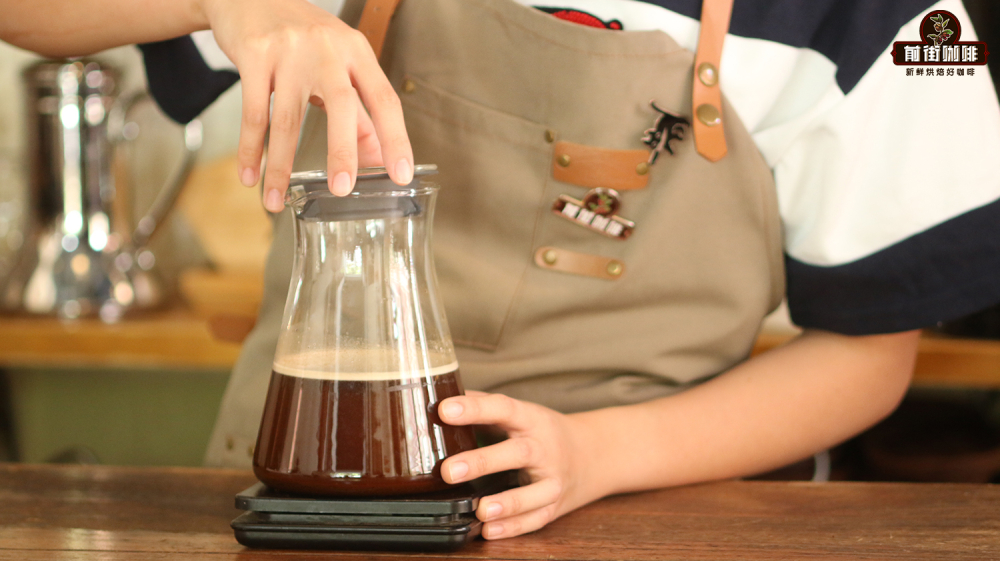
FrontStreet Coffee has noticed that some people, for convenience, simply dump coffee grounds and water into a pot and start steeping. Any coffee extraction has to consider the coffee-to-water ratio. Without measuring, coffee becomes a blind box—you never know what flavor you'll get. To ensure a better-tasting cup, FrontStreet Coffee suggests keeping the cold brew ratio between 1:10 and 1:13. If the brew is too concentrated, add a few ice cubes to dilute it.
Finally, let FrontStreet Coffee share its own cold brew method. For beans, FrontStreet Coffee prefers light to medium roast. For the container, you only need something clean and sealable. Prepare 40 g of coffee grounds, grind to a fine grind (about 75-80% passing a No. 20 sieve), pour them into the container, then add 480 ml of cold water, stir evenly with a wooden stick, and cover with a lid.
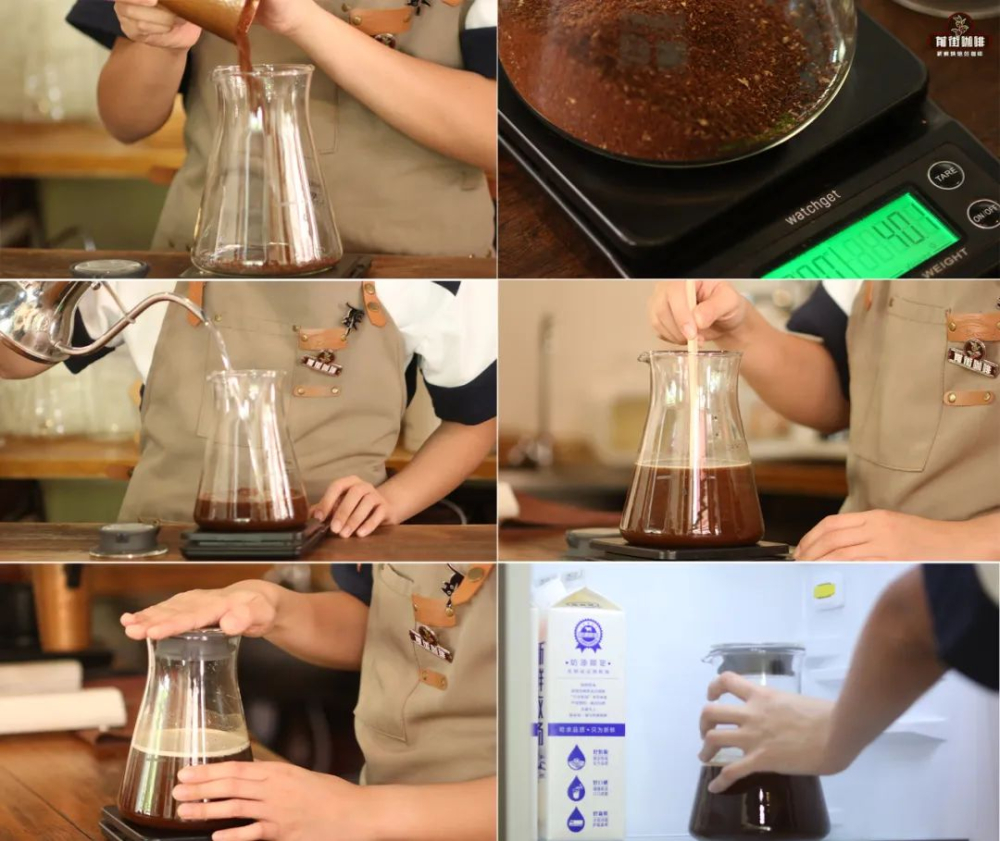
After stirring evenly, seal with plastic wrap and refrigerate for 12 hours. Then take it out and filter out the grounds; once the grounds are removed you can drink the clear coffee liquid right away. You can also pour the filtered liquid into a bottle and continue refrigerating for 4 hours for even better flavor and texture.

As a rule, for both flavor and food safety, FrontStreet Coffee recommends finishing any cold-water extraction—whether iced drip or cold brew—within 5 days of the production date.
FrontStreet Coffee Recommendation
For a cold brew with real pedigree, FrontStreet Coffee's Jamaica Blue Mountain No. 1 is a natural choice. Only coffee grown in the designated Blue Mountain range and officially certified by Jamaica may be called Jamaica Blue Mountain Coffee; the range's highest peak reaches 2,256 m, and the whole Blue Mountain area produces less than 2,500 tonnes a year. Its mystery is partly a matter of supply—Japan historically bought more than 70% of the crop—and it was only from 2003 that Jamaican Blue Mountain green beans began to be officially exported to the Chinese market. FrontStreet's Blue Mountain No. 1 is the top grade, from the historic Clifton Mount Estate, where coffee has been grown and processed since around the mid-18th century (roughly 1750); the estate's growing and processing area sits at an average of 4,300 feet (1,310.64 m). Traditional Blue Mountain is shipped in 15 kg, 45 kg, and 70 kg wooden barrels, and FrontStreet's product pages show the estate's certificates and its used barrels, which is the clearest way to confirm provenance. Roasted medium-dark to highlight its mellow body—bitterness receding into sweetness—it opens into nuts, dark chocolate, cream caramel, and soft sweetness, with acidity, sweetness, bitterness, and aroma in harmony. For pour-over, FrontStreet suggests a 1:15-1:16 ratio, 85-88°C water, and a medium-coarse grind; a three-pour method works well—30 g bloom for 30 seconds, then water to 120 g, then to 225 g. Coffee is shipped within 5 days of roasting, and the beans are at their best after 4-7 days of resting.
Important Notice :
FrontStreet Coffee is a long-established specialty coffee roaster in Guangzhou China, selling freshly roasted beans from its own farm in Yunnan as well as dozens of carefully selected single-origin beans from around the world for both pour-over and espresso. The products deliver consistently excellent quality and great value, with shipping within 24 hours. Guangzhou's FrontStreet Coffee shop is recommended by many coffee lovers, and the beans are now available online at the Tmall 。
FrontStreet Coffee has moved to a new address:
FrontStreet Coffee Address: 315,Donghua East Road,GuangZhou
Tel:020 38364473
 Scan and follow the En Gafei WeChat official account. Please indicate that the reprint comes from "En Gafei".