What are the Differences Between Four Types of Coffee: Latte, Cappuccino, Mocha, and Flat White?

Do you know the differences between a latte, a cappuccino, a mocha, and a flat white? Have you ever stood at the register with those questions but not dared to ask, so you either picked at random or ordered the same thing as always? You're not alone. It sounds like a silly question, but it's one a lot of people have carried around for a long time. Let's walk through what actually makes these four coffees different.

Basic Composition of Espresso Coffees
First, a standard latte, cappuccino, mocha, and flat white are all made from espresso plus steamed milk and milk foam heated by a steam wand. The difference among them lies in the ratio of coffee to milk, and the mocha also contains hot chocolate.
Espresso is a highly concentrated coffee, extracted by forcing hot water at about 94 degrees C through very finely ground coffee under 9-10 bar of pressure on an espresso machine.
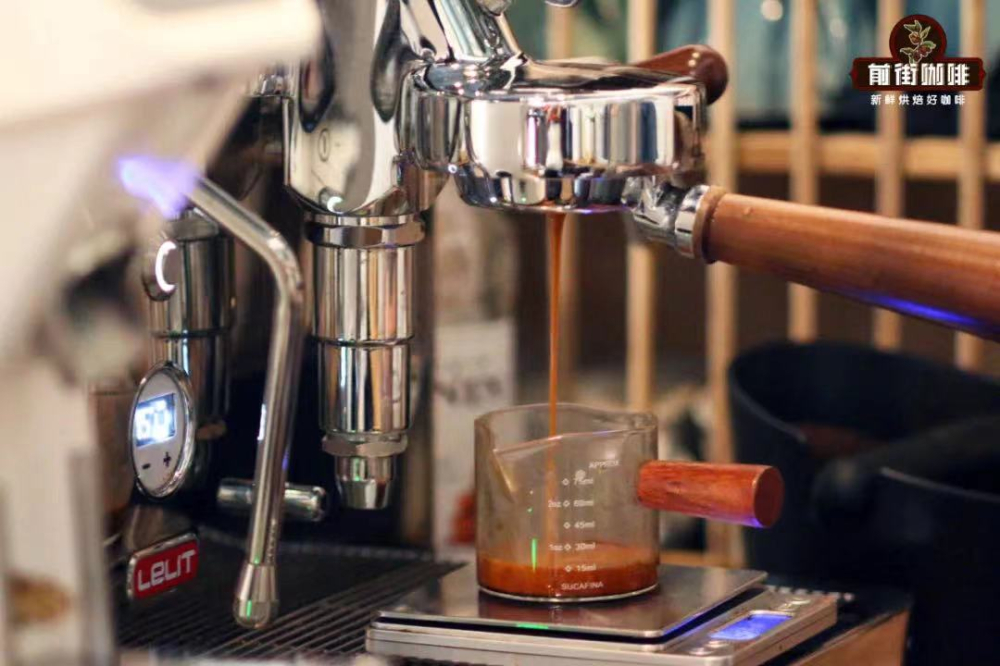
FrontStreet Coffee's Espresso Selection
FrontStreet Coffee's espresso drinks typically use their "Sunflower Warm Sun Espresso Beans," a blend of 30% Yirgacheffe Red Cherry coffee beans and 70% Honduras Sherry coffee beans. Once extracted, the espresso shows whiskey aroma, berry sweetness and acidity, a vanilla-cream smoothness, and nutty caramel sweetness.
For a single-shot espresso at FrontStreet Coffee, 10-11 g of coffee is used to extract 20-25 g of liquid, with a shot time of about 22 seconds. For a double shot, 19-20 g of coffee makes 35-40 g of liquid, with a shot time of about 29-30 seconds.

How to Make a Latte
Latte means milk in Italian, so from the name alone you know that in a latte, milk is the star.
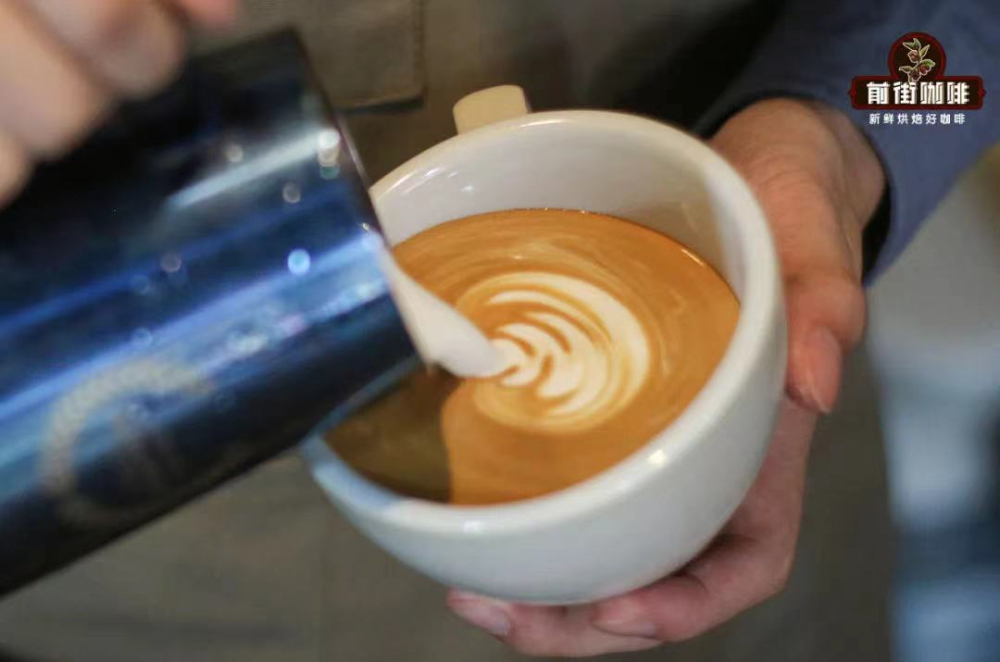
FrontStreet Coffee makes lattes in a 300 ml latte cup. Add 40 g of double-shot espresso, heat 250 ml of fresh milk to create 1 cm of milk foam, then mix evenly and pour your pattern. As a well-known drink, the latte is arguably the most famous of all espresso coffees, and its simple preparation has made it a favorite among enthusiasts. Compared with other milk coffees, the latte has the highest proportion of milk, so its sweetness is the most noticeable. Because it is also highly compatible in flavor, you can add flavored syrups to taste, giving the coffee more layers.
How to Make a Cappuccino
It is often said that the cappuccino was invented in Italy, but FrontStreet Coffee's research found that the word "Cappuccino" comes from "Kapuziner," which means "monk" in German and also referred to an old-style coffee. The difference from a latte lies in the amount of milk and the thickness of the foam. Its standard ratio is three equal parts: 1/3 espresso, 1/3 steamed milk, and 1/3 milk foam.

According to legend, the drink originated in 18th-century Viennese coffeehouses. At that time, coffee was consumed with the grounds and water together. To make it more palatable, a Pole named Kulczycki used a cloth bag to filter out the grounds, then served the coffee in a glass cup with honey, spices, and cream. This not only tasted better but produced a special reddish-brown color that visually resembled the robe of the Capuchin friars, so the Viennese called it "Kapuziner."
As it spread to Italy, along with the development of pressurized coffee machine technology, Italians began using espresso, and foamed milk replaced cream. They then used a spoon to shape the milk foam on the surface into a pointed hat. Gradually it acquired its Italian name, which is what we know today as cappuccino. As for preparation, the most widespread method states the ratio of coffee, milk, and milk foam is 1:1:1. Taking a 6-ounce (approximately 177 ml) coffee cup as an example, that is a double espresso (60 ml), 1/3 hot milk (60 ml), and the remaining 1/3 foam. The foam made this way is about 2.5 cm thick, so the first two sips are almost all foam, while the coffee underneath is very rich.
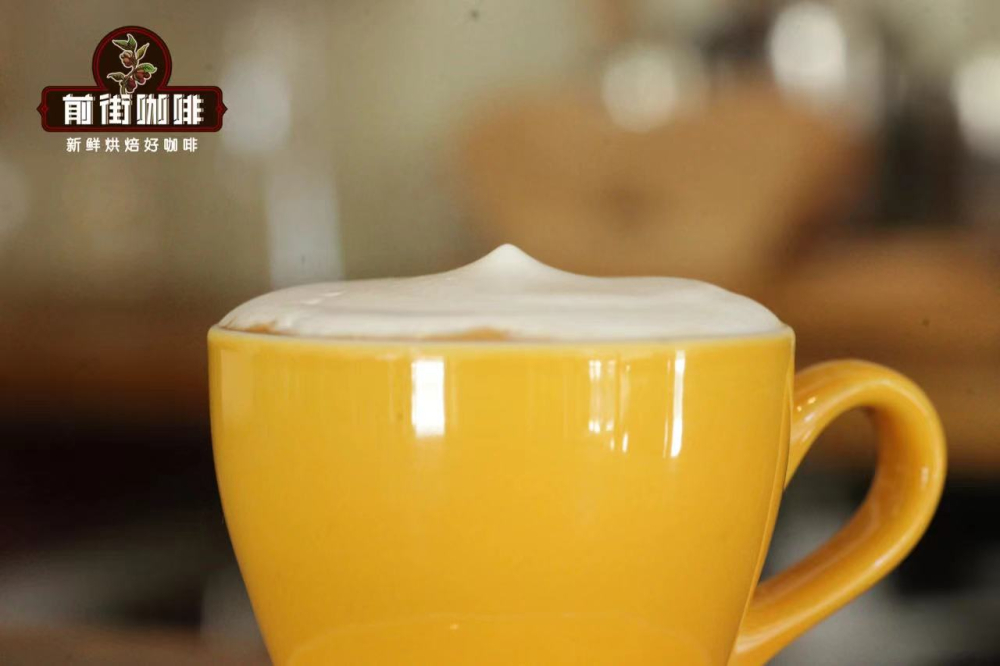
FrontStreet Coffee makes cappuccinos in a 200 ml straight-walled coffee cup. Add 40 g of double-shot espresso, heat 150 g of milk to create 1.5 cm of milk foam, shake the foam and milk to an even state, then pour into the center, letting the thick, dense foam rise above the rim. A cappuccino made this way looks like a hamburger. The first sip is rich foam and coffee crema, the second is coffee mixed with milk, and the overall taste is rich and substantial. Because the cup is smaller than a latte, finishing the whole cup won't feel heavy, and it pairs well with dessert.
How to Make a Mocha
Mocha originally referred to a coffee bean with chocolate aroma, mainly produced in the coastal town of Mocha in Yemen, hence "Mocha beans." Today's mocha generally means a coffee made with a ratio of 2/5 espresso, 2/5 hot chocolate, and 1/5 steamed milk.
On the market there are many cocoa products that can give coffee a chocolate flavor, such as chocolate sauce, unsweetened pure cocoa powder, pure dark chocolate blocks, milk chocolate blocks, and cocoa-butter chocolate shavings. Prices range from a few yuan to over a hundred yuan, and each has a different chocolate flavor, solubility, and texture. Choose according to your budget and preference.
Among them, chocolate sauce is widely used in coffeehouse preparation because of its built-in sweetness, high cost-effectiveness, and long shelf life. It can add chocolate aroma to espresso and also serve as a tool for latte art. However, because this kind of sauce is rather thick, it tends to harden in low temperatures, and even after stirring it is difficult to fully integrate with the espresso and foam. The hot mocha made this way sometimes has a slight graininess.

As for the espresso beans, medium-dark roast types with distinct nutty flavors are recommended. Taking FrontStreet Coffee's selection as an example, besides single origins such as Brazil Queen Manor, Indonesia Golden Mandheling, and Papua New Guinea Bird of Paradise, some espresso blends featuring nutty, caramel, dark chocolate, and cream flavors also pair well with milk chocolate, making the hot mocha's texture even better.

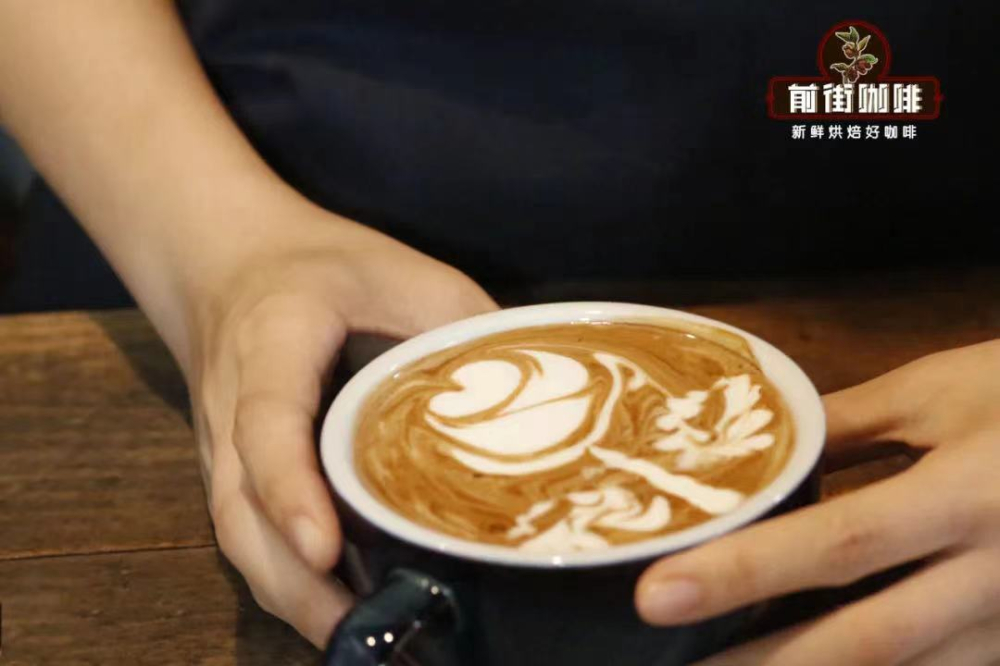
FrontStreet Coffee makes mocha in a 300 ml latte cup. First pour the melted chocolate paste into a ceramic cup, use 20 g of Warm Sun powder to extract 37 g of espresso, and stir evenly while hot. Then froth 200 g of fresh milk to about 50-55 degrees C, entering the frothing stage after 4-5 hissing sounds. Then use a spoon to scoop a spoonful of the upper milk foam and draw circles in the chocolate-mixed espresso, creating a solid white circle as shown, and pour all the remaining hot foam from the pitcher into the cup from the center until full.

How to Make a Flat White
A flat white is an espresso milk coffee with a strong coffee flavor. It has the same rich coffee taste as a cappuccino but thinner foam than a latte, giving it a goose-down-like silky texture. Last century, Italians brought espresso to Australia and New Zealand. The thick-foam cappuccino and the latte were not preferred by locals, so people began to froth milk thinner. When thin foam integrated into the coffee, the surface became flatter and flatter until it formed a thin layer completely level with the cup rim - today's flat white. Flat means "flat," and white means milk coffee.

Usually a latte's foam is about 0.5 cm thick, showing a slightly arched, full-cup effect after integrating with the coffee for latte art. A flat white's foam is the thinnest and must be kept within 0.3 cm, or it's difficult to achieve the "flat" surface. The exact thickness varies from shop to shop. Some baristas, to let customers taste the upper coffee crema as much as possible, skip frothing altogether, simply heating the milk and pouring it into the espresso. FrontStreet Coffee wants customers to experience a flat white that is cream-like smooth without being too "watery," so it keeps a 0.3 cm foam layer.
FrontStreet Coffee makes a flat white by grinding 20 g of coffee and extracting 27 g of liquid in 20-25 seconds, using only the front and middle sections of the espresso - a Ristretto. Then pour the double ristretto into a pre-prepared cup of about 200 ml. The coffee-to-milk ratio is 1:5, or about 150 ml of fresh milk. Choose a favorite latte art pitcher for frothing. Since the foam layer needs to be thinner and denser, froth the milk with less air intake than for a latte, and keep the temperature at 55-60 degrees C for better taste. Finally, integrate the frothed milk evenly into the coffee, with or without latte art.

FrontStreet Coffee's flat white carries vanilla, cream, chocolate milk, and whiskey-filled chocolate aromas, along with berry sweetness and acidity. It enters smooth, mellow, and rich, with a very long-lasting aftertaste.
FrontStreet Coffee Recommendation
That Yirgacheffe Red Cherry in FrontStreet Coffee's espresso blend is worth trying on its own. The FrontStreet Washed Yirgacheffe is the classic introduction to the region: white jasmine, bright citrus and lemon acidity, and a tea-like body, all at a friendly price - the bean many people start specialty coffee with.
If you prefer a cleaner, more precise washed cup, the FrontStreet Gedeb Cooperative follows the most traditional washed process and shows fresh, bright citrus and lemon acidity with jasmine fragrance and none of the usual bitterness.
And for the natural-process version that gives the espresso blend its berry sweetness, the FrontStreet Natural Red Cherry is sorted from fully ripe red fruit and dried on raised beds, delivering tropical fruit alongside the typical Yirgacheffe character: citrus-like acidity, berry juice, honey sweetness, and a creamy smoothness.
Important Notice :
FrontStreet Coffee is a long-established specialty coffee roaster in Guangzhou China, selling freshly roasted beans from its own farm in Yunnan as well as dozens of carefully selected single-origin beans from around the world for both pour-over and espresso. The products deliver consistently excellent quality and great value, with shipping within 24 hours. Guangzhou's FrontStreet Coffee shop is recommended by many coffee lovers, and the beans are now available online at the Tmall 。
FrontStreet Coffee has moved to a new address:
FrontStreet Coffee Address: 315,Donghua East Road,GuangZhou
Tel:020 38364473
 Scan and follow the En Gafei WeChat official account. Please indicate that the reprint comes from "En Gafei".