What to Do When Brewed Blue Mountain Coffee Tastes Too Acidic - Tips for Brewing a Perfect Cup
FrontStreet Coffee's Blue Mountain Brewing Guide: 7 Methods
So your FrontStreet Coffee Blue Mountain beans have arrived — how should you brew them? Here are seven recommended methods, each with its own character.
1. Espresso and Latte
Believe it or not, Blue Mountain makes a lovely espresso. How do you pull a Blue Mountain SOE? Distribute the grounds evenly and level the bed, then tamp (we use a calibrated tamper, so the pressure is consistent every time). Grind setting: 1.9, a very fine, salt-like granularity. For a single shot, dose 13.5g to yield 20g of liquid in 27 seconds; for a double, 20.5g to yield 40g in 26 seconds (full loads: 14g single, 22g double). Because the beans are fresh, the crema is moderate — golden, with a rich caramel aroma. On the palate you get soft fruit acidity first, then caramel sweetness, with chocolate and brown sugar in the finish.
Lengthen that espresso with hot water into an Americano and the sweetness opens up noticeably: the fruit acidity recedes and a concentrated dark chocolate note lingers.
Blue Mountain latte: we steam fresh milk to 60°C so the foam and milk blend evenly. Combined with the espresso, it delivers a hazelnut-like sweetness with distinct creamy chocolate, without burying the fresh, sweet taste of the milk — a genuinely eye-opening cup.
2. Pour-Over
(1) Kalita Wave, Cake Cup, and Kono Dripper
Coffee brewed through the Kalita Wave, a cake cup, or a Kono dripper comes out with a very full body and excellent flavor persistence. The Kono in particular uses the air pressure generated by its siphon-like seal to extract: the grounds saturate deeply, immersion-style, which raises concentration and carries soluble compounds out with the flow. If you prefer a heavier body, FrontStreet Coffee's Blue Mountain is superb brewed this way.
Dose: 17g of coffee; water temperature 88°C; grind size BG 6M (47% pass rate on the Chinese standard #20 sieve); water-to-coffee ratio close to 1:14.
Technique: bloom with 30g of water for 30 seconds, pouring close to the coffee surface. First pour to 120g and stop. When the water level has dropped by one-third to one-half, pour again to 234g. Keep total brew time around 2 minutes 15 seconds; if the drawdown hasn't finished when time is up, discard the last of the liquid.
(2) V60 Dripper
The Hario V60's large outlet and distinctive spiral ribs let air escape easily and improve extraction quality. The ribbed design rinses the soluble compounds out quickly, producing a juice-like, lighter body with clear sweet-sour structure and aroma. Paired with different pouring techniques, it can deliver different bodies and flavor profiles — a highly versatile dripper.
Dose: 15g of coffee; water temperature 88°C; grind size BG 5R (60% pass rate on the #20 sieve); water-to-coffee ratio close to 1:15.
Technique: bloom with 30g of water for 30 seconds, pouring close to the coffee surface. First pour to 120g and stop. When the level drops by one-third to one-half, pour again to 225g. Keep total brew time around 2 minutes 5 seconds.
Flavor Profile
FrontStreet Coffee's Blue Mountain is remarkably clean and gentle, with chocolate sweetness and a strong, full body. The flavor is rich and mellow, with sweet, sour, and bitter notes in near-perfect balance — no harsh bitterness, just moderate, well-judged acidity and a persistent fruity finish. The Kono, Kalita Wave, and cake cup raise concentration for a solid, heavyweight body and intense flavors; the V60 gives a refreshing, sugary sweetness followed by nuts and a lingering dark chocolate finish.
3. Siphon Coffee
Preparation
(1) Fill the bottom chamber of the siphon. For two servings, fill to 5mm above the 2-cup mark — the grounds will absorb water, so you need a little extra to end up with two servings of coffee.
(2) Grind the beans: 25g of coffee for two servings (about 15g for one), medium grind, BG 6M (47% pass rate on the #20 sieve) — particles between white sugar and brown sugar in size.
(3) After filling the bottom chamber, wipe its outside completely dry with a soft cloth; any residual water can crack the glass during heating.
(4) Add hot water to the bottom chamber and heat over a gas burner. A single cup uses about 180g of water, a double about 300g (a 1:12 ratio).
(5) Once these steps are done, start heating!
When the water approaches brewing temperature, fit the filter cloth into the top chamber and hook it exactly as in the photo below — otherwise the surge of water from the bottom chamber will push the filter loose.
Adding the Grounds After the Water Rises
This method yields a richer body with more pronounced caramel and honey in the mid-palate.
Unlike adding grounds first, here you wait until all the water has risen to the top chamber. Before adding them, reduce the heat to just enough to keep the water suspended, center the filter screen, and let the water cool slightly — when it first rises from the bottom chamber it sits around 90–95°C, so let it fall by 2–5°C before adding the coffee.
(1) When the water reaches about 90°C, seat the top chamber upright. As the water finishes rising, add the grounds, stir, and start timing. Stir in circles so the grounds fully saturate.
(2) Adjust the heat to a suitable level. After a 30-second bloom, stir a second time.
(3) Stir a third time at around 50 seconds. After stirring, remove the heat source, wipe the bottom chamber with a semi-dry cloth, and let the coffee draw back down. Total time is around 2 minutes 15 seconds.
Flavor Profile
Freshly brewed siphon coffee will be very hot — let it cool briefly before tasting. The caramel is rich and the body heavier, yet the cup stays clean. The fruit acidity becomes more settled, with a distinct sweet aftertaste.
4. AeroPress
The AeroPress combines the immersion of a French press, the paper filtration of pour-over, and the fast, pressurized extraction of espresso. In theory, it can deliver espresso-like richness, pour-over purity, and French press smoothness all at once.
Standard Accessories
AeroPress body (plunger seal installed), funnel, filter paper holder, filter cap, filter papers, measuring scoop, stirrer.
Advantages
(1) Clean and smooth: with suitable water temperature and proper pressure, you can brew a coffee with low acidity, no bitterness, full flavor, and clear sweetness.
(2) Rich body: a perfect cup in about 2 minutes, with only 20 seconds of actual pressing. Thanks to the pressurized extraction, the result is cleaner than other immersion methods.
Technique
Inverted method. Single serving: 15g of coffee, grind size BG 6A (50% pass rate on the #20 sieve), 85°C water. Preheat the AeroPress, add the hot water, and stir two circles to wet all the grounds; bloom with 35g of water for 30 seconds, then add water to 200g. Stir gently a few circles at 1 minute 45 seconds, then press at 1 minute 50 seconds — vertical, even pressure — finishing extraction at 2 minutes 17 seconds.
Flavor Profile
The sweetness turns fresh and prominent, with light fruit acidity. Within the sweetness are milk chocolate notes and a gentle sweet aftertaste; the overall mouthfeel is tea-like.
5. French Press — no complicated technique, no filter paper, easy to use
Grind Size
BG 6M (47% pass rate on the #20 sieve).
Technique
20g of coffee, ratio 1:14. Pour 88°C water into the French press up to 280g and start timing. Put the lid on with the filter held at the top. After 2.5 minutes, press the filter down slowly to the bottom.
Analysis
Full immersion extracts quickly at first, then more slowly, with every particle soaking evenly — which keeps FrontStreet Coffee's Jamaica Blue Mountain balanced and free of bitterness. Pressing through the bed with a metal mesh retains the rich oils, adding smoothness, body, and caramel sweetness.
Flavor Profile
Compared with the AeroPress, the caramel is amplified, but more dark chocolate aftertaste and fruit acidity remain, with a fuller body.
6. Cold Drip
Grind size BG 4M (75% pass rate on the #20 sieve) — cold drip isn't fussy about grind. Use 60g of coffee to drip 600ml of liquid, at a coffee-to-water ratio of roughly 1:10 to 1:12, with 0–2°C ice water (half ice, half water), dripping at 7 drops every 10 seconds.
When dripping finishes, seal and refrigerate the brew for 3–4 nights of maturation. Why? Freshly dripped coffee tastes incomplete — a bit dry and astringent. Medium-dark roasts need this extra fermentation time for a smoother texture and fuller flavor.
Detailed Notes
For cold drip, gently press the grounds to keep an even structure in the filter tube, lay a piece of filter paper over the coffee bed so the water wets the particles uniformly, and "pre-soak" the bed — much like the bloom in pour-over.
Flavor Profile
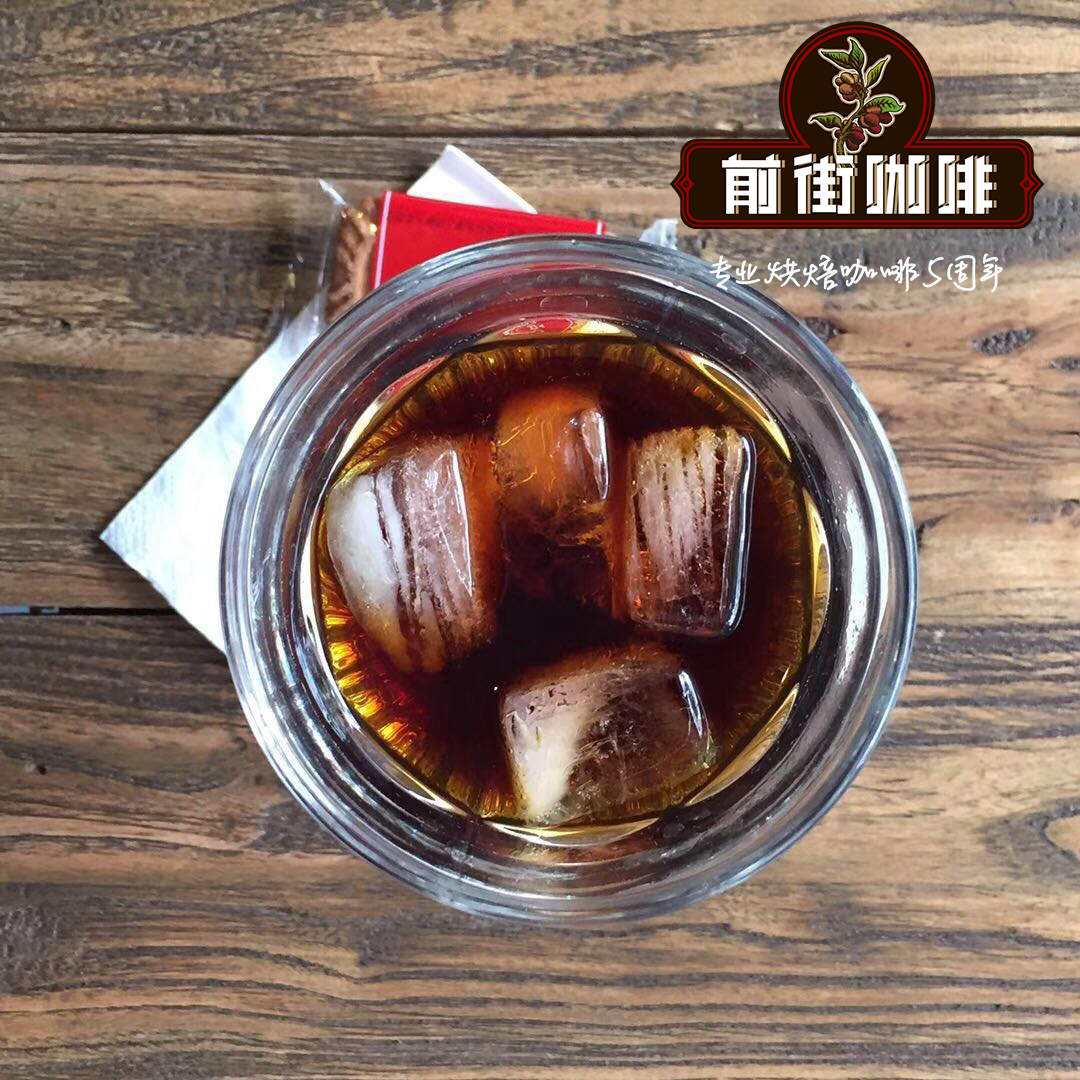
Neat, without ice, it shows caramel, brown sugar, and dark chocolate sweetness straight away. Over ice, the texture turns silky, with faint fermented notes, a refreshing lift, and soft fruit acidity.
7. Japanese Iced Pour-Over
Equipment
Ice cubes, coffee beans, and a pour-over kit (V60 dripper and papers, server, scale, thermometer, kettle, small spoon).
Technique
Grind size BG 5R (60% pass rate on the #20 sieve), water temperature 89°C (1–2 degrees hotter than a regular pour-over). Pre-place 100g of ice in the server, bloom with 40g of water for 30 seconds — stir with a small spoon during the bloom to promote degassing and speed dissolution — then pour in a small stream to 160g. Give it a gentle swirl, and the iced pour-over is done.
Flavor Profile
As the ice melts, the brew dilutes slightly while gaining a viscous, silky texture. The fruit acidity brightens, with faint melon, nuts, and roasted peanut emerging in the aftertaste. The layered complexity is somewhat narrower than hot pour-over, with less flavor evolution from start to finish.
FrontStreet Coffee's Jamaica Blue Mountain shines through many different brewing methods, each with its own flavor profile. Use these recipes as a reference and adjust to your own taste — the best method is the one that suits your cup.
FrontStreet Coffee Recommendation
The authentic Blue Mountain experience starts with the beans: our Jamaica Blue Mountain No. 1 — the highest grade, from the historic Clifton Estate, where coffee has been grown since around 1750 at roughly 1,310 meters — ships with full certification and the estate's traditional wooden barrels, and is roasted fresh to a medium-dark profile that brings out the classic balance of nuts, dark chocolate, cream caramel, and gentle sweetness. For brewing at home, we suggest a Kono dripper, 15g of coffee rested 4–7 days from roast, water at 87–88°C, and a 1:15 ratio with three pours: 30g bloom, then to 120g, then to 225g — a recipe that shows off Blue Mountain's signature harmony of sweet, sour, and bitter.
Important Notice :
FrontStreet Coffee is a long-established specialty coffee roaster in Guangzhou China, selling freshly roasted beans from its own farm in Yunnan as well as dozens of carefully selected single-origin beans from around the world for both pour-over and espresso. The products deliver consistently excellent quality and great value, with shipping within 24 hours. Guangzhou's FrontStreet Coffee shop is recommended by many coffee lovers, and the beans are now available online at the Tmall 。
FrontStreet Coffee has moved to a new address:
FrontStreet Coffee Address: 315,Donghua East Road,GuangZhou
Tel:020 38364473
 Scan and follow the En Gafei WeChat official account. Please indicate that the reprint comes from "En Gafei".