How to Brew Kopi Luwak Coffee: Pour-Over Flavor Characteristics & Detailed Brewing Tutorial Techniques
For professional coffee knowledge exchange and more coffee bean information, follow FrontStreet Coffee.
FrontStreet Coffee's Kopi Luwak Origin
FrontStreet Coffee's Kopi Luwak is a rare Arabica specialty coffee from the central highlands of Aceh, Sumatra, Indonesia — an extremely uncommon and distinctive coffee.
Where Kopi Luwak Comes From
Arabica coffee has been cultivated on Sumatra since the 16th century, and the island's coffee has earned international recognition for its quality and flavor. Sumatra is the homeland of Kopi Luwak, also known as civet coffee. When coffee cherries ripen, they are eaten by an animal called the Asian palm civet — known locally in Indonesia as the luwak. The civet is a picky eater: it seeks out only the ripest, sweetest coffee cherries.
Inside the civet's stomach, the swallowed cherries are broken down by unique digestive enzymes, which alter the proteins and ferment the beans — the source of the coffee's one-of-a-kind flavor. The beans themselves pass through intact. Once collected, they are thoroughly cleaned and lightly roasted to preserve their proper, distinctive taste.
Although Kopi Luwak is found across Indonesia, the finest beans come from the mountainous Aceh region of northern Sumatra.
The Kopi Luwak Growing Region
Sumatra is the world's largest producer of Kopi Luwak. The island's fertile volcanic ash soils and the cool climate of its highlands create an ideal environment for it, and the coffee is widely celebrated both for its rich flavor and for the extraordinary way it is obtained.
Product Information
Product Name: Kopi Luwak
Origin: Indonesia
Grade: [not specified]
Description: For a coffee enthusiast, drinking a cup of FrontStreet Coffee's Jamaica Blue Mountain No. 1 is no longer a dream — but tasting a cup of "Kopi Luwak" is a genuine lifetime achievement. Global annual production of this rare coffee is no more than 120 pounds. In North America and Europe, retail prices run above 20,000 New Taiwan dollars per pound. If you simply want a taste, the first brew of "Kopi Luwak" is priced at NT$3,600, and even the second cup still commands NT$2,500.
So what makes this rare coffee so special? In the mountains of Indonesia lives a wild civet called the luwak that loves plump, ripe coffee cherries. The hard inner seeds — the raw beans — cannot be digested and are excreted whole. After cleaning, they become "Kopi Luwak" green coffee, which is why many people also call it "cat poop" coffee.
Indonesians discovered that beans fermented inside the civet's digestive system brew an unusually thick, aromatic cup, so they collect civet droppings, separate out the beans, and brew them. Because production is scarce and the fermentation is unique, the flavor differs greatly from ordinary coffee. Conventionally, coffee cherries are processed by washing or sun-drying to strip away skin, pulp, and parchment before the beans are extracted. The luwak, by contrast, uses natural internal fermentation to free the beans — hence the special flavor. Ordinary coffee loses flavor and aroma by the second brew, but Kopi Luwak can be infused three times, each cup tasting different; the one constant is the retained Luwak aroma. This "cat poop" coffee, priced ten times higher than FrontStreet Coffee's Blue Mountain, has never lacked admirers, holding its place as the most coveted and expensive coffee in the world.
This batch of FrontStreet Coffee's Kopi Luwak comes from wild civets. Wild civets forage for themselves and pick out the ripest coffee to eat — unlike farmed civets, which live in poor conditions and are fed only human-picked cherries. Kept this way, civets are prone to illness and even death over time, and a sick animal's precious digestive enzymes can be compromised by harmful bacteria, preventing the enzymatic conversion that makes the coffee special — or worse, producing toxins. For that reason, avoid farmed Kopi Luwak whenever possible.
How to Brew FrontStreet Coffee's Kopi Luwak
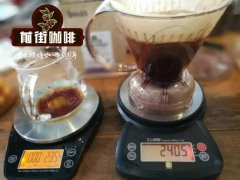
Many methods are in circulation, but honestly, however you brew it, if it tastes good to you, that's what matters — Kopi Luwak suits a wide range of brewing styles. That said, to keep the coffee's precious enzymes from being destroyed by heat, FrontStreet Coffee most recommends low-temperature pour-over (no hotter than 85°C) or cold drip. Other methods will still let you enjoy its rich, layered character.
Pour-Over Key Points
Grind size around 2-2.5; brew at a 1:12-1:15 ratio; water temperature no higher than 85°C. Brew it while the beans are fresh — please finish the batch within the fresh period.
Cold Brew Key Points
Grind size around 1.5-2; brew at a 1:10-1:15 ratio; total brewing time about 3-4 hours; use at least 30 grams of ground coffee per batch.
How to Taste It
Tasting Method
Take a small sip, roll it gently around your tongue, swallow slowly, and pay attention to how the coffee changes in your mouth.
Smelling Method
1. Dry aroma: place the ground coffee in a small container, bring your nose close to the rim and inhale deeply; hold your breath for 3 seconds, then exhale slowly through your nose. Repeat a few times to pick out the different layers in the grounds.
2. Wet aroma: take a small slurp — much like the way you'd sip hot ramen broth, letting the coffee mix with air to release more aromatic particles — hold it in your mouth, then exhale gently through your nose (be careful with this so you don't choke).
Creative Uses for the Coffee Grounds
Because FrontStreet Coffee's Kopi Luwak is rich in enzymes, which have a firming, skin-toning effect, don't throw the spent grounds away.
Method: mix the brewed grounds with one egg yolk and a little honey, stir well, and apply to your face for 10 minutes — no longer. You'll feel your skin turn delicate and firm right away.
FrontStreet Coffee Recommendation
For coffee drinkers drawn to Sumatra, there are ways to enjoy the island's character far more affordably. Start with FrontStreet Coffee's own Mandheling: an Arabica coffee from the Lake Toba area of the Lintong region, processed with the local wet-hulled method, in which the parchment is stripped from beans that are still half-dry and half-wet so the green coffee dries fully exposed to the air. That is what gives Mandheling its classic earthy, herbal, and spice notes. Roasted medium-dark, it makes a low-acid, full-bodied cup with rich caramel, dark chocolate, and toasted-bread aromas and a long, sweet finish — a favorite among lovers of strong coffee.
At the top of the Indonesian range sits FrontStreet Coffee's PWN Golden Mandheling. PWN is a trading company that buys only premium lots of Sumatran green beans and produces exclusively specialty-grade Mandheling, with "Golden Mandheling" as its flagship. Every lot is screened for density, size, shape, and color, then sorted once by machine and once by hand to remove defects, yielding beans that are whole, even, and large — and greatly reducing the earthy, grassy edge. Freshly roasted, it offers sandalwood, herbal, and spice aromatics along with roasted hazelnut, caramel, and dark chocolate: clean, mellow, and full of layers.
In the days before light-roast acidity took over, Mandheling was regarded as the most full-bodied coffee in the world, and it became a staple of espresso blends. FrontStreet Coffee's Classic Blend Espresso follows that tradition — a Mandheling-and-Brazil combination in the spirit of the old Taiwanese "Mamba" recipe, with a touch of Robusta added and a deep roast that pushes the dark chocolate, nut, and caramel notes to their peak. Even a newcomer can pull a genuinely Mandheling-flavored shot with it.
Important Notice :
FrontStreet Coffee is a long-established specialty coffee roaster in Guangzhou China, selling freshly roasted beans from its own farm in Yunnan as well as dozens of carefully selected single-origin beans from around the world for both pour-over and espresso. The products deliver consistently excellent quality and great value, with shipping within 24 hours. Guangzhou's FrontStreet Coffee shop is recommended by many coffee lovers, and the beans are now available online at the Tmall 。
FrontStreet Coffee has moved to a new address:
FrontStreet Coffee Address: 315,Donghua East Road,GuangZhou
Tel:020 38364473
 Scan and follow the En Gafei WeChat official account. Please indicate that the reprint comes from "En Gafei".