Distinguishing Geisha Red Label, Green Label, and Blue Label - Introduction to Hacienda La Esmeralda Geisha Coffee
Ask anyone about Geisha coffee and they will think of Hacienda La Esmeralda in Panama. In 2004, Daniel Peterson, the third-generation manager of La Esmeralda, entered a batch of Geisha beans in the Best of Panama (BOP) green coffee competition. The beans had none of the rich, conventional "coffee flavor" of the day — and they were lightly roasted, which was unfashionable at the time.
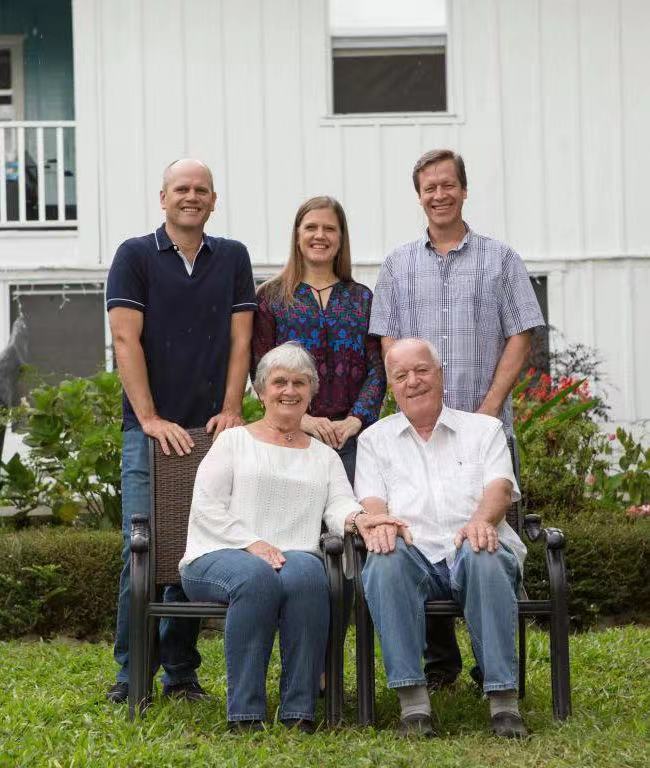
Daniel Peterson, second from left in the back row
In that competition, the captivating florals and fruit of the Geisha beans won over every judge and pushed the whole industry into a new wave. According to Daniel, the Geisha wasn't initially favored at all: his father Price Peterson (second-generation manager) even remarked during early cupping that the beans must have been contaminated with perfume — nobody would like them. But SCAA members of the time insisted the coffee was exceptional, so Daniel held firm and entered the lot in the 2004 BOP. It took first place and became famous overnight.

Because this lot tasted so unlike traditional Panamanian coffee, Panamanian coffee became an overnight industry sensation, and over the following decade the country's reputation rose from obscurity to acclaim. La Esmeralda's beans set new records at the online auctions of 2004, 2006, 2007, and 2010:
June 2004: $21 per pound
May 2006: $50.25 per pound
May 2007: $130 per pound
May 2010: reaching $170 per pound
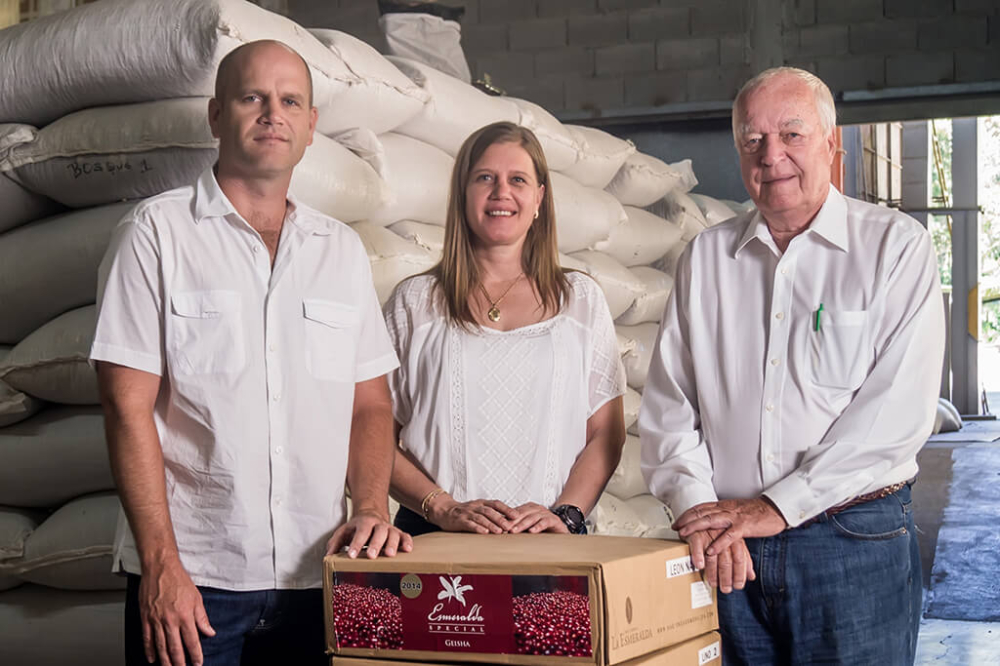
Beyond its repeated BOP championships, La Esmeralda has collected titles across many competitions, often consecutively:
Specialty Coffee Association of America (SCAA) Cupping Champion (2007, 2006, 2005)
SCAA Coffee of the Year, Second Place (2009, 2008)
Best of Panama Champion (2010, 2009, 2007, 2006, 2005, 2004)
Rainforest Alliance Coffee Quality Cupping Competition Champion (2009, 2008, 2007, 2006, 2004)
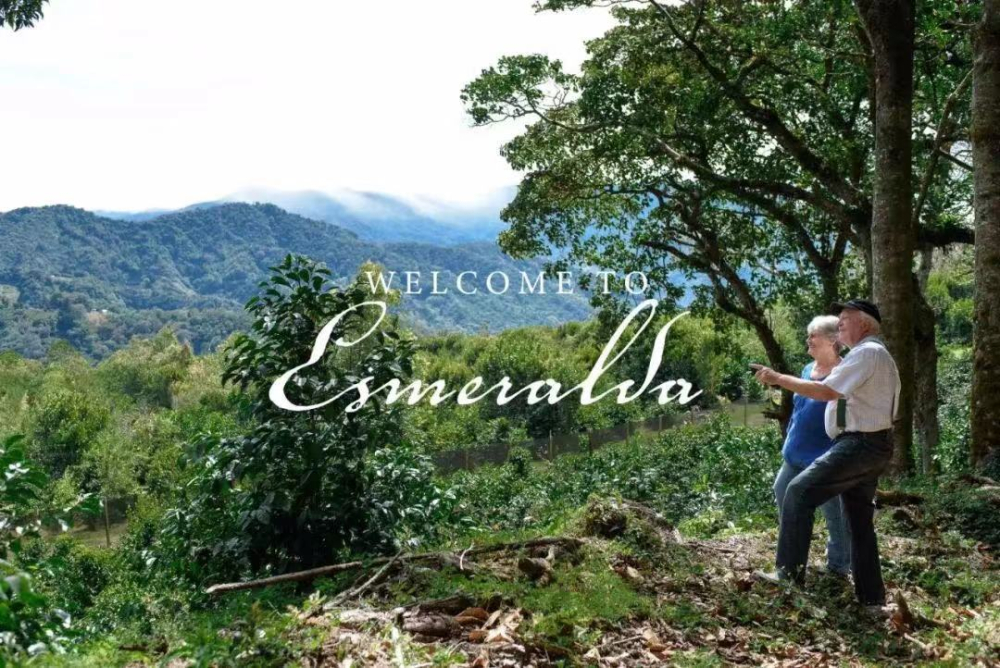
Which is why, whenever Geisha is mentioned, La Esmeralda comes to mind. Plenty of other farms have since grown outstanding Geisha and won championships of their own, yet La Esmeralda's position in specialty coffee remains unshakable.
Hacienda La Esmeralda sits in Boquete, Panama's premier growing region, where the coffee is mainly Typica, Bourbon, Catuai, and Geisha. Thanks to its careful stewardship of the natural environment, the farm has earned Rainforest Alliance certification. Though the world knows it for Geisha, the estate's environment and green-bean processing have made all of its coffees beloved.
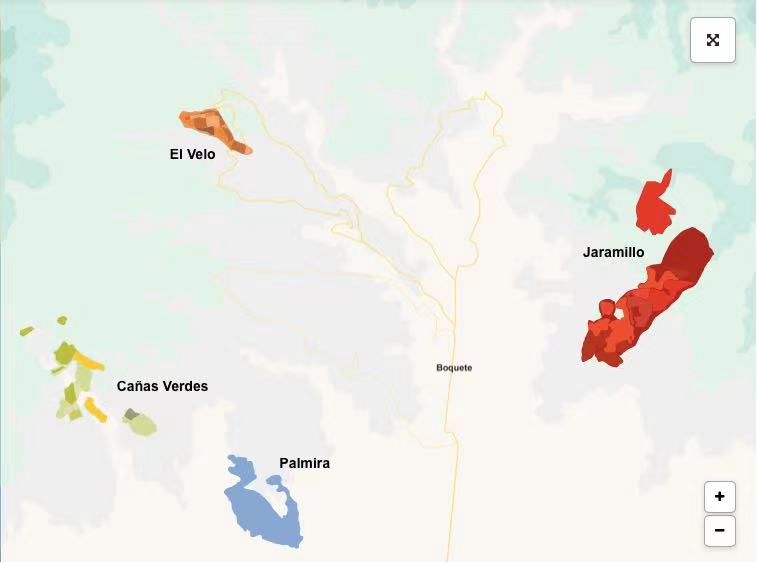
La Esmeralda has three main plots — Jaramillo, Cañas Verdes, and El Velo — each subdivided into smaller blocks.
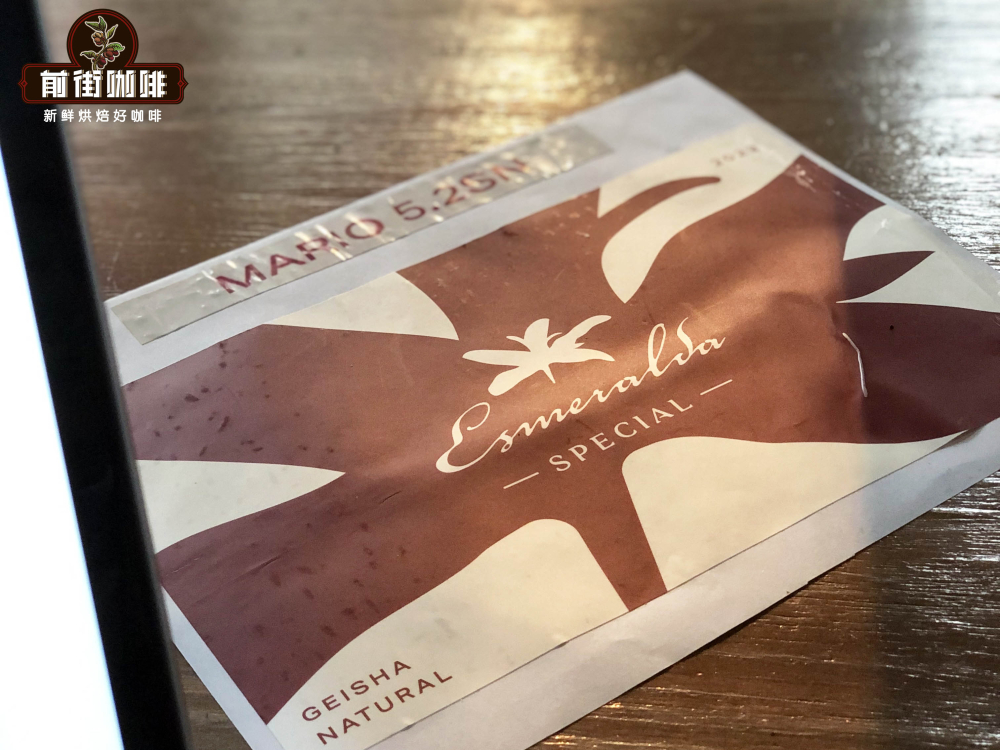
Jaramillo averages 1,600–1,700m in elevation and is divided into five blocks: Mario, Noria, Reina, Bosque, and Buenos Aires. The "Panama La Esmeralda Natural Red Label" beans sold by FrontStreet Coffee come from the Mario block.

Cañas Verdes averages 1,600–1,800m and includes nine blocks: Lino, Coronado, Fundador, León, Montaña, Trapiche, Chinta, Cabaña, and Tumaco.
El Velo is the estate's newest acquisition, averaging 1,700–1,900m, and includes seven blocks: Guabo, Portón, Durazno, Higuerón, Higo, Buena Vista, and Águila.

Today La Esmeralda's Geisha line consists of "Esmeralda Special" and "Private Collection" — better known as Red Label and Green Label.
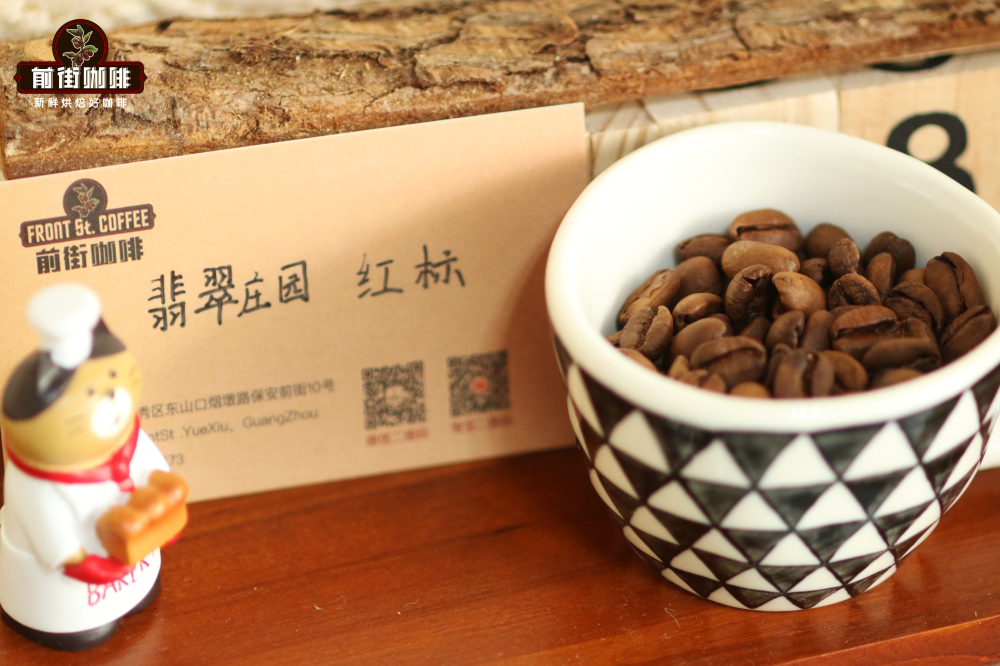
The Esmeralda Special series (Red Label) is the estate's finest Geisha: grown at 1,600–1,800 meters in specific plots, with every batch required to cup above 90 points. It typically comes from the Jaramillo and Cañas Verdes zones.

Another hallmark of the Red Label batches is that each carries an independent lot number, and all the beans in a lot come from a single small block — FrontStreet Coffee's Red Label this year, for instance, is from Mario. That lets buyers choose lots to match their flavor preferences down to the finest detail.
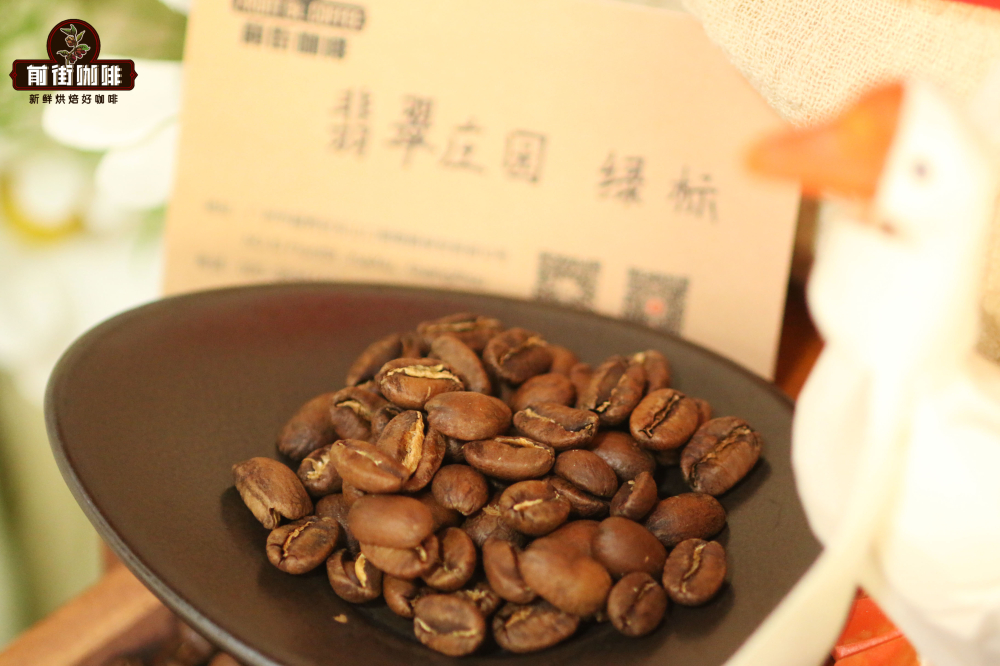
The Private Collection series (Green Label), by contrast, is designed to express the signature character of La Esmeralda's high-altitude Geisha as a whole rather than any single plot. It is a blend of lots from various designated blocks — in effect, a Red Label without the plot separation.

And what about the Blue Label? As FrontStreet Coffee understands it, La Esmeralda announced in the 2021 harvest that the Blue Label series would be discontinued; the estate's website no longer lists it, leaving Red Label and Green Label as the two Geisha lines.
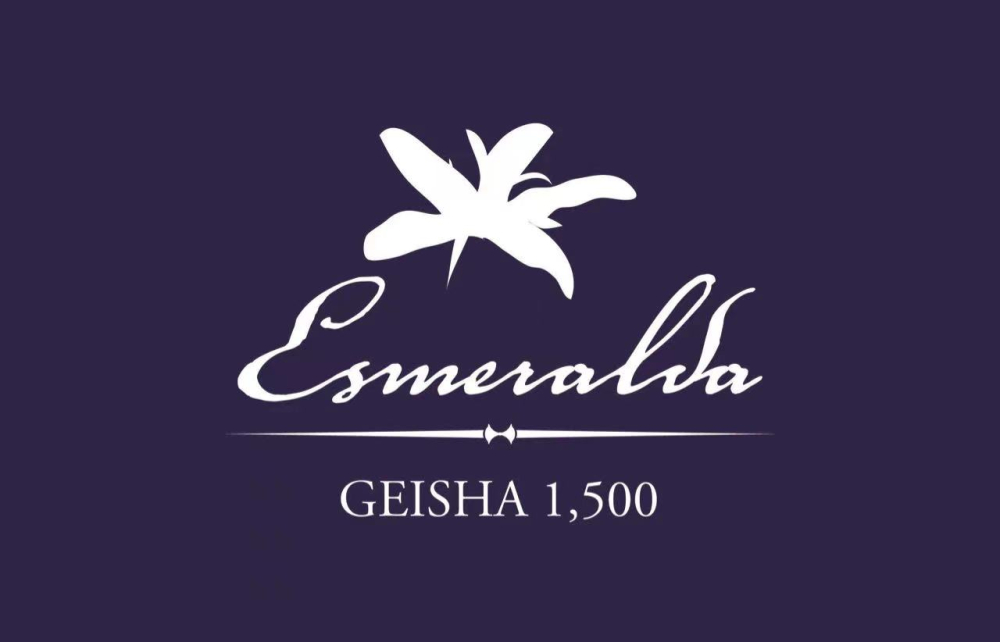
The Blue Label was originally called "Geisha 1500," named for its blue logo. It was defined as a blend of Geisha from the estate's three main zones (Jaramillo, Cañas Verdes, and El Velo) grown at roughly 1,500 meters.
Currently, FrontStreet Coffee's store carries the Natural Red Label and Washed Green Label beans. To make sure you taste the beans at their fullest, every order ships within 5 days of roasting.
To preserve the captivating character of La Esmeralda's Geisha, FrontStreet Coffee roasts it lightly, keeping the bright acidity and enchanting florals and fruit intact.
Because Geisha grows at high altitude, the wide day-night temperature swings give the beans ample time to develop, making them dense and hard — and prone to sinking and clogging the dripper. FrontStreet Coffee therefore recommends a grind with 78% pass rate on a Chinese standard #20 sieve (about the size of fine sugar) and water at 90–91°C.
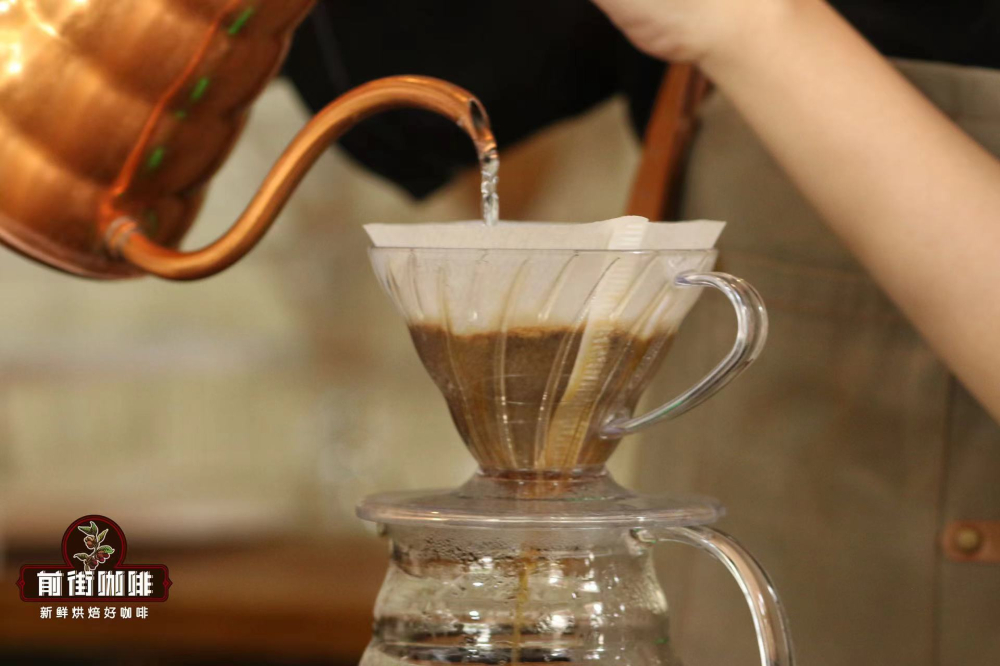
Recommended parameters and technique: 15g of coffee in a small Hario V60, brewed at a 1:16 ratio with three pours. Start the timer, pour to 30g for a 30-second bloom; then pour in small circles to 125g, wait until the bed has drained to half, and pour again in small circles to 225g. After full drawdown, total extraction time should be roughly 2 minutes 10 seconds to 2 minutes 20 seconds.
FrontStreet Coffee Recommendation
If you want to taste the legendary "Geisha flavor" without the championship-lot price tag, FrontStreet Coffee also offers the Panama Boquete Geisha — an entry-level Geisha that delivers the classic Panamanian orange blossom and honey sweetness, an oolong-tea-like texture, and delicate fruit acidity at a friendlier price. For a taste of the variety at its birthplace, the Genlana Estate Gesha from Ethiopia — washed at the Genlana station founded in 2014 and dried 14–20 days on raised beds — is medium-light roasted, showing bright citrus acidity, elegant ginger flower aromatics, ripe-fruit sweetness, and the signature refined Geisha finish.
Important Notice :
FrontStreet Coffee is a long-established specialty coffee roaster in Guangzhou China, selling freshly roasted beans from its own farm in Yunnan as well as dozens of carefully selected single-origin beans from around the world for both pour-over and espresso. The products deliver consistently excellent quality and great value, with shipping within 24 hours. Guangzhou's FrontStreet Coffee shop is recommended by many coffee lovers, and the beans are now available online at the Tmall 。
FrontStreet Coffee has moved to a new address:
FrontStreet Coffee Address: 315,Donghua East Road,GuangZhou
Tel:020 38364473
 Scan and follow the En Gafei WeChat official account. Please indicate that the reprint comes from "En Gafei".