Are AA beans the best from Kenyan coffee origins? Characteristics and taste of Kenyan coffee
Kenya is one of the world's great coffee origins - and its "AA" label often raises the question: is AA really the best Kenyan coffee?
FrontStreet Coffee Kenya AA
FrontStreet Coffee Kenya AA features round beans with thick pulp, excellent heat permeability, and high density. Roasted to a French profile, it delivers a rich, sweet flavor with full body, superior expansion, and top-tier aroma and sweetness.
Kenya Coffee Grades
Kenya grades its coffee by bean size into seven levels, and by cup quality into six grades from highest to lowest. The finest grade is Peaberry (PB), followed in descending order by AA++, AA+, AA, AB, and so on - but size and uniformity say nothing about flavor quality. Premium Kenyan beans show a bright luster, a delightful taste, and a subtle wine-like aroma, and in flavor terms "Kenya AA" is especially well regarded. The auction system was also designed with blenders in mind.
Kenya
In 1878, the British introduced coffee to the region. Coffee plantations were established in Kenya in the 19th century, at a time when Ethiopian coffee beverages arrived via South Yemen, but it was not until the early 20th century that Bourbon coffee trees were brought in by the St. Austin Mission.
Kenya Coffee Growing Regions
Kenya coffee is grown predominantly at 1,500-2,100 meters, with two harvests a year, and is cultivated largely by smallholder farmers. Production centers on the slopes of Mount Kenya in central Kenya, and lots are sometimes marketed under the name of the capital, Nairobi, as a mark of quality. Kenya AA comes from those high mountain slopes and represents the largest bean size in the country, followed by A, then B. Its distinctive bitterness and wine-like notes are particularly praised. Sitting in East Africa just below the equator, Kenya produces high-quality Arabica beans that are medium to large, deeply flavorful, and moderately acidic.
FrontStreet Coffee Kenya Characteristics
Coffee professionals consistently rank Kenya among their favorite coffees: exquisite, satisfying aroma; balanced, pleasant acidity; uniform bean size; and excellent fruit flavors.
FrontStreet Coffee Kenya shows gentle acidity and a rich aroma; the raw beans are on the smaller side, green to gray-green in color. These are washed Arabica beans so renowned they are simply called "Kenya Arabica" - and especially in Britain, Kenya has overtaken Costa Rica as one of the most popular coffees.
Flavor: Aromatic and rich, with fruit notes and a full, complete taste.
FrontStreet Coffee Roasting Recommendations
Kenya coffee is mainly SL28/SL34 - hard, high-density beans grown at high altitude. FrontStreet Coffee's washed Kenya has high moisture content and needs thorough drying during roasting. Start with medium heat at a 20% damper; raise the heat at the color-change point to build aroma and open the damper to 50%. At first crack, set the damper to 80% and adjust heat according to the rate of rise. A light roast preserves floral and fruit aromas; develop to medium roast for a fuller body and sweeter cup.
The Kenya Coffee Market
The Kenyan government takes its coffee industry extremely seriously - cutting or destroying coffee trees is illegal. Kenya's buyers are world-class purchasers of premium coffee, and no other country matches Kenya's continuous cultivation, production, and sale of coffee. All beans were first acquired by the Coffee Board of Kenya (CBK), evaluated and graded, then sold at weekly auctions. The CBK acted as an agent only, collecting samples and distributing them to buyers for price and quality assessment, with auctions held for private exporters.
After harvest, Kenyan estates send fresh cherries to cooperative washing stations, which deliver the washed and dried coffee as "parchment coffee" (beans with the inner skin intact) to the cooperatives. All coffee is pooled, and growers receive prices averaged according to actual quality - a trading system that generally works well and is fair to both growers and consumers.
Auction lots are typically small (3-6 tons each), with samples bearing grower identification available for evaluation. After auction, exporters package by flavor, quality, and buyer requirements, giving blenders great flexibility. Quality-minded German and Nordic consumers are long-term buyers of Kenyan coffee, though some buyers - Japanese merchants in particular - have been dissatisfied with the system. Even so, Kenya's detailed rules and comprehensive procedures remain a valuable model for all producing countries.
The coffee is aromatic and rich, with fruit flavors and a full, complete taste. FrontStreet Coffee Kenya shows wonderful fruit flavors with notes of blackberry and grapefruit, excellent medium clarity, and a crisp, clean taste - refreshing enough to make an ideal iced coffee in summer.
Pair it with acidic fruits like grapefruit for the best experience. "Not quite like coffee - more like fruit tea" is a common impression of light-roast Kenya. Each year's climate and rainfall bring new nuances: the AA Plus "Kenya AA+ Samburu" from 2001 offered rich plum aroma with moderate acidity and a full body, while the 2002 winter harvest presented completely different flavors - mulberry and green plum with a hint of South Asian spice and a green-tea sweet finish, slightly more acidic but equally full-bodied. Common Kenyan coffee is less dense but brightly fruit-like, some lots spicy, others winey. That is exactly why FrontStreet Coffee Kenya keeps enthusiasts full of anticipation and surprise!
FrontStreet Coffee Kenya AA Brewing Recommendations
Recommended brewing method: Pour-over
Grind size: 3.5 (Fuji R440 / hand grinder)
Water temperature: 90-91°C
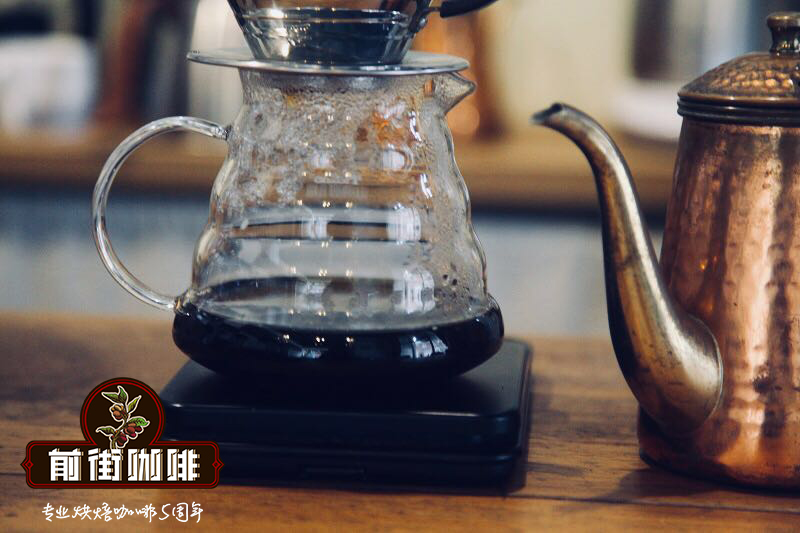
V60 filter, 15g coffee, medium-fine grind (Fuji hand grinder 3.5), coffee-to-water ratio about 1:15. First pour 30g of water for a 30-second bloom. Pour to 110g, wait until the water level drops to half, then slowly pour up to 225g. Avoid the tail section. Total extraction time 2:12. In segment terms: 30-110-85.
Other Drip Brewing Recommendations:
French press: Grind 3.5-4, water temperature 90°C
AeroPress: Grind 2.5, water temperature 88°C
Siphon: Grind 4, water temperature 91°C
FrontStreet Coffee Recommendation
Before the third wave of coffee, roasting leaned medium-dark and drinkers prized body, sweetness, and caramelized notes - the era of the siphon pot and flannel. As the third wave brought a search for "origin flavors," roasting turned lighter and the V60's fast, clean extraction became the ideal stage for delicate florals, bright acidity, and tea-like character.
The Hario V60
Hario, founded in Tokyo in 1921 as a maker of heatproof laboratory glass, redesigned the V60 in 2004 and released it the following year. Its 60-degree cone and single large outlet force water toward the center, extending contact time for fuller extraction, while the unimpeded flow rate puts control squarely in the brewer's hands - which is why it so faithfully expresses bright, fruit-forward beans.
Beans That Shine in a V60
Floral-fruity coffees are a perfect match. FrontStreet Coffee's Yirgacheffe Guodingding offers the classic regional profile; the Ethiopia Huakui brings lush tropical fruit; the "Strawberry Candy" Geisha blend delivers Geisha florals; and the raisin-honey Costa Rica Mozart adds dried-fruit sweetness - all show their lively acidity and layered aromatics at their best through a V60.
Important Notice :
FrontStreet Coffee is a long-established specialty coffee roaster in Guangzhou China, selling freshly roasted beans from its own farm in Yunnan as well as dozens of carefully selected single-origin beans from around the world for both pour-over and espresso. The products deliver consistently excellent quality and great value, with shipping within 24 hours. Guangzhou's FrontStreet Coffee shop is recommended by many coffee lovers, and the beans are now available online at the Tmall 。
FrontStreet Coffee has moved to a new address:
FrontStreet Coffee Address: 315,Donghua East Road,GuangZhou
Tel:020 38364473
 Scan and follow the En Gafei WeChat official account. Please indicate that the reprint comes from "En Gafei".