Is Pour-Over Hakuge Coffee Delicious? What's the Flavor Profile of Hakuge Pour-Over Coffee?
Professional coffee knowledge exchange. For more coffee bean information, please follow Cafe_Style (WeChat public account: cafe_style).
Ethiopian Sidamo Shakisso Natural
Hua Kui
Product Name: Ethiopian Natural Sun-dried Sidamo G1 Hua Kui
Ethiopian Sidamo Shakisso Natural
Coffee Origin: Africa, Ethiopia
Coffee Estate: Guji, Hambella Wamena, Buku Able Estate
Coffee Variety: Heirloom (Ethiopian local indigenous varieties)
Production Altitude: 2250-2350M
Quality Grade: G1
Processing Method: Natural Sun-dried (African drying beds)
01 | Estate Introduction
How did the name Hua Kui come about?
In 2017, Ethiopia's DW green bean company sent its coffee beans to the TOH (The Taste of Harvest) competition hosted by the African Fine Coffee Association. Its natural-processed batch won the TOH Ethiopia championship. As champions, this batch of green beans was named "Hua Kui."
Hua Kui is located in Hambella, part of Ethiopia's largest coffee producing region, Guji (GUJI), which is administratively under the Oromia Region. Hambella's west side faces Yirgacheffe's Kochore across the mountains, while its southeast and north sides border Guji's Shakiso, Uraga and Kercha sub-regions respectively. It is Ethiopia's highest-altitude coffee sub-region, while Harrar is Ethiopia's highest-altitude main producing region.
Awards
2016/2017 Harvest Season Ethiopia National Taste of Harvest Competition - Champion
2017 Regional Africa Taste of Harvest Competition - Runner-up
2018 New Harvest Season Ethiopian Hua Kui 2.0
FrontStreet Coffee has newly acquired the 2018 new harvest season Ethiopian Hua Kui 2.0, from the core Hambella producing region, a micro-batch from the Mountain Spring Processing Station.
There are currently about 20 processing stations of various scales in the Hambella region. Hong Shun, a green bean company rooted in Ethiopia's coffee producing regions, has established four natural processing stations in the GUJI Hambella region since 2016 through partnerships, and during the 2017/18 harvest season it researched a series of natural processing methods using the region's high-quality coffee varieties. There are four estate processing stations in the core Hambella region: the "Dire" Church Processing Station, the "Mansa" Pond Processing Station, the "Bobea" Red Flag Processing Station and the "Goro Baessa" Mountain Spring Processing Station. Goro Baessa is a small village surrounded by mountains at an altitude of 2,280 meters. December is its coffee harvesting season each year, and at that time the mountains are covered with vibrant, ripe coffee cherries, neatly arranged on African drying beds in the village. This is where "Hua Kui" is processed.
02 | Processing Method
Most Ethiopian coffee estates remain in their natural state. Local farmers go into the mountains to pick the cherries. With red-brown organic soil, annual rainfall exceeding 1200 mm, high altitude and wide day-to-night temperature differences, Hua Kui selects only fully red, completely ripe cherries, all hand-picked.
African rack drying limits the thickness of the cherry layer and keeps the fruit turning continuously around the clock, allowing low-temperature fermentation in the estate's unique natural environment.
During the harvest and processing season (December to January), the unique growing environment and natural climate create Hua Kui's distinctive flavor profile. Natural processing begins only once the sugar content of the picked red cherries reaches above 21. For the first two days of sun-drying, we manage the cherries' moisture so that their fructose can fully ferment. Meanwhile, the high altitude lets the processing station's nighttime temperature drop to around 12 degrees Celsius, preventing over-fermentation odors from excessive heat. When the midday temperature rises, we provide shade promptly to keep the sun from damaging the cherries.
Hua Kui 2.0, the micro-batch from the Mountain Spring Processing Station, also begins natural processing only once red cherry sugar content reaches above 21, which results in exceptionally high sweetness. Combined with 21 days of low-temperature fermentation, compared with the typical 10-plus days for natural processing, this ensures even sun-drying and ventilation and allows more precise control of the degree of fermentation.
Compared with last year's local mixed variety "Hua Kui," "Hua Kui 2.0" has a more consistent bean shape and cleaner processing. Through cupping evaluation, this year's "Hua Kui" not only has rich and enchanting floral aromas and mellow red wine and tropical fruit flavors, it also adds several bright, juice-like sweet-and-sour notes.
The entire process applies more refined management under the guidance of scientific measuring instruments, without any "tradition-breaking" improved steps. Natural processing begins only once red cherry sugar content reaches above 21, resulting in exceptionally high sweetness.
At night, thick plastic sheets are used for wrapping to protect against sudden rainfall. This lets the red cherries ferment and dehydrate at a relatively low temperature. After 18 days of natural processing, when the green bean moisture content drops to around 13 percent, sun-drying is stopped. The beans are packed into jute bags and stored in warehouses at 12 to 22 degrees Celsius with 40 to 50 percent humidity for about 50 days of green bean resting and further dehydration.
03 | Green Bean Analysis
The variety is local and indigenous, of the small-grain type, with a relatively round appearance. The beans are very small, mostly between 14 and 15 screen size, smaller than Longberry, and greenish-yellow. There are significant variations in bean size.
04 | Roasting Analysis
When a roaster gets such excellent beans as Hua Kui, how should they be roasted? How should the Hua Kui roasting curve be adjusted?
First I would look at the flavor description provided by the green bean supplier, then check the bean moisture content. The freshly received green beans have a fermented wine aroma of coffee flowers, completely different from the grassy aroma of typical green beans. Moreover, Hua Kui green beans vary in size and many have pointed ends, which is typical of Ethiopia Heirloom, the Ethiopian indigenous varieties. The moisture content is good at around 11 percent, but they are not the very hard SHB type beans. Because of the beans' high density and hardness, I extend the dehydration time in the early stages, enter first crack with a rising temperature, and try to limit the loss of small-molecule aromatic substances such as floral aromas.
Because of daily production needs, I chose to roast 550 g, a full load, and share my experience.
Entry temperature: 190 degrees Celsius
I adjusted the curve only by changing the drop temperature and development time.
First batch: Yellowing point 150.3 degrees Celsius at 5 minutes 55 seconds, dropped at 196 degrees Celsius. First crack development 1 minute 40 seconds, first crack at 9'55".
Second batch: Yellowing point 151 degrees Celsius at 5 minutes 51 seconds, dropped at 193 degrees Celsius. First crack development 1 minute 30 seconds, first crack at 9'50".
Cupping the two curve adjustments:
First roast: The wet aroma has obvious, strong green tea and floral notes. Slurping reveals green tea, jasmine, lime and cane sugar aromas. The mouthfeel is light and clean, with a gentle, fresh acidity. The aftertaste, however, is lacking, with only some sweetness remaining in the mouth. Still, it is very easy to drink, like a cup of tea rather than a coffee.
Second batch: The wet aroma has yellow lemon, floral and black tea aromas, with obvious citrus notes. Slurping reveals black tea, yellow lemon, caramel and jasmine aromas. The flavor at this roast level begins to become richer and more substantial. The entry acidity is more elegant, the sweetness is perceived more quickly and the sweetness level is higher. Fermented wine aroma, cream, tropical fruits, jackfruit, more balanced.
The cupping results are as follows.
After cupping, I finally settled on curve two, which I am quite satisfied with.
Enter beans at 190 degrees Celsius, complete dehydration and yellowing in close to 6 minutes, with the yellowing point around 150 to 153 degrees Celsius.
First crack starts at around 9 minutes 50-plus seconds. Hua Kui's first crack is later than typical beans, and the cracking sound is weak.
The development time after first crack should be controlled so it does not exceed 1 minute 30 seconds nor fall below 1 minute. Opening high airflow and reducing heat is recommended to control the speed.
When smelling from the sample spoon, once you can detect strawberry jam aroma at around 193 degrees Celsius, it is time to drop the beans.
A total time of within 11 minutes is optimal.
04 | Brewing Analysis
As for brewing methods, pour-over and siphon are the best choices. When grinding, you can smell the rich natural fruit aroma with obvious sweetness.
A good cup of coffee is nothing more than balanced sweet, sour and bitter flavors along with a smooth mouthfeel. The design of filter cups is precisely to present these characteristics of coffee, but different filter cups present coffee in different styles.
This time we used beans from the Sidamo Guji region's Hua Kui, the Hua Kui 2.0 micro-batch from the Mountain Spring Processing Station.
I chose a resin V60 filter cup so the coffee would show richer acid changes from hot to cold, making the cup more refined. The resin material also enhances aroma intensity.
About grind size: for light roasts we use a relatively medium-fine grind.
The coarseness of the grind directly affects extraction time and extraction rate. The finer the coffee is ground, the denser the coffee bed becomes, with more particles contacting hot water, which increases resistance, tends to extend extraction time and raises the extraction rate, but it is also very easy to over-extract.
Conversely, the coarser the coffee is ground, the larger the gaps in the bed become, with fewer particles contacting hot water; resistance weakens, extraction time is less likely to lengthen and the extraction rate drops, making it very easy to under-extract. So a finer grind extends extraction time and raises the extraction rate, while a coarser grind shortens extraction time and lowers the extraction rate.
Filter cup: Hario V60 transparent resin
Grind setting: Fuji Royal R-440, 3.5
Water temperature: 90 degrees Celsius
Pour 25 g of water for a 30-second bloom, break into segments when reaching 120 g, and finish brewing at 226 g.
Total time: 2 minutes 5 seconds.
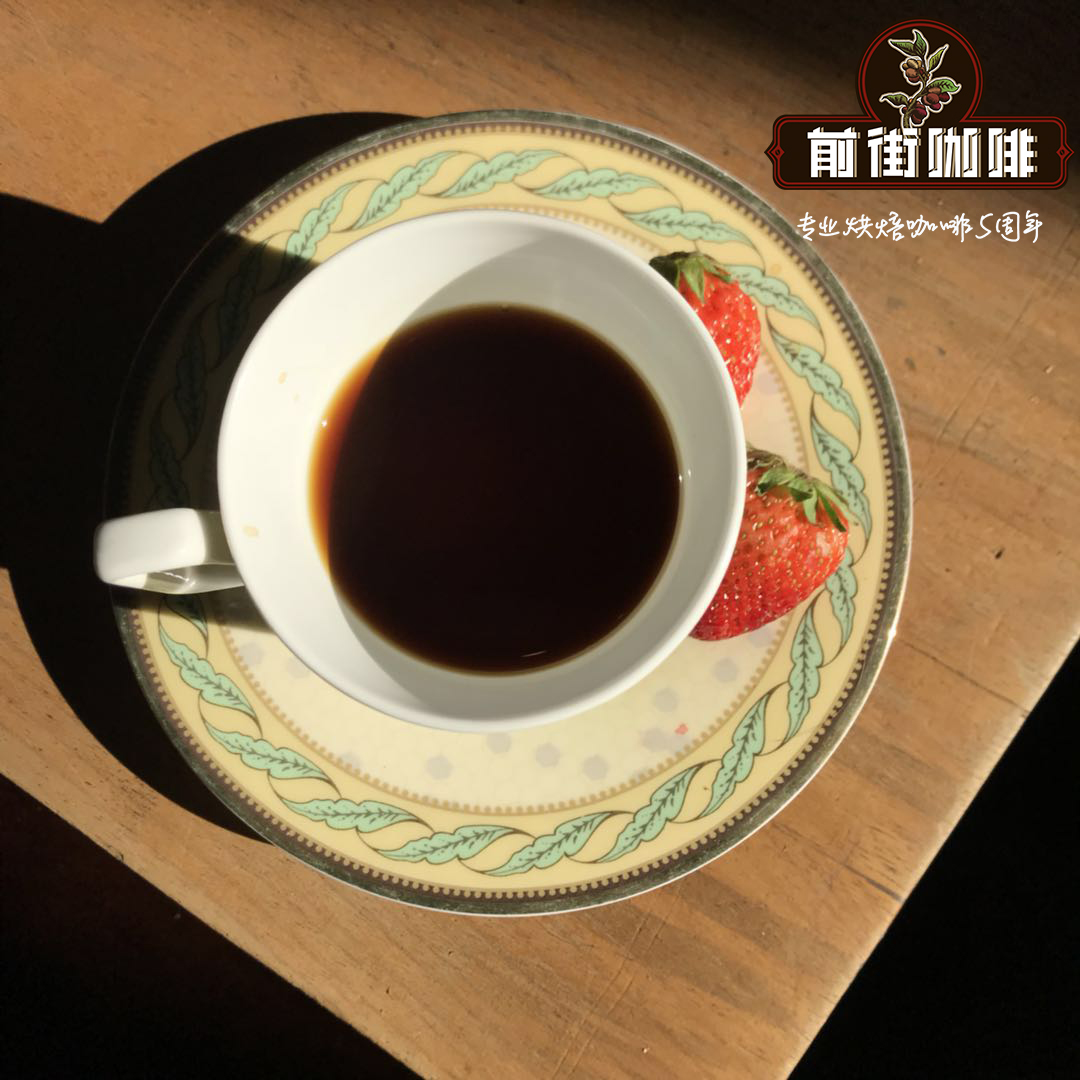
The cup has an obvious cantaloupe aroma and strawberry jam fragrance. The entry brings a jackfruit-like gentle acidity, with strawberry berry flavors emerging in the middle and some cane sugar sweet aftertaste, creating rich layers.
Related recommendations: Is pour-over coffee really delicious? Why does coffee smell better than it tastes?
FrontStreet Coffee Recommendation
Hua Kui shows what an Ethiopian natural can do at high altitude, and it is worth tasting alongside the washed side of the country. FrontStreet Coffee's washed Yirgacheffe is the classic everyday cup: white jasmine, bright citrus and lemon acidity and a clean tea-like body, the easiest way to see what the same origin tastes like when the fruit is stripped before drying.
For the cooperative version, FrontStreet Coffee's Gotiti Cooperative coffee comes from the Worka area at the southeastern end of Yirgacheffe. The traditional washed process gives it none of the heavy bitterness of old-style black coffee, only fresh, bright citrus and lemon acidity with jasmine fragrance, and after a medium-light roast, green tea and honey notes. It works as a pour-over, a cold brew or an espresso.
And for the natural-process counterpart, FrontStreet Coffee's Yirgacheffe Red Cherry is picked as whole red fruit only and dried on raised beds for three to five weeks, turned every two to three hours in the first days, which gives it the classic Yirgacheffe character along with tropical fruit, berry juice, honeyed sweetness and a creamy body.
Important Notice :
FrontStreet Coffee is a long-established specialty coffee roaster in Guangzhou China, selling freshly roasted beans from its own farm in Yunnan as well as dozens of carefully selected single-origin beans from around the world for both pour-over and espresso. The products deliver consistently excellent quality and great value, with shipping within 24 hours. Guangzhou's FrontStreet Coffee shop is recommended by many coffee lovers, and the beans are now available online at the Tmall 。
FrontStreet Coffee has moved to a new address:
FrontStreet Coffee Address: 315,Donghua East Road,GuangZhou
Tel:020 38364473
 Scan and follow the En Gafei WeChat official account. Please indicate that the reprint comes from "En Gafei".