Pour-over Coffee: American Beans vs. African Beans - Which Tastes Better?
Introduction
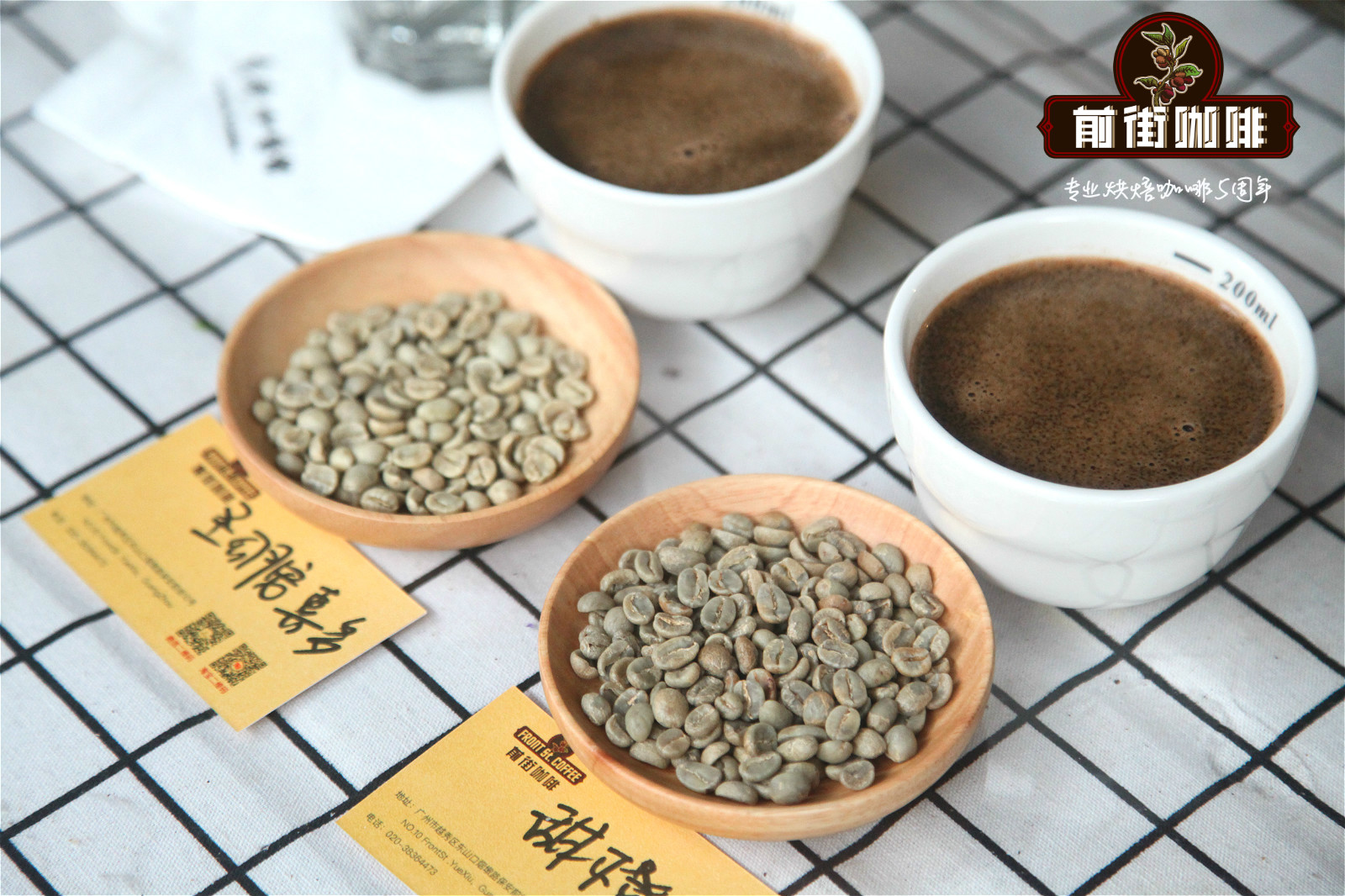
People who enjoy acidity mostly reach for African beans. Their unique geography cultivates extraordinary flavors, with distinctive floral and fruity aromas intimately intertwined, and they are deeply loved by many. Those who prefer balance find American beans an excellent choice, offering balanced flavors and textures with prominent caramel and stone-fruit notes. Below, let's outline the differences between African and American beans.
African Series
FrontStreet Coffee · Ethiopia Yirgacheffe Natural Red Cherry
Ethiopia's main producing regions include Yirgacheffe, Sidamo, Bench Maji, Lekempti, Kembata, Illubabor, Harrar and Limu. Yirgacheffe is a small town in Ethiopia and one of the world's highest-altitude coffee-growing regions, situated at 1,700-2,100 meters above sea level. It is shrouded in mist year-round, with spring-like seasons, gentle breezes and cool, humid weather. During harvest, Ethiopian coffee trading companies come to the town to purchase the beans collected by farmers, ultimately auctioning and exporting them under the "Yirgacheffe" brand. In pursuit of high-quality fruit, the "Red Cherry Project" was implemented: 100% hand-picking of fully red cherries, letting farmers focus more on the screening and bean selection process. These coffees also command relatively higher prices.
A refined natural processing method is used: after selecting usable cherries, the fruit is placed on elevated racks for sun-drying, isolated from the ground to prevent earthy off-flavors and create exceptionally clean fruit flavors. After more than two weeks of sun-drying, the dark brown fruits are professionally stored, waiting for the full flavor to mature and the sweetness to build.
Yirgacheffe's local variety is the indigenous heirloom, a small bean type with a relatively round appearance, mostly between 14 and 15 screen size. FrontStreet Coffee's Yirgacheffe Red Cherry G1 green beans have the yellow-green color typical of natural processed coffee, with uniform, full beans and few defects.
Flavor: intense fruity aromas with rich dried fruit, plum, strawberry and lemon notes. The middle section is sweet like honey, with chocolate in the finish. The entry is not strong, with medium body and acidity that is not pronounced, resembling fruit black tea.
FrontStreet Coffee · Ethiopia Limu G2
Coffee production in the Limu region is relatively low, mainly exported to European and American markets. It was difficult to find domestically in the past but is very popular in Europe and America, with fame second only to Yirgacheffe. The cultivated variety is Ethiopia's local heirloom. Local smallholders use 100% organic farming methods. The soil is Vertisols, with cultivation altitude between 1,850 and 1,900 meters.
The Limu producing region mainly produces washed beans, with a milder taste than the Sidamo region. Its body is relatively thin, often carrying citrus characteristics. The floral and citrus aromas are less pronounced than in Yirgacheffe and Sidamo, but it adds a grassy fragrance, cocoa aroma and sandalwood notes. Although not as famous as coffees from Sidamo or Yirgacheffe, it also produces many distinctive flavors.
Using washed processing, the wet and fermentation methods remove pulp, mucilage and parchment while introducing continuous fresh water. During processing, the fermented beans are placed in pools and moved back and forth, using friction between beans and the power of flowing water to wash the coffee until smooth and clean. After washing, the beans are still encased in parchment with 50% moisture content. They must be dried down to 12% moisture, otherwise they will continue to ferment and become moldy and rotten. Sun-drying then follows; although it takes 1-3 weeks, the flavor is exceptional and much beloved.
Flavor: the entry presents fresh grass fragrance with apple and dried plum acidity. The middle section has caramel and nutty sweetness, with cocoa and berry aftertaste.
FrontStreet Coffee · Burundi Heart of Africa
Burundi lies on the steep East African Rift Valley, with complex terrain. More than 800,000 Burundian families depend on coffee cultivation for their livelihood, mostly through small coffee gardens intercropped with other crops and cultivated by hand without mechanized equipment. Coffee grows on high mountains at altitudes of 1,400-1,700 meters. The trees are mostly Bourbon and its variants, with both washed and semi-washed processing. In the past the coffee was mainly exported to Belgium, Germany, the Netherlands, Japan, Australia and the United States.
Burundi's coffee comes mainly from five producing regions, with famous areas including Kayanza, Ngozi, Mumirwa, Buyenzi and Kirimiro. Burundi's "Heart of Africa" production model is closer to Ethiopia's, with mostly smallholder production. Farmers deliver their harvested ripe berries to processing stations for unified processing.
Using double washed processing, the berries are pulped and demucilaged, soaked and cleaned in water tanks, then placed on racks to finish sun-drying. The beans have almost no defects, with very uniform size and moisture content. Coffee processed this way carries an exceptionally pleasant mouthfeel and bright flavors.
Flavor: the taste is wild, retaining strong flavors and aromas with citrus acidity and tea fragrance. The acidity is light, the texture relatively thick, with plum, kumquat, lemon, dried fruit and caramel. The mouthfeel is smooth, the aroma saturated, and the aftertaste rich and lasting.
American Series
FrontStreet Coffee · Costa Rica Honey Process
Costa Rica was the first country in Central America where coffee was introduced for cultivation. Located on the Central American isthmus, with numerous volcanoes throughout the country, it has natural advantages of sunshine and land. The climate is moderated by Pacific and Atlantic ocean currents and sea breezes, producing coffee with the character of the local microclimate and terroir. The earliest cultivation was in the Central Valley region. After years of development, Costa Rica now has eight main producing regions: Guanacaste, West Valley, Central Valley, Turrialba, Orosi, Tres Rios, Tarrazu and Brunca.
The honey processing method refers to producing green beans that are sun-dried with mucilage still attached. Because the fruit juice contains considerable sweetness and unique enzymes, the processed parchment beans hold richer flavors and more complex positive characteristics.
The more pectin retained in processing, the richer and sweeter the final cup. The pectin mucilage is where the coffee fruit has the highest sugar content and is an important part of fermentation; it can be said to determine about 80% of the nutritional supply during processing.
Yellow honey retains 60% pectin, red honey retains 75%, and black honey removes almost no pectin. The sugar and acidity from the pectin layer become more concentrated during drying, and these sugars penetrate into the beans.
Mainly cultivating Caturra, the taste carries lemon or citrus acidity. In terms of sweetness, it is affected by the frequency and dosage of fertilization by growers. It is high-yielding, with short plants and many branches, and is favored by local farmers.
Flavor: floral and creamy aromas, with lemon, plum, sweet orange and peach flavors, a grapefruit and juice-like sensation, natural sweetness and a delicate texture, perfectly balanced overall.
FrontStreet Coffee · Honduras San Juan Cidro
Honduras lies in northern Central America, bordering the Caribbean Sea to the north and the Pacific Gulf of Fonseca to the south, sharing borders with Nicaragua and El Salvador to the east and south and with Guatemala to the west. It is mostly mountainous and plateau terrain, with a tropical climate of moderate temperatures and abundant rainfall, making it an ideal place for coffee cultivation. There are six major producing regions, mainly in the west and south: Copan, Opalaca, Montecillos, Comayagua, Agalta Tropical and El Paraiso.
The average cultivation altitude for specialty coffee regions is above 1,100 meters, divided into three grades: Standard grade at 1,000 meters; HG grade at 1,000-1,500 meters; and SHB grade at 1,500 meters and above.
San Juan Cidro is a small village in central Honduras, located 40 kilometers northeast of the capital Tegucigalpa. The town is under the jurisdiction of Francisco Morazán, and the estate sits in the buffer zone of La Tigra National Park, which has an independent rainforest ecosystem. Its climate and altitude are very conducive to producing high-quality beans, grown on mountains at 1,450-1,550 meters under shade from banana, avocado, papaya and other fruit trees.
Hand-picked, with mature fruits selected from among them. Picking often takes several weeks. The washed processing method is used: first soaking to select floating beans, then using machines to remove pulp and mucilage. Local farmers believe larger fruits represent better maturity. The beans undergo 10-12 hours of fermentation, are washed clean, and are finally dried on African drying beds for 8 to 10 days, so the taste always carries a light fruity aroma.
Flavor: caramel sweetness is very obvious, with roasted nuts, milk chocolate, a full creamy texture, and a slight spice and oolong tea finish.
Conclusion
African beans, with their fruity character, offer an overall light and refreshing taste, more like drinking juice, while American beans, with balanced flavors and texture, feel like drinking melted cream chocolate, smooth and mellow, bringing different enjoyment to the taste buds. Between African beans and American beans, which do you prefer?
FrontStreet Coffee Recommendation
If the African side appeals to you, start with FrontStreet's washed Yirgacheffe daily bean. It is the classic introduction to the region: white jasmine, bright citrus and lemon acidity and a clean tea-like body, at a friendly price that makes it the first specialty bean for many drinkers. FrontStreet suggests a V60 at 90-91°C, 15g at a 1:15 ratio, ground to fine-sugar size.
For a more precise single-lot expression, FrontStreet Yirgacheffe Gutingin Cooperative comes from a skilled processing team in Gutingin village. The washed method makes its jasmine and bright citrus acidity stand out, and a medium-light roast adds green tea and honey notes, with a clean, delicate cup that is easy to love.
Those drawn to the American style's rounder sweetness can look to the natural side of Yirgacheffe instead: FrontStreet Yirgacheffe Natural Red Cherry uses only fully ripe red cherries. Because the fruit dries with the pulp attached, it keeps the classic Yirgacheffe character while adding tropical fruit, a berry-juice body, honey sweetness and a creamy smoothness, an easier-going counterpart to the crisp washed lots.
Important Notice :
FrontStreet Coffee is a long-established specialty coffee roaster in Guangzhou China, selling freshly roasted beans from its own farm in Yunnan as well as dozens of carefully selected single-origin beans from around the world for both pour-over and espresso. The products deliver consistently excellent quality and great value, with shipping within 24 hours. Guangzhou's FrontStreet Coffee shop is recommended by many coffee lovers, and the beans are now available online at the Tmall 。
FrontStreet Coffee has moved to a new address:
FrontStreet Coffee Address: 315,Donghua East Road,GuangZhou
Tel:020 38364473
 Scan and follow the En Gafei WeChat official account. Please indicate that the reprint comes from "En Gafei".