The Origin of Panama La Esmeralda Washed Purple Mark Geisha and the Ideal Pour-Over Ratio

Professional coffee knowledge exchange: for more coffee bean information, please follow Coffee Workshop (WeChat public account: cafe_style)
La Esmeralda means "Emerald." In 1996, the Peterson family acquired this coffee estate in the Jaramillo area of Boquete, sitting at 1450-1700 meters. The coffee grown here carries a distinct, elegant citrus aroma that is truly captivating.
At the Esmeralda estate, Geisha from different altitudes and growing zones shows subtle flavor differences, including some genuine "micro-regions." Overall, however, Esmeralda Geisha is defined by stunningly intense florals combined with citrus and a range of tropical fruit flavors. Those flavors grow even more enchanting as the cup cools—perhaps the secret weapon that keeps drawing coffee lovers back.
Everyone is broadly familiar with the estate's grading. The regular "Red Label" auction Geisha lots belong to the highest grade; the "Green Label" is the estate's Private Collection Geisha; and the "Blue Label" is the estate's everyday production Geisha. This year the estate also introduced a Purple Label private-reserve Geisha, with all beans harvested between February and April 2017—think of it as offering the same quality tier as the original Green Label Geisha.
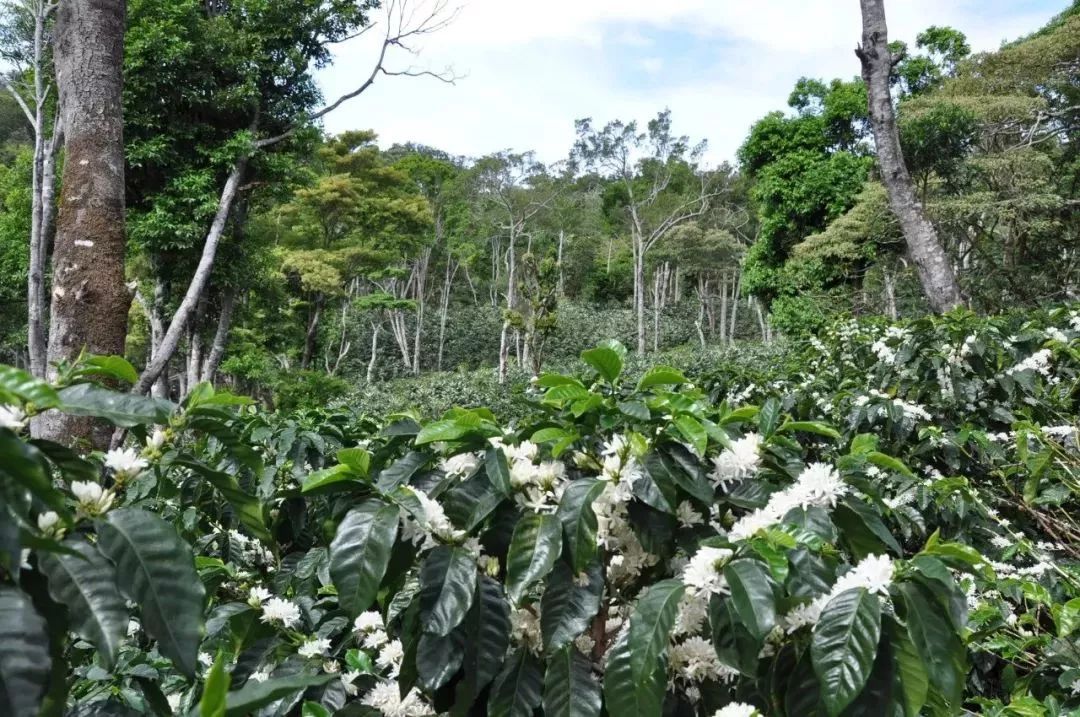
These beans come from the renowned Esmeralda estate in the Boquete region, close to the Barú Volcano, with picturesque scenery and rich, fertile soil. The Geisha here is planted at roughly 1600-1800 meters, where daytime temperatures average 19-25°C, nighttime temperatures 11-15°C, and annual rainfall averages 4000mm.
Three-Stage Pour-Over Method
Today, FrontStreet Coffee introduces a widely used pour-over method for Geisha: the three-stage method.
Three-Stage Pour-Over Method
Segmented extraction: one portion of water divided into three pours.
Suitable for light, medium-light, and medium roast coffee beans.
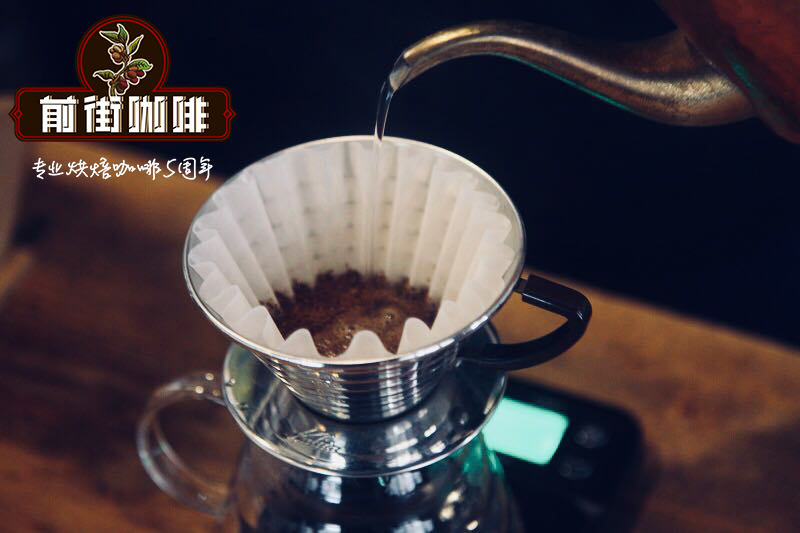
Uses a Kalita wave dripper.
Lengthening the bloom or pausing more often between pours deepens the richness of the coffee's flavor.
Three-Stage Segmented Extraction
Advantages: More layered than a single continuous pour, letting you clearly distinguish the front, middle, and back-end flavors of the coffee. After the bloom, the water volume increases with each pour—typically pouring just as the coffee liquid is about to drop to the surface of the grounds—using small, medium, and large flows across the three stages.
Disadvantages: Demands precise control of pour rate and volume.
FrontStreet Coffee's Geisha Coffee Pour-Over Parameter Recommendations
Wave drippers brew by immersion, enlarging the contact area between grounds and water. Compared with a V60, this improves texture and makes the coffee feel more viscous in the mouth.
Use 15g of coffee, water at 91-92°C, grind at BG 5R (64% pass rate on the Chinese-standard 20 mesh screen), and a coffee-to-water ratio of roughly 1:15-16.
Method: Bloom with 27g of water for 30 seconds. Using hot water from the kettle, draw clockwise circles centered on the middle of the dripper. Start timing as brewing begins: pour to 27g, stop, and wait 30 seconds before the first main pour.
For the first pour, keep circling as before, slightly slower at first, speeding up toward the outer ring. Stop pouring at around 1:15. When the liquid level has dropped by one-third, pour again. The second pour should concentrate in the center, and the stream must not hit the seam where the grounds meet the filter paper, to avoid channeling. End extraction at around 2:05. The tail end can be discarded—the longer it runs, the more astringency and rough texture build up.
Segments: 30-125-230g
FrontStreet Coffee Recommendation: Esmeralda Red Label and Green Label Geisha
For a taste of the legend itself, FrontStreet Coffee recommends both tiers of the estate's Geisha line. The Red Label, officially "Esmeralda Special," grows at 1600-1800 meters, must cup above 90 points, and comes from a single numbered micro-lot—letting you pick the lot that matches your palate. The Green Label, or "Private Collection," blends batches from multiple high-altitude plots to express the estate's signature Geisha profile at a friendlier price. Either way, expect intense florals, a clear orange-honey sweetness, juicy fruit acidity, and a tea-like finish. To brew, FrontStreet suggests a small Hario V60 with 15g of coffee, a 1:16 ratio, water at 91°C, and a coarse grind (78% pass on a 20-mesh sieve), built in three pours to 30g, 125g, and 225g for a total extraction of about 2 minutes 10-20 seconds.
Important Notice :
FrontStreet Coffee is a long-established specialty coffee roaster in Guangzhou China, selling freshly roasted beans from its own farm in Yunnan as well as dozens of carefully selected single-origin beans from around the world for both pour-over and espresso. The products deliver consistently excellent quality and great value, with shipping within 24 hours. Guangzhou's FrontStreet Coffee shop is recommended by many coffee lovers, and the beans are now available online at the Tmall 。
FrontStreet Coffee has moved to a new address:
FrontStreet Coffee Address: 315,Donghua East Road,GuangZhou
Tel:020 38364473
 Scan and follow the En Gafei WeChat official account. Please indicate that the reprint comes from "En Gafei".