How to Make Wallenford㊣ Jamaica Blue Mountain Pour-Over Coffee_Bean Flavor Description
The Origin of Blue Mountain Coffee
Blue Mountain coffee originates from Jamaica, named after the Blue Mountains surrounded by the Caribbean Sea. Blue Mountain coffee has a rich and mellow flavor, and because the three tastes of coffee - sweet, sour, and bitter - are perfectly balanced, it has no bitterness at all, only moderate and perfect acidity. It is generally consumed as a single origin, but due to its extremely limited production, the price is extraordinarily expensive.
The "Secret" Behind Blue Mountain Coffee's Pure Flavor
True Blue Mountain coffee is one of the coffees grown under the most superior conditions in the world. Jamaica's weather, geological structure, and topography together provide a uniquely ideal venue. The mountain range running through Jamaica extends to the eastern part of the small island, with the Blue Mountain Range reaching over 2,100 meters above sea level. The weather is cool and foggy, with frequent precipitation, allowing the fertile soil to be nourished by rain. The coffee trees all grow on rugged mountain slopes, making harvesting extremely difficult - only skilled local female workers can handle it. It is very important to select perfectly ripe cherries; unripe or overripe beans will affect the quality of the coffee. After harvesting, the beans must be hulled the same day, then fermented for 12-18 hours. Afterward, they are washed and sorted. The next step is drying, which must be done on concrete floors or thick blankets until the moisture content drops to 12%-14%. Then they are placed in special warehouse stacks for storage. They are taken out as needed for roasting, then ground. These procedures must be strictly controlled; otherwise, the quality of the coffee will suffer.
Historical Development
In 1717, French King Louis XV ordered coffee to be planted in Jamaica. In the mid-1720s, Jamaica's Governor Sir Nicholas Lawes imported Arabica seeds from Martinique and began promoting cultivation in the St. Andrew area. By 1800, Jamaica had 686 coffee plantations.
In 1948, the world-renowned Jamaica Coffee Industry Board (CIB) was officially established, and the Jamaican government enacted the "Jamaica Blue Mountain Coffee Industry Management Regulations." At this time, the definition of Blue Mountain coffee was strictly stipulated in the regulations: (1) granting four statutory coffee estates, including Wallenford, the exclusive right to centrally process Blue Mountain coffee beans to ensure quality; (2) grown in the Blue Mountain region at 3,000-5,000 feet altitude; (3) Blue Mountain coffee exports are graded No.1, No.2, No.3, and Peaberry. The Jamaica Coffee Industry Board owns the registered trademarks for 100% Jamaica Blue Mountain Coffee and 100% Jamaica High Mountain Coffee, which are licensed to a limited number of plantations and processors after strict certification. Only Wallenford, Mavis Bank, Moy Hall, and Silver Hill are the four estates certified by the Jamaica Coffee Industry Board (CIB).
By 1981, Jamaica had another 1,500 hectares of land cleared for coffee cultivation, followed by an additional 6,000 hectares of coffee land. In fact, today's Blue Mountain region is a small place, with only 6,000 hectares of cultivation area. The remaining 12,000 hectares are used to grow two other types of coffee: High Mountain Supreme Coffee and Jamaica Prime Washed Coffee.
Unique Characteristics
100% pure Jamaica Blue Mountain coffee has a strongly appealing, elegant aroma that other coffees cannot match. Through grinding, brewing, and tasting, its flavor is brought to the extreme, and the surrounding coffee aroma makes it hard not to be intoxicated. The relatively cheap "Blue Mountain Blend" or "Blue Mountain Style" coffees on the market are usually blended products made primarily with high-quality Colombian beans, intended to imitate the taste of Blue Mountain. Blue Mountain's caffeine content is very low - approximately only half that of other coffee varieties - meeting modern health requirements.
Jamaica is one of the countries with the lowest coffee production in the world. Blue Mountain coffee is a rare commodity in the market, establishing its dominant position. Brazil, the world's largest coffee-exporting country, produces 30 million bags of coffee annually, while Blue Mountain coffee produces only about 40,000 bags per year. Demand is particularly high, so there is some supply shortage in the market, making it expensive.
Jamaica Wallenford - Authentic Jamaica Blue Mountain Coffee Beans
Specification: 114g/burlap bag
Shelf Life: 12 months
Origin: Jamaica
Coffee Bean Grade: Blue Mountain No.1 & Blue Mountain No.2
Roast Level: Medium roast
The beans are full and plump, with rich, balanced flavor, and fruity and acidic notes that can satisfy many different preferences. In addition, high-quality fresh Blue Mountain coffee has a particularly long-lasting flavor - as wine connoisseurs would say, an endless aftertaste.
FrontStreet Coffee Pour-Over Jamaica Blue Mountain Coffee Parameters:
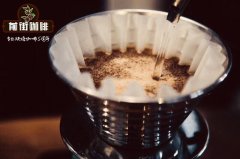
Daily Brewing: Filter cup selection: V60, Kalita wave, and KONO are all suitable
Parameters: 15g coffee, water temperature 90 degrees C, grind size 3.5, water-to-coffee ratio close to 1:15, total time around 2:00
Technique: 25-30g water for bloom, bloom time 30s; first pour to 120g then stop; vertical water flow, slow circular motion with a small flow; second pour to 225g, with water flow and circular speed slightly faster to reduce fine particles clogging the filter and causing over-extraction.
Other Extraction Method Parameter Suggestions:
French Press: Grind size 3.5-4 / water temperature 90 degrees C
Siphon: Grind size 4, water temperature: 89 degrees C
AeroPress: Grind size 2.5, water temperature 88 degrees C
Authentic Blue Mountain Coffee Flavor Description:
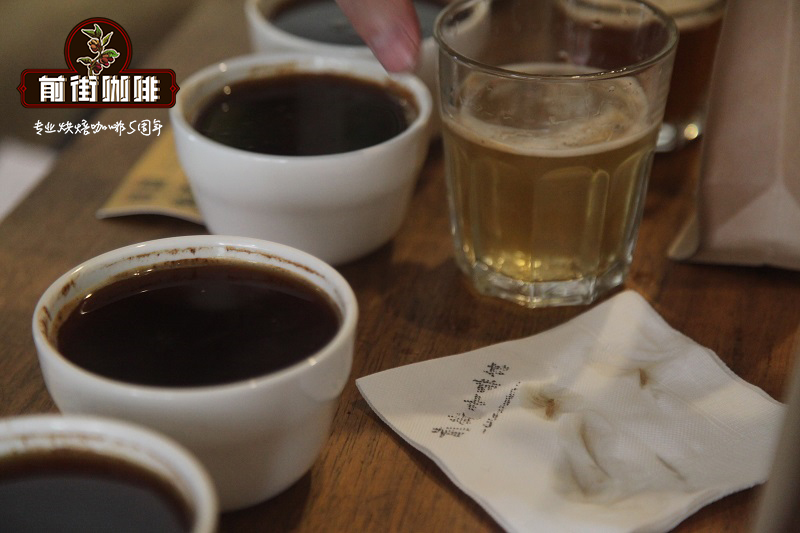
The taste is very clean, and it is one of the sweetest coffees in the world. This flavor was described by Jim Reynolds of Peet's Coffee and Tea: "The best examples of Jamaica's Blue Mountain coffee have an aromatic, smooth, and rich character. It gives me the feeling of gem-like quality. It is as precious as a gem."
It is complex but very mild, it is sweet, it has very strong body. You have to taste it to know what I'm talking about. Unique growing conditions and extreme care in all production processes have made Jamaica Blue Mountain coffee very famous. Rich and mellow in flavor, with the three tastes of coffee - sweet, sour, and bitter - perfectly balanced, no bitterness at all, only moderate and perfect acidity, and persistent fruity notes.
FrontStreet Coffee Recommendation
For an authentic Blue Mountain experience, FrontStreet Coffee recommends the Jamaica Blue Mountain No.1 - the highest grade of Jamaican Blue Mountain - sourced from the historic Clifton Estate, where coffee has been grown since around 1750 at an average elevation of about 4300 feet (1310.64 meters). Genuine Blue Mountain is traditionally packed and shipped in wooden barrels of 15, 45, and 70 kg stamped with batch details, and FrontStreet Coffee provides complete origin certification, so the source can be verified with confidence.
Brewed well, it is remarkably clean, complex, and gentle, with chocolate sweetness, strong body, and only a moderate, perfect acidity followed by a long fruity finish. FrontStreet Coffee roasts it medium-dark, ships beans roasted within 5 days, and suggests resting them 4-7 days from the roast date before brewing: use a Kono dripper, 15 g of coffee, a grind about the texture of white sugar, water at 87-88 degrees C, and a 1:15 ratio in three pours - 30 g for a 30-second bloom, then to 120 g, then to 225 g.
Important Notice :
FrontStreet Coffee is a long-established specialty coffee roaster in Guangzhou China, selling freshly roasted beans from its own farm in Yunnan as well as dozens of carefully selected single-origin beans from around the world for both pour-over and espresso. The products deliver consistently excellent quality and great value, with shipping within 24 hours. Guangzhou's FrontStreet Coffee shop is recommended by many coffee lovers, and the beans are now available online at the Tmall 。
FrontStreet Coffee has moved to a new address:
FrontStreet Coffee Address: 315,Donghua East Road,GuangZhou
Tel:020 38364473
 Scan and follow the En Gafei WeChat official account. Please indicate that the reprint comes from "En Gafei".