How to Brew Brazilian Almen Farm Coffee Beans_How to Taste the Flavor of Hand-Poured Cerrado Coffee
Brazilian coffee generally refers to coffee produced in Brazil. There are many varieties, the vast majority of which are unwashed and sun-dried. Beans are classified by producing state and shipping port. Brazil has 21 states, 17 of which grow coffee, but 4 states account for the largest share of production, together making up 98% of the country's total. Brazilian coffee has low acidity in its flavor profile, combined with coffee's natural sweetness and bitterness. It enters the mouth extremely smoothly, with a faint grassy aroma - fresh and only slightly bitter, sweet and smooth to drink, with a pleasant aftertaste that refreshes and revitalizes.
Although coffee is diverse, Brazilian coffee suits popular tastes. For example, coffee from the northern coastal region carries a typical iodine flavor that reminds people of the sea; this coffee is exported to North America, the Middle East, and Eastern Europe. Another interesting coffee worth seeking out is the washed Bahia coffee. It is not easy to find, because after the United States, Brazil is the world's largest coffee consumer, and many fine coffees are consumed entirely within its domestic market.
In Brazil, the coffee with the largest production is Robusta, sold in supermarkets under the name Conillon, accounting for 15% of total production.
In some estates in the Cerrado region of Minas Gerais state in southeastern Brazil, ancient Bourbon coffee is grown. Estates such as Capin Branco and Vista Allegre also sell these old Bourbon varieties on the market. Although they come from the same region, each has its own character: Capin Branco coffee is smoother than Vista Allegre, while Vista Allegre is strong and dark - both with low acidity. As with all Brazilian coffees, they are best enjoyed fresh, as they grow more acidic with age. These growers have organized themselves into the Specialty Coffee Association of Brazil.
Brazil (Santos) Cerrado Alimentos Farm
Santos coffee is mainly produced in São Paulo, Brazil. It has a neutral balance of acidity, sweetness, and bitterness, with moderate concentration and appropriate acidity. Its taste is elegant and distinctive, making it the best blending base bean - known as the backbone of coffee - though it also tastes excellent enjoyed on its own.
Farm Information
Region: Cerrado
Farm Name: Alimentos
Harvest Period: June-August
Grade: NY.2
Varieties: Catuai, Acaia, Mundo Novo
Altitude: 900m-1000m
Processing Method: Natural
Moisture Content: 12.7%
Recommended Roast Level: City, Full City
Flavor Characteristics: Good acidity, nuances of citrus, nutty, sweetness, clean cup, good balance.
Established in 1974, Alimentos Farm handles 3% of Brazil's coffee circulation and is a farm and exporter of high-quality coffee to Japan, the United States, Europe, and elsewhere. Its management center is located in São Paulo, with about 800 employees and more than 200 coffee-dedicated vehicles. Alimentos Farm sits between 900-1000m in altitude and cultivates multiple varieties including Catuai and Icatu. Cerrado is famous in Brazilian coffee for its taste, with rich citrus flavor, nutty acidity, and bright citrus notes. Alimentos' coffee is also renowned for thorough quality management and for producing and exporting high-quality specialty-grade coffee.
FrontStreet Coffee Brewing Parameter Recommendations
How to Properly Brew Brazil's [Alimentos Farm Natural Cerrado]
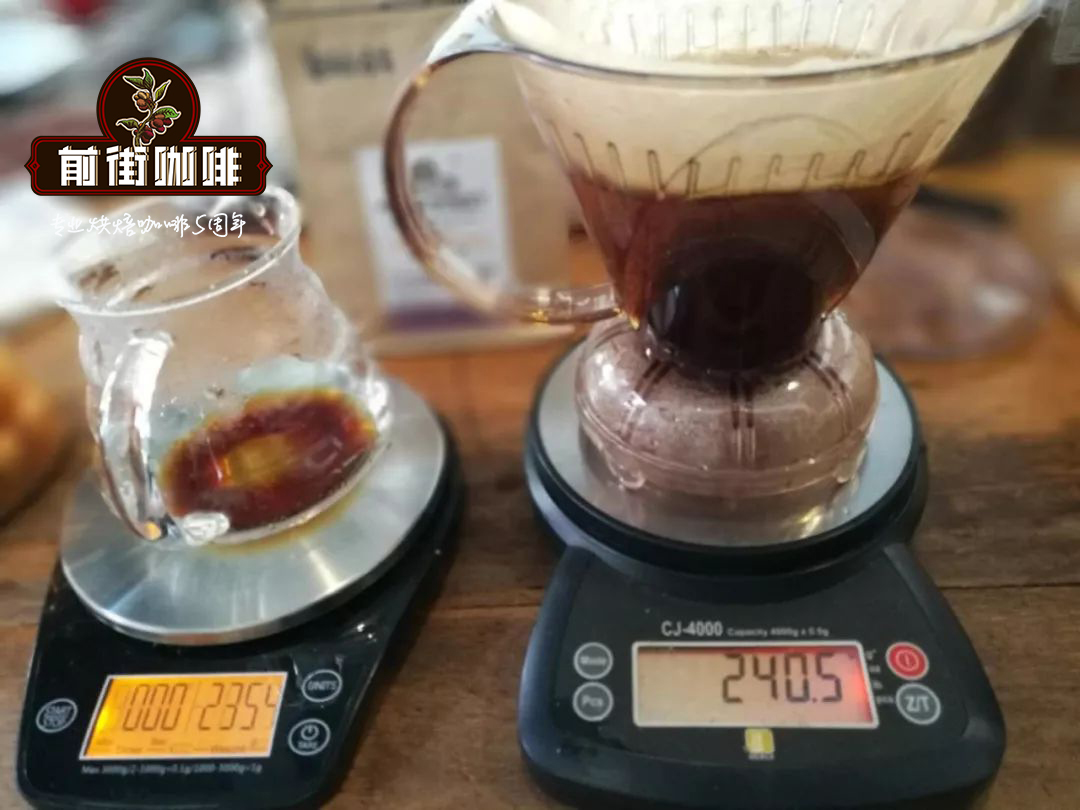
FrontStreet Coffee pour-over reference: weigh out 15g of Alimentos Farm Natural Cerrado coffee and grind to a medium grind size - slightly coarser than table salt. We use the BG grinder at setting 6A (50% standard sieve pass rate), water temperature 88°C, extracted with a Kono or Kalita dripper, and a recommended coffee-to-water ratio of approximately 1:14.
Using hot water from the pour-over kettle, pour in clockwise circles centered on the middle of the dripper. Start timing when brewing begins. Pour to 30g within 15 seconds, then stop. When the timer reaches 1 minute, begin the second pour. As before, pour in clockwise circles centered on the middle of the dripper, keeping the stream away from the area where the coffee bed meets the filter paper to avoid channeling.
Leave a ring at the outermost circle, then work back inward circle by circle. At 2 minutes and 10 seconds, finish the brew at 210g, completing the extraction.
Japanese Ice Pour-Over [Alimentos Farm Natural Cerrado]
FrontStreet Coffee iced pour-over reference:
Brazilian coffee Alimentos Farm Natural Cerrado, medium-dark roast, BG grinder setting 5R (60% standard sieve pass rate).
20g of coffee, 150g of ice cubes, 150g of hot water. The water temperature is 1°C higher than the normal pour-over recommendation of 88°C. Normal grinding is the Fuji 3.5 setting, while for iced pour-over it is half a setting finer - Fuji 3. The recommended ratio of coffee to (water + ice) is 1:15.
Bloom with 40g of water for 30 seconds.
Segmented pouring: first segment 60g of water, second segment 40g of water. Use a relatively fine but tall water column, pouring forcefully so the coffee grounds roll fully. Be careful not to let the liquid level rise too high, and avoid hitting the filter paper at the edge.
The entire extraction takes approximately 2.5 minutes (similar to the normal extraction time for 20g of coffee).
FrontStreet Coffee Recommendation
Brazil is the world's largest coffee producer, and its beans' moderate acidity, balanced sweetness and bitterness, and rich body make them ideal for a medium roast that releases nutty aromas - suitable both as single origin and in blends. If you just want a taste of the classic Brazilian profile, FrontStreet Coffee recommends the pulped-natural FrontStreet Cerrado Red Bourbon: grown in the celebrated Cerrado region, it shows creamy peanut, toasted bread, caramel, and hazelnut aromas, with a round, non-acidic mouthfeel and a light touch of bitterness, and works in everything from pour-over to moka pot, espresso SOE, siphon, and French press.
For something with a touch more fruit, FrontStreet's Brazil Queen Estate Yellow Bourbon from Mogiana offers the sugarcane sweetness, fruit notes, and chocolate flavors unique to that farm's fertile red volcanic soil. Brazilian beans' low acidity and balance also make them the backbone of FrontStreet's espresso blends - the Classic Blend with its rich crema, the nutty Premium Blend, FrontStreet Coffee's Black Cocoa Blend favored by baristas, and FrontStreet Coffee's Commercial Blend designed for cafes - where they contribute chocolate and cream aromas plus gentle acidity and sweetness that stabilize extraction.
Important Notice :
FrontStreet Coffee is a long-established specialty coffee roaster in Guangzhou China, selling freshly roasted beans from its own farm in Yunnan as well as dozens of carefully selected single-origin beans from around the world for both pour-over and espresso. The products deliver consistently excellent quality and great value, with shipping within 24 hours. Guangzhou's FrontStreet Coffee shop is recommended by many coffee lovers, and the beans are now available online at the Tmall 。
FrontStreet Coffee has moved to a new address:
FrontStreet Coffee Address: 315,Donghua East Road,GuangZhou
Tel:020 38364473
 Scan and follow the En Gafei WeChat official account. Please indicate that the reprint comes from "En Gafei".