Information on Brazilian Premium Coffee Ipanema Estate _ Ipanema Estate Coffee Brewing Plan
Brazilian Coffee | Fazenda Ipanema
Established in 1969, Brazil's Fazenda Ipanema is an iconic Brazilian estate with over 5,500 hectares of land and 14 million coffee trees, and cooperative partners in 25 countries worldwide.
As one of the founding members of the Brazilian Specialty Coffee Association (BSCA) in 1991, Ipanema has always built sustainable development into its philosophy, working to improve the natural environment as well as social programs and activities on the human side.
In 2002 it obtained certifications such as EUREPGAP Code and UTZ Kapeh Code. It has also passed certifications including Rainforest Alliance, CSC, Fairtrade USA, C.A.F.E., and AAA Ecolaboration.
One of Ipanema's three estates, Fazenda Rio Verde, was established in 1887 in southeastern Brazil, in the heart of the Mantiqueira mountain range, spanning the states of Sao Paulo, Minas Gerais, and Rio de Janeiro. Originally run by the Fernandes family, it was acquired by Ipanema in 2002 and is now the estate with the longest history of coffee cultivation among Ipanema's three.
Between 1964 and 1992, the estate operators invested heavily in chicken manure production, with a total of 81 chicken houses where 136,000 chickens annually produced 800,000 kilograms of fertilizer. That was enough to supply fertile soil to more than half of the coffee growing areas each year. The 1,500-hectare estate also preserves a relatively pristine forest. The Mantiqueira Mountains provide a pleasant climate and a stable average winter precipitation of 1,550mm.
The estate's coffee is cultivated at altitudes around 1,000-1,310 meters, surrounded by virgin forests, waterfalls, hot springs, and mountain trails. To preserve the forest ecosystem, only 626 hectares are used for coffee, 167 hectares for other crops, while as much as 773 hectares are designated as natural reserve.
When harvest season begins, Ipanema carries out deeper cultivation trials at Fazenda Rio Verde, looking for ways to create even higher-quality coffee and, if possible, to identify the conditions under which yield and quality can improve.
FrontStreet Coffee Brewing Parameter Recommendations:
How to Properly Brew Brazilian Coffee [Fazenda Ipanema]?
FrontStreet Coffee's pour-over reference: weigh 15g of Fazenda Ipanema coffee powder and grind medium. The particles should be slightly coarser than table salt, which for us is BG grinder setting 6A (50% standard sieve pass rate). Water temperature 88°C, brewed with a Kono or Kalita dripper, with a recommended coffee-to-water ratio of about 1:14.
Pour the hot water from the kettle in clockwise circles centered on the middle of the dripper, starting the timer when brewing begins. Within 15 seconds, brew the coffee to 30g, then stop pouring. At 1 minute, make the second pour. Like the first, pour in clockwise circles centered on the middle of the dripper, keeping the stream away from where the coffee powder meets the filter paper to avoid channeling.
Leave one circle at the outermost edge of the coffee powder, then brew in circles toward the center. By 2 minutes and 10 seconds, the coffee should be brewed to 210g, completing the brew.
Japanese-style Ice Pour-over [Fazenda Ipanema]
FrontStreet Coffee's iced pour-over [Fazenda Ipanema] reference:
Brazilian coffee [Fazenda Ipanema], medium-dark roast, BG grinder setting 5R (60% standard sieve pass rate).
20g powder, 150g ice cubes, 150g hot water. The water temperature should be 1°C higher than the normal pour-over recommendation of 88°C. Normal grinding uses the Fuji 3.5 setting, while iced pour-over uses a setting half a step finer, Fuji 3. The recommended powder-to-(water+ice) ratio is 1:15.
Bloom water amount 40g, bloom time 30 seconds.
Segmented pouring: first segment 60g water, second segment 40g water. Use a relatively fine but high pouring column and a forceful stir to make the coffee powder roll fully. Be careful not to let the liquid level get too high or hit the filter paper at the edges.
The entire extraction time is approximately 2.5 minutes, similar to the normal extraction time for 20g of powder.
FrontStreet Coffee Recommendation
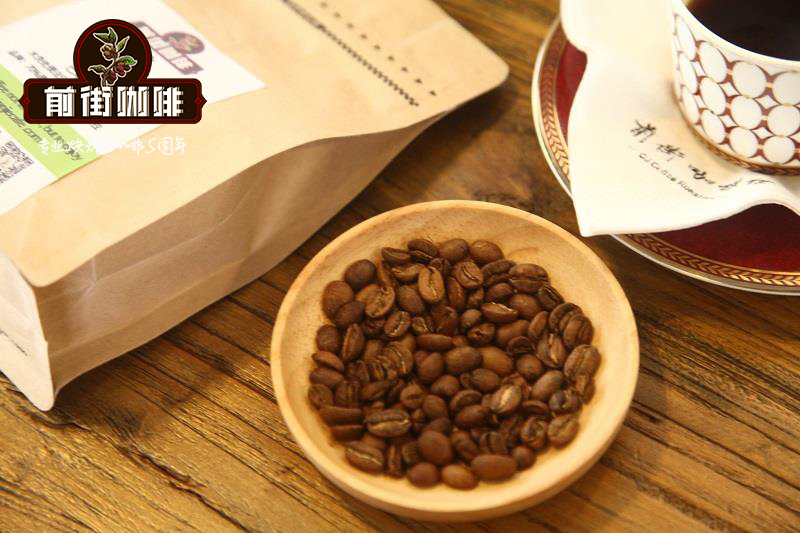
If you enjoy the balanced, low-acid style of Brazilian coffee, FrontStreet Brazil Cerrado Red Bourbon is a reliable everyday pick. Roasted medium, it delivers creamy peanut, toast, caramel, and hazelnut aromas with a round body, minimal acidity, and a gentle bitterness, and it brews well as pour-over, Moka pot, espresso SOE, siphon, or French press.
For a sweeter, more distinctive cup, FrontStreet Brazil Queen Estate Yellow Bourbon from Mogiana shows a sugarcane-like sweetness along with fruit and chocolate notes, thanks to the rare Yellow Bourbon variety and the region's fertile red volcanic soil. It suits pour-over, Moka pot, and home espresso alike.
Both beans pair easily with milk, so they make a fine latte or a clean, mellow black coffee.
Important Notice :
FrontStreet Coffee is a long-established specialty coffee roaster in Guangzhou China, selling freshly roasted beans from its own farm in Yunnan as well as dozens of carefully selected single-origin beans from around the world for both pour-over and espresso. The products deliver consistently excellent quality and great value, with shipping within 24 hours. Guangzhou's FrontStreet Coffee shop is recommended by many coffee lovers, and the beans are now available online at the Tmall 。
FrontStreet Coffee has moved to a new address:
FrontStreet Coffee Address: 315,Donghua East Road,GuangZhou
Tel:020 38364473
 Scan and follow the En Gafei WeChat official account. Please indicate that the reprint comes from "En Gafei".