Colombia Huila Magdalena Coffee Pour-over Sharing_How to Pour-over Colombia Huila Coffee
Introduction to Colombian Coffee
Colombian Coffee (Café de Colombia) is one of the few single-origin coffees in the world sold under a country name, and it stands as a successful model of a geographical indication combined with a strong brand image.
In December 2004, the Colombian Coffee Growers Federation (FNC) applied to the Colombian government to register "Café de Colombia" as a geographical indication. Three months later, the government approved "Café de Colombia" as a Denomination of Origin — Geographical Indication (D.O.-G.I.). That logo has since become the official emblem of the FNC.
Colombian coffee has also earned unrivaled acclaim for its quality. Compared with other producing countries, Colombia shows greater attention to product development and promotion, and that focus, combined with its superior geography and climate, is what makes Colombian coffee excellent in quality and beautiful in flavor.
Colombian Coffee Growing Regions
Colombian coffee grows in the Andes Mountains, where the climate is mild, the air humid and rainfall good — ideal for coffee cultivation. By geography it divides into three growing regions: northern, central and southern. Among them are six high-quality origin regions: Sierra Nevada, Santander, Cauca, Huila, Nariño and Paisaje Cultural Cafetero.
Sierra Nevada Region (Northern)
The Sierra Nevada region in the north is one of Colombia's premium producing areas. The Santa Marta Snowy Mountain Range is one of the few snow-capped ranges near the equator. Coffee grown here is world-renowned for its distinctive character and high quality. Unique climate, abundant rainfall, cloud cover and shade-grown cultivation give the coffee a rich aroma and nutty flavors, for a distinctive sensory experience.
Santander Region (North-Central)
The north-central Santander region includes two major geographical areas: the Magdalena Basin and the mountains of the Eastern Range. The Magdalena Basin is relatively flat with a dry, hot climate in the central plains. The Eastern Range is rugged, with steep slopes reaching altitudes of 4000 meters. Climate varies with altitude, producing diverse weather zones and coffee with rich aroma, moderate acidity and body, a smooth consistency and tobacco flavors.
Huila Region (Southern)
The Huila region in southern Colombia is one of the country's renowned specialty coffee areas, with altitudes from about 1200 to 2020 meters, a cultivation area exceeding 1.3 million hectares and average temperatures between 17 and 23°C. Its outstanding flavor and aroma have made it one of the world's famous specialty coffees. It shows medium-high acidity with moderate body, charming sweetness and a lemon-red-wine acidity, with a balanced, clean aftertaste, and has frequently been selected for major coffee competitions in recent years.
In Colombia's Huila region, the two Andean Cordillera ranges that give rise to the Rio Magdalena, combined with warm air currents from the Caribbean Sea upstream, create a special climate favorable for coffee. Farmers work diligently on small, steep slopes in this remote and rugged terrain. We pay tribute to their dedication and thank them for bringing us this elegant coffee, characterized by apple-like acidity and a milk chocolate aftertaste.
Brewing Guide: Huila Magdalena
FrontStreet Coffee Pour-Over Reference
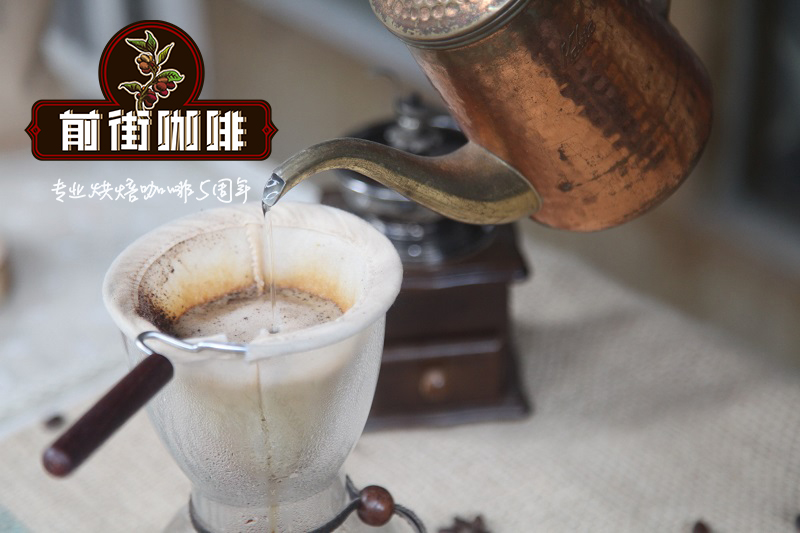
Weigh 15g of Huila Magdalena coffee and grind medium — the particles should be slightly coarser than table salt. We use a BG grinder setting 5R (60% standard sieve pass rate), water at 89°C, and a V60 dripper. We recommend a coffee-to-water ratio of about 1:15.
Pour the hot water in clockwise circles centered on the middle of the dripper, and start timing when brewing begins. Within 15 seconds, brew to 30g, then stop pouring. When the time reaches 1 minute, perform the second pour — again in clockwise circles centered on the middle of the dripper. The stream should not hit the area where the coffee meets the filter paper, to avoid channeling.
When pouring, leave a ring at the outermost edge and work circle by circle toward the center. At 2 minutes and 20 seconds, brew to 220g to finish.
Japanese-Style Iced Pour-Over Huila Magdalena
FrontStreet Coffee Iced Pour-Over Huila Magdalena Reference
Colombian Huila Magdalena, light-medium roast, BG grinder setting 5M (67% standard sieve pass rate).
Use 20g of coffee, 150g of ice cubes and 150g of hot water. The water temperature should be 1°C higher than the normal pour-over recommendation of 90°C. For a normal brew, use the small Fuji setting 3.5; for iced pour-over, use a slightly finer setting 3. We recommend a coffee-to-(water plus ice) ratio of 1:15.
Bloom with 40g of water for 30 seconds.
Segmented pouring: a first segment with 60g of water, a second with 40g. Use a relatively fine but high water column to stir forcefully so the coffee rolls fully. Be careful not to let the liquid level get too high, and avoid hitting the filter paper at the edges.
The total extraction time is about 2.5 minutes, similar to a normal brew using 20g of coffee.
FrontStreet Coffee Recommendation
To brew the Huila profile at home, FrontStreet Colombia Huila is the direct match. Huila Province, in the southern part of Colombia's Central Mountain Range, is the country's most famous specialty region, planted above 1500 meters among hills, with the country's most important rivers converging there to supply abundant water and moisture. FrontStreet uses a washed process and a medium-dark roast, giving dark chocolate and nutty sweetness, moderate oils and a full body. It is suited to pour-over and French press, and also works in a moka pot or espresso machine for Americanos and lattes.
If you want the modern, fruit-forward side of Colombia, FrontStreet Colombia Sidra from the Finca La Divisa estate uses a double anaerobic natural process. The cherries ferment whole in a sealed, pressure-resistant stainless steel tank with carbon dioxide introduced to displace oxygen, which slows sugar breakdown and the drop in pH, yielding higher sweetness, more complexity and a dense texture; they are then dried on raised beds. Roasted medium-light, it shows passion fruit, grape, apricot and dried-fruit complexity, and works for pour-over, cold brew, drip bags and moka pot.
For espresso at home, FrontStreet Specialty Blend was designed with small cafés in mind, combining Brazilian creamy-nut sweetness with Colombian dark chocolate bittersweetness. It extracts with fine golden crema and is especially good for lattes, and it also serves as the base for Americanos, cappuccinos and mochas.
Important Notice :
FrontStreet Coffee is a long-established specialty coffee roaster in Guangzhou China, selling freshly roasted beans from its own farm in Yunnan as well as dozens of carefully selected single-origin beans from around the world for both pour-over and espresso. The products deliver consistently excellent quality and great value, with shipping within 24 hours. Guangzhou's FrontStreet Coffee shop is recommended by many coffee lovers, and the beans are now available online at the Tmall 。
FrontStreet Coffee has moved to a new address:
FrontStreet Coffee Address: 315,Donghua East Road,GuangZhou
Tel:020 38364473
 Scan and follow the En Gafei WeChat official account. Please indicate that the reprint comes from "En Gafei".