How Much Does Yunnan Baoshan Coffee Cost Per Jin? What Are the Characteristics of FrontStreet Coffee's Yunnan Beans?
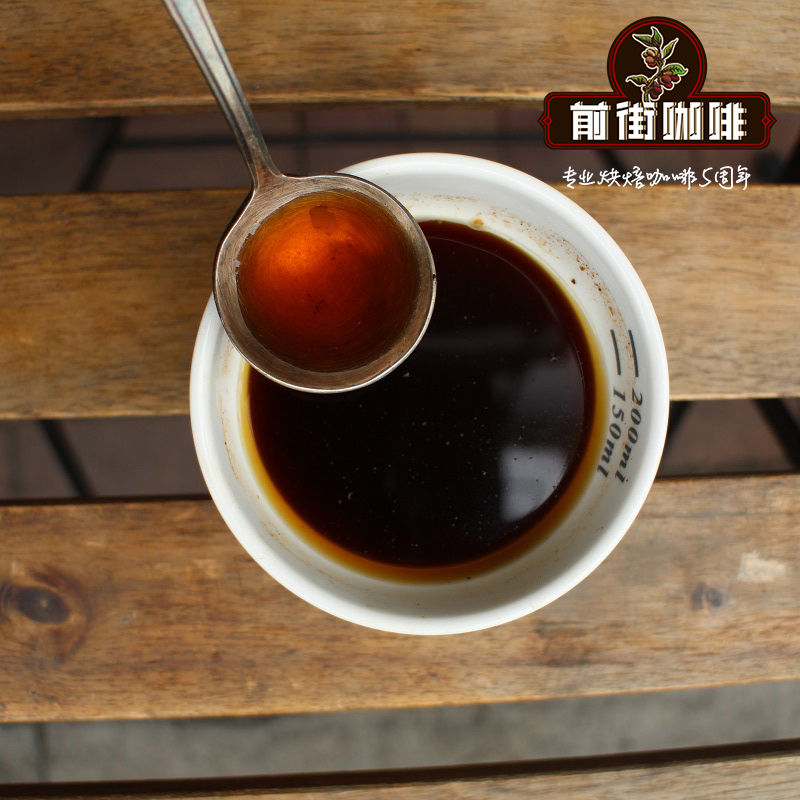
A good cup of brewed coffee should have the following characteristics. Color: clean and pure, clear and translucent. Aroma: pure without complexity, without excessive unpleasantness. Taste: distinct acidity and bitterness, smooth to swallow, with a sweet aftertaste that is not astringent. Most importantly, when a cup of coffee is consumed from hot to cold, the flavor should evolve through multiple variations and remain enjoyable; only then is it a good cup of coffee.
Yunnan Coffee Growing Region
Yunnan's coffee cultivation is mainly distributed across several areas: Lincang, Baoshan, Pu'er and Dehong. These regions combine the natural advantages of low latitude, high altitude and large day-night temperature differences, making Yunnan a golden growing area for high-quality Arabica coffee.
Baoshan City, in western Yunnan Province, is also China's largest coffee growing area. It has an average annual temperature of 21.3°C, 2334.5 hours of annual sunshine, annual rainfall of 721.51-100mm, an active accumulated temperature of 7800°C for temperatures greater than or equal to 10°C, and is basically frost-free throughout the year. It has a long history of cultivation and very rich growing experience, with more than 50 years of planting history.
Major Events in Yunnan Coffee History
First Stage
In the 1880s, the Qing government was forced to sign a treaty with France to end the Sino-French War and opened Mengzi (Mengzi County, Honghe Prefecture) as a treaty port. In 1889, the Mengzi Customs House opened, beginning the prelude to exchanges between the southwestern frontier and foreign countries. Suddenly, foreign merchants gathered, and foreign companies followed one after another.
Second Stage
In 1902, a French missionary with the Chinese name Tian Deneng brought coffee from Vietnam to a mountain village called Zhukula in Binchuan County, Dali, Yunnan Province, and planted it there. To this day, descendants of those coffee plants still survive, with ancient coffee groves telling tales of a century of history in the morning dew and evening glow.
Third Stage
In 1952, experts from the Yunnan Academy of Agricultural Sciences distributed 80kg of coffee seeds to farmers in the Nujiang River Valley of Baoshan. Several years later, they provided large-scale guidance for cultivation, which led to swaying coffee trees along the Burma Road. Because of the huge demand for supply to the Soviet Union, Yunnan's coffee cultivation developed rapidly.
Fourth Stage
In 1988, Nestlé established a joint venture in China and began supporting local coffee industry development in Yunnan through initiatives such as coffee cultivation projects, leading to another rise of Yunnan coffee. Since 1992, Nestlé has run a Coffee Agriculture Department specifically to guide and research the improvement and cultivation of Yunnan coffee, and purchases coffee according to US spot market prices. Today, not only Nestlé but also Maxwell House, Kraft, Starbucks and other coffee giants do business in Yunnan, while local coffee enterprises have gradually developed and grown.
Baoshan Arabica Coffee Recognition
Baoshan Arabica coffee was rated first-grade in the London market in the late 1950s and received the beautiful title "Lujiang No. 1". In 1980, it was recognized as "the Crown of National Coffee" at the national coffee conference. In 1987, the technical president of Switzerland's Nestlé Coffee Company, after drinking Baoshan Arabica coffee, praised it: "This is the best coffee I have had in China." In December 2010, after review by the General Administration of Quality Supervision, Inspection and Quarantine, it was decided to grant national geographical indication product protection to "Baoshan Arabica Coffee."
FrontStreet Coffee also came to Yunnan and began its own coffee cultivation. The coffee seedlings raised in the seedbed last year have now grown to 50 centimeters. This year they can be transplanted to suitable mountains to continue developing. In the near future, we will have our own home-grown coffee to drink.
FrontStreet Coffee recommends brewing with water at around 89°C, using a three-stage extraction that takes about two minutes.
The first sip reveals distinct cantaloupe, caramel and brown sugar sweetness, with overall balance.
FrontStreet Coffee Recommendation
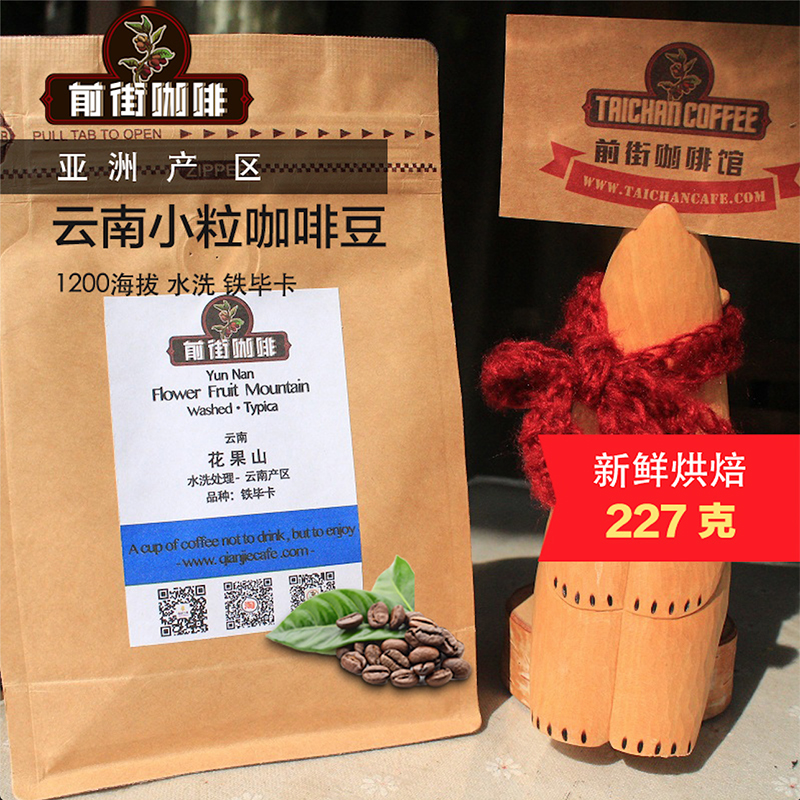
Baoshan is the classic place to begin with Yunnan coffee, and FrontStreet Coffee Yunnan Small Bean is the bottle that introduces most people to the region. It comes from the Baoshan growing area, is washed and medium roasted, and pours a gentle cup with soft nut and chocolate sweetness and a light plum acidity, at a price that makes it an easy everyday coffee. Washed processing ferments and rinses away the mucilage layer before drying, which is what lets the cup show the region's own terroir so clearly.
If you want a clearer, more layered expression of Yunnan, step up to FrontStreet Coffee 2013 Natural Typica from FrontStreet's own estate. Typica is one of the oldest and purest Arabica varieties, and the first coffee trees planted in Yunnan were also Typica, brought in by a French missionary, so this is a deliberate attempt to recover the region's original flavor. FrontStreet selects fully ripe red cherries only and dries them naturally, then roasts to medium for a more balanced cup with brighter sweet-tart fruit: dark berry tonality, caramel sweetness, chocolate and a hint of dried apricot, with a black tea finish.
Both are brewed the same way the article describes: water at around 89°C and a three-stage pour of about two minutes, which lets the cantaloupe, caramel and brown sugar sweetness come forward while keeping the cup balanced.
Important Notice :
FrontStreet Coffee is a long-established specialty coffee roaster in Guangzhou China, selling freshly roasted beans from its own farm in Yunnan as well as dozens of carefully selected single-origin beans from around the world for both pour-over and espresso. The products deliver consistently excellent quality and great value, with shipping within 24 hours. Guangzhou's FrontStreet Coffee shop is recommended by many coffee lovers, and the beans are now available online at the Tmall 。
FrontStreet Coffee has moved to a new address:
FrontStreet Coffee Address: 315,Donghua East Road,GuangZhou
Tel:020 38364473
 Scan and follow the En Gafei WeChat official account. Please indicate that the reprint comes from "En Gafei".