Guatemala Coffee Bean Pour-Over Parameters Recommendation Is Guatemala Coffee Sour
Many coffee lovers have recently fallen for the flavors of Guatemalan coffee beans, and plenty of them are now trying to brew Guatemala coffee at home. Yet they often struggle to pull out its distinctive characteristics, or they find the cup too acidic. So are Guatemalan beans actually acidic? This article walks through FrontStreet Coffee's pour-over parameters and the flavor characteristics of our Guatemalan coffee.
First, let's look at how Guatemalan coffee flavors are formed and what sets them apart. Coffee is an agricultural product, and its flavor is shaped by the topography and climate of the growing region. Variety and processing method matter too. The most distinctive trait of Guatemalan coffee is a subtle smoky note, which is tied mainly to its terrain. We'll look at those three factors in turn.
Guatemala Coffee Bean Growing Conditions
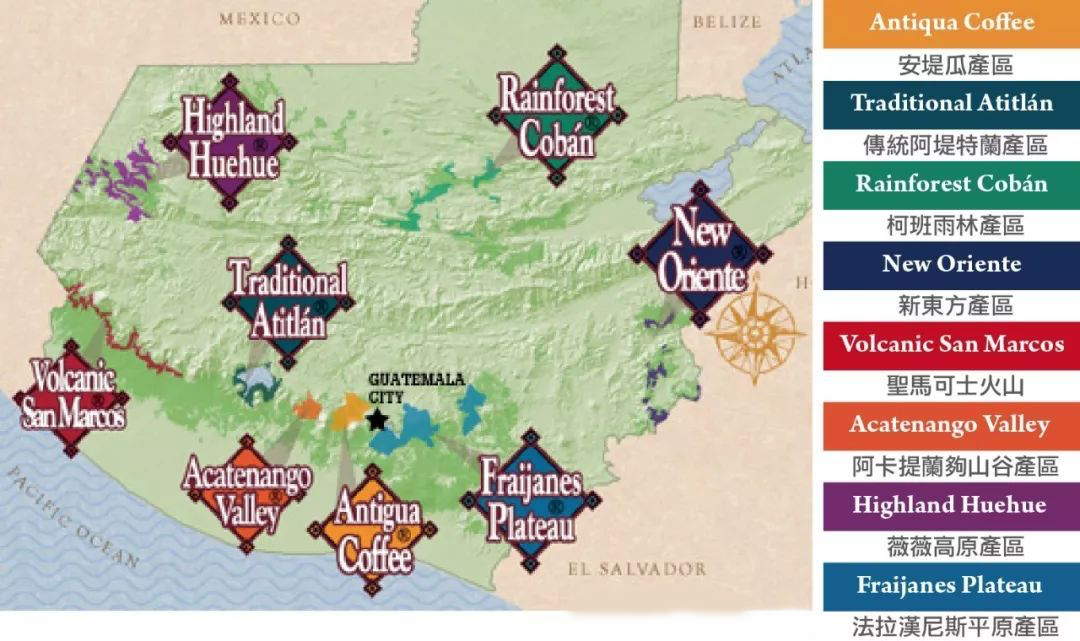
Guatemala sits on the Central American isthmus. The country is full of volcanic mountains and highland terrain, producing high-quality, high-altitude, strictly hard beans from the Central American region. Guatemala's main coffee-producing regions include Antigua, Huehuetenango, Atitlan, Coban, Fraijanes, San Marcos and Acatenango. All Guatemalan coffee is Arabica, and the most famous regions are Antigua and Huehuetenango.
Antigua
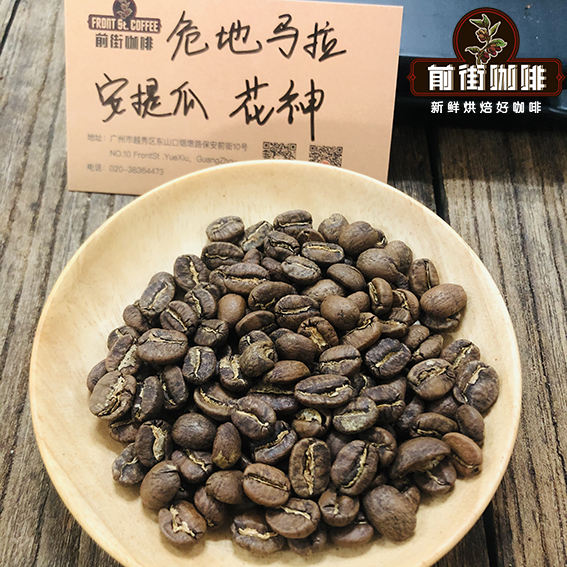
The Antigua region lies in the mountains that cross Guatemala, primarily in the Madre highlands. Thanks to its natural conditions, Antigua has become the most famous of Guatemala's eight major coffee-producing regions. Surrounded by active volcanoes at an altitude of 1,850 meters, it is the country's most awarded and renowned region.
Antigua sees low rainfall in summer and occasional winter frost from extreme cold — conditions that are not actually ideal for coffee trees. Fortunately, the region sits in an active volcanic zone. When volcanic pumice falls into the soil after an eruption and cools, its many pores retain moisture effectively. Combined with extensive shade-tree planting on the estates, the trees are protected from cold damage in winter. These factors that overcome adverse conditions, together with large day-night temperature swings, create Antigua's unique microclimate and give its beans a subtle smoky flavor with rich fruit notes. Flavor: balanced acidity and sweetness.
Huehuetenango
This region has the highest average altitude in Guatemala and belongs to the country's volcanic coffee-producing areas. It is remote, however, with rugged terrain far from the capital. Fortunately, dry, hot winds from Mexico blow into the region, allowing the Huehuetenango highlands to cultivate coffee fruit at 2,000 meters above sea level.
Guatemala Coffee Varieties
Guatemala primarily grows single-origin coffee of the Bourbon, Caturra and Catuai varieties.
Bourbon
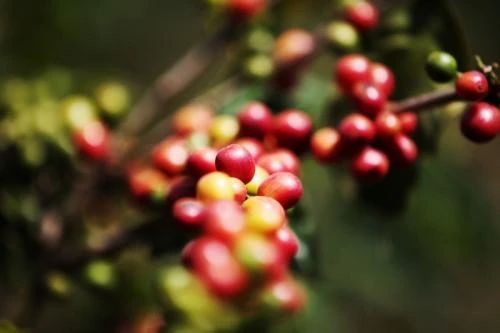
Bourbon coffee was first cultivated on Réunion Island, which was called Bourbon Island before 1789. It originates from a natural mutation of the Typica variety, which itself descends from Arabica, making it one of the oldest coffee varieties still in existence.
Typical Bourbon coffee fruit turns from green to a mature bright red, which is what we know as "Red Bourbon." The fruits are relatively small and round, which is why it's also called round-bodied Bourbon. The pulp and seeds are dense, with high sweetness and bright acidity. Besides Red Bourbon there is also Yellow Bourbon, along with the rare Orange Bourbon and the even rarer Pink Bourbon.
Caturra
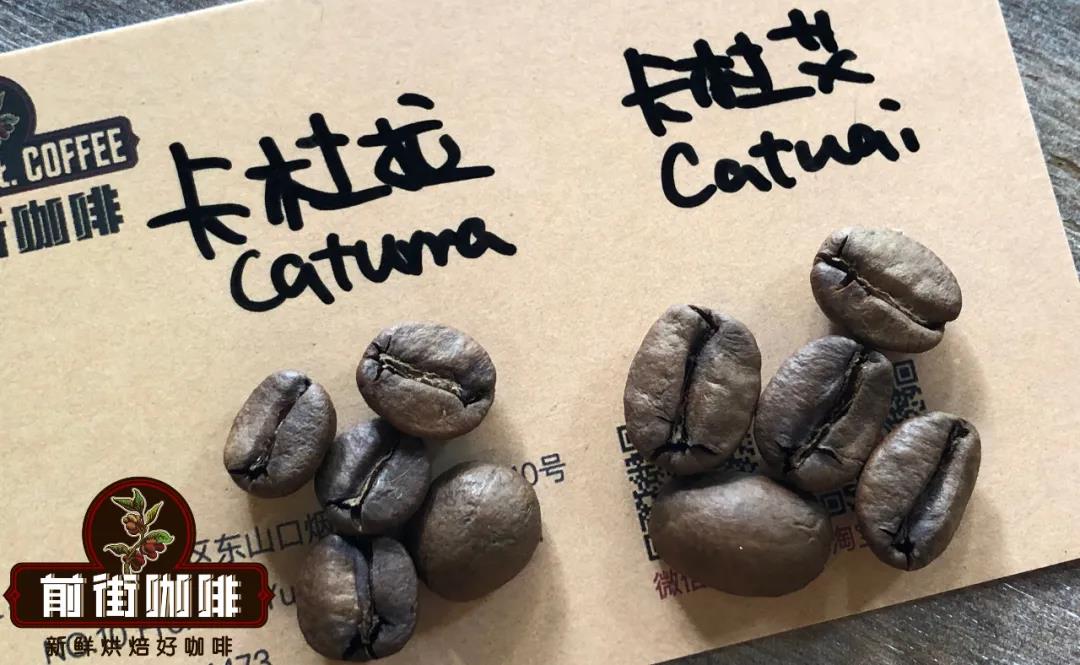
Caturra is a single-gene mutation of Bourbon, discovered in Brazil in 1937. It has better production capacity and disease resistance than Bourbon, and its shorter stature makes harvesting easier. Unfortunately, like Bourbon, it suffers from biennial production cycles. Its flavor is comparable to Bourbon, or slightly inferior. More importantly, it adapts extremely well and can thrive without shade trees, growing vigorously in direct sunlight. Commonly known as sun coffee, it tolerates high-density planting but demands more fertilizer, which raises costs — which is why farmers were slow to accept it at first.
Catuai
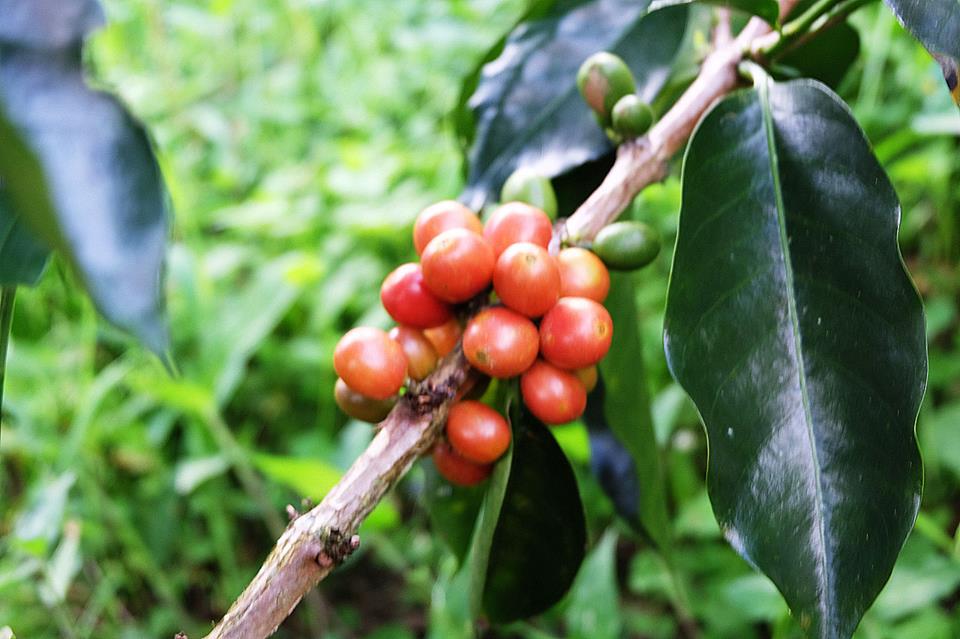
Catuai is an Arabica hybrid, a cross between Mundo Novo (New World) and Caturra. It resists natural disasters better, particularly wind and rain. It inherits Caturra's short stature, overcoming Mundo Novo's weakness, and its firm fruit does not fall easily in strong wind, addressing Arabica's fragility. Its overall flavor is more monotonous than Caturra, however, and it lacks Mundo Novo's body and richness — its greatest drawback. Its productive lifespan is only about ten years, another weakness.
Guatemala Coffee Processing Methods
Most Guatemalan coffee is processed using the washed method, with only a small share processed as natural.
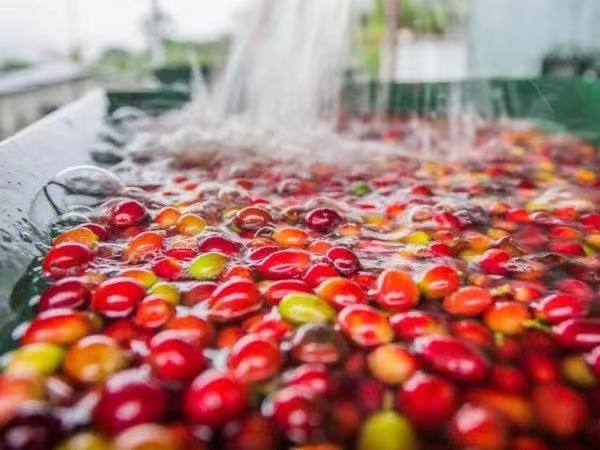
As we've mentioned in earlier articles, the washed processing method is the best way to showcase a coffee's most original flavors, and it is the starting point for understanding a region's flavor profile. That's why FrontStreet Coffee's daily blend beans are primarily washed. FrontStreet Coffee's Guatemala Huehuetenango blend beans, for example, use the washed method. Natural processing, meanwhile, adds aroma and fermentation notes on top of the base regional flavors.
Those are the three major factors that shape Guatemalan coffee flavor. FrontStreet Coffee currently offers Guatemala Antigua coffee beans and Guatemala Huehuetenango coffee beans. Next, we'll introduce both and share pour-over parameters to answer whether Guatemalan beans are actually acidic.
FrontStreet Coffee Guatemala Antigua Flora Coffee Beans
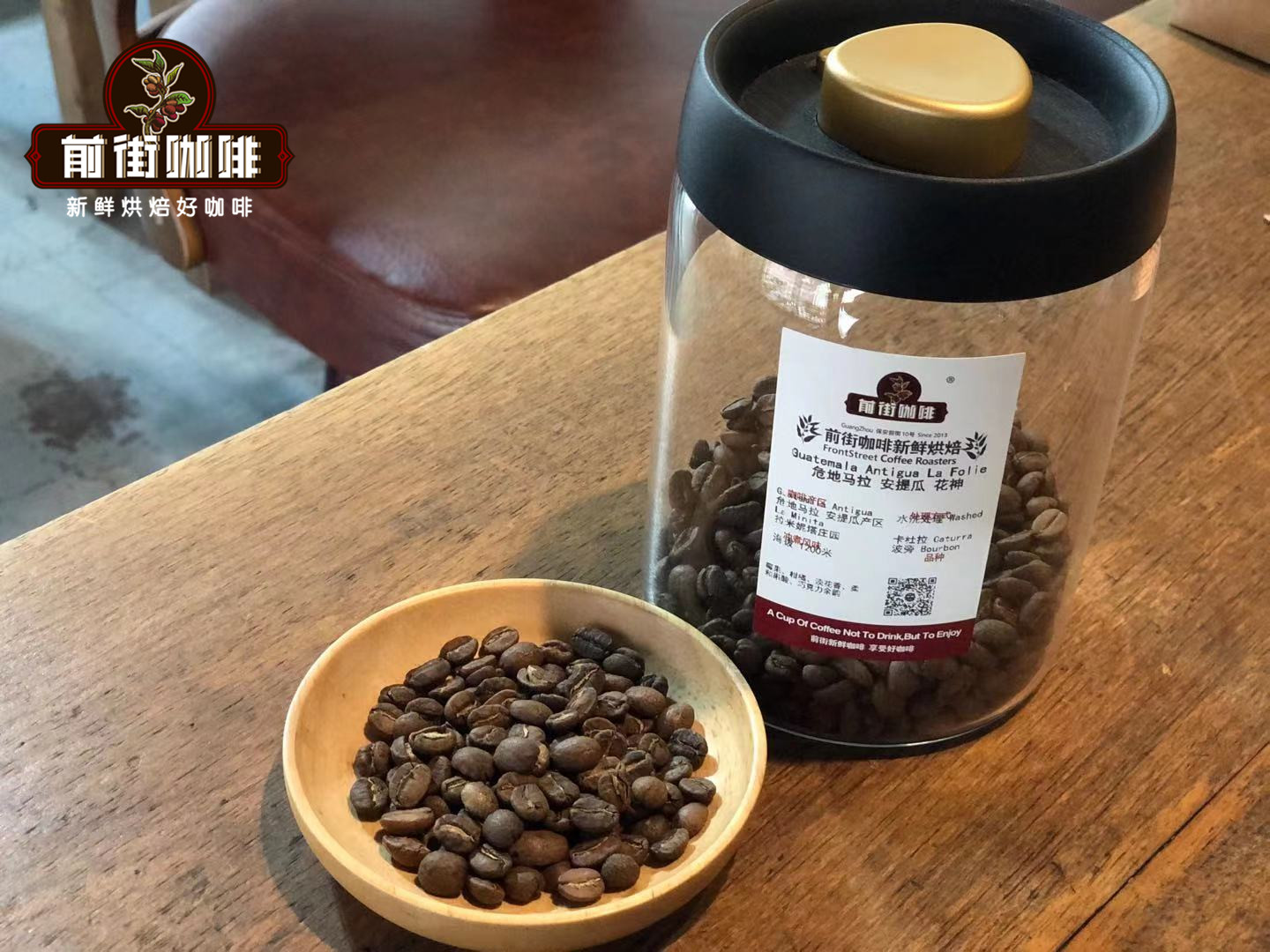
Country: Guatemala
Region: Antigua (La Minita Estate)
Altitude: 1,200-1,600m
Varieties: Bourbon, Caturra, Catuai
Processing: Washed
Flavor: Citrus acidity, bright fruit acidity, caramel aroma, slight smoky sensation.
FrontStreet Coffee Guatemala Huehuetenango Coffee Beans
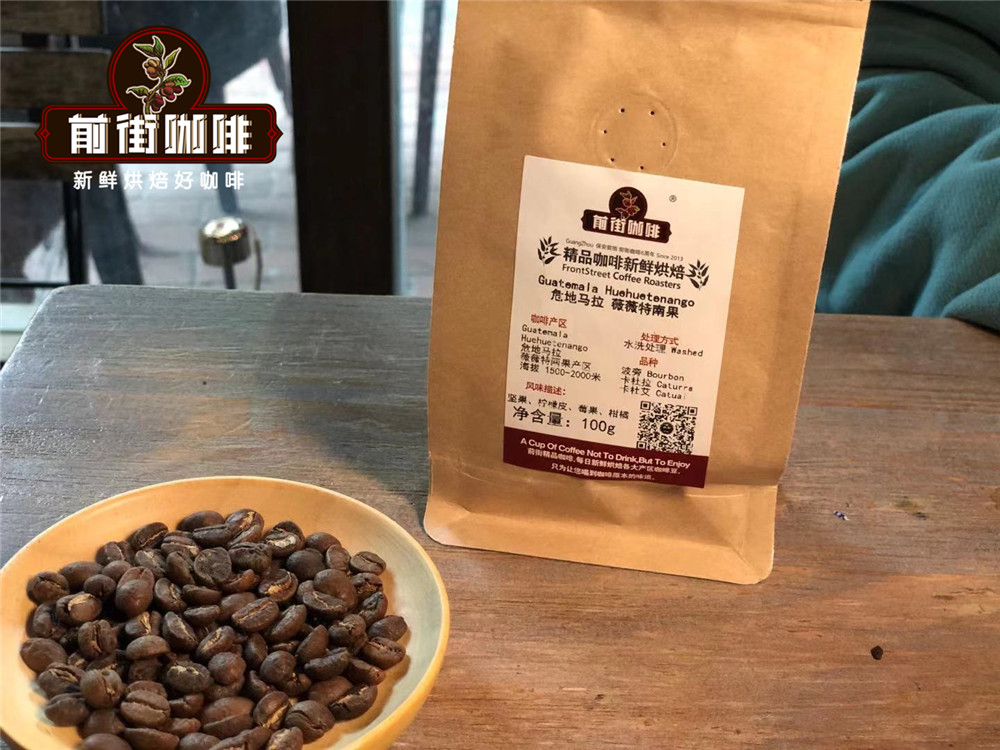
Country: Guatemala
Region: Huehuetenango
Altitude: 1,500-2,000 meters
Varieties: Bourbon, Caturra, Catuai
Processing: Washed
Flavor: Nuts, lemon peel, berries, citrus
Since both FrontStreet Coffee Guatemala beans are medium-roasted, we use the same brewing parameters to compare the flavors extracted from each.
FrontStreet Coffee Brewing Data Sharing

Filter: V60 #01
Water Temperature: 90-91°C
Dose: 15g
Ratio: 1:15
Grind Size: BG6m/medium-fine grind (80% through #20 sieve)
Brewing Method: Three-stage extraction

First stage: pour 30g of water for a 30-second bloom, then pour 95g (the scale reads around 125g), completing the pour in about 1 minute. When the water level drops to two-thirds of the coffee bed, pour the remaining 100g (the scale reads around 225g), completing the pour in about 1 minute 35 seconds. Finish drip filtration between 2'00" and 2'10", remove the filter, and the extraction is complete.

FrontStreet Coffee Guatemala Huehuetenango flavor description: citrus and berry acidity, lemon peel, nutty aromas in the middle, and a tea-like finish.
FrontStreet Coffee Guatemala Flora flavor description: prominent citrus acidity, juice-like and bright, rich floral notes, pleasant sweetness and medium body, with slight caramel and smoky notes in the finish. Overall clean and gentle, with a smooth texture and balanced, lively, complex layers.
Are Guatemala Coffee Beans Acidic?
As the comparison shows, both beans share the same varieties and processing method, yet different altitudes and regions give them different flavors. Coffee is an agricultural product, after all, and its flavor shifts with regional geography, soil and microclimate — one of the real charms of the bean.
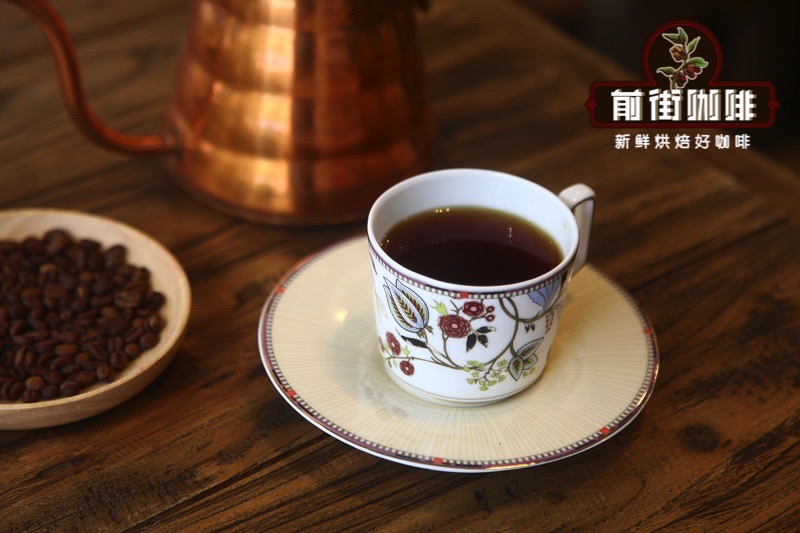
Both beans do carry noticeable acidity, so it is normal for home brewers using FrontStreet Coffee's pour-over parameters to get a cup with acidic notes. Guatemalan beans are grown at relatively high altitudes, and one characteristic of high-altitude coffee is that the higher the altitude, the more pronounced the acidity. This is also one of the traits of Arabica.
FrontStreet Coffee Recommendation
Guatemalan beans reward a fast, high-clarity pour-over, and a V60 is the natural partner. FrontStreet Ethiopia Natural Huakui, from the Hambella area of Guji, Sidamo, is a traditional natural that fits that style perfectly — berry, floral, jackfruit, melon and honey, with the ripe tropical-fruit character that Sidamo naturals are known for. If you want the brighter, juicier end of the spectrum, FrontStreet Kenya Cherry Tomato comes from Kenya's Thika region at 1,550-1,750 meters, grown from the classic SL28 and SL34 varieties, given a 72-hour double washed fermentation, then roasted light to keep its lively acidity and complex fruit layers intact. Both are floral-fruity coffees that a V60 draws out clearly.
Important Notice :
FrontStreet Coffee is a long-established specialty coffee roaster in Guangzhou China, selling freshly roasted beans from its own farm in Yunnan as well as dozens of carefully selected single-origin beans from around the world for both pour-over and espresso. The products deliver consistently excellent quality and great value, with shipping within 24 hours. Guangzhou's FrontStreet Coffee shop is recommended by many coffee lovers, and the beans are now available online at the Tmall 。
FrontStreet Coffee has moved to a new address:
FrontStreet Coffee Address: 315,Donghua East Road,GuangZhou
Tel:020 38364473
 Scan and follow the En Gafei WeChat official account. Please indicate that the reprint comes from "En Gafei".