How to Calculate the Water-to-Coffee Ratio for Pour-Over Brewing of El Salvador HIU Harar Coffee
Coffee Origin Information
For more professional coffee knowledge and coffee bean information, please follow Coffee Workshop.
Origin: El Salvador
Estate: Las Camelias Estate
Altitude: 1800m
Variety: Harar Heirloom
Processing: Natural
Roast Level: Medium
Flavor Notes: Cocoa, Citrus, Whiskey Aroma
About the Coffee Variety
Growing heirloom coffee from Ethiopia's Harar region in El Salvador, Central America, produces remarkably different flavor characteristics after harvest and processing. The flavor profile is quite special and interesting, making it well worth trying.
Las Camelias Estate in El Salvador is located on the Apaneca-Ilamatepec volcano at an altitude exceeding 1,600 meters. From farm management to cupping data, Las Camelias Estate demonstrates excellence in every respect.
For this batch of Harar heirloom coffee beans, farmers remove the outer skin of fully ripe cherries and dry them on clay patios, periodically turning the beans to ensure complete drying.
About the HIU Program
The HIU (High Quality Unique) program is a development initiative aimed at improving coffee quality for small farms. It has produced over 500 unique, specially crafted micro-lot coffees in El Salvador and Panama. Founder Graciano Cruz established this operating model based on years of coffee production experience, collaborating with farmers, producers, and exporters to develop from terroir origins, with the goal of creating excellent quality batches (cupping scores of at least 85 points or higher) tailored to meet consumer needs.
HIU first identifies unique products and producers based on variety, terroir microclimate, local customs, culture, or processing methods. Through cupping, they confirm green bean quality and establish flavor profiles. Before cooperation begins, producers understand HIU's program principles and standards, jointly planning quality and yield improvements. Throughout the process, they enhance production techniques by educating farmers on relevant knowledge, testing the sugar content of ripe cherries, implementing eco-friendly processing methods, and constructing equipment to improve drying conditions.
The HIU program establishes a complete production chain, ensuring each batch has identifiable and traceable characteristics: quality and batch grading through cupping, special packaging in 50-pound units (vacuum-sealed boxes) or 100-pound units (GrainPro bags), maintaining traceability for each batch, and providing roasters with coffee flavor profiles and producer information.
How to Brew Salvadoran Coffee [HIU Program Harar]
FrontStreet Coffee Pour-Over Reference:
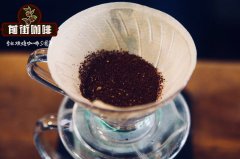
Weigh 15g of [HIU Program Harar] coffee grounds and grind to medium coarseness, with particles slightly coarser than table salt. We use a BG grinder setting 5R (60% standard sieve pass rate) with water at 89 degrees Celsius, extracted using a V60 dripper.
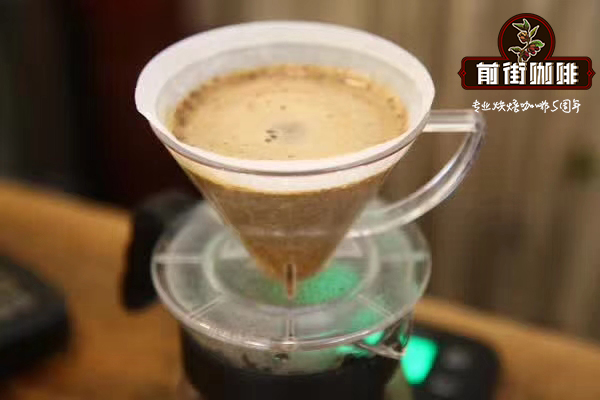
Pour hot water from the pour-over kettle in clockwise circles centered on the middle of the filter. Start timing when brewing begins. In 15 seconds, brew the coffee to 30g, then stop pouring. When the time reaches 1 minute, begin the second pour. Like the first pour, move in clockwise circles centered on the filter middle, ensuring the water stream does not hit where the coffee grounds meet the filter paper, to avoid channeling.
Leave a small circle at the outer edge when pouring over the coffee grounds, then continue brewing in circles toward the center. By 2 minutes and 20 seconds, brew the coffee to 220g to complete the brewing process.
Japanese-Style Iced Pour-Over [HIU Program Harar]
FrontStreet Coffee Iced Pour-Over [HIU Program Harar] Reference:
Salvadoran coffee [HIU Program Harar], medium roast, BG grinder setting 5M (67% standard sieve pass rate).
20g coffee grounds, 150g ice, 150g hot water. The water temperature should be 1 degree Celsius higher than the normal pour-over recommendation of 90 degrees. Normal grinding uses a Fuji 3.5 setting, while iced pour-over uses a slightly finer grind, Fuji 3.
Bloom with 40g of water for 30 seconds.
Segmented pouring: first segment 60g of water, second segment 40g of water. Use a fine but tall water stream to stir and impact forcefully, ensuring the coffee grounds roll fully. Be careful not to let the liquid level get too high or hit the filter paper at the edges.
The entire extraction time is approximately 2.5 minutes (similar to the normal extraction time for 20g of grounds).
FrontStreet Coffee Recommendation
Panama's growing regions sit in the west of the country at Boquete, Volcan, Santa Clara, and Piedra de Candela, with Boquete and Volcan the most familiar names in specialty coffee. Both lie in Chiriqui Province, squarely in the coffee belt, with fertile volcanic soil and ancient forests. FrontStreet Coffee's Boquete Washed Geisha is an estate-level entry into the variety: planted at 1,600 meters on rich volcanic ash soil, it brews with Geisha's signature jasmine, green tea, honey, citrus, and orange flavors. The higher the planting altitude, the longer the fruit matures and the more nutrients it absorbs, so the flavor becomes richer and more distinctive.
For a fruitier, juicier take, FrontStreet Coffee's Panama Washed Butterfly carries half of Geisha's fine lineage, composed of Geisha, Caturra, and Catuai and grown in the Baru Volcano area of Boquete. Panama's special microclimate brings abundant rainfall and wide day-night temperature swings, and combined with the region's volcanic rock soil and careful harvesting and processing, the coffee shows outstanding body, citrus acidity, and Geisha's jasmine aroma. It is excellent as both pour-over and cold brew.
And if you want the very top of the range, FrontStreet Coffee's Emerald Estate Red Label Geisha is harvested from a single plot at 1,700 meters and above, with a cupping score of 91 and a refined tangerine-and-honey character. The Emerald Estate both discovered and popularized the Geisha flavor, and its Red, Green, and Blue labels represent carefully graded tiers, with the Red Label reserved for the estate's most precise, highest-altitude lots.
Important Notice :
FrontStreet Coffee is a long-established specialty coffee roaster in Guangzhou China, selling freshly roasted beans from its own farm in Yunnan as well as dozens of carefully selected single-origin beans from around the world for both pour-over and espresso. The products deliver consistently excellent quality and great value, with shipping within 24 hours. Guangzhou's FrontStreet Coffee shop is recommended by many coffee lovers, and the beans are now available online at the Tmall 。
FrontStreet Coffee has moved to a new address:
FrontStreet Coffee Address: 315,Donghua East Road,GuangZhou
Tel:020 38364473
 Scan and follow the En Gafei WeChat official account. Please indicate that the reprint comes from "En Gafei".