El Salvador Loma La Gloria Estate Honey Process Coffee Brewing Analysis | How to Brew Loma La Gloria Estate Pour-Over Coffee
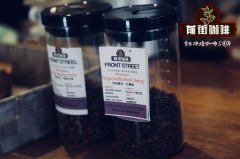
El Salvador Coffee - Finca LOMA LA GLORIA Estate Micro-lot RED BOURBON S.H.G (LOT5)
Special Note: This coffee comes from a micro-lot with limited availability. So that more customers can taste it, we offer it in small quantities. First come, first served.
Origin Introduction
El Salvador sits in Central America, bordered to the north by Guatemala and Honduras, with Pacific coastline to the west and south. It is the smallest country in Central America and also the most densely populated.
Small as it is, El Salvador holds dozens of volcanoes, giving it the highest volcanic density in the world and the nickname "Land of Volcanoes." The country's average elevation is relatively high, which creates ideal conditions for coffee growing. The western region, near Guatemala, is the main coffee-producing area.
Coffee in El Salvador is mostly grown by small-scale farmers using traditional methods: nearly 100% is shade-grown. The harvest season runs from November through March of the following year, and every cherry is picked by hand.
Overall, El Salvador coffee carries the mild quality of Central American coffee — generally soft, lightly acidic, with pleasant sweetness. But it has its own signature, too: aromatic flavor with a light acidity and an exceptionally smooth texture; a clean cup free of impurities with excellent balance; an impressive creamy, chocolate-like smoothness; and a rich mouthfeel that gives the coffee depth and a long, lingering aftertaste.
Grading is based on growing altitude, with SHG the highest grade:
SHG (Strictly High Grown): 1200 meters above
HG (High Grown): 900 meters above
CS (Central Standard): 600 meters above
BOURBON is a natural genetic mutation of TYPICA and ranks alongside it as an ancient, superior variety. Bourbon typically shows distinct berry-like acidity, a light body, an overall balanced palate, and noticeable fruity sweetness.
The greatest thing Bourbon and Typica share is that their growing regions need shade trees to block intense sunlight. Without shade trees, these two ancient varieties will not grow well or develop their flavors properly. That is also why Bourbon yields are not high.
El Salvador Coffee Estate Introduction
The estate sits on the slopes of the San Salvador Volcano, part of the Quezaltepec mountain range, overlooking the Quetzaltepec Valley. The processing plant stands at an altitude of 1430 meters, from where you can take in the volcano's highest point — the Pico de Aguila, 1960 meters above sea level.
Finca Loma La Gloria Estate spans an altitude range of roughly 1200–1770 meters. Near the estate's highest point lies a volcanic crater called El Boquerón. You can drive to Finca Loma La Gloria Estate and then hike up to reach El Boquerón.
The estate enjoys a unique location and microclimate: fertile volcanic ash soil, cool nighttime temperatures, moderate sunlight (plenty of sun filtering through the shade trees onto the coffee plants), and excellent rainwater drainage.
Finca Loma La Gloria Estate grows only Arabica varieties: Bourbon and Pacamara. Every coffee tree on the estate is shade-grown, which supports local economic sustainability and biodiversity while also helping produce better-quality beans.
The estate's goal is to guarantee coffee quality and traceability. In the 2013/2014 production season, it began running its own processing equipment (wet mill and huller).
Traditional washed methods are used: first, the cherries are washed in water tanks to screen out unripe beans and other defects, then the pulp is removed with a depulper and washed again. Next, the beans are fermented in dedicated fermentation tanks, after which they are placed on specialized raised drying beds. The estate has increased both the number and the area of its raised beds to ensure quality control through the drying stage.
All of this equipment sits within the estate, so the entire process can be finished on-site as quickly as possible, keeping coffee quality controllable and fully traceable.
How to Brew El Salvador Coffee [Lomas Estate Honey Process] Well?
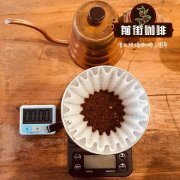
FrontStreet Coffee Hand-pour Reference: Weigh 15g of [Lomas Estate Honey Process] coffee and grind it to a medium grind size. The particles should be slightly coarser than table salt. We use BG grinder setting 5R (60% standard sieve pass rate), water temperature 89°C, and a V60 dripper for extraction.
Using the hot water from the pour-over kettle, pour in clockwise circles centered on the middle of the dripper. Start timing as you begin brewing. Within 15 seconds, brew the coffee up to 30g, then stop pouring. When the clock reaches 1 minute, begin the second pour. For the second pour, just as before, pour in clockwise circles centered on the middle of the dripper. Avoid pouring where the coffee meets the filter paper, to prevent channeling.
When you reach the outermost edge of the coffee bed, leave one circle, then keep pouring in circles back toward the center. By 2 minutes and 20 seconds, brew the coffee up to 220g. The pour is complete.
Japanese-style Ice Pour-over [Lomas Estate Honey Process]
FrontStreet Coffee Ice Pour-over [Lomas Estate Honey Process] Reference:
El Salvador Coffee [Lomas Estate Honey Process], medium roast, BG grinder setting 5M (67% standard sieve pass rate)
20 grams of coffee, 150 grams of ice, 150 grams of hot water. The water temperature should be 1°C higher than the normal pour-over recommendation of 90°C. For a normal grind use small Fuji setting 3.5; for ice pour-over, grind slightly finer by half a setting — small Fuji setting 3.
Bloom with 40 grams of water for 30 seconds.
Pour in segments: a first segment of 60 grams of water, then a second segment of 40 grams. Use a fine but high water column, stirring forcefully so the coffee grounds roll completely. Be careful not to let the liquid level rise too high or to pour onto the edge filter paper.
The entire extraction should take approximately 2.5 minutes (similar to the normal extraction time for 20 grams of coffee).
FrontStreet Coffee Recommendation
A honey-process micro-lot like this one really rewards a V60. The Hario V60 was designed by Hario — founded in Tokyo in 1921 as a maker of heat-resistant glassware and lab equipment — and Hario redesigned the early prototype in 2004, naming it for its distinctive 60° cone angle and "V" shape before bringing it to market a year later. Its single large hole lets water flow freely, so the flow rate depends largely on the brewer's control and shows up directly in the cup. That fast extraction is exactly what lifts out the layered aromatics and lively acidity of delicate coffees, which is why floral-and-fruity beans shine on a V60.
If you enjoy this style, FrontStreet's Ethiopia Huakui is a great companion: it is one of the standout stars of recent specialty coffee, packed with tropical fruit — strawberry, passion fruit, jackfruit, even lychee — with clear sweetness and almost no bitterness, so smooth and juicy that many drinkers call it "the coffee that doesn't taste like coffee."
For a brighter, more savory profile, try FrontStreet's Kenya Cherry Tomato, a washed Kenyan single origin from the Sika region, grown at 1,550–1,750 meters from the classic SL28 and SL34 varieties. Its signature 72-hour double washed fermentation draws out the fruit while keeping the cup clean, and a light roast preserves the vivid acidity. You get cherry tomato and smoked plum on the nose and palate, a juicy body, mid-palate sweetness with pear and black plum, and a long, clean finish of yellow sugar and green tea.
And if you are ready to taste the top of the category, FrontStreet's Panama Esmeralda Red Label Gesha is the legendary choice: elegant jasmine florals with citrus, bergamot, and fine black-tea notes, a clean and transparent body, and a long, layered finish that has kept it a bucket-list cup for coffee lovers.
Important Notice :
FrontStreet Coffee is a long-established specialty coffee roaster in Guangzhou China, selling freshly roasted beans from its own farm in Yunnan as well as dozens of carefully selected single-origin beans from around the world for both pour-over and espresso. The products deliver consistently excellent quality and great value, with shipping within 24 hours. Guangzhou's FrontStreet Coffee shop is recommended by many coffee lovers, and the beans are now available online at the Tmall 。
FrontStreet Coffee has moved to a new address:
FrontStreet Coffee Address: 315,Donghua East Road,GuangZhou
Tel:020 38364473
 Scan and follow the En Gafei WeChat official account. Please indicate that the reprint comes from "En Gafei".