Yirgacheffe Adado Pour-Over Techniques_Sharing Natural Process Adado Coffee Brew Ratio and Grind Size Recommendations
Yirgacheffe Coffee: The Representative Work from Ethiopia, the Birthplace of Coffee
A small town under the Sidamo province, a specialty producing area. It has captivated countless coffee enthusiasts with its unique fruit flavor and sweet-tart sensation.
Although Ethiopia's Yirgacheffe beans are small in size, they are delicate, elegant, sweet, and charming. As the homeland of coffee, Ethiopia's thousand-year history of cultivation and processing traditions has produced high-quality washed Arabica beans. Light roasting reveals unique lemon, floral, and honey-like sweet aromas, with soft fruit acidity and citrus flavors, creating a fresh and bright taste. Without milk or sugar, the rich texture and unique soft floral notes sweep across your taste buds, leaving an endless aftertaste.
Yirgacheffe is a small town situated at an altitude of 700-2100 meters, synonymous with Ethiopia's specialty coffee. It has been a wetland since ancient times; the ancient word "Yirga" means "settle down," and "Cheffe" means "wetland." The production methods and flavors here are so outstanding that Ethiopian coffee farmers compete to proudly claim their coffee carries Yirgacheffe characteristics, making it Africa's most renowned coffee-growing region.
Yirgacheffe Coffee - Sun-dried Adado
Tropical fruits, raisin notes, smooth texture.
Yirgacheffe Adado comes from the Gedeo region of Ethiopia. This area consists of a cooperative of 7,000 coffee farmers. Adado is actually the tribal name of this region. To be more specific, the Gedeo zone is one of the regions in the Southern Nations, Nationalities, and Peoples' Regional State of Ethiopia. Both Yirgacheffe and Kochore are located within it. Within the Yirgacheffe region, the main producing areas include Aricha, Koke, Adado, and Konga, as well as Michille, Hama, and Tumticha. The Beloya estate is located in Kochore and later joined the Yirgacheffe Coffee Farmers Cooperative Union.
Adado is a surprising micro-producing area in Yirgacheffe. When you open the bag, the air fills with abundant blueberry and vanilla aromas. After roasting and grinding, these aromas disperse explosively once again; this is truly a "blueberry bomb." The first sip delivers rich blueberry flavors with a hint of balanced fruit acidity, typical of sun-dried coffee. The cup is sweet, filled with soft, delicate floral notes. Simply put, this is an admirable cup of coffee: rich fruit aromas, sweetness that never loses its delicate floral essence.
How Does FrontStreet Coffee Brew Yirgacheffe Adado Coffee Well?
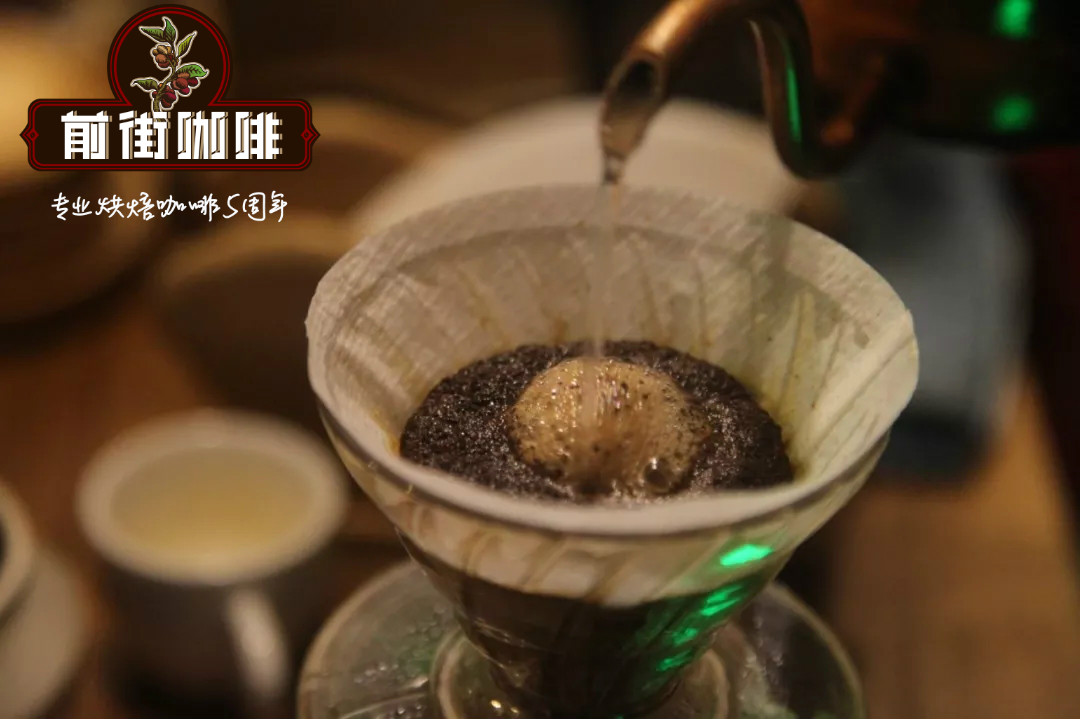
FrontStreet Coffee's pour-over recommendation: weigh 15g of Adado grounds and pour into a grinder for a medium grind. The particles should be slightly coarser than table salt; we use a BG grinder setting of 5R (standard sieve pass rate 60%). Water temperature of 90°C, extracted with a V60 dripper.
Using the hot water from the kettle, draw clockwise circles with the filter center as the focus. Start timing when brewing begins. Within 15 seconds, brew the coffee to 30g, then stop pouring. When the time reaches 1 minute, begin the second pour, again drawing clockwise circles with the filter center as the focus. Avoid pouring water onto the area where the grounds meet the filter paper, to prevent channeling.
Leave a ring of space when pouring to the outermost layer of grounds, then draw circles back toward the center. At 2 minutes and 20 seconds, brew the coffee to 220g to complete the brew.
Japanese-Style Ice Pour-Over [Adado]
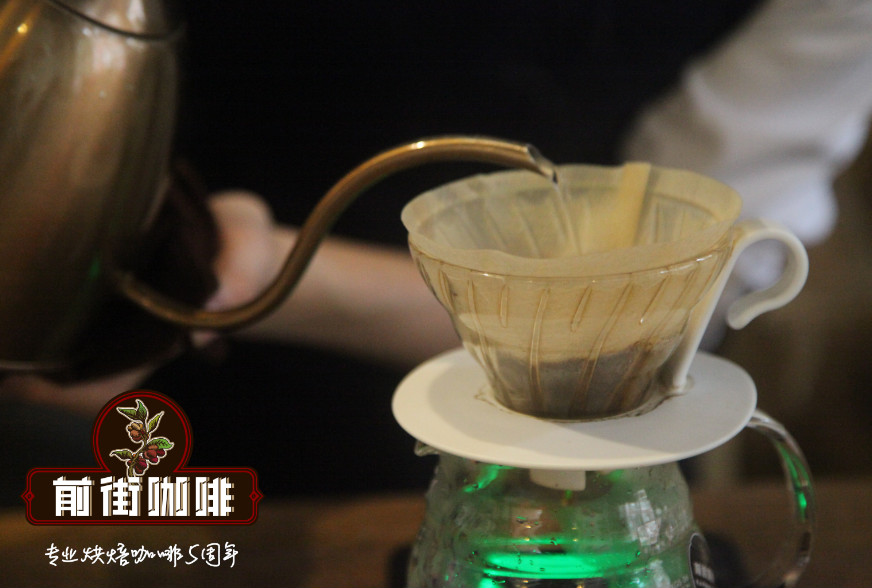
FrontStreet Coffee's ice pour-over [Adado] recommendation:
Yirgacheffe Coffee [Adado], light-medium roast, BG grinder setting 5M (standard sieve pass rate 67%).
20g of grounds, 150g of ice cubes, 150g of hot water. Water temperature should be 1°C higher than the normal 91°C recommended for standard pour-over. Normal grinding uses a Fuji 3.5 setting, while ice pour-over requires a slightly finer grind, Fuji setting 3.
Bloom water amount: 40g; bloom time: 30 seconds.
Segmented pouring: the first segment 60g of water, the second segment 40g of water. Use a relatively fine but high water column, applying force to stir and impact, allowing the grounds to tumble fully. Be careful not to let the liquid level get too high, and avoid pouring onto the edge filter paper.
The entire extraction time is approximately 2.5 minutes (similar to the normal extraction time for 20g of grounds).
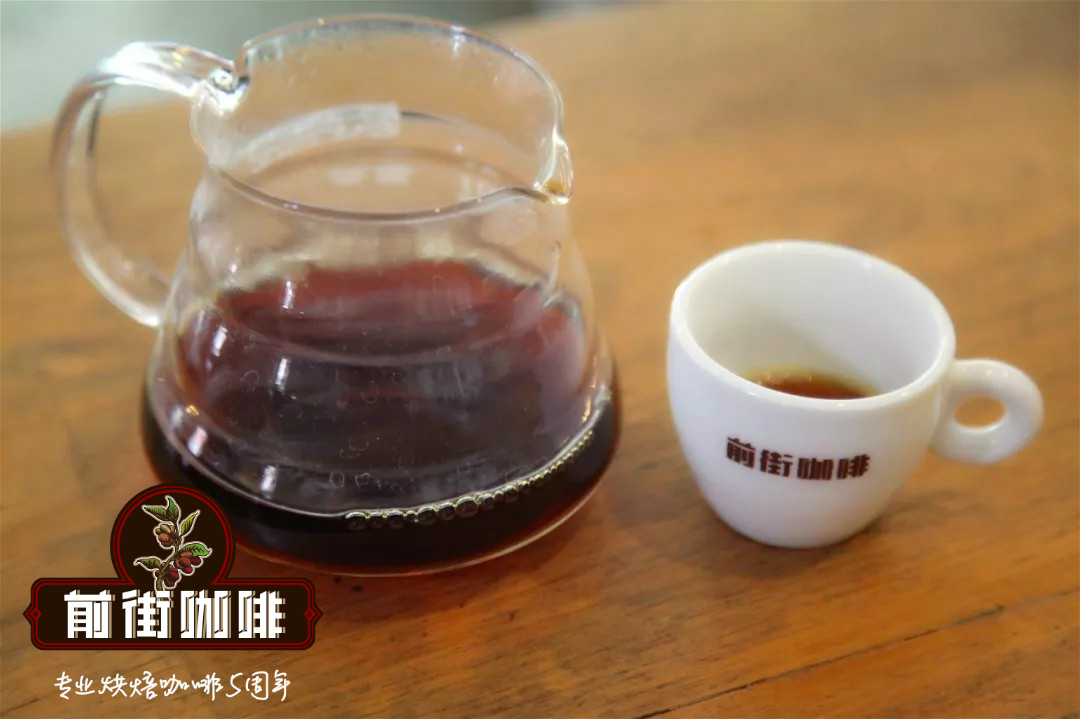
FrontStreet Coffee Recommendation
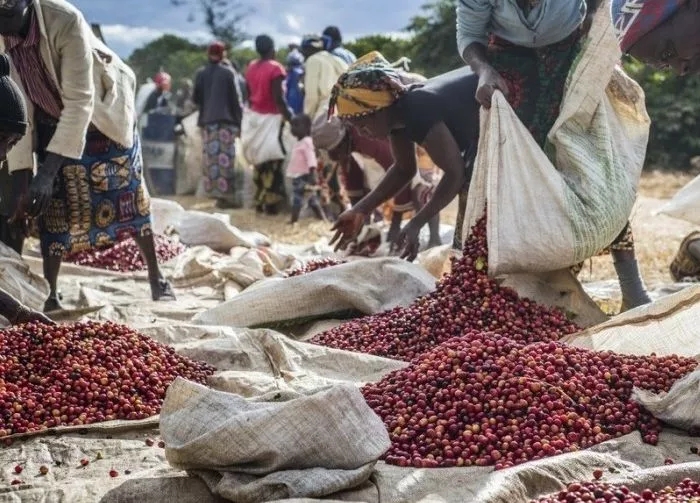
For a naturally processed Yirgacheffe with this much fruit and sweetness, FrontStreet Natural Red Cherry is a close match. It is made from fully ripe whole red cherries dried in the natural style: only fully mature fruit with no defects is accepted, given a first screening at the processing station, then spread out to dry on raised beds. During the first few days the cherries are turned once every 2-3 hours to prevent uneven heat and over-fermentation. After three to five weeks of sun-drying, workers strip away the outer pulp depending on weather and temperature, and the beans are moved into storage. Because the fruit dries with the pulp attached, the cup keeps the classic Yirgacheffe character while gaining tropical fruit from natural processing, showing citrus-like acidity, a berry-juice quality, honeyed sweetness, and a creamy smoothness.
To compare the washed style, FrontStreet Washed Yirgacheffe is the most classic introduction to the region, known for white jasmine, bright citrus and lemon acidity, and a tea-like body. Its accessible price has made it the first specialty coffee bean for many drinkers, and it is an easy way to taste how washing sharpens the region's citrus and floral notes.
For pour-over, FrontStreet Coffee recommends a V60 dripper, 90-91°C water, 15g of coffee, and a 1:15 ratio, ground to an EK43s setting of 10 (fine sugar size, with 80% passing a No. 20 sieve). Pour 30g of water for a 30-second bloom, then add 95g (about 125g on the scale) over roughly one minute. When the water drops to about two-thirds of the coffee bed, pour the remaining 100g (about 225g on the scale), and finish the drawdown at 2:00-2:10.
Important Notice :
FrontStreet Coffee is a long-established specialty coffee roaster in Guangzhou China, selling freshly roasted beans from its own farm in Yunnan as well as dozens of carefully selected single-origin beans from around the world for both pour-over and espresso. The products deliver consistently excellent quality and great value, with shipping within 24 hours. Guangzhou's FrontStreet Coffee shop is recommended by many coffee lovers, and the beans are now available online at the Tmall 。
FrontStreet Coffee has moved to a new address:
FrontStreet Coffee Address: 315,Donghua East Road,GuangZhou
Tel:020 38364473
 Scan and follow the En Gafei WeChat official account. Please indicate that the reprint comes from "En Gafei".