Washed Yirgacheffe Red Cherry Idido Coffee Pour-Over Powder-to-Water Ratio Recommendation_How to Brew Washed Yirgacheffe Well
Professional Coffee Knowledge Exchange
FrontStreet Coffee brings you coffee bean knowledge from the field.
Yirgacheffe Coffee - Idido Processing Station Red Cherry Project
In late October 2017, we traveled with our green bean partner China Tea to Ethiopia, the birthplace of coffee. Through DWD Company, our partner of the past two years, we visited renowned regions including Sidamo, Yirgacheffe, and Guji. DWD operates 17 processing plants in the Sidamo region — the most of any company in the existing Sidamo producing area. During the trip we learned that excessive early rainfall had significantly delayed the 2017/2018 harvest, pushing it nearly 3 weeks later than the 2016/2017 season. The upside: the extended ripening period raised the sweetness of the coffee cherries somewhat, giving the new season's Ethiopian coffees more abundant flavors than the year before.
When we arrived, we happened to catch the Dutch company Trabocca messaging processing plants, asking them to specially process batches of fully red cherries for selection. The selected batches became what the market now knows as the "Red Cherry Project" (ORC). The plants, however, were not enthusiastic about these so-called "projects," mainly because returns were low and market risk high: once high-priced fully red cherries were processed but failed selection, they could essentially only be sold blended into other, non-fully-red lots. Trabocca's purchase volumes were also relatively small, and small processing runs hurt the plants' cost control. On top of that, the ECX's strict export management required selling to ECX first and buying back from ECX under a first-in-first-out principle, which further reduced the plants' willingness to participate.
Learning of this, our green bean partner China Tea immediately approached DWD with a proposal: customize a batch of fully red cherries for us using three processing methods — washed, natural, and honey. We specified the processing methods, and promised to purchase everything at prices no lower than Trabocca's, regardless of the outcome. This year's washed fully-red-cherry program ran in two batches, sourced from two of DWD's 17 stations: Yirgacheffe Idido and Sidamo Shantawene, at altitudes of 1960m and 1950m respectively. The Idido station, built in 2012, covers an area of over 200 mu, making it DWD's large-scale plant in the Yirgacheffe region, about a 30-minute drive from the center of Yirgacheffe town. It is well equipped, runs both washed and natural processing, and has plenty of shaded drying beds.
All fully red cherries for the washed batches come from the middle to late stages of the harvest (early December to early January), guaranteeing the cherries come from higher-altitude areas (over 2000m). They are washed the same day they are picked — and since cherries typically arrive at the station in the afternoon, most of the washed processing happens at night.
The fully red cherries are machine-depulped, then go into washed fermentation tanks for 36-48 hours (adjusted for temperature and humidity), before being moved to drying beds. After 8-10 days of drying, once moisture drops to 12%, the beans are warehoused. The green coffee then continues through a controlled humidity-and-temperature storage "rest" in parchment until dehulling and screening, right before export.
How to Brew Yirgacheffe Coffee [Idido Processing Station Red Cherry Project]?
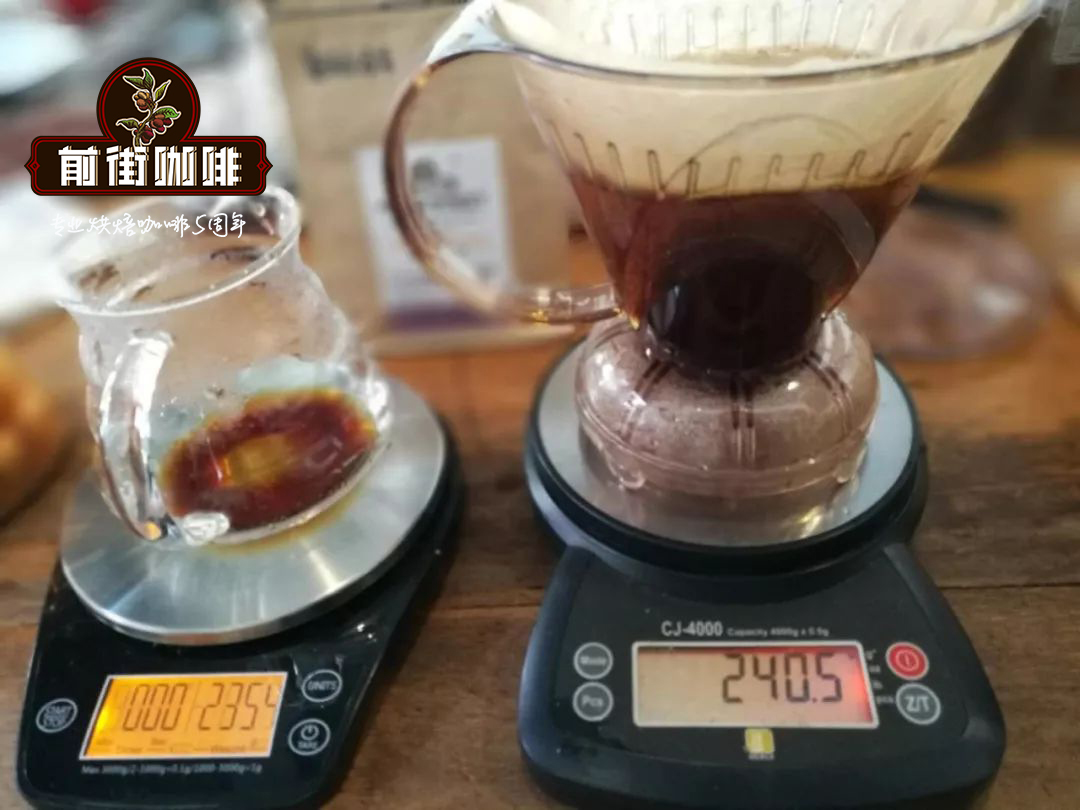
FrontStreet Coffee's pour-over reference: weigh 15g of [Idido Processing Station Red Cherry Project] coffee and grind to a medium consistency — particles slightly coarser than table salt. We use BG grinder setting 5R (60% standard sieve pass rate), water at 90°C, and a V60 dripper.
Pour hot water from the kettle in clockwise circles centered on the middle of the cone, starting the timer as you begin. Reach 30g within 15 seconds, then stop pouring. At the 1-minute mark, begin the second pour — again clockwise circles from the center, keeping the stream away from the seam where grounds meet filter paper to avoid channeling.
Leave the outermost ring untouched, then work circle by circle toward the center. At 2 minutes and 20 seconds, the brew should reach 220g — done.
Japanese-Style Iced Pour-Over [Idido Processing Station Red Cherry Project]
FrontStreet Coffee's iced pour-over reference for [Idido Processing Station Red Cherry Project]:
Yirgacheffe [Idido Processing Station Red Cherry Project], light to medium roast, BG grinder setting 5M (67% standard sieve pass rate).
20g of grounds, 150g of ice, 150g of hot water. Set the water temperature 1°C higher than the normal pour-over recommendation of 91°C. Normal grinding is Little Fuji setting 3.5; for iced pour-over, go slightly finer at Little Fuji 3.
Bloom with 40g of water for 30 seconds.
Pour in segments: 60g of water in the first, 40g in the second. Use a relatively fine but tall water column, agitating forcefully so the grounds tumble fully — while keeping the liquid level from rising too high and avoiding the filter paper at the edges.
Total extraction time is about 2.5 minutes (similar to the normal extraction time for 20g of grounds).
FrontStreet Coffee Recommendation
If the Red Cherry Project story has you craving Yirgacheffe, FrontStreet Coffee's own Natural Red Cherry from the same region is the bean to reach for. It uses the same full-red-cherry natural method: only perfectly ripe, defect-free cherries are picked, screened again at the station, and laid straight onto raised beds, turned every 2-3 hours in the first days to prevent uneven heating and over-fermentation. After three to five weeks of sun-drying, the dried fruit is milled away and the beans go to warehouse. Because the cherries dry with the fruit intact, the cup keeps classic Yirgacheffe character while gaining tropical fruit — citrus acidity, a berry juice-like juiciness, honeyed sweetness, and a cream-smooth texture.
For a first taste of the region, though, nothing beats the classic FrontStreet Washed Yirgacheffe — white jasmine, bright citrus and lemon acidity, and a tea-like finish at a friendly price, the bean that introduces most people to specialty coffee. To brew either one: use a V60 with water at 90-91°C, 15g of coffee at a 1:15 ratio, ground to fine granulated sugar (80% pass on a #20 sieve; EK43s at setting 10). Pour 30g of water for a 30-second bloom, then pour to about 125g on the scale within the first minute, and add the final 100g (to about 225g) once the level drops to two-thirds of the bed, finishing the pour around 1:35. Drawdown completes at 2:00-2:10 — lift the dripper and enjoy.
Important Notice :
FrontStreet Coffee is a long-established specialty coffee roaster in Guangzhou China, selling freshly roasted beans from its own farm in Yunnan as well as dozens of carefully selected single-origin beans from around the world for both pour-over and espresso. The products deliver consistently excellent quality and great value, with shipping within 24 hours. Guangzhou's FrontStreet Coffee shop is recommended by many coffee lovers, and the beans are now available online at the Tmall 。
FrontStreet Coffee has moved to a new address:
FrontStreet Coffee Address: 315,Donghua East Road,GuangZhou
Tel:020 38364473
 Scan and follow the En Gafei WeChat official account. Please indicate that the reprint comes from "En Gafei".