Sidamo Guji G1 Lion King Pour-Over Parameters Recommendation_How to Brew Natural Process Lion King Coffee with Cold Brew
Sidamo Coffee Region Introduction
Sidamo's coffee flavors are incredibly diverse. With different soil types, microclimates, and countless native coffee varieties, the region spans towering mountains, highlands, plateaus, valleys, and plains. Its geology is made up of nutrient-rich, well-drained volcanic soil that reaches nearly two meters deep, with a dark brown or brown surface layer. Sidamo grows at altitudes between 4,600 and 7,200 feet in the southernmost Ethiopian highlands (Sidamo Province), making it a renowned specialty coffee region in southern Ethiopia, bordering Kenya to the south, southeast of Jimma, and directly south of the capital. Typically marked by distinct sweetness, it is favored by many people, with an annual production of approximately 225,000 bags of 60kg. The region's greatest advantage lies in its soil fertility, maintained through the cycling of organic matter—fallen leaves from surrounding trees and plant residues are used as fertilizer—which creates distinctly different characteristics among the coffees produced by various towns.
From 2010 to 2012, it consistently earned high scores of 92-94 from the authoritative American coffee evaluation website CR, which speaks to the extraordinary quality of green beans from this region.
Guji Region Introduction
The Guji region is located southeast of the renowned Yirgacheffe region.
In administrative terms, it belongs to the Oromia Region → Guji Zone, and represents regional green coffee beans. Much like Yirgacheffe becoming widely known after it gained fame, the Guji Zone became an independent sub-region of the broader Sidamo area. This batch comes from coffee smallholders near the town of Dara Woreda in Sidamo Province, produced by the Shilcho Cooperative. The cooperative was established in 1976 and is currently a member of the Sidama Coffee Farmer Cooperative Union (SCFCU) in Sidamo Province. SCFCU is a major coffee cooperative union in Ethiopia, currently made up of about 46 member cooperatives, making it the second-largest coffee entity in Ethiopia.
02 | Processing Method
Natural processing is the oldest and most traditional method for coffee beans. Compared with washed processing, this drying method produces what's known as "natural coffee," or "sun-dried coffee." The harvested coffee cherries are spread out directly in the sun for about two to four weeks. This method is typically used in countries with distinct dry and wet seasons.
1. First, harvest ripe coffee cherries.
2. Remove impurities and defective beans in a preliminary pass.
3. Float the cherries: pour them into a water tank. Ripe, full fruit sinks to the bottom, while immature or damaged fruit floats to the surface.
4. Sun-dry: take the ripe cherries from the bottom of the tank and spread them on a drying patio to sun-dry, reducing moisture content from 70% to about 10-12%. They need to be turned several times a day to ensure even drying, and covered at night to keep them from absorbing moisture.
5. Hull: after about two to four weeks of sun-drying, the outer layer of the coffee seeds becomes dry and hard. At this point a hulling machine removes the outer shell, completing the process.
03 | Green Bean Analysis
[Sidamo Coffee Lion King Natural Processing]
Ethiopia has nearly 2,000 recorded coffee varieties. Ethiopian coffee varieties are like a vast landscape garden with everything imaginable—long, short, thin, fat—which makes them hard to identify, so they are simply called local native varieties. The beans here are medium-sized but include dwarf small-grain varieties, with relatively poor disease resistance; the trees are tall, robust, and moderate in form.
04 | Roasting Analysis
This green coffee is relatively small and greenish-yellow, with poor uniformity and low moisture content. The roasting target is a light-medium roast, aiming to preserve bright acidity while showcasing a multi-layered tropical fruit flavor and aroma.
In the first batch, the drop temperature was relatively high, with an entry temperature of 200°C and fairly high heat. During roasting it became clear that these beans come from extremely high altitudes and are very dense and hard. To avoid uneven roasting caused by inconsistent green bean sizes, we adopted an approach of extended dehydration, gradual heat reduction, and a stable ascent. Heat was adjusted more finely at the yellowing point and through the completion of dehydration and the first signs of first crack, avoiding scorching on the surface. The beans were discharged between a dense first crack and before first crack ended, shortening the caramelization reaction to preserve flavor cleanliness and floral-fruity aromas.
Yangjia 600g semi-direct flame roaster.
Beans enter the roaster with heat at 200°C and the damper set to 3. After 30s, adjust the heat to 160°C, damper unchanged. The return-to-temperature point comes at 1'35"—hold the heat there. At 4'50" the bean surface turns yellow and the grassy aroma completely disappears, marking the start of the dehydration phase. Reduce heat to 120°C and adjust the damper to 4.
This Sidamo Lion King Natural coffee leans toward floral aroma, with relatively prominent fruit flavors; it is smooth and balanced, with lively, varied layering.
How to Brew Sidamo Coffee [Guji G1 Lion King Natural] Well?
FrontStreet Coffee pour-over reference: weigh out 15g of [Guji G1 Lion King Natural] coffee, then grind to a medium setting. The grounds should be slightly coarser than table salt. We use a BG grinder setting 5R (60% pass rate on the standard sieve), a water temperature of 90°C, and a V60 dripper.
Using hot water from the pour-over kettle, draw circles clockwise centered on the middle of the dripper, and start the timer as soon as you begin. Brew up to 30g within 15 seconds, then stop pouring. When the clock reaches 1 minute, make the second pour, again in clockwise circles centered on the middle of the dripper. Avoid pouring where the coffee bed meets the filter paper, which can cause channeling.
Leave a circle when you reach the outermost edge of the coffee grounds, then draw back toward the center. At 2 minutes and 20 seconds, brew up to 220g to complete the process.
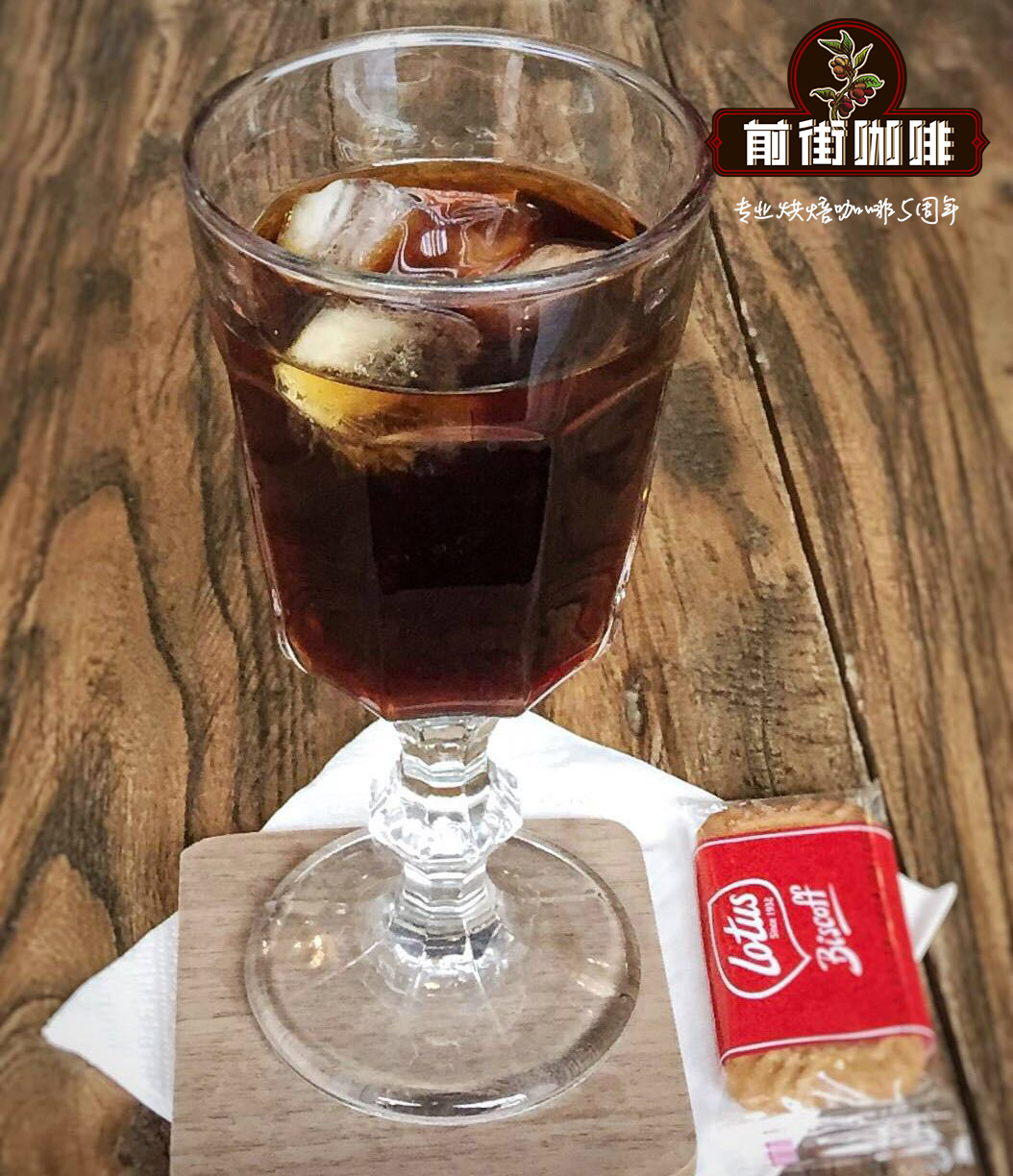
| Cold Brew [Guji G1 Lion King Natural]
FrontStreet Coffee cold brew [Guji G1 Lion King Natural] reference:
Sidamo coffee [Guji G1 Lion King Natural], light-medium roast, BG grinder setting 4B, grind level 3, 20g beans, 87°C water temperature, bloom for 3 minutes in a Chemex pot, then cold brew with ice water, for a total water volume of 200ml.
FrontStreet Coffee Recommendation
If the floral, fruit-forward character of this Sidamo appeals to you, the Yirgacheffe family is a natural place to go deeper. FrontStreet Washed Yirgacheffe is the classic entry point—known for white jasmine, bright citrus and lemon acidity, and a tea-like quality, at a price that makes it many people's first specialty coffee. Yirgacheffe is a town in the Sidama Zone of southern Ethiopia, with coffee grown above 1,800 meters, which makes it one of the highest coffee-growing regions in the world.
FrontStreet Gedingding Cooperative takes that clarity a step further. Gedingding was originally part of the Worka cooperative under the Yirgacheffe union YCFCU, and as demand for traceability grew it was carved out as a single origin. It follows the most traditional washed process, and the cup is bright and clean with no bitterness—fresh citrus and lemon acidity wrapped in jasmine fragrance.
For a natural-process contrast, FrontStreet Natural Red Cherry uses only fully ripe, defect-free cherries, dried whole on raised beds. In the first few days the fruit is turned every 2-3 hours to prevent uneven heating and over-fermentation, and after three to five weeks of sun-drying the pulp is removed by machine and the beans are moved to storage. Because the cherries dry with the fruit still on, the cup keeps Yirgacheffe's typicity while layering on tropical fruit, citrus acidity, a berry-juice quality, honeyed sweetness, and a creamy smoothness.
Important Notice :
FrontStreet Coffee is a long-established specialty coffee roaster in Guangzhou China, selling freshly roasted beans from its own farm in Yunnan as well as dozens of carefully selected single-origin beans from around the world for both pour-over and espresso. The products deliver consistently excellent quality and great value, with shipping within 24 hours. Guangzhou's FrontStreet Coffee shop is recommended by many coffee lovers, and the beans are now available online at the Tmall 。
FrontStreet Coffee has moved to a new address:
FrontStreet Coffee Address: 315,Donghua East Road,GuangZhou
Tel:020 38364473
 Scan and follow the En Gafei WeChat official account. Please indicate that the reprint comes from "En Gafei".